Echeveria Cubic Frost
At first sight, Echeveria Cubic Frost intrigues with its striking geometric shapes and sculptural growth habit. This succulent, with its almost futuristic design, is a true jewel for any collection.
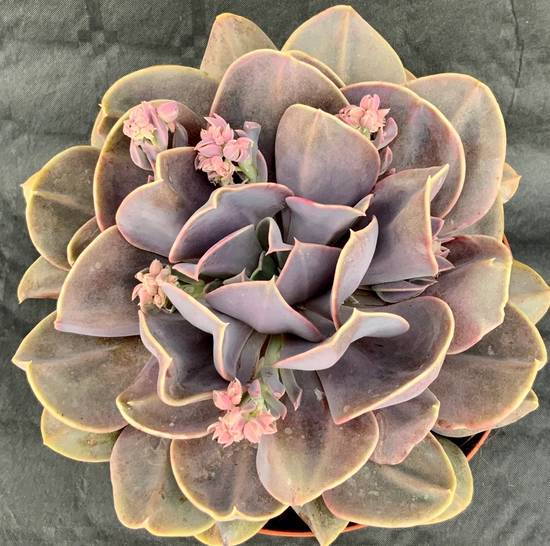
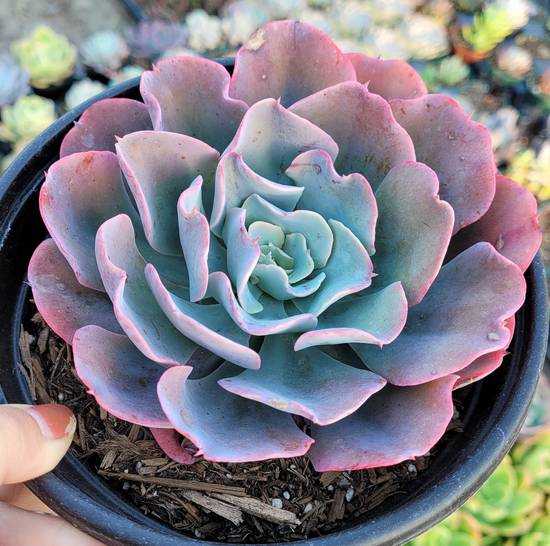
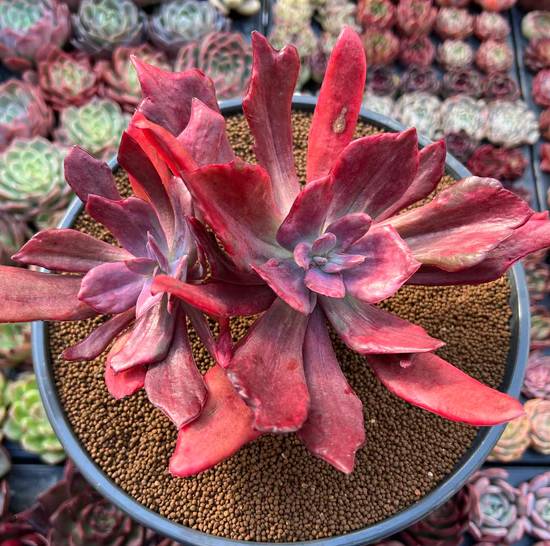
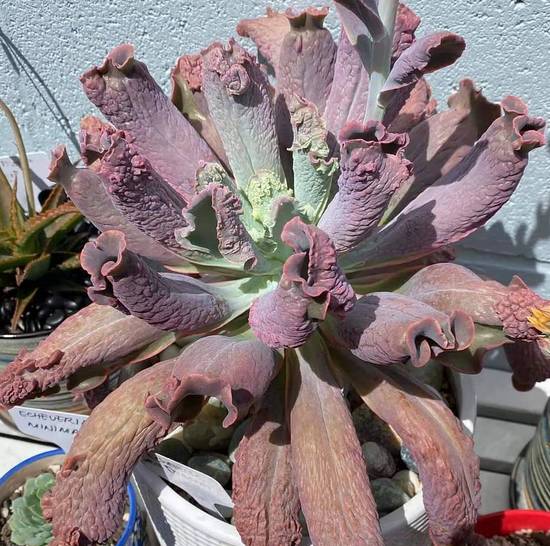
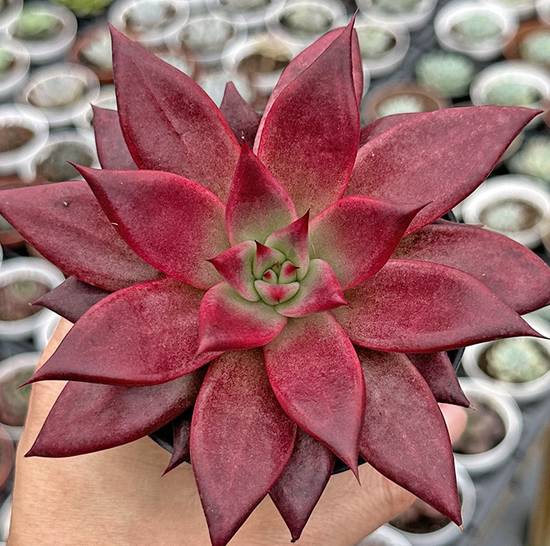
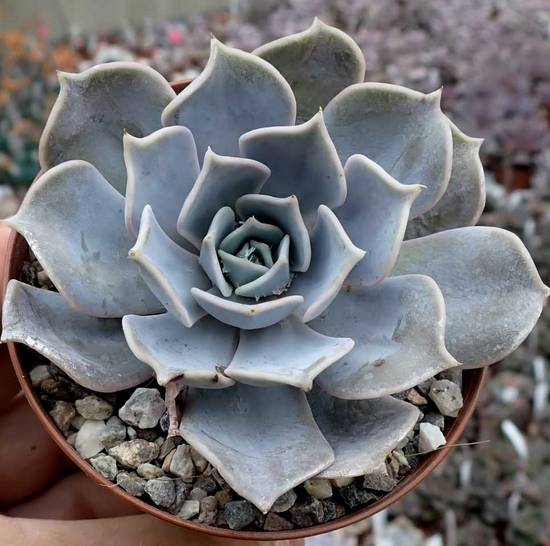
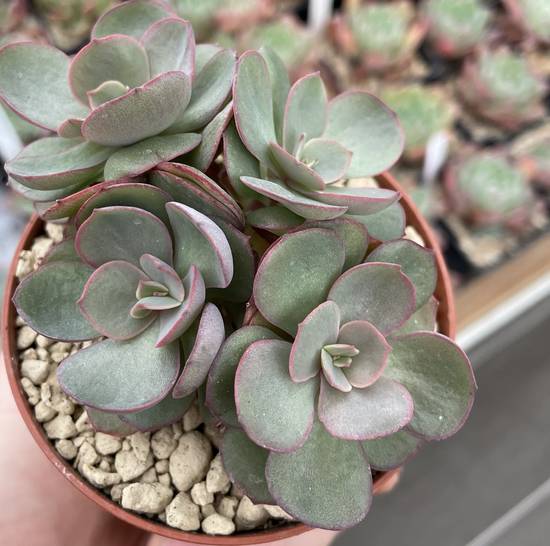
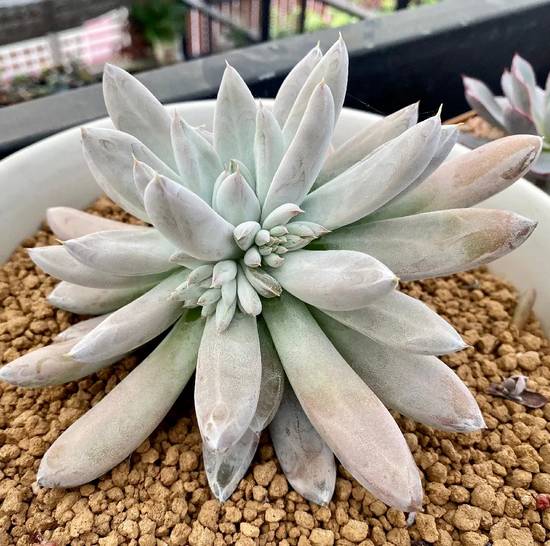
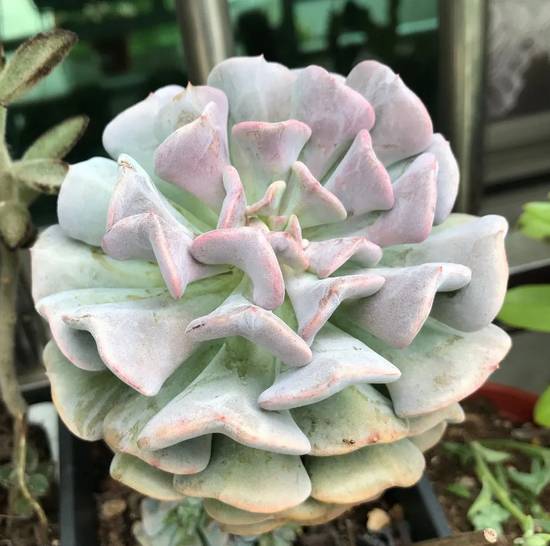
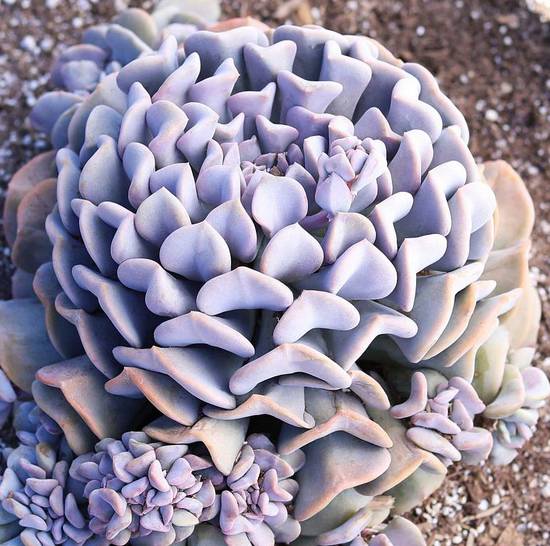
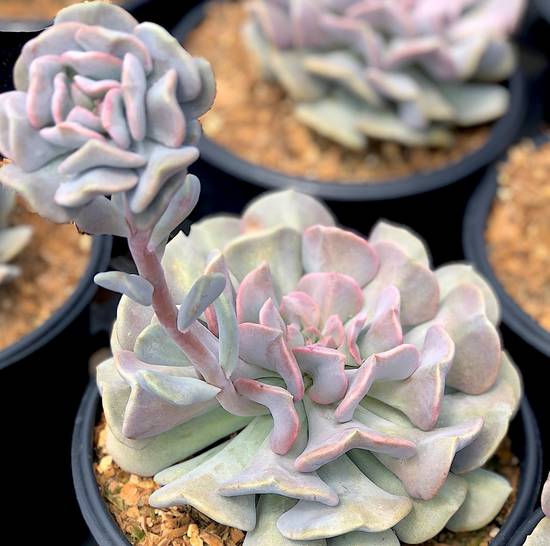
Its fleshy, thick leaves curve outward, forming a rosette about 15 to 20 cm in diameter. The powdery shade ranging from pale lavender to pastel pink, sometimes with bluish reflections, depends on light exposure and temperature. Each rosette seems drawn from an imaginary world, as if handcrafted.
Highly valued for its texture and originality, this Echeveria is also resilient and relatively easy to care for, making it ideal for beginners and experienced enthusiasts alike.
Echeveria Cubic Frost is a cultivar selected for its uniquely curved leaves and soft coloration. It is not a natural species but a horticultural creation widely grown in specialized nurseries.
Good brightness enhances its pastel tones.
☀️ Outdoors: Direct sun in the morning, light shade in the afternoon.
🌤️ Indoors: Sunny spot near a south- or west-facing window.
💡 Adequate light strengthens pink coloration and compact growth.
☀️ Outdoors: Direct sun in the morning, light shade in the afternoon.
🌤️ Indoors: Sunny spot near a south- or west-facing window.
💡 Adequate light strengthens pink coloration and compact growth.
Controlled watering ensures longevity.
🌱 Spring / Summer: Water when soil is completely dry, about every 12–15 days.
🍂 Autumn / Winter: Reduce to once per month maximum.
⚠️ Never let water stagnate in the rosette.
🌱 Spring / Summer: Water when soil is completely dry, about every 12–15 days.
🍂 Autumn / Winter: Reduce to once per month maximum.
⚠️ Never let water stagnate in the rosette.
It enjoys warmth but dislikes excessive cold.
🌡️ Ideal: 18–26 °C.
❄️ Minimum: 5 °C if dry.
🏠 Overwinter indoors in bright, ventilated conditions.
🌡️ Ideal: 18–26 °C.
❄️ Minimum: 5 °C if dry.
🏠 Overwinter indoors in bright, ventilated conditions.
🪨 Recommended mix: cactus soil + perlite + pumice for optimal aeration.
A charming summer bonus.
📅 Period: Summer.
🌺 Flowers: Small orange-pink bells on slender flower stalks.
🐝 Attracts pollinators like bees.
📅 Period: Summer.
🌺 Flowers: Small orange-pink bells on slender flower stalks.
🐝 Attracts pollinators like bees.
FAQ - Echeveria Cubic Frost
Is Echeveria Cubic Frost suitable for indoor growing?
Yes, provided it receives good sunlight near a well-exposed window.
What substrate should be used for Echeveria Cubic Frost?
A mix of cactus soil, perlite, and pumice ensures excellent drainage.
How should Echeveria Cubic Frost be watered to prevent rot?
Water only when the soil is dry and avoid letting water sit in the rosette.
Is Echeveria Cubic Frost hardy?
No, it does not tolerate frost. Bring it indoors when temperatures drop below 8 °C.
Can Echeveria Cubic Frost be propagated easily?
Yes, it can be propagated by leaves or basal offsets.
What fertilizer is recommended for Echeveria Cubic Frost?
Use a liquid fertilizer for succulents every 20 days in spring and summer.
Why do the leaves of Echeveria Cubic Frost become soft?
This may be due to excess moisture or lack of light.
Can it bloom every year?
Yes, if it benefits from strong light and a dry winter rest period.
Is Echeveria Cubic Frost toxic?
No, it is considered non-toxic to pets.
Does Echeveria Cubic Frost naturally lose its lower leaves?
Yes, this is normal. Remove them gently when dry.