Echeveria Linguas
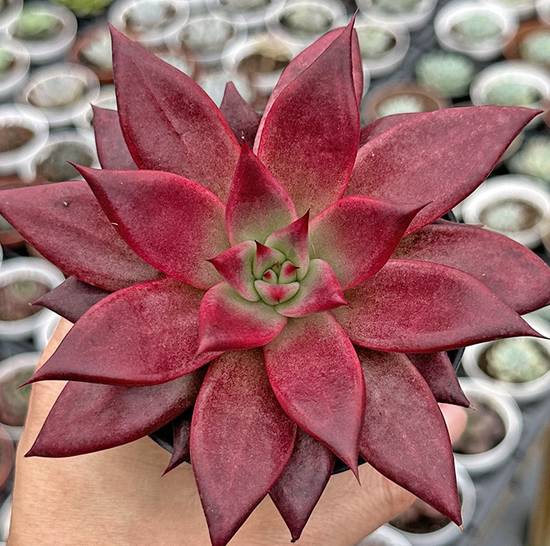
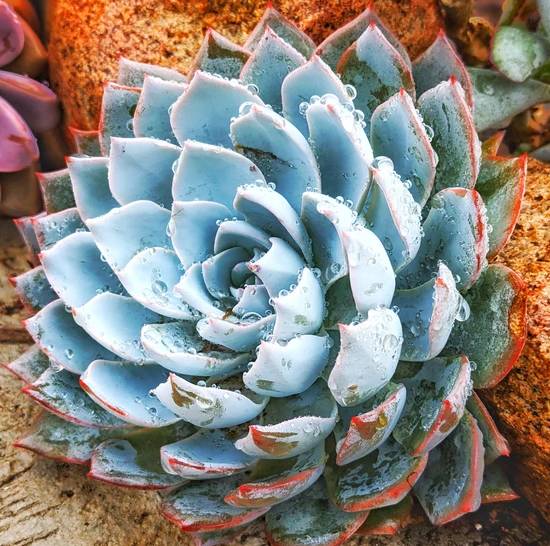
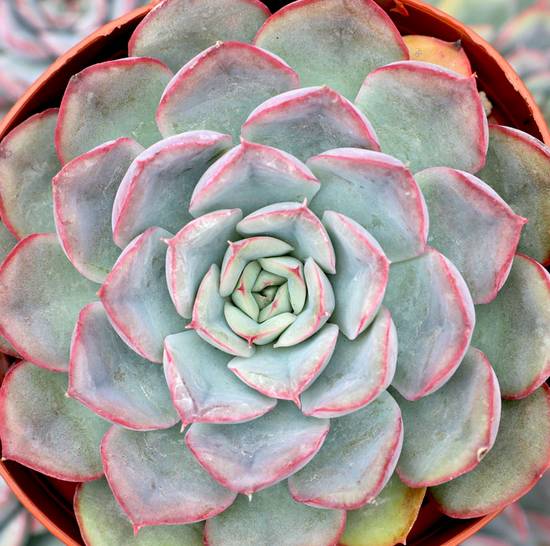
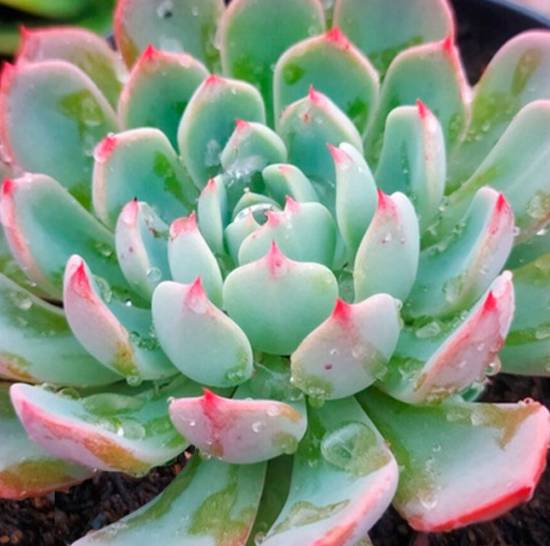
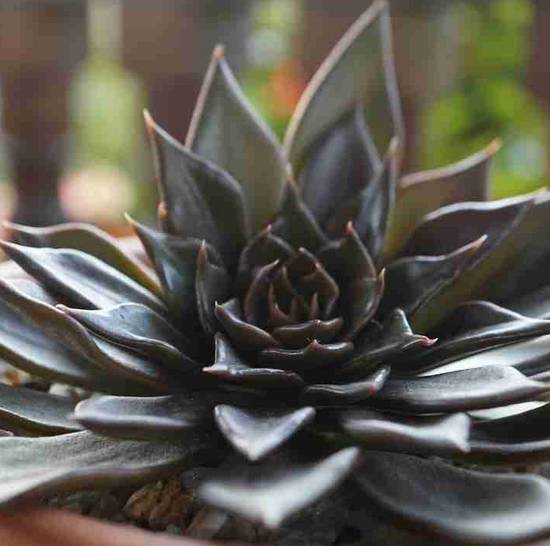
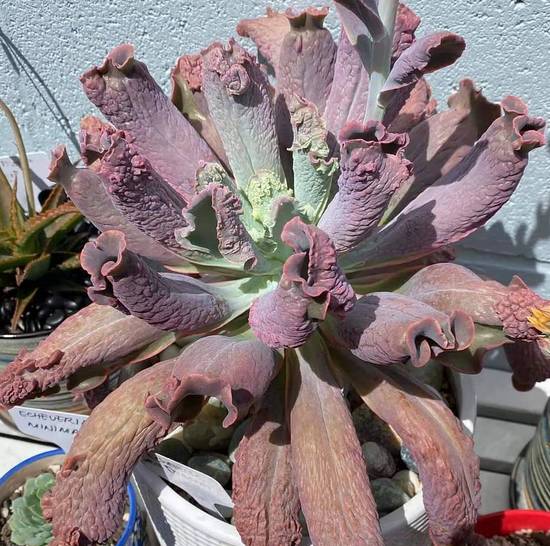
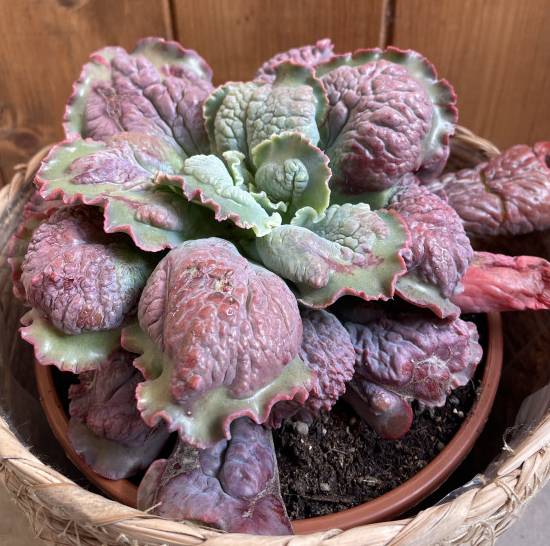
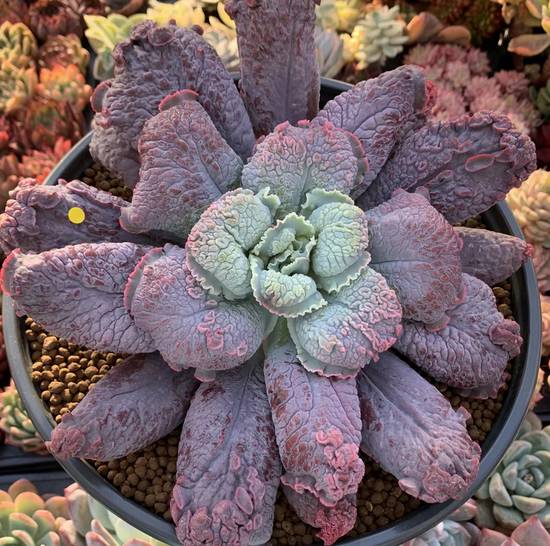
A plant that never goes unnoticed, Echeveria Linguas captivates with its long, fleshy, pointed, and subtly wavy leaves in deep green tinged with purplish hues. It embodies bold elegance, perfect for adding a contemporary touch to any bright space.
Its silhouette is daring, almost reptilian at times, with leaves arranged in a dense rosette reaching up to 20 cm in diameter. Under adequate light, its tips develop purple tones that enhance its unique character. This still rare cultivar is highly sought after for modern compositions and graphic collections.
Echeveria Linguas is appreciated for its robustness, ease of care, and ability to stand out in any setting.
Echeveria Linguas is a horticultural cultivar, likely derived from crosses between long-leaved species such as Echeveria Runyonii and Echeveria Agavoides. It is mainly cultivated for the originality of its foliage.
Light is essential to reveal the full beauty of Echeveria Linguas.
☀️ Outdoors: Morning sun or bright partial shade. Gentle exposure prevents leaf burn.
🏡 Indoors: Near a bright window with at least 5–6 hours of direct natural light.
🔄 Tip: Rotate weekly for even growth.
☀️ Outdoors: Morning sun or bright partial shade. Gentle exposure prevents leaf burn.
🏡 Indoors: Near a bright window with at least 5–6 hours of direct natural light.
🔄 Tip: Rotate weekly for even growth.
Like most Echeverias, Echeveria Linguas dislikes stagnant moisture.
🌱 Spring / Summer: Water every 10–15 days.
🍂 Autumn / Winter: Space watering (about once per month).
⚠️ Tip: Always water at the base, never inside the rosette.
🌱 Spring / Summer: Water every 10–15 days.
🍂 Autumn / Winter: Space watering (about once per month).
⚠️ Tip: Always water at the base, never inside the rosette.
Echeveria Linguas prefers temperate conditions but tolerates heat well.
🌡️ Ideal: 18–26 °C
❄️ Minimum: 4 °C if soil is dry
🏠 Wintering: Protect from frost in a bright, dry space.
🌡️ Ideal: 18–26 °C
❄️ Minimum: 4 °C if soil is dry
🏠 Wintering: Protect from frost in a bright, dry space.
🪨 Recommended mix: 50% cactus soil + 25% perlite + 25% pumice for excellent drainage.
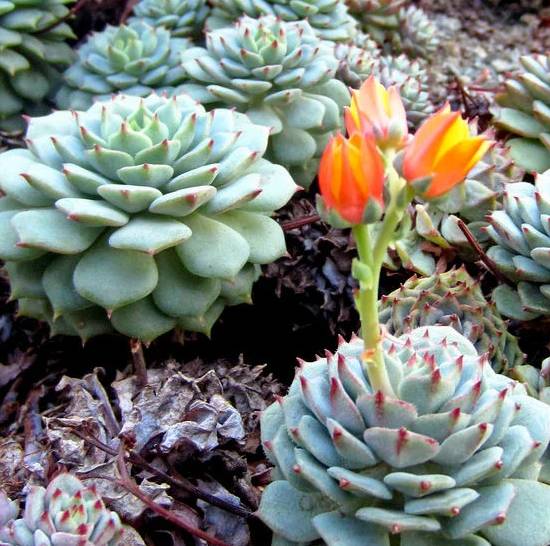
Subtle yet charming, its bloom adds a gentle touch in spring.
📅 Period: Spring or early summer
🌺 Flowers: Small orange to pink bells on slender stalks
🌿 Note: May not bloom every year in pots.
📅 Period: Spring or early summer
🌺 Flowers: Small orange to pink bells on slender stalks
🌿 Note: May not bloom every year in pots.
FAQ - Echeveria Linguas
Can Echeveria Linguas grow indoors?
Yes, provided it receives sufficient direct light daily.
What type of soil is suitable for Echeveria Linguas?
A mix of cactus soil, perlite, and pumice is ideal.
How should Echeveria Linguas be watered?
Moderately: once every two weeks in summer, once per month in winter.
Can Echeveria Linguas survive cold temperatures?
No, avoid temperatures below 4 °C. It should be grown in a pot and brought indoors in winter.
When does Echeveria Linguas bloom?
In spring, with small orange or pink tubular flowers.
Is Echeveria Linguas easy to propagate?
Yes, by leaf or lateral rosette cuttings.
Can Echeveria Linguas be fertilized?
Yes, with a gentle succulent fertilizer once per month during the growing season.
Why is my Echeveria Linguas stretching?
It lacks light. Move it to a brighter location.
Is Echeveria Linguas toxic to animals?
No, it is considered non-toxic to pets.
Can Echeveria Linguas be grown outdoors?
Yes, from spring to autumn, as long as it is protected from heavy rain and frost.