Echeveria Dusty Rose

Echeveria Dusty Rose

Echeveria Dusty Rose

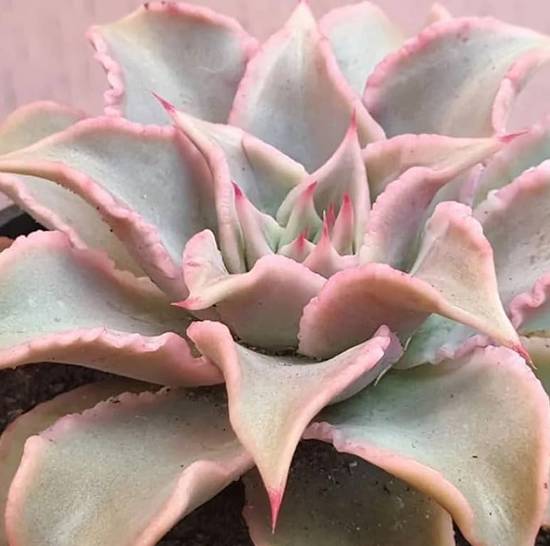
If you are looking for a succulent that is delicate, romantic, and easy to grow, Echeveria Dusty Rose is a perfect choice. This hybrid cultivar stands out with its slightly powdery purple-pink tone, as if sprinkled with stardust, which inspired its evocative name.

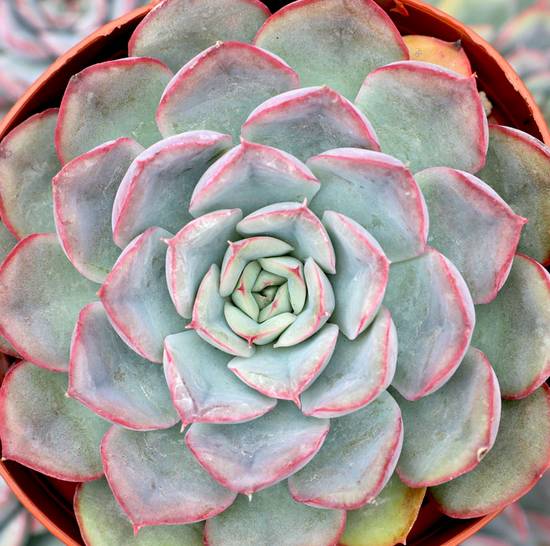
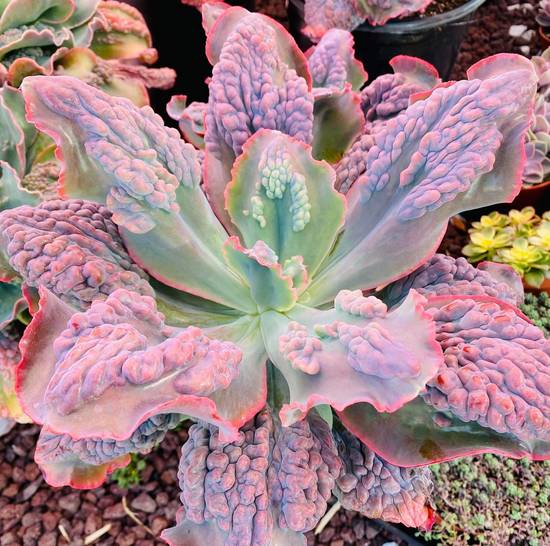
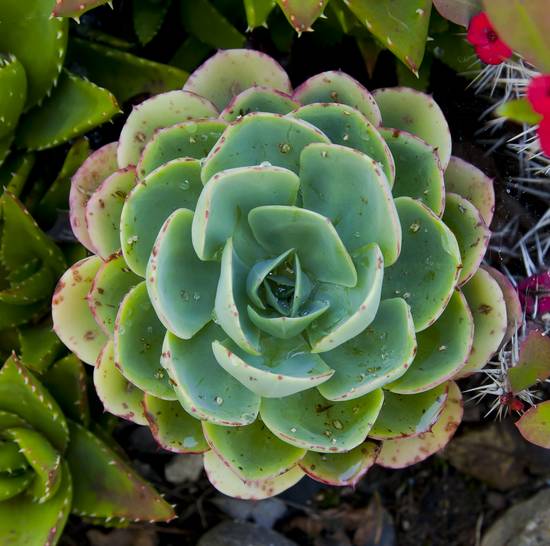
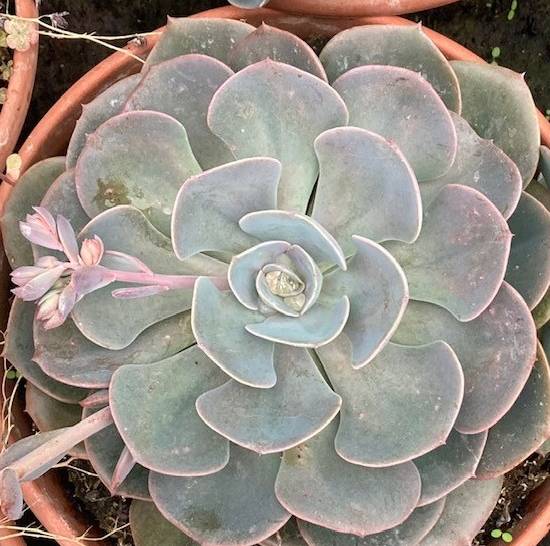
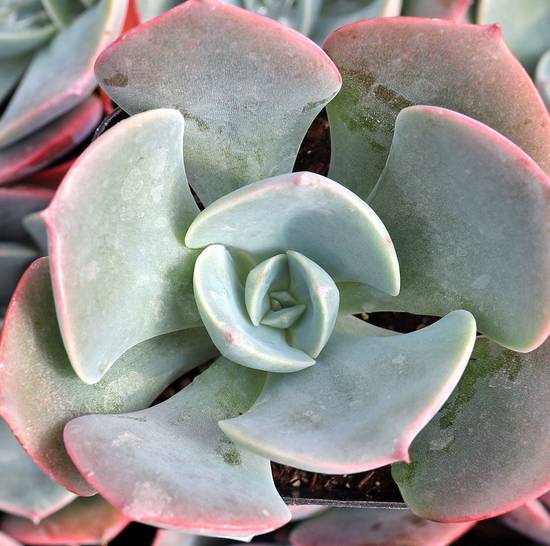
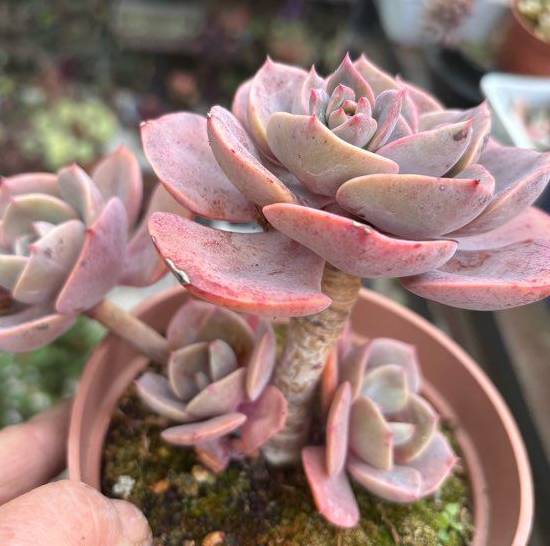
Its well-formed, compact rosette reaches 15 to 20 cm in diameter at maturity. The thick, spatula-shaped leaves range from soft mauve to pinkish gray depending on light intensity, with a light powdery coating that gives it an irresistible velvety look. With sufficient light and slight water stress, its colors intensify, offering a striking display.

Echeveria Dusty Rose is highly ornamental, perfect for potted arrangements, rock gardens, or dry landscapes. Beyond its beauty, it is also a hardy plant capable of tolerating drought and occasional watering neglect.

Echeveria Dusty Rose is a horticultural cultivar, likely resulting from a cross between Echeveria Lilacina and Echeveria Derenbergii. It does not occur in the wild but inherits the resilience and refined coloration of both parents, which are native to Mexico.
Providing strong light allows this plant to reveal its full magic.

☀️ Outdoors: Morning sun or filtered light throughout the day. It loves to bask!

🌤️ Indoors: Place in front of a south- or west-facing window.

💡 Tip: Rotate the pot regularly for balanced growth.
Watering is simple but requires respecting its dry cycle.

🌱 Growing season: Water thoroughly only when soil is dry in depth (about every 10–15 days).

🍂 Dormant season: Water very sparingly or stop if kept cool.

⚠️ Mistake to avoid: Never wet the center of the rosette.
Echeveria Dusty Rose enjoys warmth but fears prolonged cold.

🌡️ Ideal: 18–28 °C.

❄️ Minimum tolerated: Down to 4 °C if kept dry.

🏠 Winter tip: Bring indoors when nights fall below 8 °C.
🪨 Recommended mix: 50% cactus soil + 25% perlite + 25% pumice for optimal drainage.
Its flowering is discreet but always welcome.

📆 Period: Spring to early summer

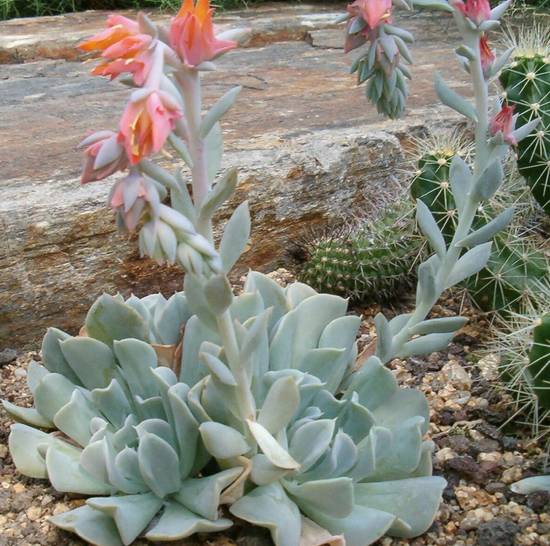
🌺 Flowers: Small yellow to orange bells on red flower stalks

🐝 Pollination: Attracts bees and beneficial insects.
FAQ - Echeveria Dusty Rose

Can Echeveria Dusty Rose live indoors all year round?
Yes, provided it receives at least 5 to 6 hours of direct light per day.
What type of substrate is recommended for Echeveria Dusty Rose?
A mix of cactus soil, perlite, and pumice is ideal.
Can Echeveria Dusty Rose be fertilized?
Yes, during the growing season with a succulent fertilizer once per month.
Why are the leaves becoming soft?
This is often due to overwatering or poorly draining substrate.
Can Echeveria Dusty Rose be propagated?
Yes, very easily by leaf or lateral offset cuttings.
How can I revive the colors of my Echeveria Dusty Rose?
Expose it to more light and slightly reduce watering.
Does Echeveria Dusty Rose tolerate rain?
No, excess water can cause rot. Always avoid watering directly into the rosette.
How long does Echeveria Dusty Rose live?
It can live for several years and regenerates easily through cuttings.
Is it a toxic plant?
No, it is generally considered non-toxic to pets.
Does Echeveria Dusty Rose bloom every year?
Yes, if well exposed and grown in good conditions, it blooms every spring.