Echeveria Brown Rose
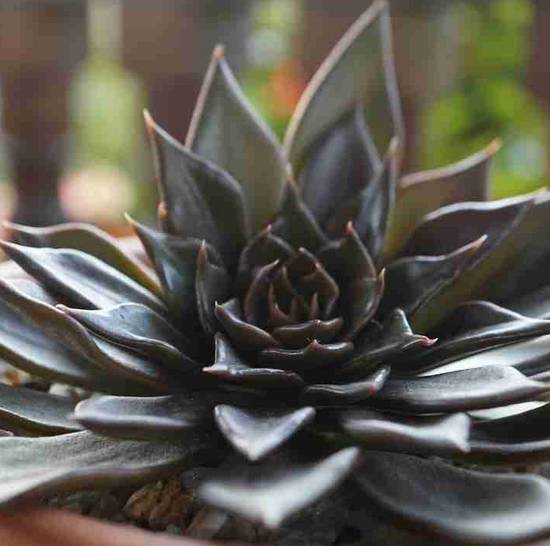
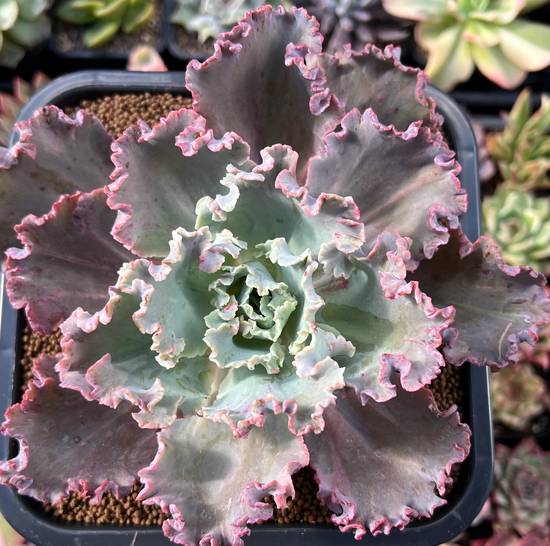
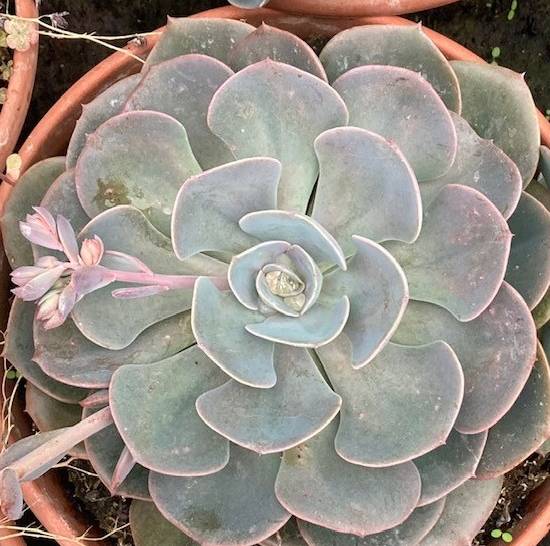
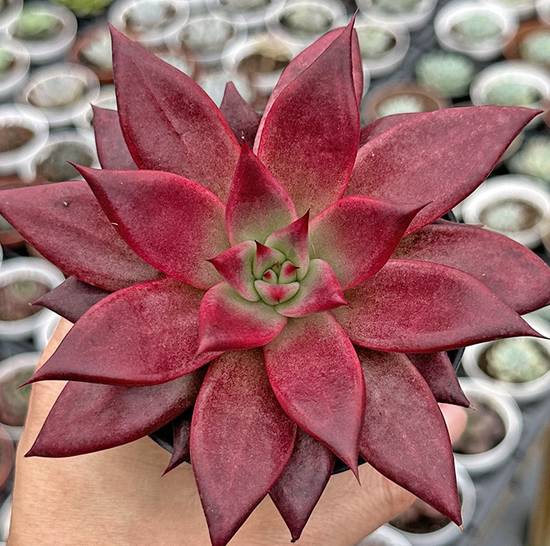
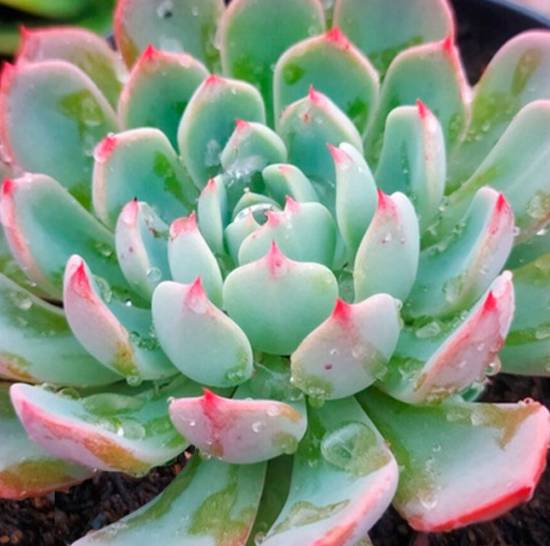
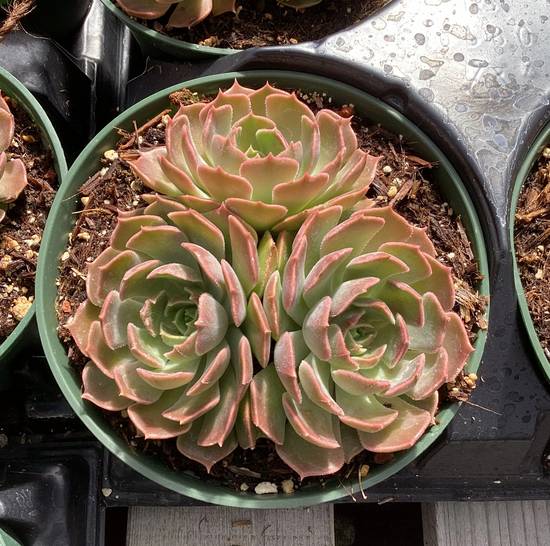
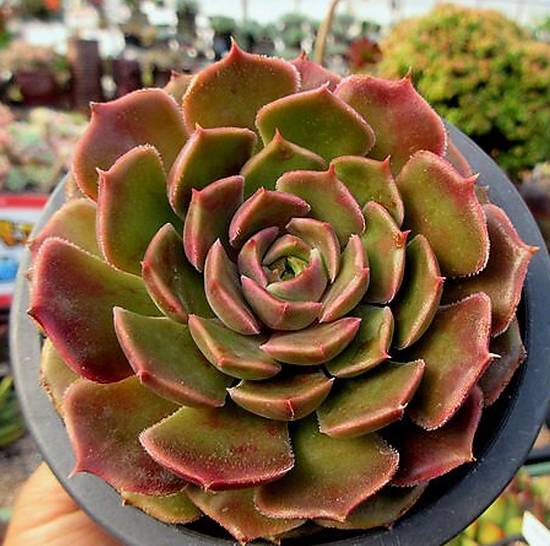
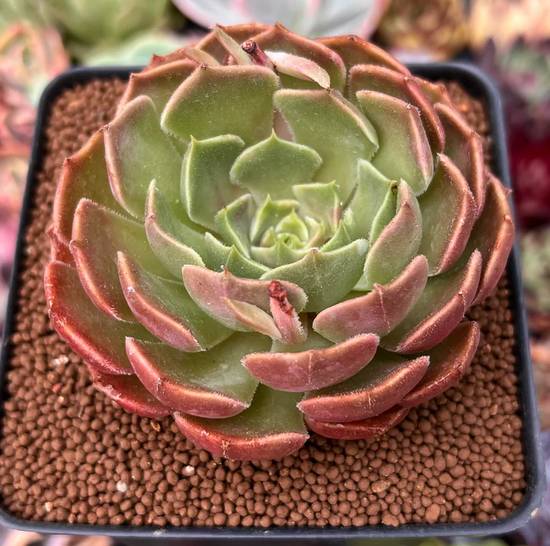
Echeveria Brown Rose is a succulent with a unique charm, reminiscent of a rose sculpted in terracotta. Its compact rosettes form in a spiral, with fleshy leaves in brown-pink tones, sometimes highlighted with purple reflections depending on exposure. Its dense, floral silhouette makes it highly appreciated by plant design enthusiasts.
It is a horticultural cultivar selected for its warm coloration and perfectly symmetrical shape. Both decorative and robust, Echeveria Brown Rose easily finds its place in a collection, a planter or even indoors in bright light. Its thick foliage retains moisture well, allowing it to withstand fairly dry conditions.
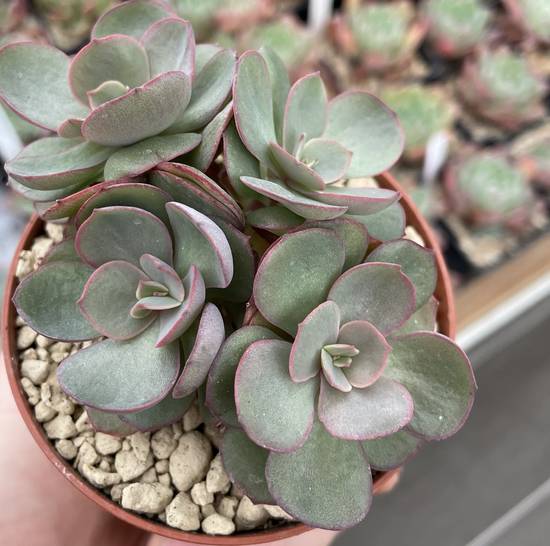
As it grows, it can form several secondary rosettes around the mother plant, creating a small dense cluster. When it blooms, its pink-orange flowers delicately contrast with the dark foliage, adding a touch of bright color to the whole.
In its natural inspiration habitat, it would evolve on rocky slopes, bathed in light, with little water but plenty of minerals. This adaptability makes it an easy plant to grow, both for enthusiasts and beginners.
🌞 Direct sun: It needs at least 5 to 6 hours of light per day for its brown-pink leaves to develop intense reflections. Insufficient light will cause it to turn greener and stretch.
🌤️ Summer protection: During periods of intense heat (>35°C), slight shading may help prevent browning of the tips.
A lack of sunlight leads to color loss and a less compact rosette.
🌱 Spring / Summer: Water approximately every 10 to 15 days, once the substrate is completely dry.
🍂 Autumn / Winter: Space out watering, or stop if the plant is kept in a cool room. Excess humidity in winter is a frequent cause of rot.
⚡ Golden rule: Always water at the base, without wetting the center of the rosette. When in doubt, it is better to wait than to overwater.
🌞 Optimal growing temperature: Between 18°C and 25°C.
❄️ Minimum resistance: It occasionally tolerates 5°C if the soil is dry but does not tolerate frost.
🏠 Wintering: Bring it indoors as soon as temperatures drop below 10°C. Choose a bright and well-ventilated room for winter rest.
🪨 Ideal substrate: Mix cactus soil or succulent substrate with perlite to lighten and aerate + pozzolana to enhance drainage.
A good substrate ensures healthy roots and reduces disease risks.
🌸 Season: Late spring to summer.
🎨 Color: Pink-orange, small bell-shaped flowers arranged along an arched flower stalk.
🕑 Duration: Each flower lasts a few days, but the stalks can persist for several weeks.
💡 Flowering is more frequent in mature, well-exposed plants benefiting from good water stress at the end of spring.