Cleistocactus Winteri

Cleistocactus Winteri

Cleistocactus Winteri

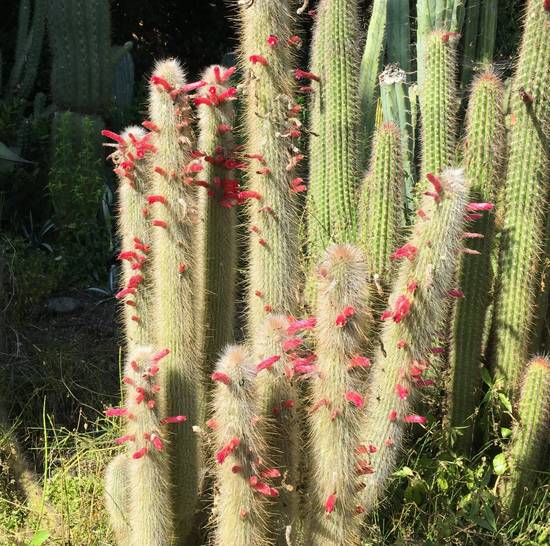
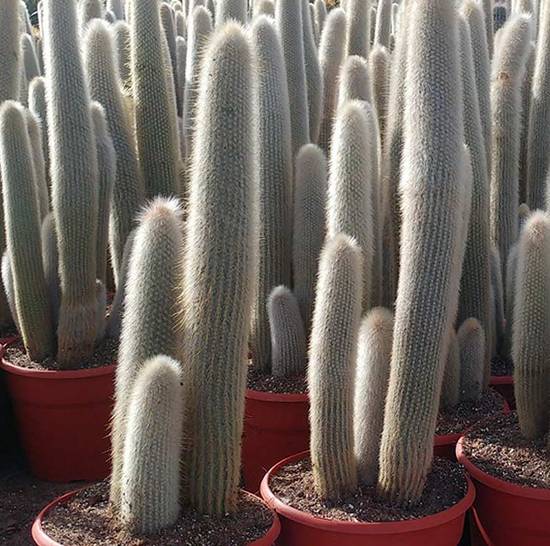
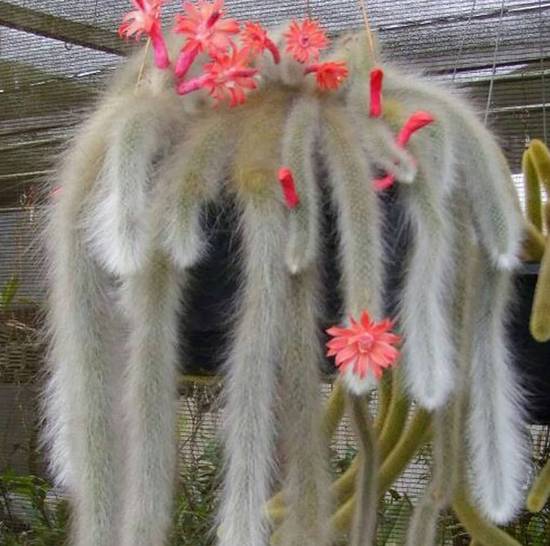
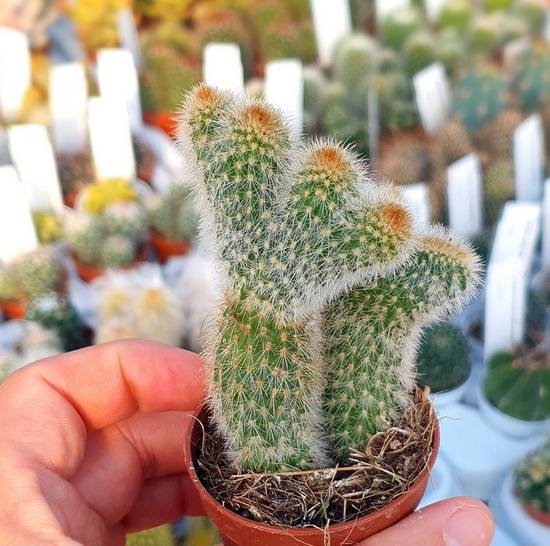
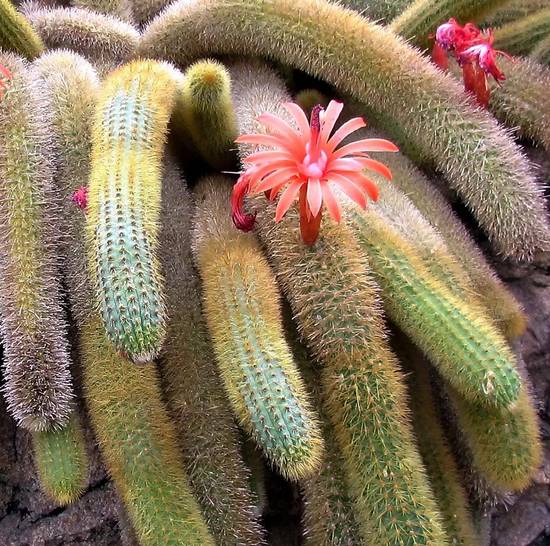
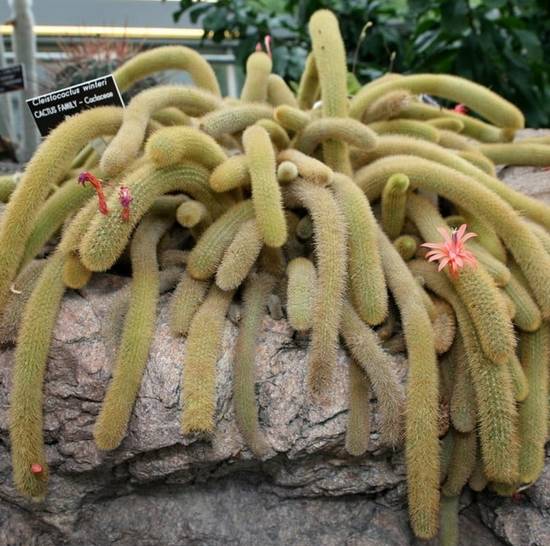
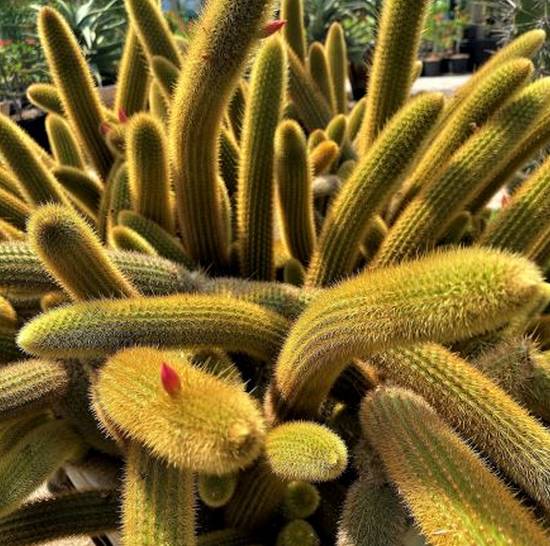
Cleistocactus Winteri, also nicknamed the “golden rat tail cactus,” is one of the most spectacular trailing cacti. Native to South America, it captivates with its slender, flexible stems covered in a coat of golden spines. In spring and summer, it displays large, bright orange tubular flowers that seem to burst forth like flames over golden foliage. Its elegant silhouette and cascading habit make it a centerpiece in hanging baskets or tall pots.

In cultivation, Cleistocactus Winteri is appreciated for its relatively fast growth compared to other cacti. Its stems can exceed 1 meter, forming true luminous cascades. Its generous and repeated flowering immediately catches the eye and turns the plant into a living spectacle.

Cleistocactus Winteri is robust when its fundamental needs are respected: abundant light, measured watering, and a very well-draining substrate. It tolerates occasional drought but fears prolonged excess moisture.

Cleistocactus Winteri grows in the dry and sunny valleys of Bolivia, often clinging to rocky slopes or gravelly soils. It benefits from a hot and dry climate for most of the year, with strong temperature fluctuations between day and night. Rainfall is rare and concentrated in a short season, shaping a plant adapted to quickly capture moisture and store it in its fleshy tissues.

In its habitat, Cleistocactus Winteri receives intense sunlight sometimes filtered by shrubs or rocks. It coexists with other cacti such as Echinopsis and various succulents thriving in the same arid conditions.
Light and warmth: its allies for an elegant habit.

🌞 Full sun: at least 6 hours per day to promote compact growth and abundant flowering.

🌤️ Bright light: tolerates slight shade, but at the expense of blooms.

💡 After winter indoors, gradually acclimate to prevent burns.
Less is more: its survival depends on proper rhythm.

🌱 Spring/summer: moderate watering, allowing the substrate to dry completely between applications.

🍂 Autumn/winter: greatly reduce or stop if overwintered in cool conditions.

⚠️ Excess water easily causes rot, especially at the base of stems.
Warm in summer, cool in winter: the recipe for flowering.

🌡️ Optimal: 20 to 30°C during growth.

❄️ Minimum: can tolerate 5°C when dry but fears frost.

🏠 Overwinter at 8–12°C with light to stimulate flowering.
Maximum drainage to prevent excess moisture.

🪨 Recommended mix: 50% cactus soil + 25% perlite + 25% pozzolana
An orange firework over a golden carpet.

🌸 Period: spring and summer.

🎨 Color: bright orange, tubular, up to 6 cm long.

🕑 Conditions: full sun, cool and dry winter rest.
FAQ - Cleistocactus Winteri

Is Cleistocactus Winteri suitable for hanging baskets?
Yes, it is one of the most spectacular trailing cacti, forming long golden and flowering cascades.
What substrate should be used for Cleistocactus Winteri?
A well-draining mix: 50% cactus potting soil, 25% perlite and 25% pumice.
How to stimulate flowering of Cleistocactus Winteri?
Cool wintering (8–12°C), dry and bright, then gradual resumption of watering in spring.
Can Cleistocactus Winteri tolerate cold?
It tolerates 5°C in dry conditions but fears frost. Overwinter indoors in cold climates.
What fertilizer should be given to Cleistocactus Winteri?
From May to August, a cactus fertilizer low in nitrogen, at half dose, once a month.
How large can Cleistocactus Winteri grow?
In pots, over 1 m in length per stem. In nature, even more.
Can Cleistocactus Winteri be grown indoors?
Yes, but with maximum light (south-facing window or grow lighting).
When should Cleistocactus Winteri be repotted?
Every 2–3 years in spring, with fresh substrate and root inspection.
Does Cleistocactus Winteri attract pollinators?
Yes, orange tubular flowers attractive to hummingbirds and pollinating insects.
Can Cleistocactus Winteri be easily propagated?
Yes, by stem cuttings in the warm season, after allowing the cut to dry.