Cleistocactus Strausii Cristata

Cleistocactus Strausii Cristata

Cleistocactus Strausii Cristata

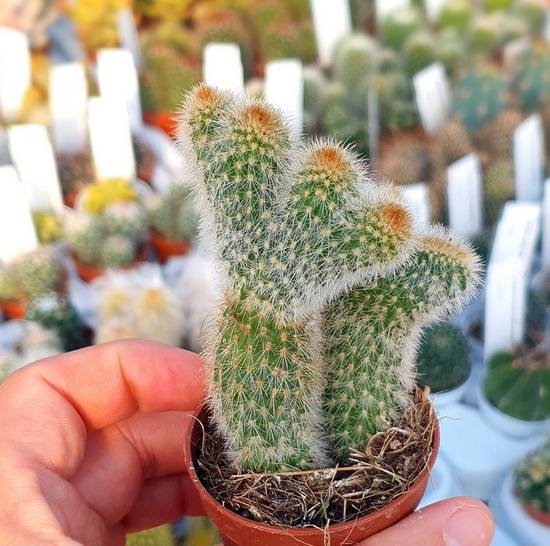
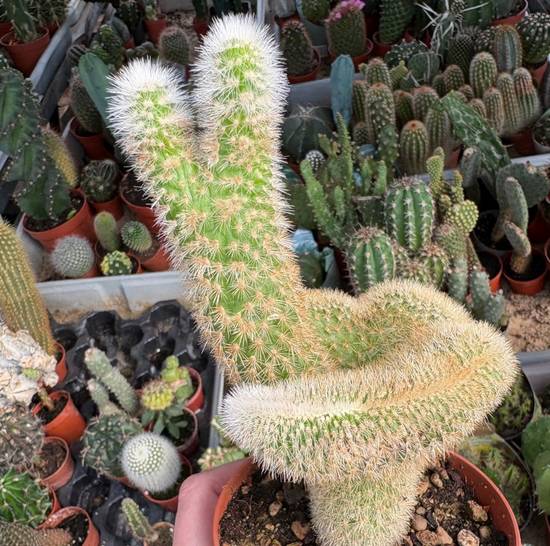
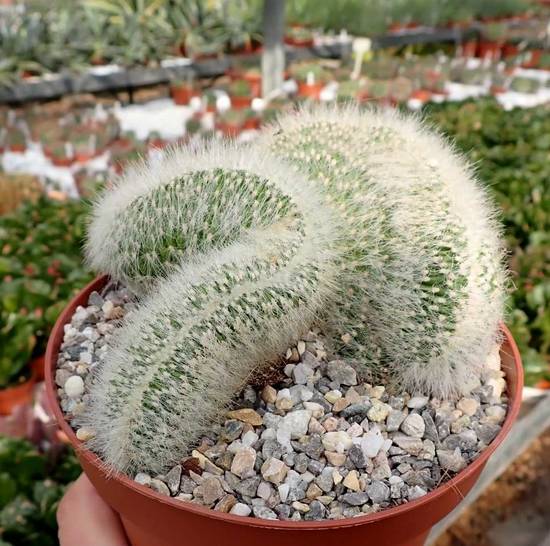
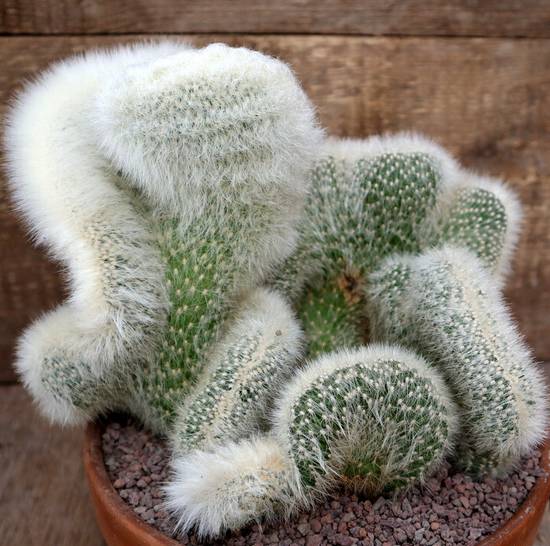
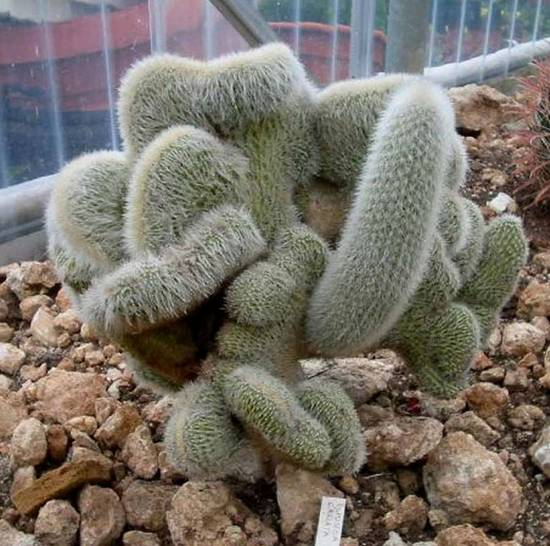
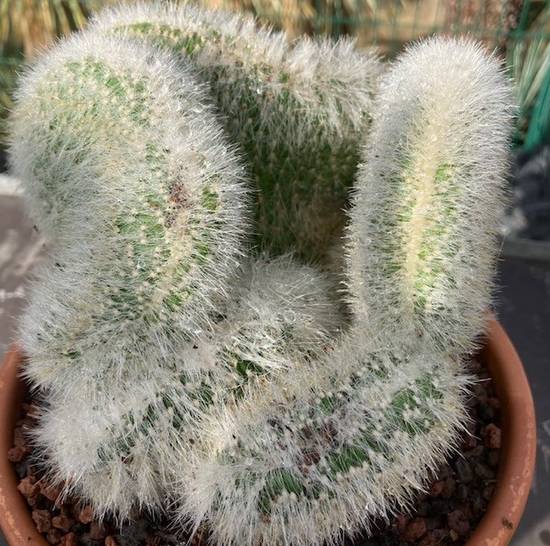
The Cleistocactus Strausii Cristata is a fascinating and rare form of the famous silver cactus native to the Andes. This “crested” version develops a fan-shaped, undulating growth, giving the plant an almost cloudy and sculptural appearance.

Unlike the classic upright columnar form, the Cleistocactus Strausii Cristata spreads horizontally or forms irregular waves of silvery bluish-green, covered with fine white hairs that give it a silky appearance. It is a plant that immediately draws attention due to its unusual shape and almost cottony look.

This crested cactus is highly sought after by collectors for its originality, its relative softness to the touch, and its dense growth. It remains compact in pots but can spread laterally over time, creating ever-changing forms.

The Cleistocactus Strausii Cristata is a natural mutation of the Cleistocactus Strausii, a species native to dry, sunny slopes at high Andean altitudes between 1,500 and 3,000 meters, particularly in Bolivia and northern Argentina.

In its native habitat, it grows in full sun on poor, rocky soils, which gives it excellent drought resistance.
The Cleistocactus Strausii Cristata prefers bright but diffused light:

🌞 Intense light: full sun or partial shade works well.

🌤️ In summer: protect from scorching rays to prevent burns on the more sensitive crest tissues.

⚠️ Warning: insufficient light will cause loss of compactness and sagging crests.
Like many crested forms, the Cleistocactus Strausii Cristata requires special care:

🌱 Spring / summer: water every 2 to 3 weeks when the substrate is completely dry.

🍂 Autumn / winter: drastically reduce watering or stop entirely.

Golden rule: never allow water to stagnate in the saucer. Excess moisture is fatal.
The Cleistocactus Strausii Cristata is relatively hardy compared to other crested forms:

🌞 Ideal temperature: between 18°C and 28°C.

❄️ Minimum tolerated: -4°C in dry soil for the normal form, but the crested form is more fragile. Do not go below 5°C.

🏠 Overwintering: sheltered, bright and dry between 5°C and 12°C.
A well-draining substrate is essential to prevent rot risks:

🪨 Recommended substrate: 50% cactus potting soil, 30% pozzolana, 20% pumice.

💡 Tip: add a layer of gravel or coarse sand on the surface to limit moisture.
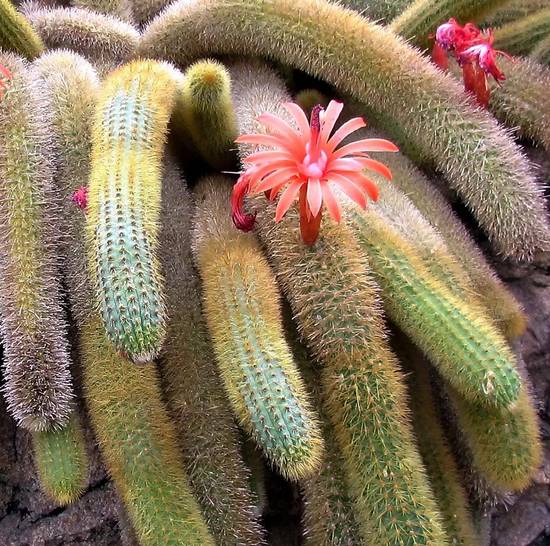
The Cleistocactus Strausii Cristata can flower, but blooming remains rare in pots:

🌼 Season: late spring to summer

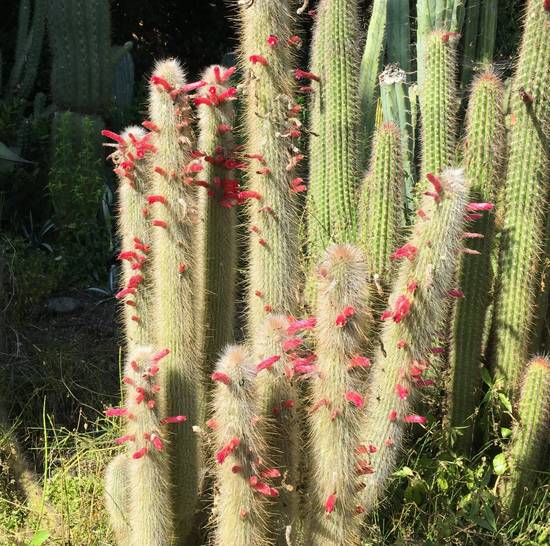
🎨 Color: carmine red or bright pink

🕑 Duration: only a few days

💡 Flowers may sometimes appear at the base of the crests or on secondary non-crested shoots.
FAQ - Cleistocactus Strausii Cristata

What type of soil should be used for Cleistocactus Strausii Cristata?
Choose an ultra well-draining substrate: mix cactus potting soil, pozzolana, and mineral sand.
How can flowering of Cleistocactus Strausii Cristata be stimulated?
Provide a dry winter rest, use a suitable fertilizer in spring, and ensure maximum sun exposure.
Should Cleistocactus Strausii Cristata be pruned?
No, it is best not to interfere. The crested form is fragile and cutting may encourage non-crested growth.
Does Cleistocactus Strausii Cristata tolerate frost?
The crested form is more sensitive. Avoid any exposure below 5°C, even if the normal form can tolerate brief frost.
Can Cleistocactus Strausii Cristata be grown indoors?
Yes, provided it receives very bright light near a south-facing window or under a grow light.
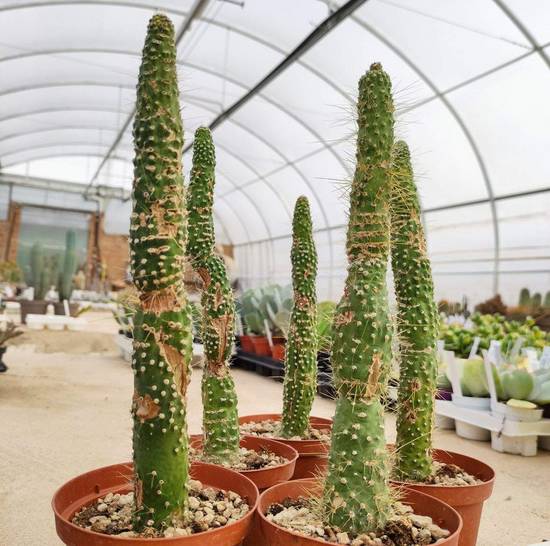
Why is my Cleistocactus Strausii Cristata becoming "normal"?
It may produce non-crested shoots. Remove them quickly if you wish to preserve the wavy appearance.
How often should Cleistocactus Strausii Cristata be watered in summer?
About every 2 to 3 weeks, depending on room temperature. Always allow the substrate to dry completely between waterings.
Can Cleistocactus Strausii Cristata be propagated?
Propagation is delicate. Only cuttings of crested segments can preserve the mutation, but the success rate is low.
What maximum size can Cleistocactus Strausii Cristata reach?
In pots, it remains compact but can spread 30 to 40 cm wide. In the ground, it can form large crests over several years.
How can diseases be prevented in Cleistocactus Strausii Cristata?
Avoid persistent moisture and use a well-draining substrate. Preventive treatment with a mild fungicide may be useful in spring.