Cleistocactus Jujuyensis
Monstruoso

Cleistocactus Jujuyensis Monstruoso

Cleistocactus Jujuyensis Monstruoso

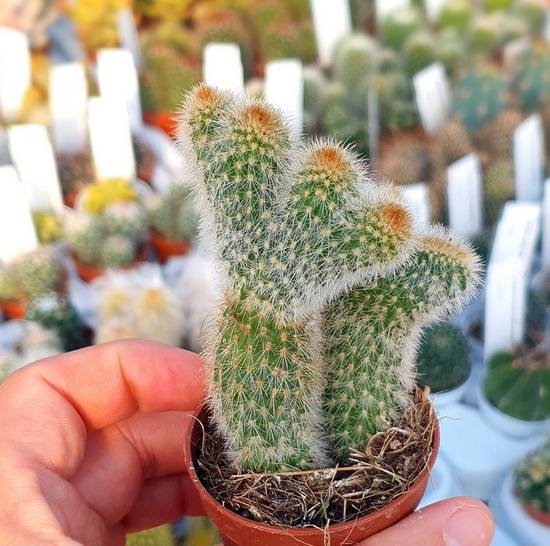
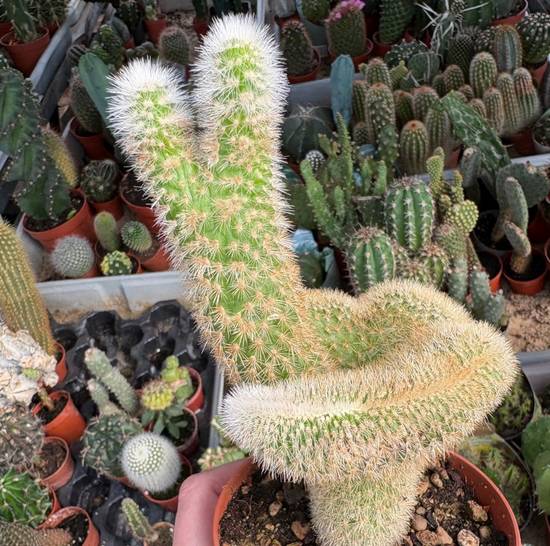
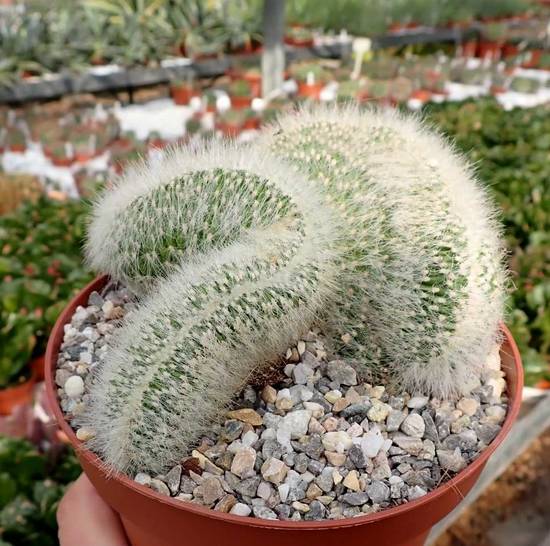
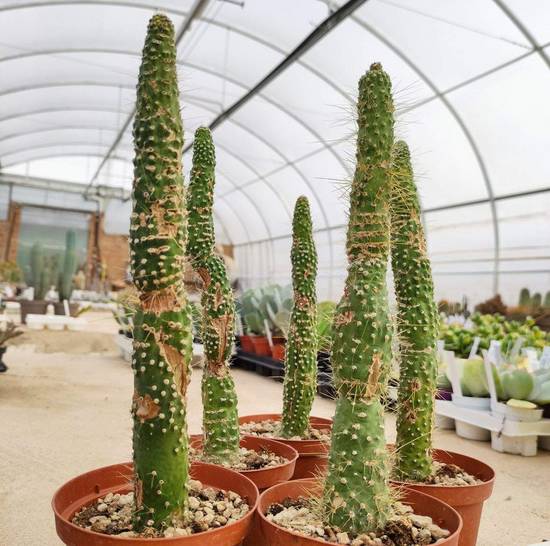
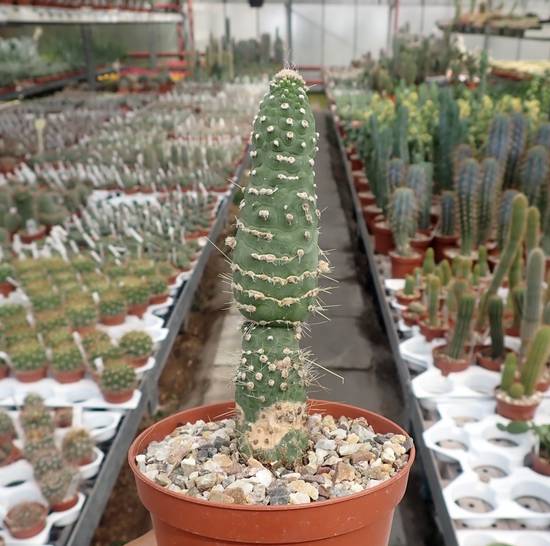
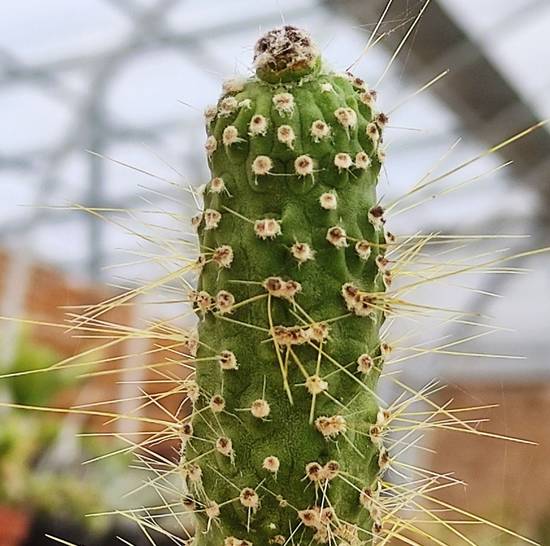
The Cleistocactus Jujuyensis Monstruoso is a botanical curiosity that immediately catches the eye. It is a mutated and deformed form of the Cleistocactus Jujuyensis, a species native to South America. Unlike its straight and slender version, the monstruoso form develops twisted, spiraled, sometimes knobby stems, creating an almost surreal appearance.

This cactus can reach 40 to 60 cm in a pot, forming a dense and spectacular clump over time. Its stems, covered with golden or brown spines, are often thick and deformed, offering a sculptural and unique look. This unusual appearance results from natural mutations in tissue growth.

Like many “monstrous” forms, each specimen of Cleistocactus Jujuyensis Monstruoso is different, making every plant absolutely unique. It is highly sought after by collectors of rare and atypical cactus forms.

The Cleistocactus Jujuyensis originates from the mountainous and semi-arid regions of north-western Argentina, particularly in the province of Jujuy. It grows at moderate altitudes, often on well-drained rocky slopes. The “monstruoso” form results from mutations observed in cultivation, selected for their originality.

In its natural environment, the climate is dry, with strong temperature fluctuations and intense sun exposure, explaining its high heat tolerance.
The Cleistocactus Jujuyensis Monstruoso is a full-sun cactus but appreciates light protection depending on the climate:

🌞 Ideal light: Full south exposure, at least 5 to 6 hours of sunlight per day.

🌤️ In summer: Avoid sunburn during prolonged heatwaves by moving it into light shade.

🚫 Insufficient light: causes loss of compactness and stem discoloration.
Watering the Cleistocactus Jujuyensis Monstruoso must be very carefully controlled:

🌱 Spring / Summer: Water every 15 to 25 days depending on heat and substrate. Wait until the soil is completely dry.

🍂 Autumn / Winter: No watering between November and March, unless the plant is kept in a very dry, heated interior.

⚠️ Tip: Too much water is fatal. This type of cactus prefers drought over excess moisture.
The Cleistocactus Jujuyensis Monstruoso is fairly hardy but remains sensitive to cold:

🌡️ Ideal temperature: between 20°C and 30°C.

❄️ Minimum threshold: down to -4°C occasionally if the substrate is dry.

🏠 Overwintering: Bring indoors as soon as temperatures fall below 5 °C. Ideal location: bright, cool, and dry.
Maximum drainage is mandatory to avoid any risk of rot: 🪨 Optimal substrate: 40% cactus potting mix, 30% pumice, 30% pozzolana.

💡 Use an unglazed terracotta pot to help evacuate moisture.
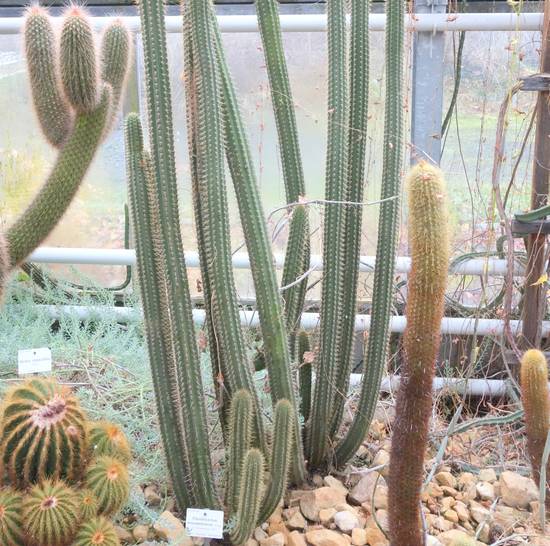
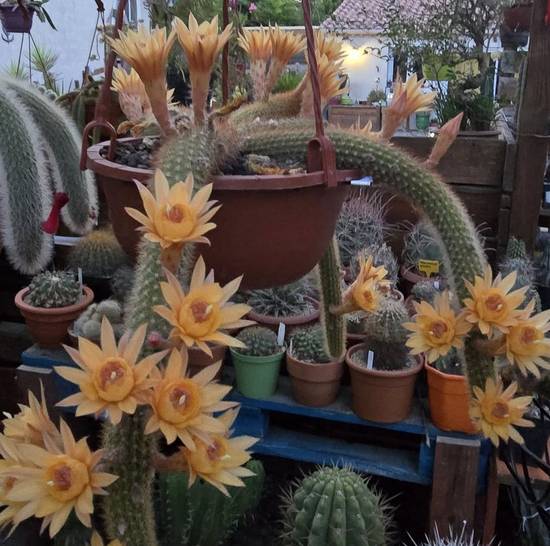
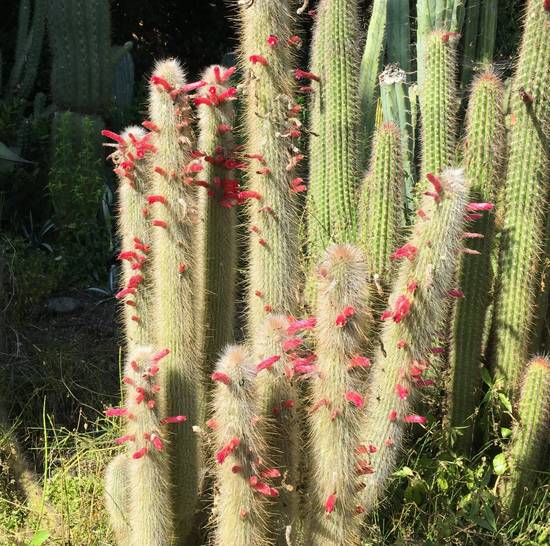
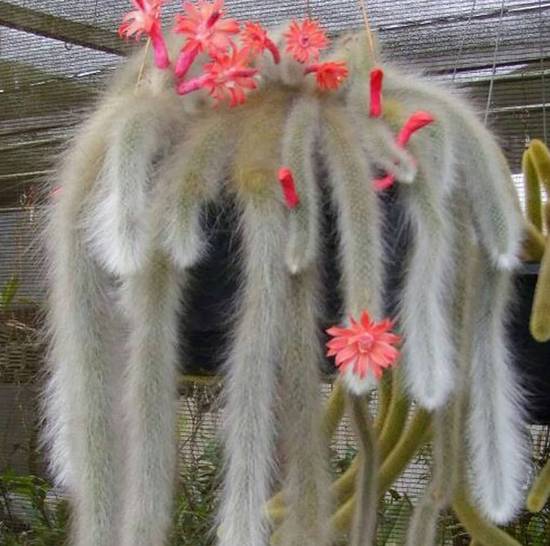
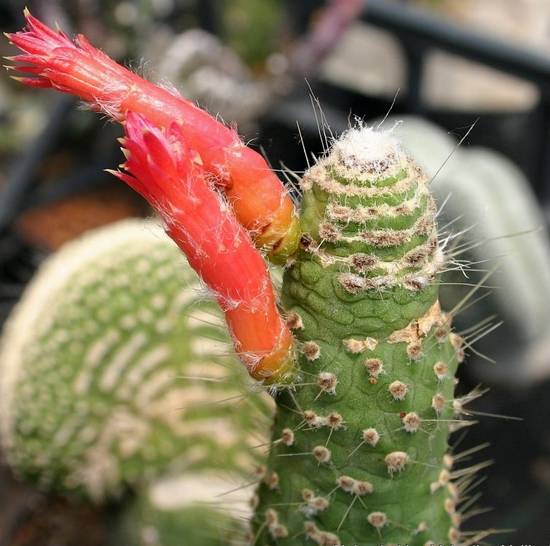
Flowering of the Cleistocactus Jujuyensis Monstruoso remains rare but possible: 🌸 Season: late spring to summer 🎨 Color: orange-red to bright pink 🕑 Duration: only a few days, often early in the day 🐝 Flowering depends: on good light and a mature plant

FAQ - Cleistocactus Jujuyensis Monstruoso

Can Cleistocactus Jujuyensis Monstruoso be fertilized regularly?
Yes, once a month during the growing season with a diluted special cactus fertilizer.
Does Cleistocactus Jujuyensis Monstruoso tolerate frost?
No, it does not tolerate frost. Bring it indoors as soon as temperatures drop below 5°C.
What is the best substrate for Cleistocactus Jujuyensis Monstruoso?
A very well-draining mix is essential: cactus potting soil, pozzolana, and pumice.
How can I tell if Cleistocactus Jujuyensis Monstruoso lacks light?
If its stems elongate abnormally or lose their color, increase light exposure.
What is the ideal watering frequency for Cleistocactus Jujuyensis Monstruoso?
In summer: water every 2–3 weeks. In winter: no watering if the plant is kept cool.
Can this cactus flower in a pot?
Yes, but only if well exposed to sunlight and mature. The flowers are red and tubular.
Should Cleistocactus Jujuyensis Monstruoso be repotted often?
About every 3 years, in spring. Use a slightly larger pot and fresh substrate.
How can Cleistocactus Jujuyensis Monstruoso be distinguished from the normal form?
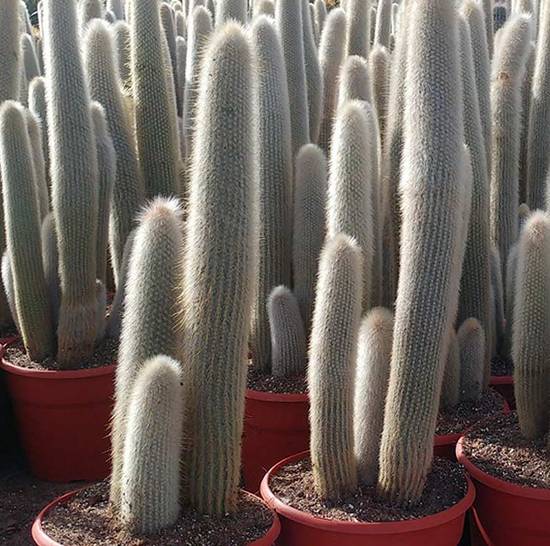
The monstruoso form has twisted, wavy, or branched shapes, unlike the straight stems of the standard species.
Is it dangerous for animals?
No, but its spines can cause injury. Keep it out of reach of children and animals.
Is Cleistocactus Jujuyensis Monstruoso easy to grow?
Yes, if its light and drainage needs are respected. It is a fairly hardy cactus.