Cleistocactus Colademononis

Cleistocactus Colademononis

Cleistocactus Colademononis

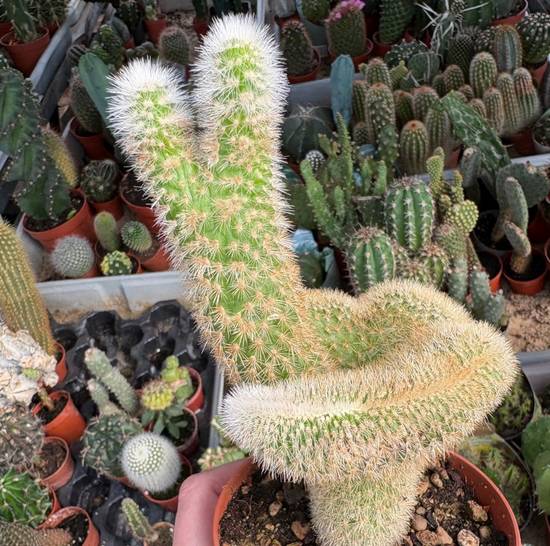
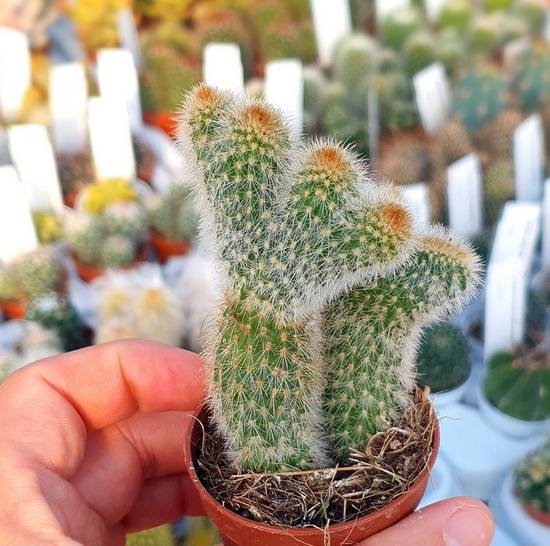
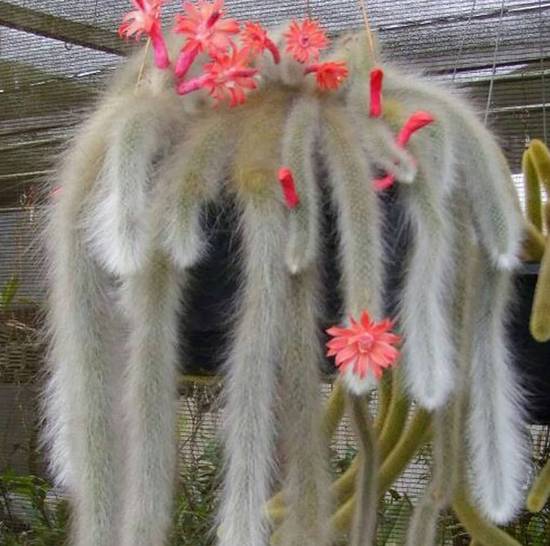
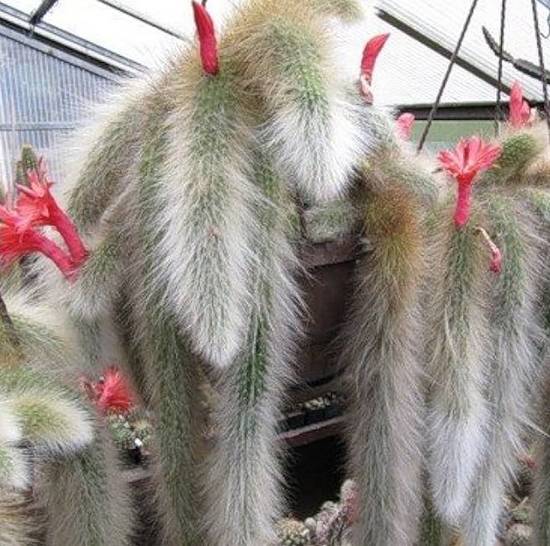
The Cleistocactus Colademononis, often nicknamed the “monkey tail cactus”, is a spectacular trailing cactus covered in a thick coat of white hair. Highly valued for its cascading habit and silky appearance, it is ideal for hanging baskets, where its long, furry stems can grow freely.

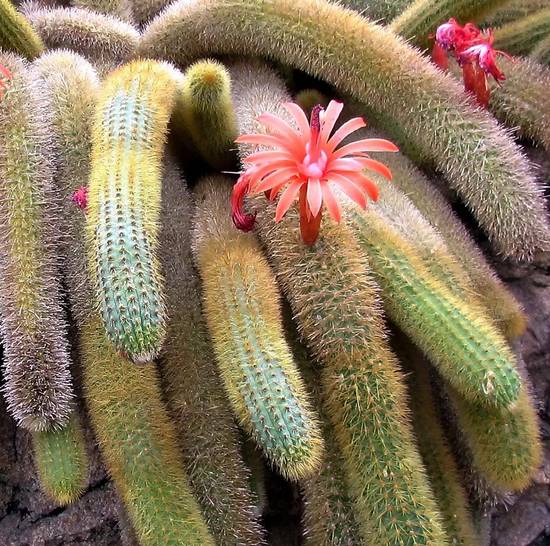
This cactus is admired as much for its texture as for its originality. Its cylindrical stems can exceed one meter in length, falling like a silvery mane. Its scientific name, “colademononis”, literally means “monkey tail” in Spanish, a direct reference to its appearance.

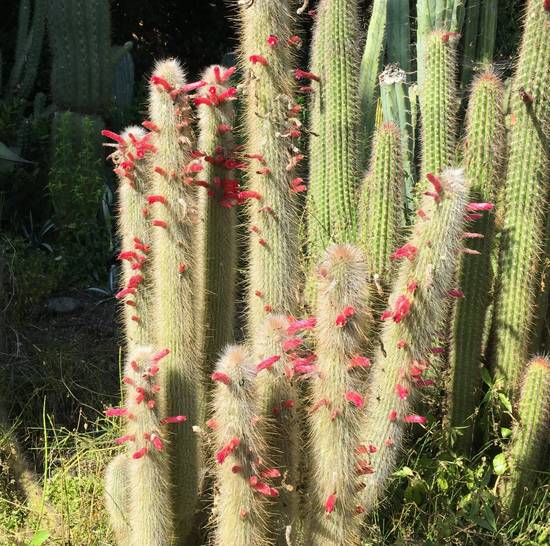
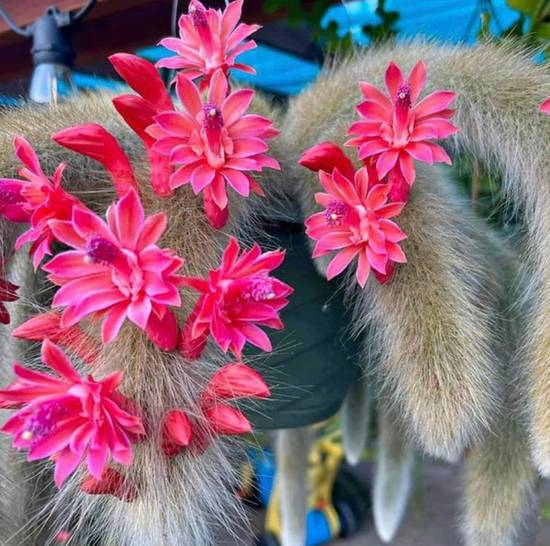
In addition to its unique look, it produces dark red tubular flowers that contrast beautifully with the whiteness of its woolly epidermis. This contrast creates a visual spectacle that is both unexpected and fascinating.

The Cleistocactus Colademononis is native to the high mountains of Bolivia, where it grows at altitude, clinging to rocky cliffs. It benefits from strong light, excellent air circulation, and moderate to cool nighttime temperatures.

This origin explains its ability to tolerate cooler air than many other cacti, while remaining very demanding in terms of drainage.
Light is essential for the beauty of the Cleistocactus Colademononis:

🌞 Bright light without scorching: morning sun or very bright indirect light

🕶️ Avoid: harsh direct summer sun, which can burn its hairs

🏠 Indoors: near a bright window or under a grow light to stimulate growth.
The Cleistocactus Colademononis requires carefully controlled watering:

🌱 Spring / summer: water every 10 to 15 days once the substrate is completely dry

🍂 Autumn / winter: drastically reduce watering, or stop completely if kept cool

🚫 Warning: its dense hairs can trap moisture, increasing the risk of rot if drainage is poor.
Hardy but sensitive to cold, the Cleistocactus colademononis prefers mild, dry climates:

🔥 Ideal temperature: between 20 and 30°C

❄️ Minimum tolerated: 5°C when dry, never below 0°C

🏠 In winter: overwinter in a bright, cool room (10–15°C) to encourage future flowering.
A very well-drained substrate is vital to keep your Cleistocactus Colademononis healthy:

🪨 Recommended mix: 40% cactus soil + 30% pumice + 30% pozzolana

⚠️ Avoid: rich or compact mixes.
The flowering of the Cleistocactus colademononis is a true spectacle:

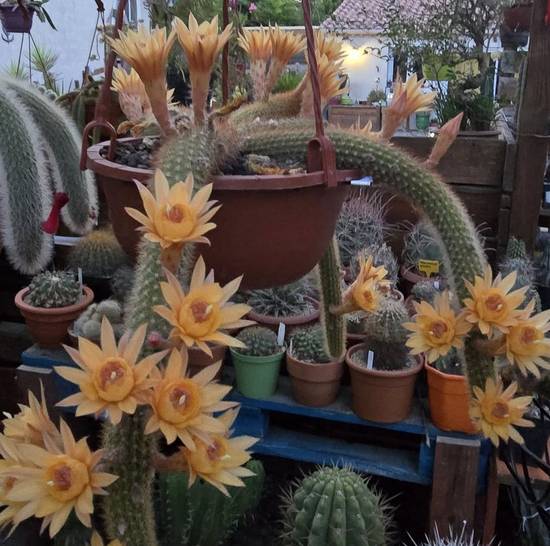
🌺 Flowers: long, tubular, deep red to magenta

📅 Season: late spring to summer

📍 Position: along the sides of mature stems

🧪 Conditions: a well-rooted plant, moderate water stress, and maximum light exposure.
FAQ - Cleistocactus Colademononis

How to encourage flowering of Cleistocactus Colademononis?
Place it in filtered full sun, reduce watering in winter, and use a cactus fertilizer in spring.
Does Cleistocactus Colademononis tolerate cold?
Only if kept perfectly dry. Never let temperatures drop below 5°C to avoid any risk of rot.
What is the best exposure for Cleistocactus Colademononis?
Bright indirect light or gentle morning sun. Avoid midday sun without protection.
What signs indicate excess water in Cleistocactus Colademononis?
Soft base, discoloration, stem collapse. Prefer a substrate with pumice and pozzolana to improve aeration.
How do I know if Cleistocactus Colademononis lacks water?
The stems wrinkle and the hairs lose their shine. Moderate watering is then necessary.
Is Cleistocactus Colademononis suitable for hanging cultivation?
Yes, it is even its ideal presentation. Its trailing stems develop freely.
Which fertilizer should be used for Cleistocactus Colademononis?
A low-nitrogen liquid cactus fertilizer, applied monthly in spring and summer.
Should Cleistocactus Colademononis be pruned?
No, except to remove a diseased stem. It does not appreciate frequent pruning.
Can Cleistocactus Colademononis be easily propagated?
Yes, by stem cuttings. Let the cut dry for several days before replanting in dry substrate.
Is Cleistocactus Colademononis toxic?
No, it is not toxic, but its hairs may irritate the skin if handled repeatedly.