Aloé Ramosissima

Aloé Ramosissima
Aloé Ramosissima
Aloé Ramosissima

Aloé Ramosissima

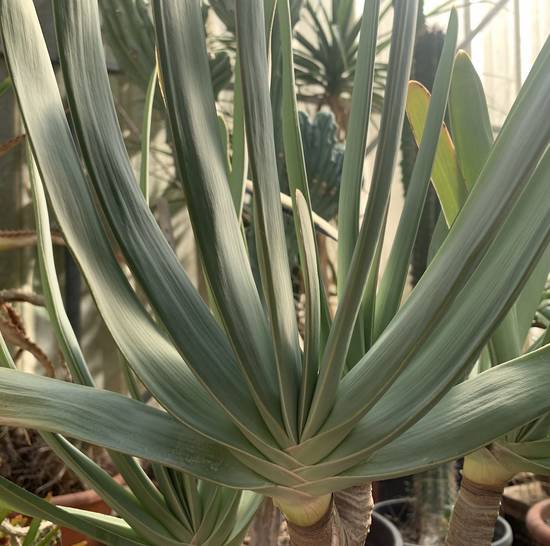
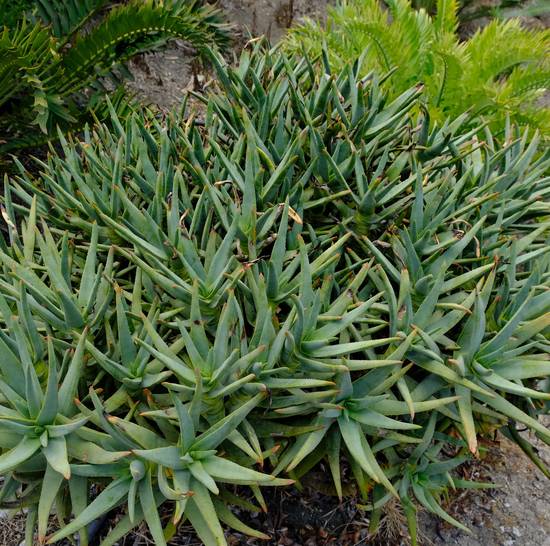
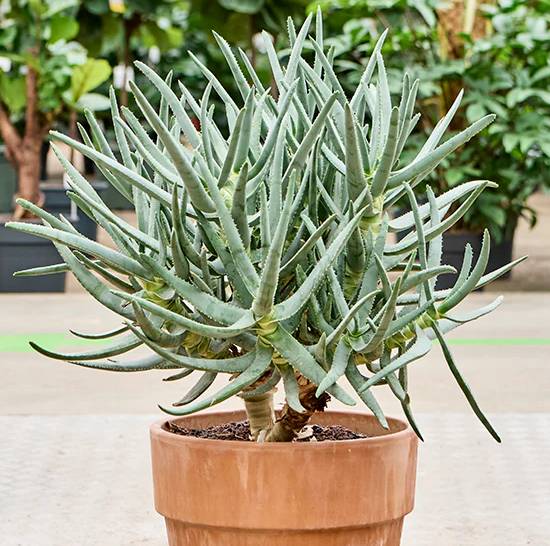
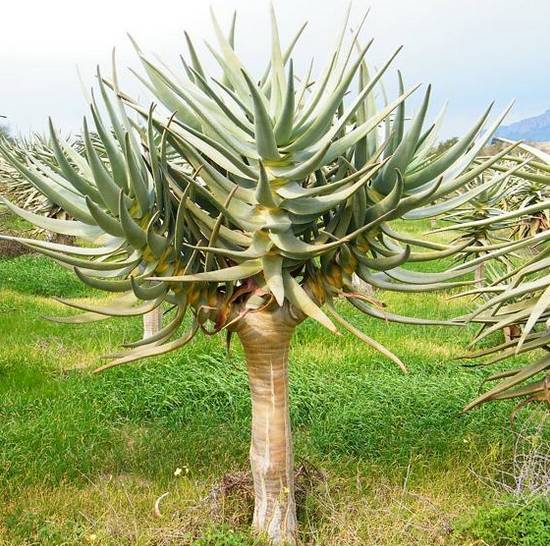
The Aloe Ramosissima is a majestic species from the aloe family, recognized for its tree-like silhouette and trunk in pinkish to grey tones, sometimes striated like tree bark. A relative of the Aloe Dichotoma, it is considered either a subspecies or a distinct species depending on classifications. It forms a true small tree, capable of reaching up to 2 meters in height under good conditions, although it remains more modest in size when grown in a pot.

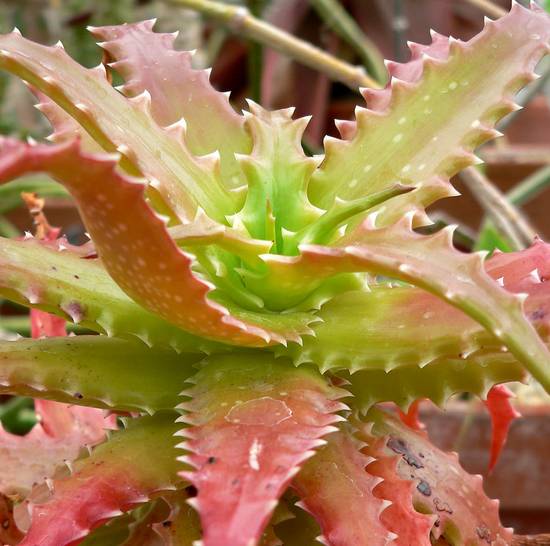
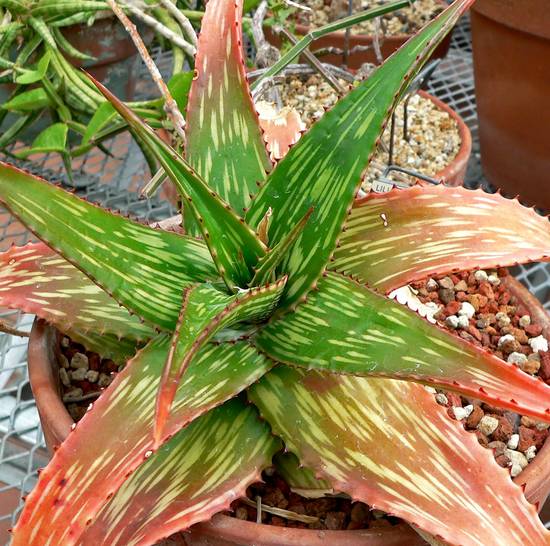
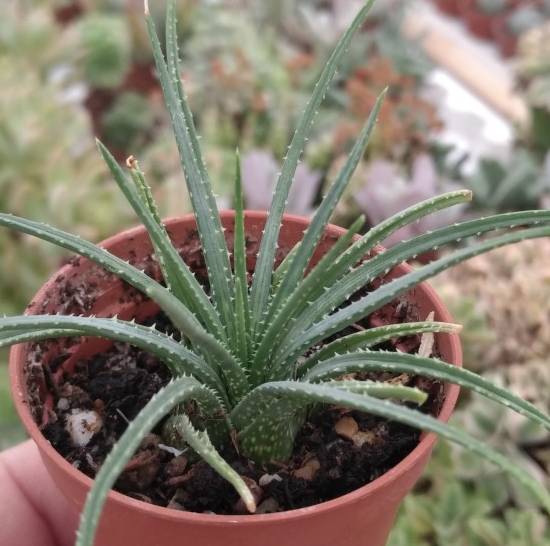
Its name, “ramosissima”, comes from the Latin “ramosus” meaning “very branched”, which perfectly illustrates its bushy habit with multiple branches. Its leaves are pale green to bluish, curved inward and finely toothed along the edges. Under light stress, they take on beautiful pink reflections. The contrast between the rigid, woody stems and the fleshy leaves gives this plant a sculptural, almost architectural appearance.

Highly drought-resistant, Aloe Ramosissima is adapted to arid climates and thrives in full sun, in well-drained growing conditions. It is an ideal plant for lovers of graphic and natural-style succulents, to be grown in a deep pot or in rocky soil in mild climates.

Aloe Ramosissima is native to the desert region of Richtersveld, on the border between Namibia and South Africa. It grows on arid rocky slopes, often exposed to wind and full sun, where it survives with very little water throughout the year.
Proper exposure is essential to obtain vigorous growth and beautiful coloration in Aloe Ramosissima.

🌞 Outdoors : Provide full sun, at least 6 to 8 hours per day.

🌤️ Indoors : Place it near a well-exposed window, as it does not tolerate prolonged shade.
Like all tree aloes, Aloe Ramosissima prefers spaced but deep watering.

💧 Spring - Summer : Water generously, but only when the substrate is completely dry.

❄️ Autumn - Winter : Limit watering to once a month, or stop completely if the plant is in vegetative rest.
Aloe Ramosissima appreciates warm and dry climates but also tolerates cooler temperatures.

🌡️ Ideal : Between 20 °C and 30 °C.

❄️ Minimum tolerated : Down to -2 °C for short periods if kept dry, but it is better to protect it from frost.
A well-draining substrate is essential for growing Aloe Ramosissima.

🪨 Use a mix composed of succulent substrate enriched with 30% perlite and 20% pozzolana. This mix guarantees optimal drainage and prevents any risk of root rot.
Aloe Ramosissima produces spectacular flowering if conditions are met.

🌸 Period : Between late winter and early spring.

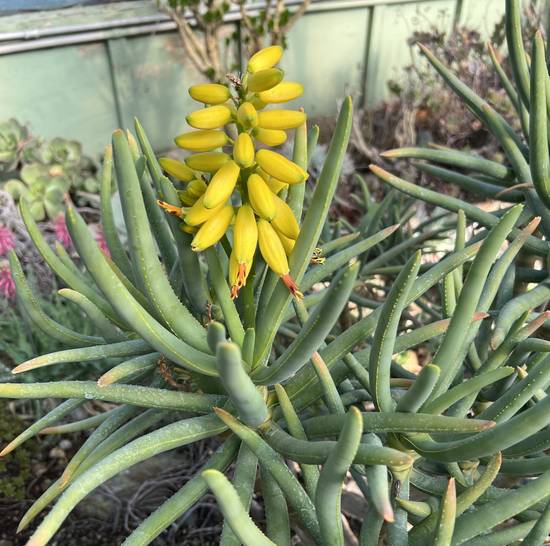
🎨 Appearance : Upright flower stalks adorned with numerous bright yellow tubular flowers, highly attractive to pollinating insects.

💡 In pots, flowering is less frequent but possible if the plant is mature, well exposed to sun and moderately watered.
FAQ - Aloé Ramosissima

What type of substrate is best suited for Aloe Ramosissima?
For successful cultivation, use a very well-draining mix: succulent substrate with perlite and pumice to promote proper water drainage.
How should Aloe Ramosissima be watered properly?
Water only when the soil is dry. In summer, watering every two to three weeks is sufficient. In winter, drastically reduce watering to prevent rot.
Does Aloe Ramosissima tolerate frost?
It can tolerate light frost down to -2°C if the soil is dry. However, it is best grown in a pot so it can be brought indoors in colder regions.
What is the ideal exposure for Aloe Ramosissima?
Full sun exposure is necessary. It is an arid-climate plant that requires intense light to grow well and maintain a compact shape.
Can Aloe Ramosissima live indoors?
Yes, but it must be placed in a very bright location. A sunroom or a south-facing window is ideal.
Does Aloe Ramosissima produce flowers?
Yes, it blooms at maturity, especially outdoors. Its bright yellow flowers appear in late winter or spring.
Can Aloe Ramosissima be pruned?
You can remove dead or poorly positioned branches to maintain a nice shape. Pruning can sometimes stimulate branching.
Should Aloe Ramosissima be fertilized?
Yes, applying a cactus fertilizer in spring and summer promotes growth and flowering.
How fast does Aloe Ramosissima grow?
Its growth is slow, especially in pots. It takes several years to form a branched trunk. Good light slightly accelerates development.
How can you tell if Aloe Ramosissima is overwatered or underwatered?
If the leaves become soft or translucent, it is probably overwatered. When thirsty, they shrink and become very thin. Always observe the substrate to adjust watering.