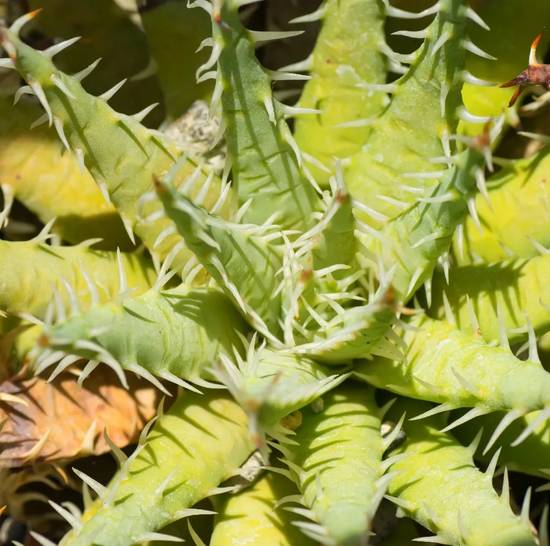
Aloé Erinacea

Aloé Erinacea
Aloé Erinacea
Aloé Erinacea

Aloé Erinacea

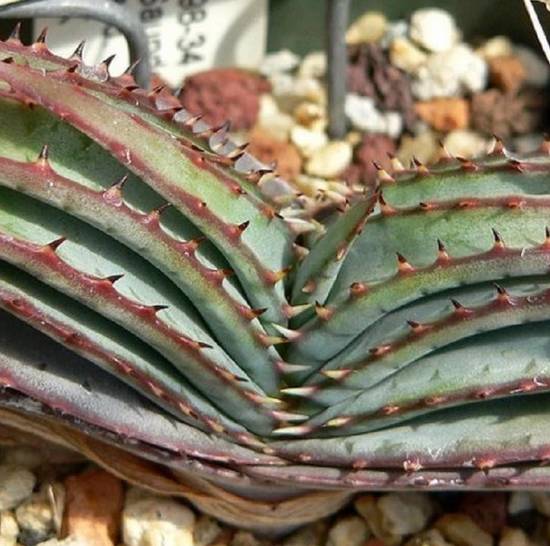
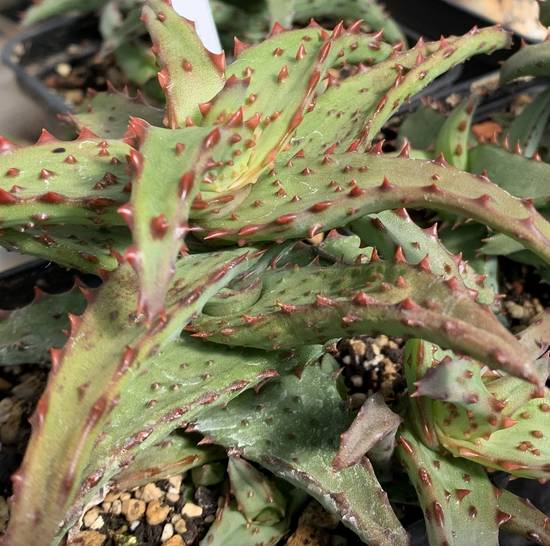
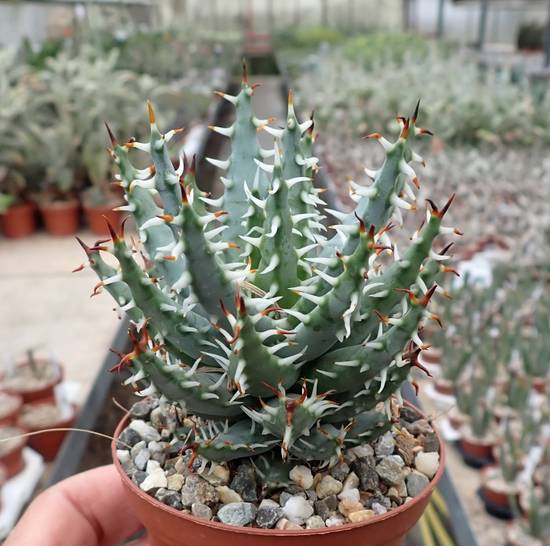
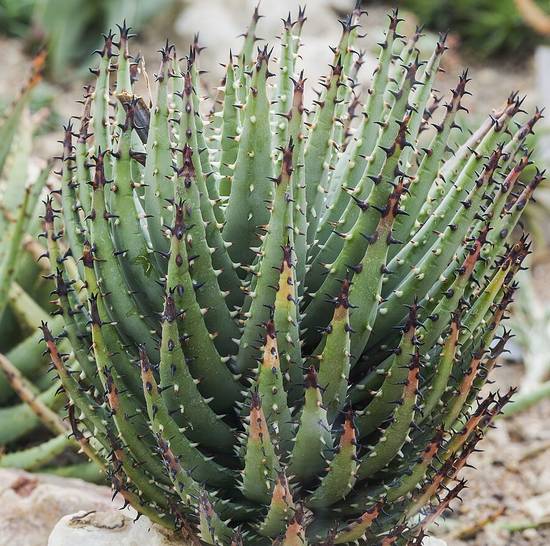
The Aloe Erinacea is a fascinating and rare succulent, often sought after for its wild and graphic appearance. This species stands out with its compact silhouette formed by dense rosettes composed of blue-green fleshy leaves with a rough texture, edged with well-defined cream-white spines. When young, it can resemble a plant sea urchin, with its outward-curving spines giving it a fiercely defensive look.

Over time, Aloe Erinacea may produce offsets, forming tight and picturesque clusters. Its growth is slow, but its longevity and elegance make it a centerpiece for any exotic succulent enthusiast. Adapted to dry and rocky climates, it is highly drought-resistant and has a root system well suited to pot cultivation.

Its primitive and sculptural appearance makes it a plant of choice for mineral gardens, rockeries, or arid arrangements. It is also appreciated in pots on a very bright windowsill or in a warm greenhouse to reveal the subtlety of its silvery tones.

Aloe Erinacea is native to Namibia, where it grows in arid and stony areas, often on north-facing slopes bathed in sunlight and swept by dry winds. This extreme biotope explains its exceptional resistance and its need for maximum drainage.
Provide maximum light for Aloe Erinacea to promote its compact form and beautiful bluish color.

🌞 Outdoors : Full sun exposure, except during extreme heat when light shading may be beneficial.

🌤️ Indoors : Prefer a south-facing window, without filtering curtains, to ensure at least 6 hours of direct light per day.
Aloe Erinacea hates excess water and prefers temporary dryness to persistent moisture.

💧 Warm season : Water approximately every 20 days, after the substrate is completely dry.

❄️ Cold season : In winter, stop watering completely if the temperature drops below 10 °C.
Resilient and robust, Aloe Erinacea can endure relatively extreme conditions.

🌡️ Optimal range : 18 to 30 °C.

❄️ Tolerance threshold : Down to 0 °C if the soil is perfectly dry, but it is preferable to bring it indoors from 5 °C to avoid any risk.
Drainage is an absolute necessity for Aloe Erinacea, otherwise its roots may quickly rot.

🪨 Ideal mix : 50% succulent substrate, 25% perlite and 25% pozzolana. This mix guarantees excellent aeration and water drainage.
Although discreet, the flowering of Aloe Erinacea is surprisingly elegant.

🌸 Period : In spring or very early summer.

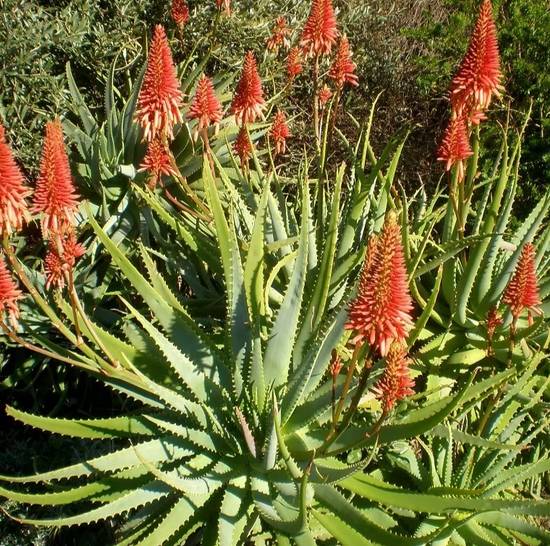
🎨 Flowers : Tubular, yellow to pale orange, borne on slender but upright flower stalks.

💡 Note : Flowering is rare in pots, but it may occur on well-grown adult specimens exposed to full sun.
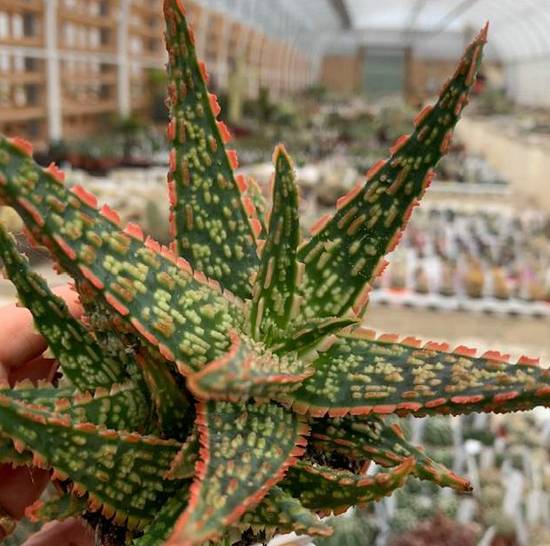
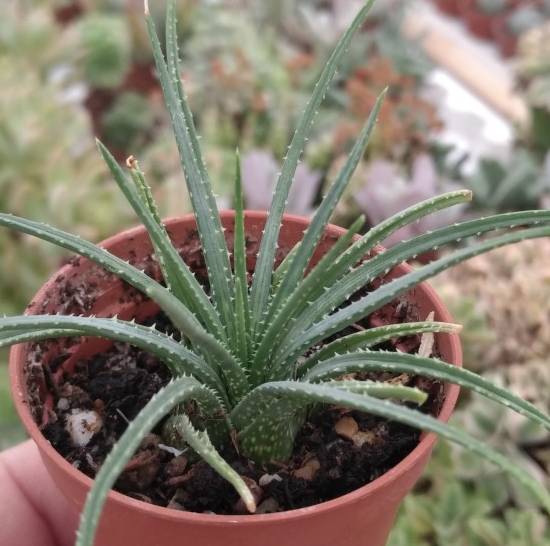
FAQ - Aloé Erinacea

What is the ideal exposure for Aloe Erinacea?
Aloe Erinacea requires very intense light. Place it in full sun or behind a south-facing window. Low exposure slows growth and dulls its color.
How should Aloe Erinacea be watered properly?
Water only when the substrate is completely dry. In summer, this may mean watering every 2 to 3 weeks. In winter, stop watering if temperatures are low.
What type of substrate is suitable for Aloe Erinacea?
Use a very well-draining mix with cactus substrate, perlite, and pumice. This mimics its natural conditions.
Can Aloe Erinacea be fertilized?
Yes, moderate fertilization in spring and summer with a succulent fertilizer is beneficial. Once per month is sufficient.
Does Aloe Erinacea tolerate cold temperatures?
It can tolerate short periods around 0°C if kept dry, but it is advisable to bring it indoors once temperatures reach 5°C to avoid damage.
How can you recognize overwatering in Aloe Erinacea?
Soft, translucent leaves or a browning base often indicate overwatering. Stop watering and check drainage.
Can Aloe Erinacea be easily propagated?
Propagation is possible through offsets, but they take time to appear. Remove them carefully and let them dry before replanting.
What is the mature size of Aloe Erinacea?
It remains compact, forming rosettes 10 to 20 cm in diameter, with offsets creating a dense cushion at maturity.
Can Aloe Erinacea live indoors?
Yes, provided it is placed in full sun and in a very dry environment. A bright sunroom is ideal.
When does Aloe Erinacea bloom?
It blooms in spring, but flowering is rare in pots. The plant must be well established, mature, and well exposed.