Aloe Dichotoma
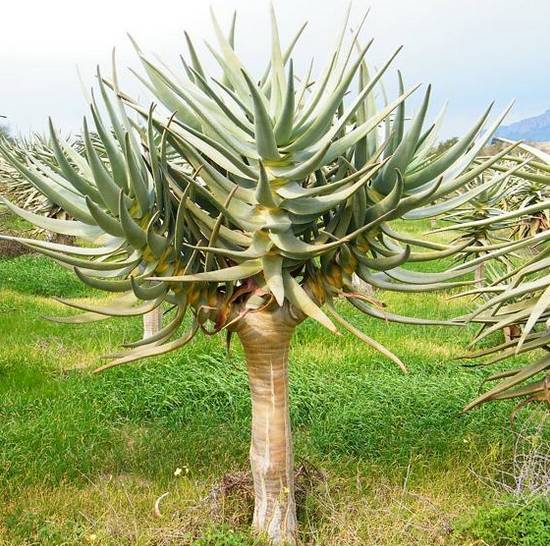
The Aloe dichotoma, also known as the quiver tree, is one of the most fascinating succulent plants of the arid world. Native to southern Africa, it is considered an emblem of the desert landscapes of Namibia and South Africa. It is not a cactus, but a tree aloe, with slow growth but a spectacular habit.
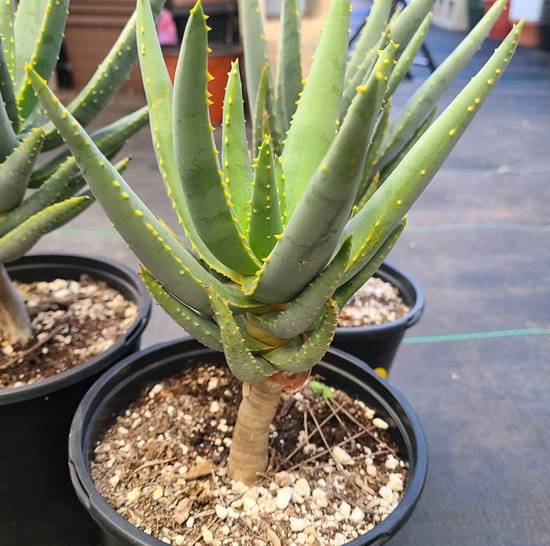
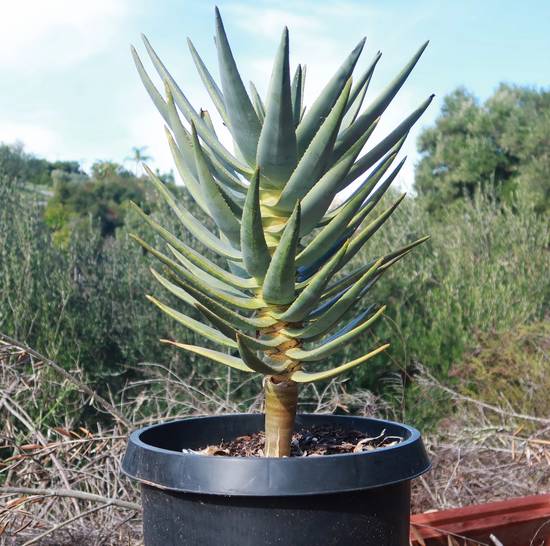
Its name “dichotoma” comes from the dichotomous division of its branches: at each bifurcation, two new shoots form, creating a remarkable symmetrical crown. Its trunk, often silvery and smooth, becomes cracked with age like the bark of a miniature baobab, while its rigid blue-grey leaves rise toward the sky.
In cultivation, it slowly reaches 1 to 2 meters, but can exceed 7 meters in its natural habitat. Its sculptural silhouette makes it a collector’s plant, particularly suited to rock gardens, patios, or dry greenhouses.
This extreme adaptation makes it highly drought-resistant, but sensitive to stagnant moisture.
🌞 Ideal exposure: full sun
🕶️ In summer: acclimate gradually if moved outdoors
🪟 Indoors: place near a south-facing window or under a grow light.
🌱 Spring/summer: water every 15 to 20 days, once the substrate is completely dry.
🍂 Winter: very rare or no watering if temperatures are low.
⚠️ Avoid: automatic watering or misting.
🌡️ Growth temperature: between 20 and 35°C
❄️ Minimum tolerated: down to 0°C when dry, occasionally
🏠 In winter: protect from moisture if temperatures drop below 5°C.
🪨 Ideal mix: 40% cactus soil, 30% pumice, 30% pozzolana.
💡 Tip: slightly raise the plant collar during repotting to reduce the risk of rot.
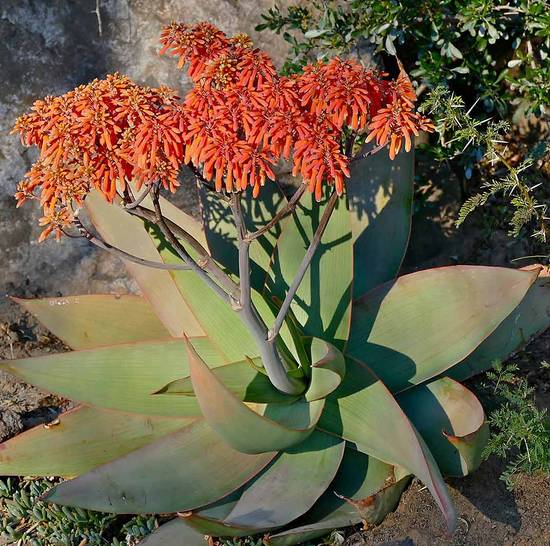
🌼 Flowers: tubular, bright yellow
📅 Period: late winter to early spring
📍 Location: at the top of mature stems, in dense panicles
🧪 Conditions: mature plant, intense sun, very limited winter watering.