Aloe Aculeata
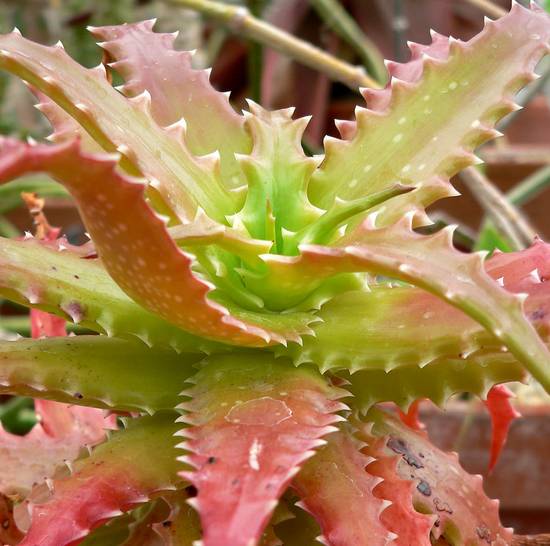
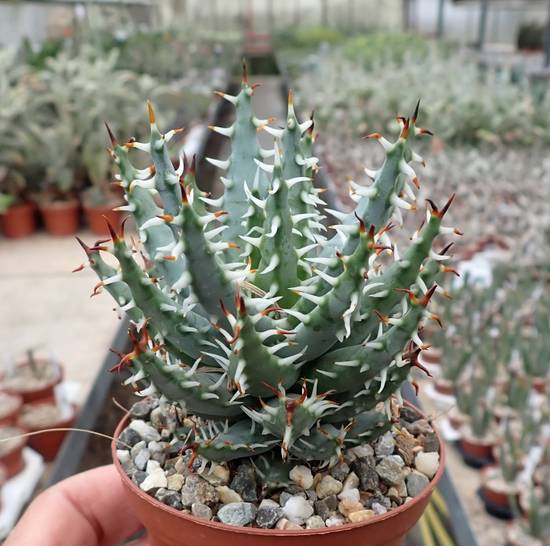
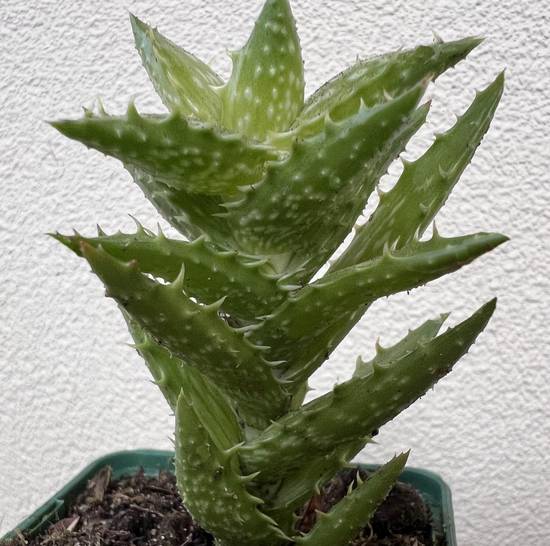
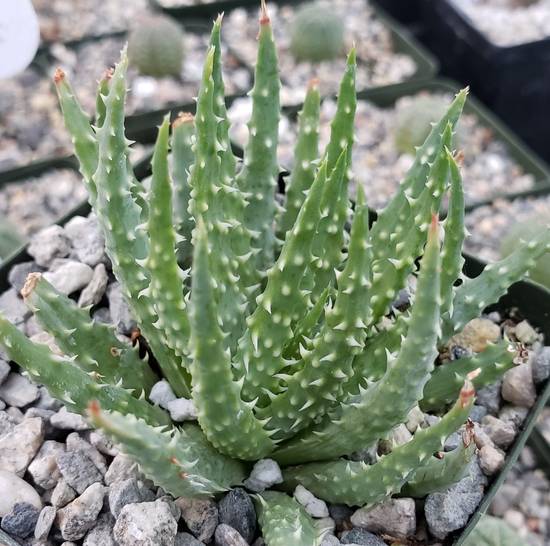
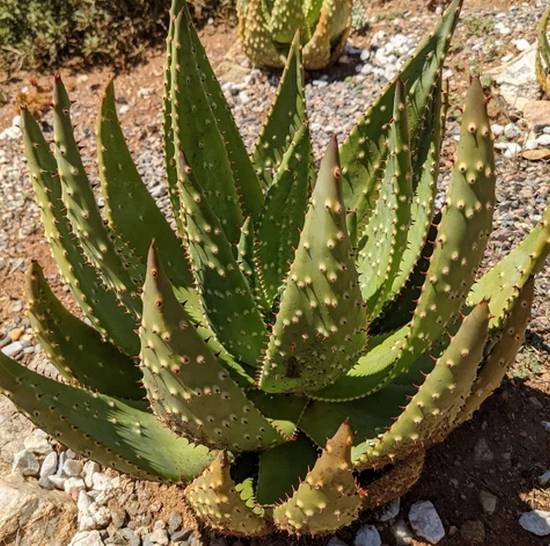
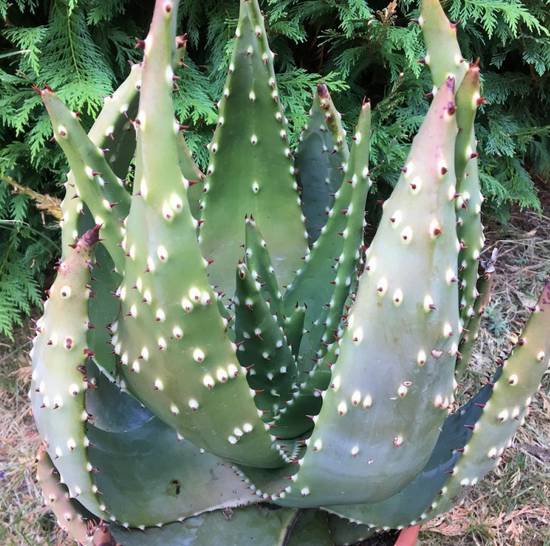
The Aloe Aculeata is a succulent plant native to southern Africa, known for its fleshy leaves covered with rigid spines. Unlike its well-known cousin, Aloe Vera, this wild species displays a more rugged, almost prehistoric appearance, making it a striking centerpiece in any succulent collection.
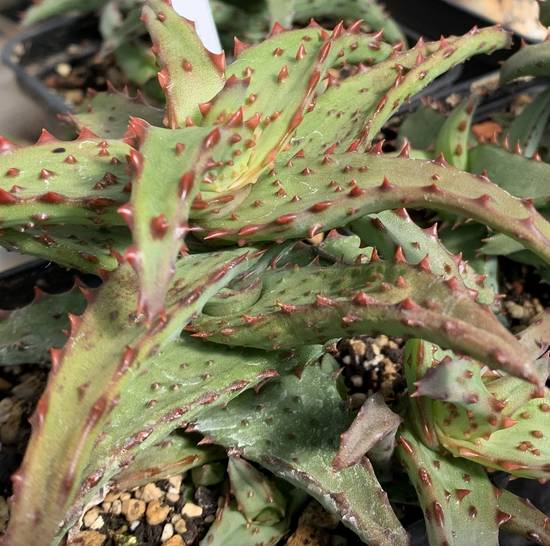
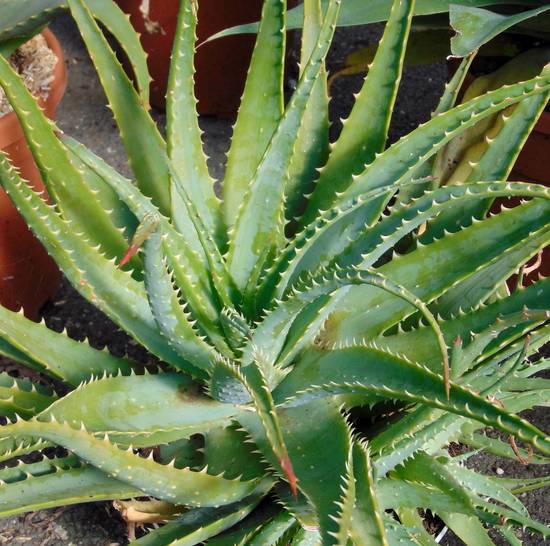
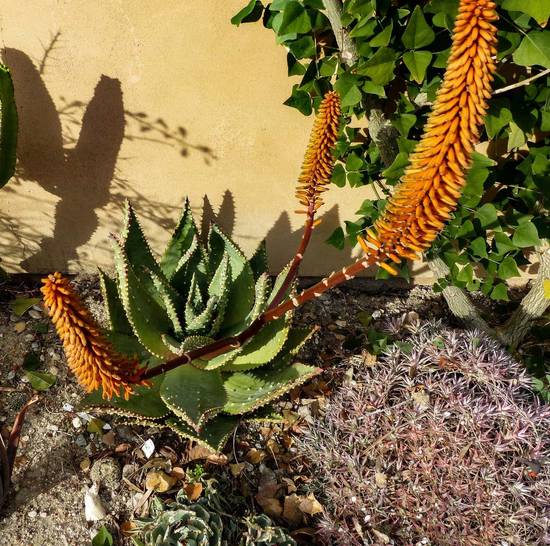
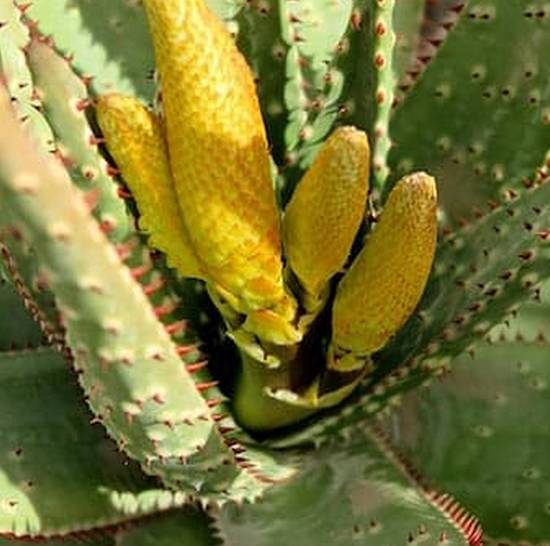
With its tight rosettes of deep green or slightly bluish leaves, the Aloe Aculeata creates a strong visual contrast thanks to its orange to brown spines lining the leaf margins. It can reach 40 to 60 cm in diameter and, with age, produces a spectacular flower stalk bearing tubular orange to yellow flowers that attract pollinators and admiration.
The Aloe Aculeata is native to the semi-arid regions of Zimbabwe, South Africa, and Mozambique. It grows on rocky soils, often in open plains or sunny slopes, in a hot and dry climate.
Its thick leaves and deep root system allow it to store water and withstand long periods of drought. It is an extremely tolerant species that adapts well to container cultivation or open ground in temperate regions.
Its thick leaves and deep root system allow it to store water and withstand long periods of drought. It is an extremely tolerant species that adapts well to container cultivation or open ground in temperate regions.
To ensure optimal growth of your Aloe Aculeata, sun exposure is essential:
🌞 Direct sunlight: This plant loves light. Provide at least 6 hours of direct sunlight per day.
🌤️ Partial shade tolerated: In hot climates, light shade during the hottest hours can prevent sunburn.
🌞 Direct sunlight: This plant loves light. Provide at least 6 hours of direct sunlight per day.
🌤️ Partial shade tolerated: In hot climates, light shade during the hottest hours can prevent sunburn.
The Aloe Aculeata follows the same watering regime as most succulents:
🌱 Spring – Summer: Water once the soil is completely dry. Generally, watering every 2 to 3 weeks is sufficient.
🍂 Autumn – Winter: Greatly reduce watering, or stop entirely if the plant is dormant.
⚠️ Vital tip: Always use a well-draining 1 to prevent excess moisture, its worst enemy.
🌱 Spring – Summer: Water once the soil is completely dry. Generally, watering every 2 to 3 weeks is sufficient.
🍂 Autumn – Winter: Greatly reduce watering, or stop entirely if the plant is dormant.
⚠️ Vital tip: Always use a well-draining 1 to prevent excess moisture, its worst enemy.
🌞 Optimal temperature: Between 20°C and 30°C, with excellent air circulation.
❄️ Minimum temperature: Down to 0°C if the soil is dry, but it is best to bring the plant indoors once temperatures drop below 5°C.
❄️ Minimum temperature: Down to 0°C if the soil is dry, but it is best to bring the plant indoors once temperatures drop below 5°C.
The secret to a healthy Aloe Aculeata? Drainage.
🪨 Ideal substrate: 1/3 1, 1/3 1, 1/3 1.
🪨 Ideal substrate: 1/3 1, 1/3 1, 1/3 1.
The Aloe Aculeata may flower in spring or summer if conditions are right:
🎨 Flower color: tubular orange or bright yellow
📏 Flower stalk height: up to 80 cm
🐝 Pollinators: attracts bees and nectar-feeding birds
🎨 Flower color: tubular orange or bright yellow
📏 Flower stalk height: up to 80 cm
🐝 Pollinators: attracts bees and nectar-feeding birds
FAQ - Aloe Aculeata
How to recognize excess water in Aloe Aculeata?
The leaves become soft, black, or translucent, especially at the base. This indicates excessive moisture. Use a draining substrate with pumice and pozzolana.
How do I know if Aloe Aculeata needs water?
The leaves shrivel slightly. This water stress is easily reversible. Adopt spaced but regular watering.
What does the ideal substrate for Aloe Aculeata contain?
Cactus potting soil enriched with 50% pumice or pozzolana.
Can Aloe Aculeata be fertilized?
Yes, with a liquid fertilizer specifically for cacti, once a month in spring and summer.
Is Aloe Aculeata resistant to cold?
Down to 0°C in dry soil, but it is recommended to bring it indoors from 5°C. It is sensitive to cold.
Can Aloe Aculeata be grown indoors?
Yes, provided it receives maximum light, such as in a veranda or in front of a south-facing window.
Does Aloe Aculeata bloom easily?
Flowering occurs in mature and well-exposed plants, with slight water stress at the end of winter to stimulate blooming.
Why does my Aloe Aculeata have spots?
Often related to sunburn or excess water. Monitor exposure and ensure good drainage.
Can Aloe Aculeata be propagated?
Yes, by detaching offsets at the base or by sowing. Spring is ideal for these operations.
What is the growth rate of Aloe Aculeata?
Moderate. Under ideal conditions, a beautiful rosette can form in 2 to 3 years.