Aloe Humilis
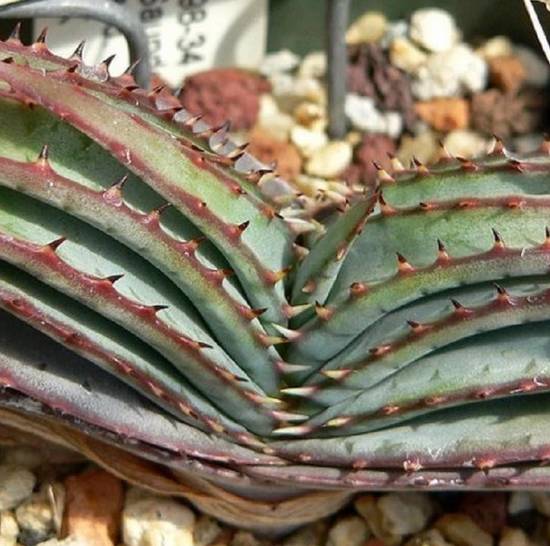
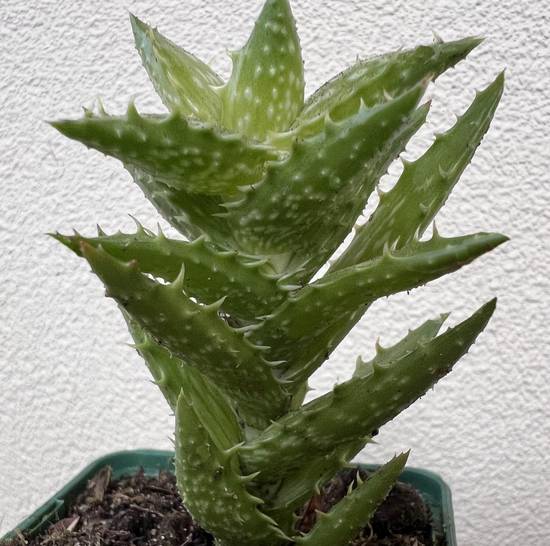
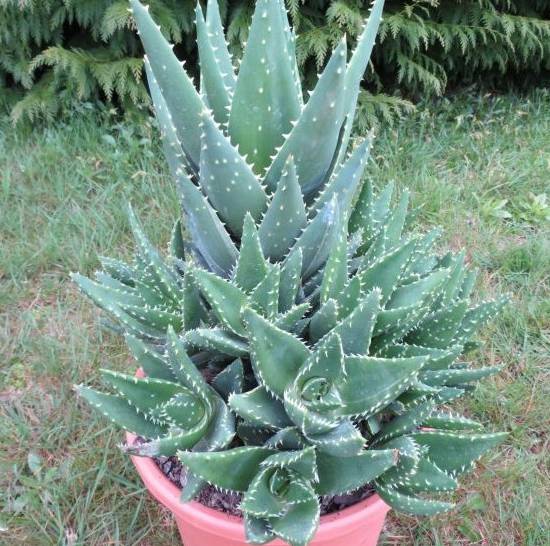
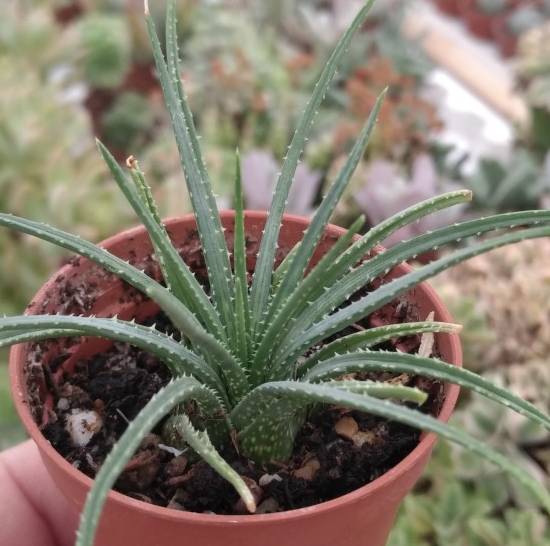
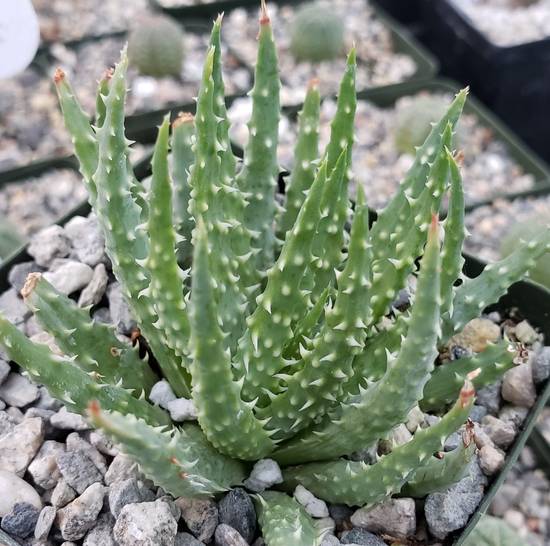
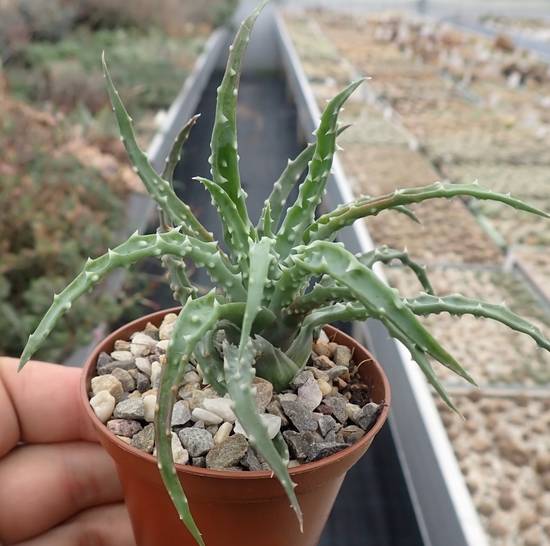
Aloe Humilis is a fascinating succulent, highly appreciated for its distinctive appearance and ornamental qualities. It forms small, compact rosettes of fleshy, slender and elongated leaves, bluish-green to sometimes slightly silvery. Each leaf is covered with small, soft white teeth, giving it a bristly and textured, almost heraldic look. This combination of soft color and pronounced relief makes Aloe Humilis an original plant that immediately catches the eye.
Its size remains modest, rarely exceeding 20 cm in height, making it ideal for small pots, succulent arrangements and rock gardens. In good conditions, it quickly produces offsets at the base, creating small, dense decorative clumps. This colony-forming growth adds extra charm, as it develops into a bluish-green carpet reminiscent of a cushion of toothed leaves.
In its natural habitat, it is often found nestled in rock crevices or sandy soils, benefiting from perfect drainage. These origins explain its drought tolerance and its need for a very well-draining substrate in home cultivation.
🌞 Direct sun: 5 to 6 hours of light per day enhance the bluish color of its foliage.
🌤️ Filtered sun: In summer, during heatwaves, light shade protects its leaves from possible burns.
⚠️ Lack of light: Too much shade causes stretching and loss of color.
🌱 Growing period: In spring and summer, water every 10 to 15 days, only when the substrate is dry.
🍂 Rest period: In autumn and winter, reduce watering to a strict minimum, or even stop in cool areas.
⚡ Tip: Absolutely avoid standing water. Add perlite or pozzolana to improve drainage.
🌞 Ideal: Between 18 °C and 28 °C, perfect for indoor conditions.
❄️ Minimum: Can tolerate down to 5 °C briefly, but must never be exposed to frost.
🏠 Wintering: Below 10 °C, bring it into a bright and cool room.
🪨 Recommended substrate: A special cactus mix or succulent potting soil is perfectly suitable.
💡 Tip: Mix with 40% perlite or pozzolana for optimal drainage.
🌸 Season: Spring or early summer.
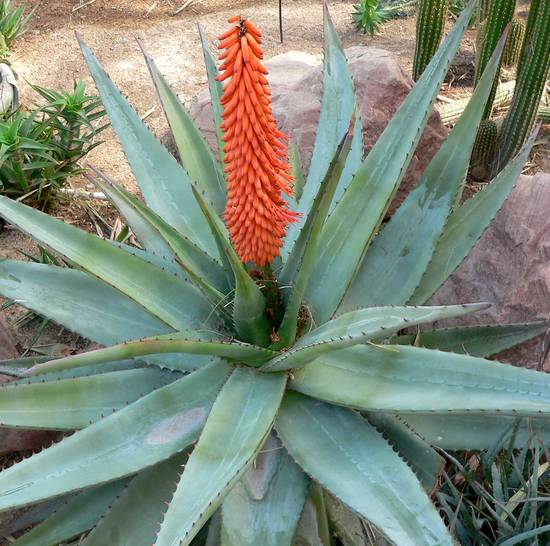
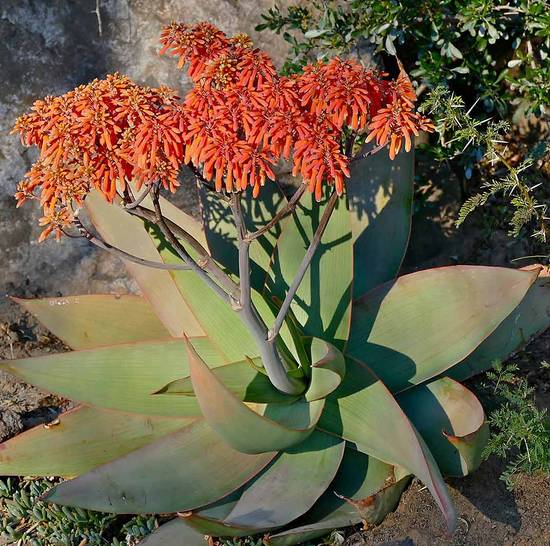
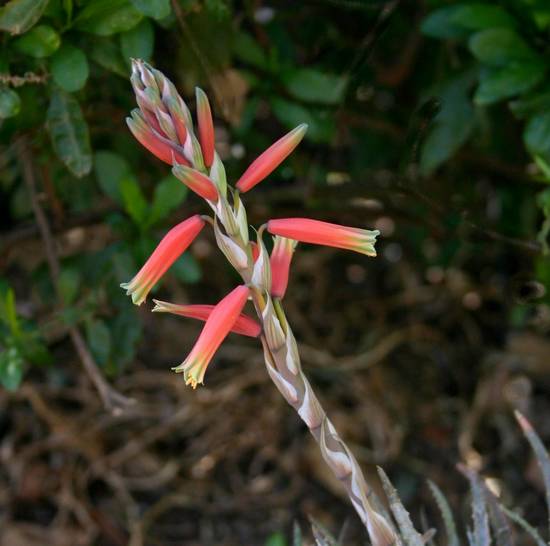
🎨 Colors: Bright red to orange tubular flowers grouped in clusters.
🕑 Duration: Several weeks, if the plant has benefited from a dry winter rest.
💡 Tip: To encourage flowering, provide a suitable succulent fertilizer in spring.