Aloé Bowiea

Aloé Bowiea
Aloé Bowiea
Aloé Bowiea

Aloé Bowiea

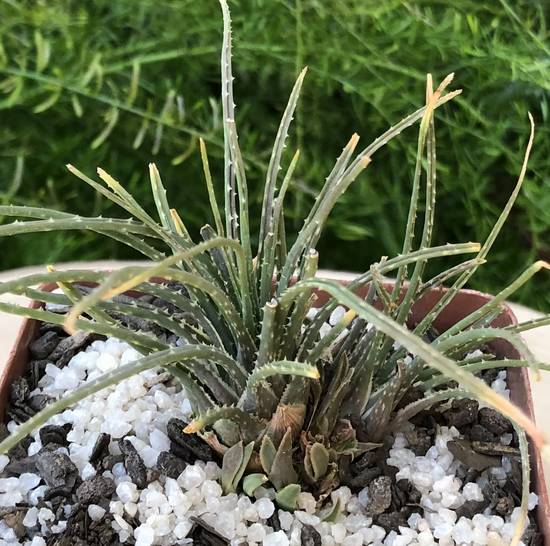
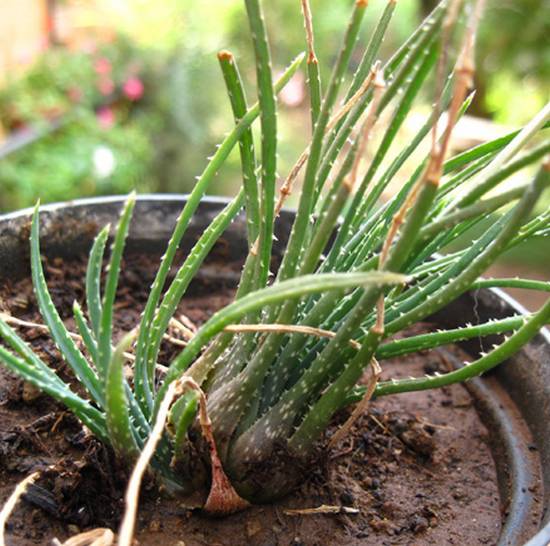
The Aloe Bowiea is an enigmatic and fascinating plant, attracting attention both for its appearance and its rarity. Despite its name, it is not a “true” aloe in the botanical sense, but it shares certain traits, notably its hardiness and its ability to adapt to dry environments. This specimen, sometimes called “Sea Onion,” develops from a large spherical bulb, from which emerge thin climbing stems that twist like green filaments.

This singular plant is highly appreciated by collectors of unusual succulents. It can be grown in hanging baskets, on trellises, or allowed to cascade freely. The plant enters dormancy during summer if exposed to excessive heat or drought, which enhances its mysterious character. Its appearance evokes vegetal hair or a tangle of algae, giving it a look that is both wild and ornamental.

With minimal care, Aloe Bowiea quickly becomes a conversation piece in any rare plant collection, while remaining remarkably resilient.

Aloe Bowiea is native to rocky and semi-desert areas of southern Africa, particularly in South Africa, Botswana and Namibia. It naturally grows in stony soils, often between rocks, where it receives maximum light while benefiting from some protection from its surroundings.
This original plant appreciates bright light for harmonious growth.

🌞 Outdoors : Place it in partial shade or gentle morning sun, especially in hot regions.

🏡 Indoors : Prefer exposure near a well-oriented window (south or east), but avoid harsh direct sun that could dry out its fine stems.
Aloe Bowiea follows a growth and rest cycle, requiring adapted watering.

💧 During growth (autumn / winter / spring) : Water moderately when the substrate is thoroughly dry.

🌵 During dormancy (summer) : Greatly reduce watering, or stop completely if the stems dry out and the plant appears inactive.
This plant tolerates varied growing conditions as long as it is protected from frost.

🌡️ Ideal temperature : Between 18 °C and 25 °C.

❄️ Minimum tolerated : Down to 5 °C if the soil is perfectly dry.
To develop properly, Aloe Bowiea requires a particularly well-draining substrate.

🪨 Prefer a mix of cactus substrate with a good percentage of perlite to lighten the soil, completed with pozzolana to strengthen the mineral structure of the mix.
Aloe Bowiea sometimes offers discreet but elegant flowering.

🌸 Period : Generally in spring or late winter.

🎨 Appearance : Small greenish star-shaped flowers borne on slender floral stems.

🔍 Note : Flowering is not consistent and depends on the plant’s age and regularity of cycles.
FAQ - Aloé Bowiea

What substrate should be used for Aloe Bowiea?
For successful cultivation, choose a succulent substrate enriched with perlite and pumice to ensure optimal drainage.
How should Aloe Bowiea be watered in a pot?
During its growing period, water only when the soil is completely dry. In summer, greatly limit watering as the plant often enters dormancy.
Where should Aloe Bowiea be placed in the house?
Place it near a bright window, facing south or east. However, avoid direct sun during the hottest hours of the day.
Can Aloe Bowiea be grown in a hanging pot?
Yes, it is an excellent way to showcase its thin, trailing stems. A hanging pot also promotes better drainage.
What temperatures can Aloe Bowiea tolerate?
It tolerates cool temperatures as long as it stays dry. However, avoid prolonged exposure below 5°C.
How does Aloe Bowiea behave in summer?
It often enters dormancy in summer. Its stems may partially dry out. Do not worry—this is normal. Reduce or stop watering.
Does Aloe Bowiea bloom indoors?
Yes, small green flowers may appear indoors, but this requires a well-established plant, a proper rest cycle, and sufficient light.
Should fertilizer be used for Aloe Bowiea?
Yes, during the growing season you may apply a mild fertilizer for succulents once a month.
Can Aloe Bowiea be propagated?
Propagation is mainly done by seed. Occasionally, the main bulb produces small offsets that can be separated.
How can overwatering or underwatering be avoided with Aloe Bowiea?
Excess water causes the bulb to rot. Lack of water during active growth slows development. Touch the soil—if it is still moist, wait before watering.