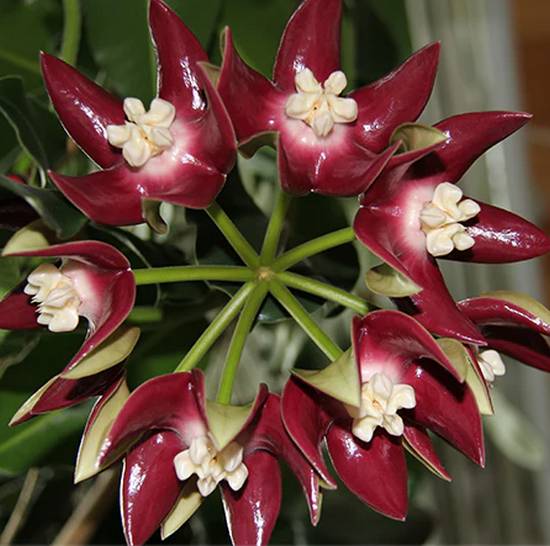
Hoya Imperialis

Hoya Imperialis
Hoya Imperialis
Hoya Imperialis

Hoya Imperialis

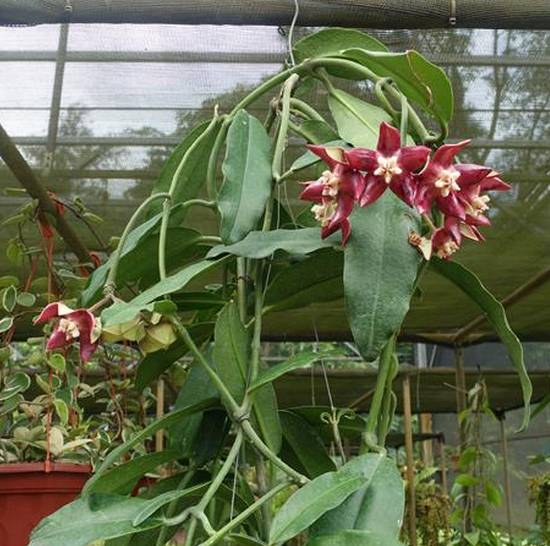
The Hoya Imperialis is a spectacular and majestic species of Hoya, renowned for producing some of the largest and most impressive flowers of the genus. Native to the humid tropical forests of Southeast Asia, this climbing plant captivates experienced collectors with its imposing size, generous foliage, and above all its royal inflorescences, which truly honor its name. Unlike more compact Hoyas, the Hoya Imperialis develops long vigorous stems that can climb several meters when properly trained or supported.

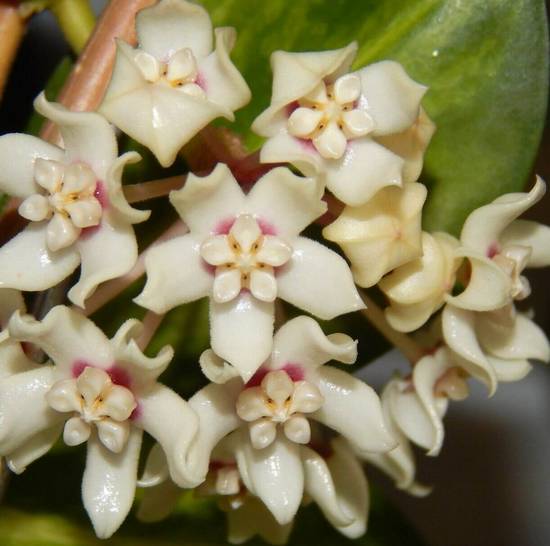
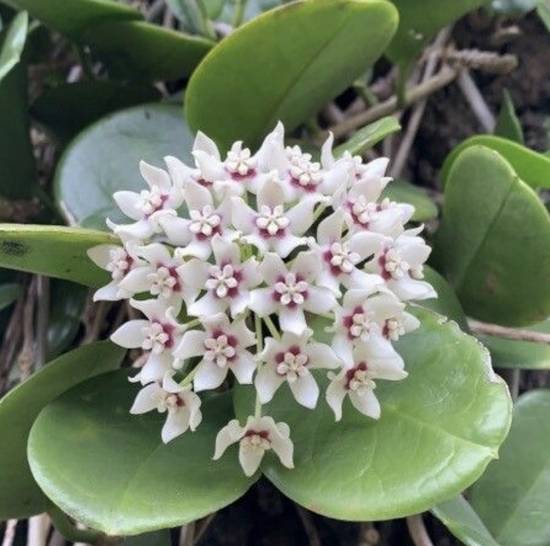
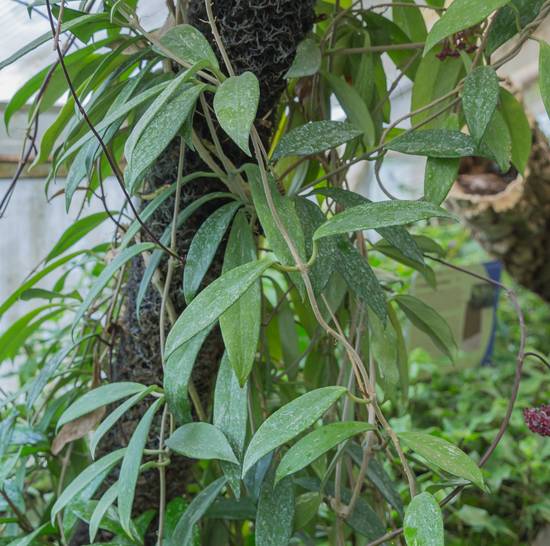
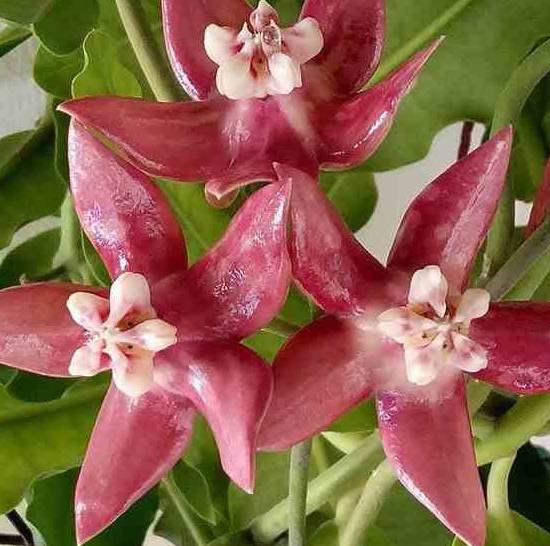
Its foliage is another of its assets. The leaves, long and broad, display a slightly glossy texture and a pronounced central vein, giving the plant an elegant and dense appearance. But it is especially its flowering that makes it so coveted: the flowers, grouped in dense umbels, can measure up to 10 cm in diameter. Deep red, burgundy, or sometimes purplish pink depending on the cultivars, they release a powerful and enchanting fragrance, particularly intense in the evening.

The Hoya Imperialis naturally grows in the low and humid tropical forests of Southeast Asia, often as an epiphyte on large trees. It thrives in warm, shaded yet bright areas, with high humidity throughout the year. This origin explains its need for warmth, soft light, and a humid atmosphere.
As with most Hoyas, light plays an essential role in stimulating growth and especially flowering.

🌤️ Bright light without direct sun: near an east-facing window or under filtered skylight

📉 Too little light = few or no flowers

☀️ Direct sun = risk of leaf burn
This tropical species requires regular watering, always well controlled.

🌱 Spring to autumn: keep the substrate slightly moist, without excess

❄️ Winter: reduce watering if temperature drops

⚠️ Avoid stagnant water, as roots are sensitive to rot

Too much or too little water can quickly result in wilted or spotted leaves.
To thrive, the Hoya Imperialis needs warmth and stability.

🌡️ Ideal temperature: between 20°C and 28°C

❄️ Minimum tolerated: 15°C

💨 Avoid cold drafts and sudden temperature changes
It is essential to provide a light, well-draining substrate that can still retain some moisture.

🪨 Ideal: mix of light potting soil, perlite and bark
The flowering of the Hoya Imperialis is a true event, rare but unforgettable.

🌸 Period: generally summer

🎨 Color: deep red, burgundy, sometimes pinkish

🌙 Fragrance: very intense, sweet, especially at night
FAQ - Hoya Imperialis

How often should Hoya Imperialis be watered?
Water regularly in summer once the surface is dry, avoiding standing water. In winter, reduce to once every two weeks.
How can you recognize overwatering or underwatering in Hoya Imperialis?
Soft, wilted leaves may indicate underwatering, while brown or black spots often signal overwatering.
What is the ideal exposure for Hoya Imperialis?
Place it in a bright spot without direct sun, such as near an east or northwest-facing window.
What type of soil should be used for Hoya Imperialis?
Use a well-draining substrate enriched with perlite for better aeration.
Should fertilizer be used for Hoya Imperialis?
Yes, apply a cactus and succulent fertilizer every two weeks during the growing season to encourage blooming.
When does Hoya Imperialis bloom?
It usually blooms in summer on mature stems. The flowers are large, fragrant, and appear in umbels.
Is Hoya Imperialis suitable for hanging pot cultivation?
No, it prefers a sturdy vertical support to climb, such as a trellis or stake.
Can Hoya Imperialis be grown outdoors?
Yes, but only in tropical or mild Mediterranean climates, protected from direct sun and cold.
Does Hoya Imperialis tolerate drafts?
No, it is sensitive to temperature fluctuations and cold drafts.
What products should be used for Hoya Imperialis?
Use a suitable well-draining potting mix and a balanced liquid fertilizer during the growing season.