Euphorbia Fruticosa
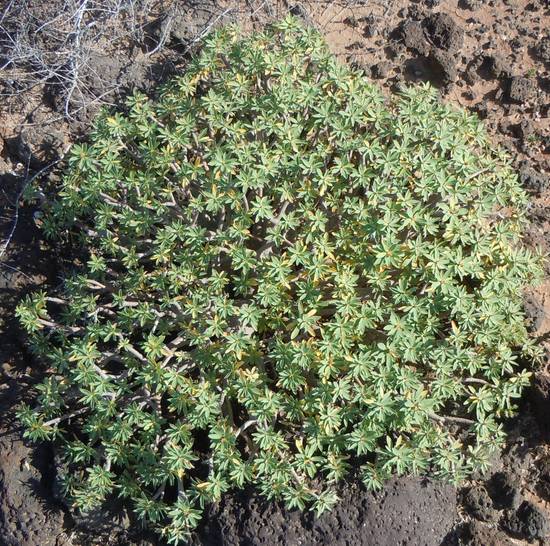
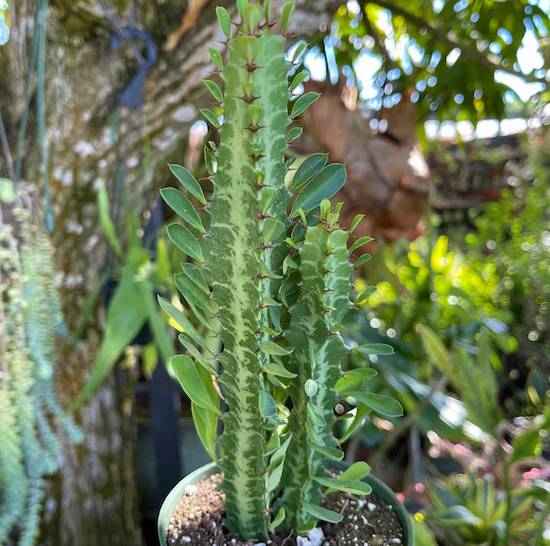
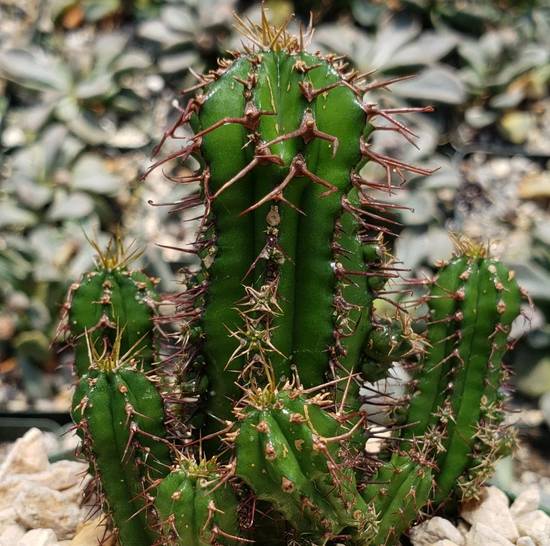
The Euphorbia Fruticosa is a still little-known shrubby succulent that fully deserves the attention of collectors of unusual plants. This euphorbia forms small compact bushes with upright and slender stems that become woody at the base over time. This bushy and branched habit allows it to occupy space while maintaining an elegant and balanced silhouette, ideal for wide pots or well-exposed rock gardens.
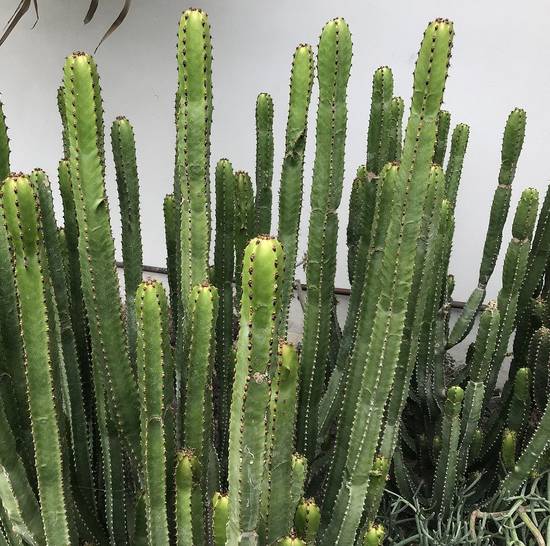
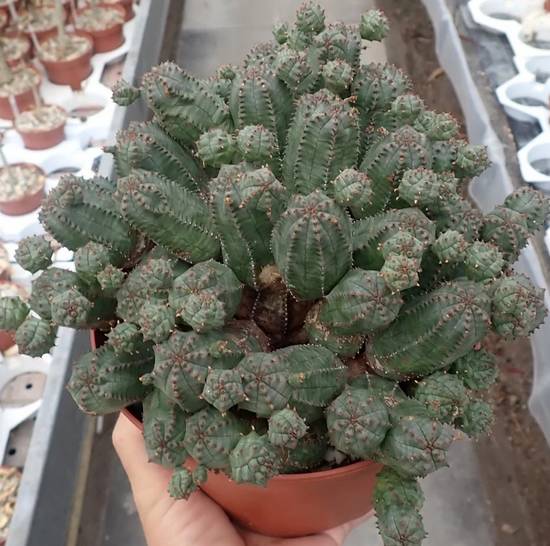
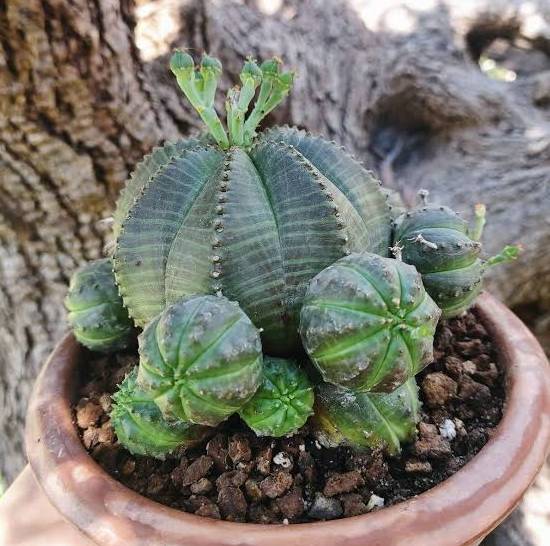
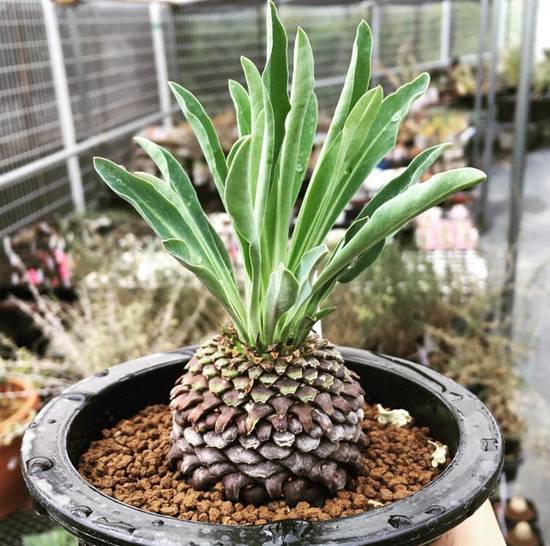
Its light green to bluish-green stems bear tiny ephemeral leaves at the top of the branches, and sometimes a few brown or blackish spines depending on growing conditions. The milky sap, as in all euphorbias, is toxic and irritating, but it is also a formidable defense against herbivores. This small succulent shrub evokes the dry and rocky landscapes of the Mediterranean basin or the Middle East, where it naturally grows.
In cultivation, Euphorbia Fruticosa proves to be robust, undemanding and highly decorative. It adapts equally well to very bright indoor environments and to dry, warm outdoor conditions. Its growth, although slow, allows it to be cultivated in pots long term without becoming invasive.
🌞 Full sun : it must receive at least 5 to 6 hours of direct light each day to maintain a compact habit.
🌤️ Indoors : a south-facing exposure, near a window or under a glass roof, is strongly recommended.
💡 Too little light will cause stem etiolation and a general loss of vigor.
💧 Spring / Summer : watering every 3 weeks is more than enough, allowing the substrate to dry completely between waterings.
🍂 Autumn / Winter : space watering to once a month or suspend it if the temperature is low.
⚠️ As with all euphorbias, excess water is more dangerous than a lack of it.
🌡️ Ideal : between 18 and 28°C during its growing period.
❄️ Limit : it can tolerate temperatures around 5°C occasionally, but does not withstand frost.
🏠 In pots, remember to bring it indoors in winter if you live in a cold region.
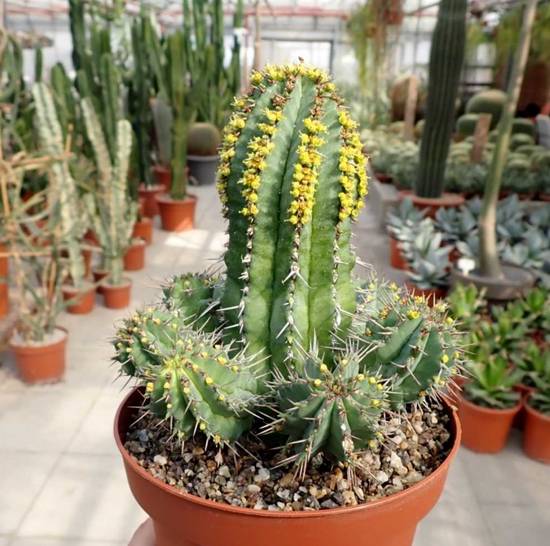
🌸 Flowers : small yellow to green cyathia grouped at the tips of the stems.
📆 Period : often in late spring or early summer, but rarely indoors.
🌼 Tip : good light and slight water stress increase the chances of flowering.