Euphorbia Hamata

Euphorbia Hamata
Euphorbia Hamata
Euphorbia Hamata

Euphorbia Hamata

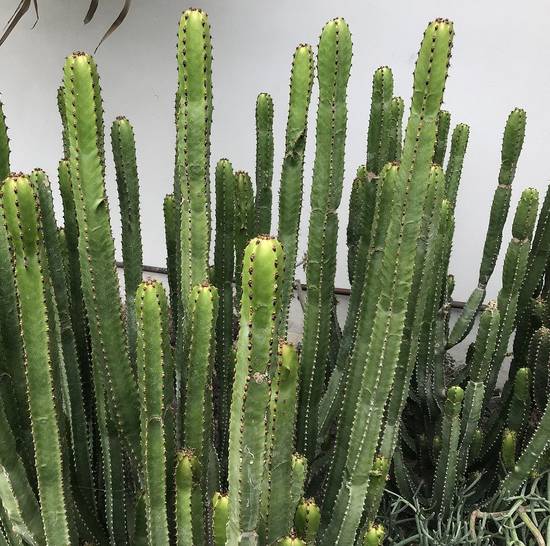
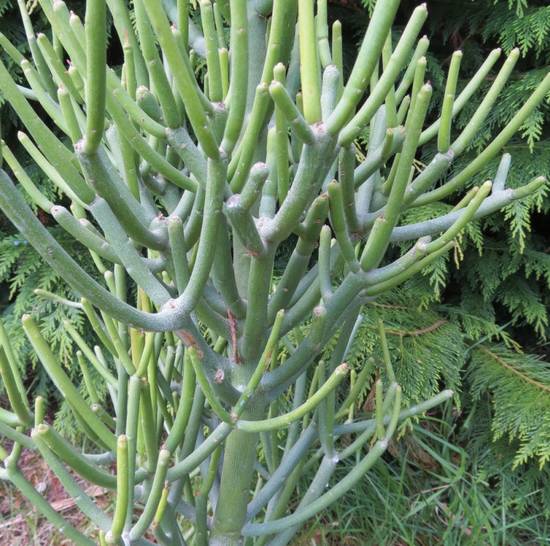
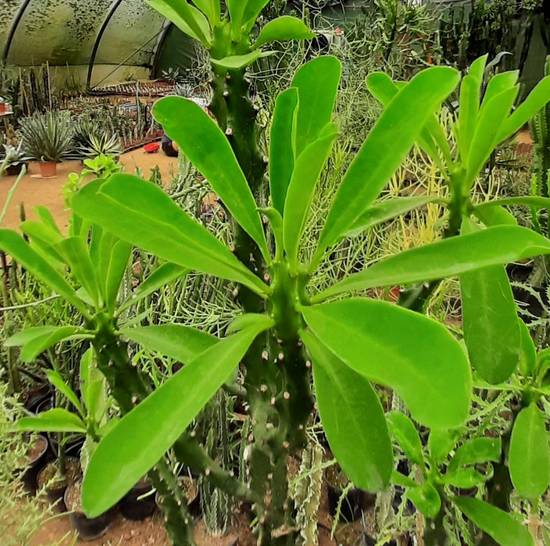
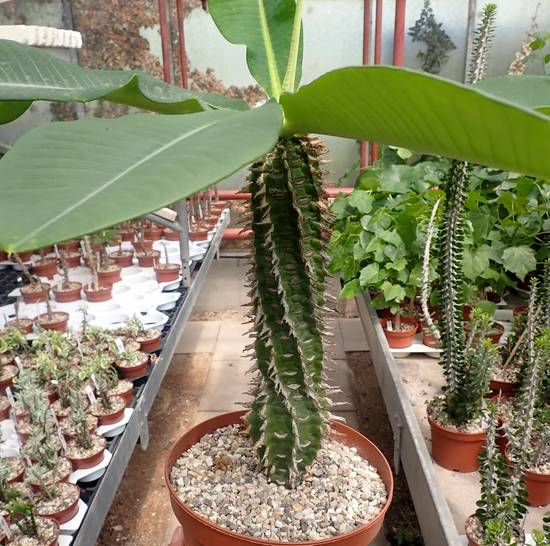
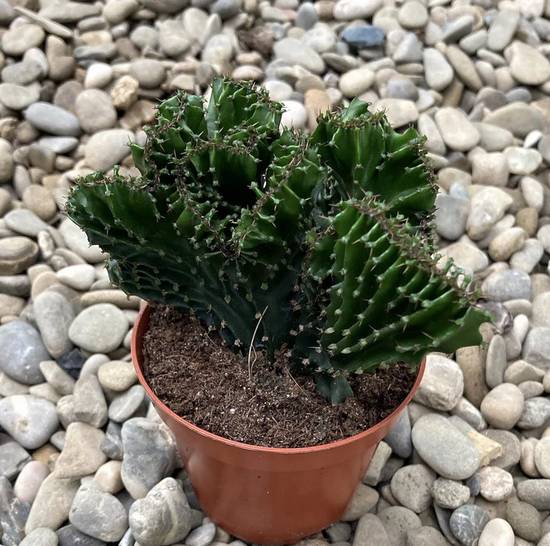
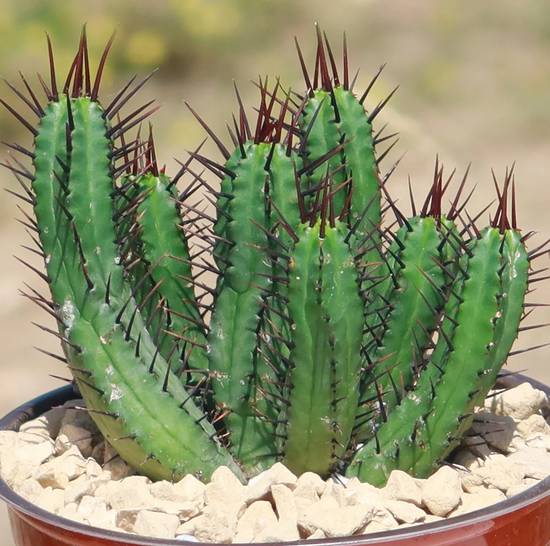
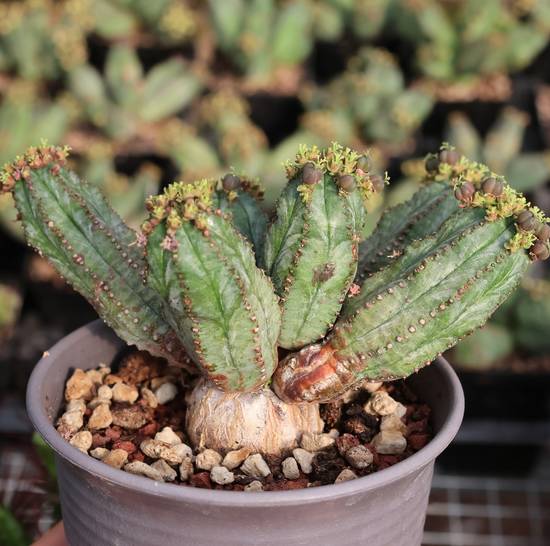
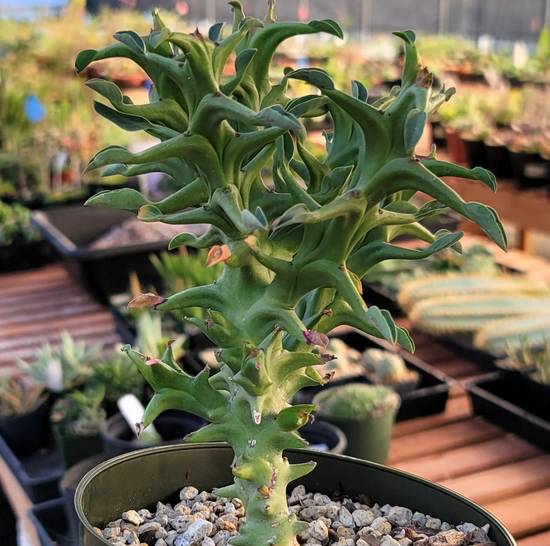
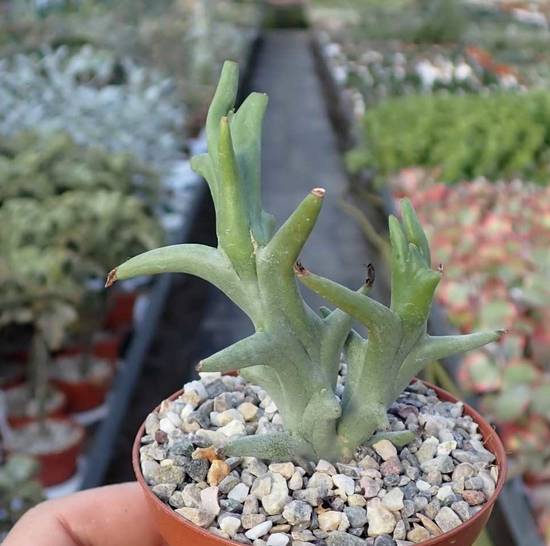
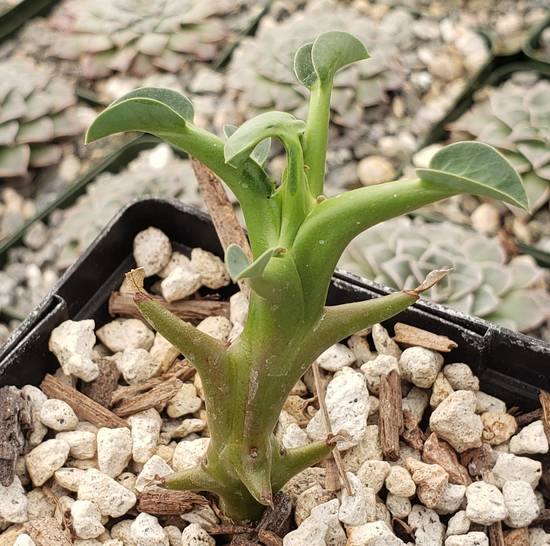
The Euphorbia Hamata is a rare and intriguing succulent plant native to southern Africa, appreciated for its both strange and elegant appearance. This euphorbia forms a low bush composed of thin, slender, highly branched stems intertwined with one another. These cylindrical stems, light green to grey-green, are covered with small protrusions or "spines" that do not prick, giving the plant a tousled or "hatched" look, hence the name "hamata", meaning curved or hooked.

It develops into dense and disorderly clumps that can quickly fill an entire pot, forming a highly graphic plant carpet. Perfect for lovers of atypical-looking plants, the Euphorbia Hamata adapts equally well to container cultivation or dry rock gardens, as long as conditions meet its requirements.

Its growth is relatively fast for a Euphorbia. It is also drought-resistant, making it an ideal candidate for distracted gardeners or those who appreciate low-maintenance plants. Despite its apparent fragility, it is a robust species, well adapted to our bright interiors or verandas.

In its natural habitat, the Euphorbia Hamata grows in rocky areas, arid slopes, and sandy soils of South Africa’s Northern Cape. It benefits from intense sunlight, cool nights, and ultra well-draining soil. It is often associated with other euphorbias and succulent plants such as Crassulas or the Mesembryanthemaceae.
To thrive, the Euphorbia Hamata requires generous light:

🌞 Direct sun: It loves full sun. Place it near a south- or west-facing window.

🌤️ Bright light: It also tolerates strong indirect light, but avoid overly shaded areas that encourage stem etiolation.
Like all Euphorbias, it fears excess water:

💧 Spring/summer: Water every 2 to 3 weeks, only when the substrate is completely dry.

❄️ Winter: Reduce watering to once a month, or not at all if it is in vegetative rest.

⚠️ Excess moisture quickly leads to root or stem rot.
The Euphorbia Hamata enjoys warm climates:

🌡️ Ideal temperatures: between 20 °C and 30 °C.

❄️ Minimum: Occasionally tolerates 5 °C, but not frost. In winter, choose a bright, cool, frost-free room.
🪨 It requires an extremely well-draining substrate:

– Mix a cactus substrate with 50% perlite then add a layer of pumice stone on the surface to prevent stagnant moisture.
The flowering of the Euphorbia Hamata is discreet but charming:

🌼 Flowers: tiny yellow or greenish cyathia appear at the ends of the stems in spring or summer.

🕑 Duration: ephemeral, they last a few days but may follow one another if the plant receives good exposure.

💡 Flowering is a good indicator of the plant’s health.
FAQ - Euphorbia Hamata

What exposure is recommended for Euphorbia Hamata?
Euphorbia Hamata enjoys full sun. Place it near a very bright window or outdoors, provided it is gradually acclimated.
What type of soil is needed for Euphorbia Hamata?
A well-draining cactus substrate mixed with 50% perlite and topped with pumice is ideal to prevent rot.
How often should Euphorbia Hamata be watered?
In summer, water every 2 to 3 weeks. In winter, space watering further apart, or stop completely if it is dormant.
Can Euphorbia Hamata be grown indoors?
Yes, perfectly, provided it is given a very bright location and well-draining substrate.
Why is my Euphorbia Hamata becoming soft?
Overwatering is often the cause. Let the substrate dry completely, reduce watering, and check pot drainage.
Is Euphorbia Hamata toxic?
Like all euphorbias, its sap is irritating. Handle with care and avoid contact with eyes or mouth.
How can Euphorbia Hamata be propagated?
By stem cuttings. Let the cut dry for a few days before replanting in dry substrate.
What is the growth rate of Euphorbia Hamata?
It grows moderately fast, especially in spring and summer. It quickly forms a dense and graphic bush.
Can Euphorbia Hamata be fertilized?
Yes, use a suitable fertilizer once a month during the growing season to stimulate its vigor.
How can you avoid watering mistakes with Euphorbia Hamata?
Always wait until the substrate is completely dry. Use a pot with drainage holes and monitor signs of overwatering (softening, blackening).