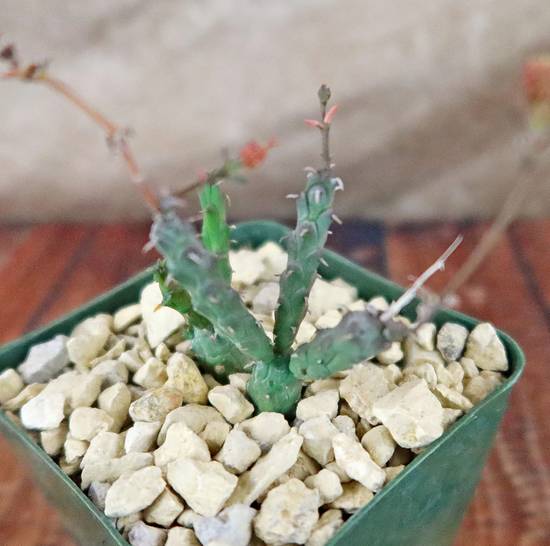
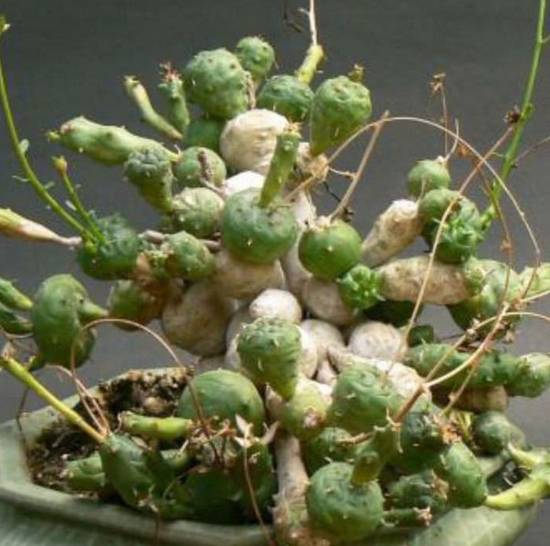
Euphorbia Globosa

Euphorbia Globosa
Euphorbia Globosa
Euphorbia Globosa

Euphorbia Globosa

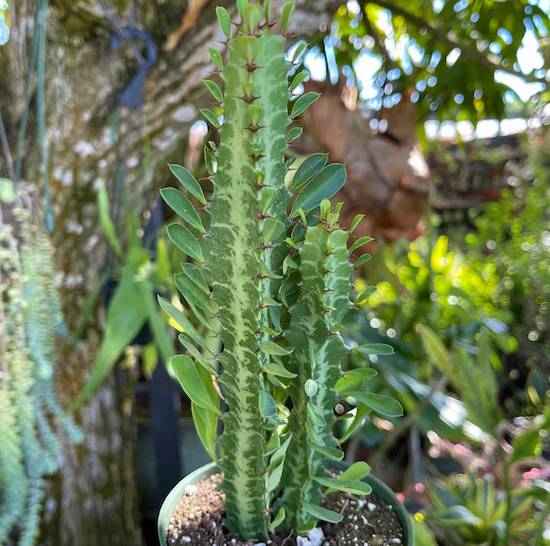
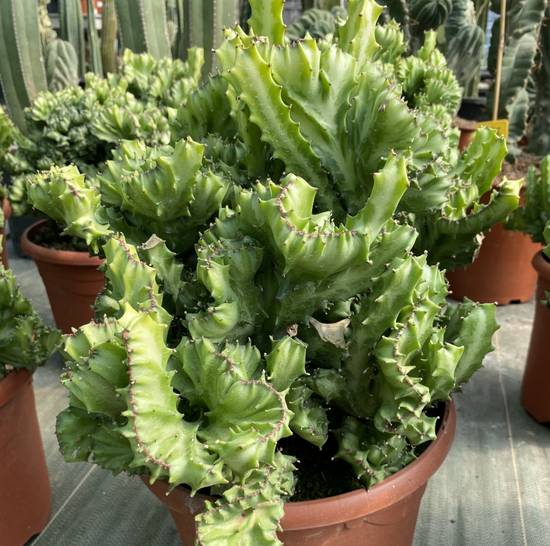
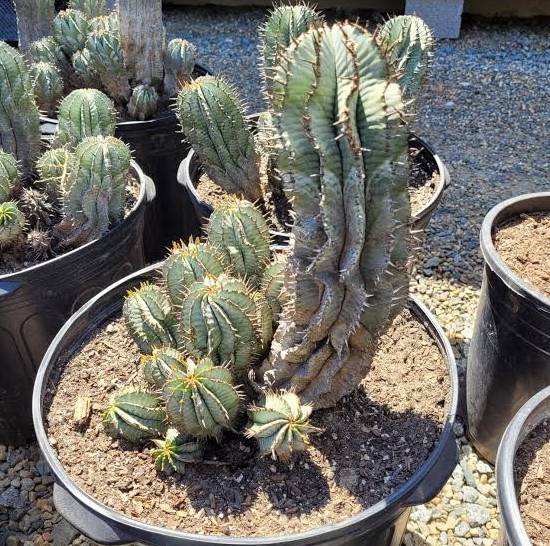
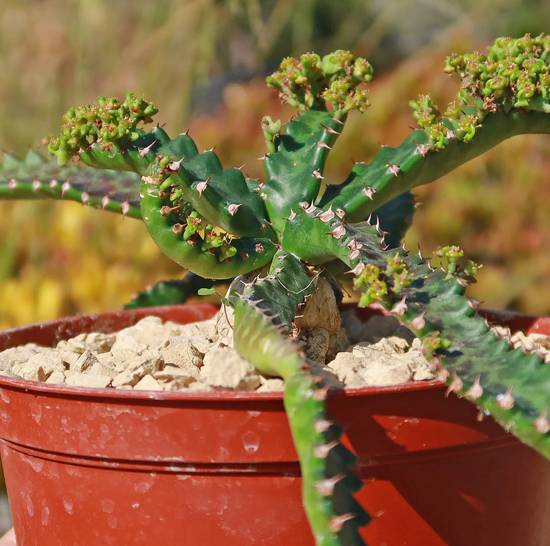
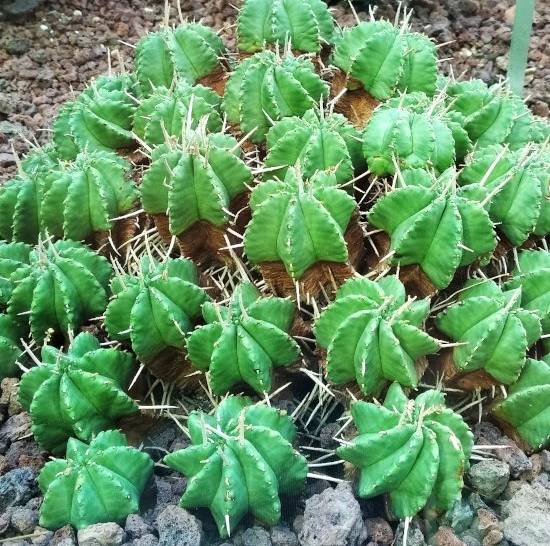
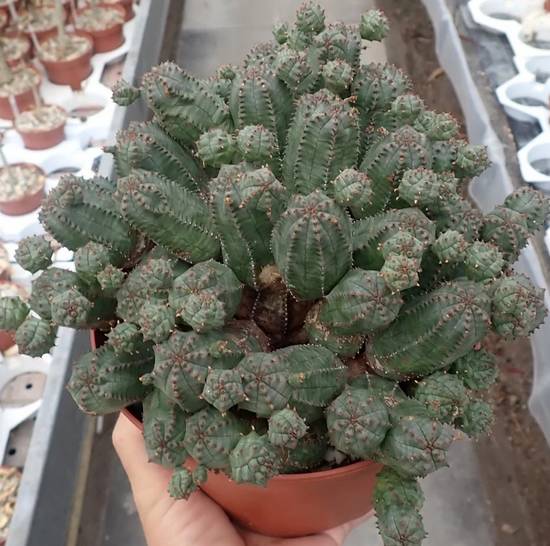
The Euphorbia Globosa is a fascinating succulent species known for its unique spherical shape. It consists of small greyish-green fleshy balls forming a dense, branched structure reminiscent of a natural sculpture. This graphic look makes it very popular among collectors of unusual plants. Unlike many other euphorbias, its “globules” appear almost artificial, which enhances its ornamental appeal.

Its growth is slow but steady, making it a perfect candidate for small spaces or container cultivation. The main stems produce numerous offsets that intertwine around the base, creating a striking and highly original visual effect. In cultivation, this plant is relatively easy to care for as long as its needs for light, warmth, and drainage are respected.

Often confused with other globular species such as Euphorbia Obesa, the Euphorbia Globosa stands out due to its spreading and branched habit, as well as the irregular texture of its segments. An ideal plant to create an “alien”-style garden or simply to add a surprising touch to a bright corner.

This Euphorbia grows in the wild in the arid and rocky areas of southern Africa. It is particularly found in semi-desert zones, where it nestles between stones, benefiting from morning dew moisture and extremely well-draining soil. Its compact shape allows it to minimize water loss and protect itself from extreme temperatures.
The Euphorbia Globosa is a lover of intense light:

🌞 Full sun or very bright light: it must receive 6 to 8 hours of light per day.

🌤️ Indoors: choose a south- or west-facing window. Light that is too weak will make it paler and less dense.
As with all euphorbias, moderation is the golden rule:

💧 Spring/summer: water every 15 to 20 days, when the substrate is completely dry.

❄️ Autumn/winter: drastically reduce watering. Once a month, or not at all if the plant is kept cool.

⚠️ Excess water is the main cause of death. Beware of saucers filled with water and pots without drainage holes.
The Euphorbia Globosa loves warmth:

🌡️ Ideal temperatures: between 22 and 30 °C.

❄️ Minimum tolerated: 5 °C. Below this, move it indoors to a bright, frost-free room.
🪨 Good drainage is essential to prevent any rot:

– Use a cactus substrate then mix it with 40 to 50% perlite for maximum drainage and cover with pumice stone to limit surface moisture.
The Euphorbia Globosa is not prized for its flowers, but they do exist:

🌼 Small yellow/green cyathia: very discreet, barely visible between the segments.

📅 Period: generally in spring, but only on mature plants with good exposure.

💡 Flowering often goes unnoticed, but it remains a lovely sign of good health.
FAQ - Euphorbia Globosa

What type of soil is needed for Euphorbia Globosa?
Euphorbia Globosa requires very well-draining soil. A special cactus substrate mixed with 50% perlite and topped with pumice is ideal.
How should Euphorbia Globosa be properly watered?
Water moderately in summer, allowing the substrate to dry out completely. In winter, watering once a month is sufficient, or none at all if it is dormant.
Where should Euphorbia Globosa be placed in a house?
Near a very bright window, facing south or west. Direct light is essential to preserve its compact shape.
Why is my Euphorbia Globosa becoming soft?
This is often a sign of excess moisture or poorly draining substrate. Reduce watering and check the pot drainage.
What is the growth rate of Euphorbia Globosa?
Its growth is slow, but it can produce many offsets that eventually form a small spreading spherical cushion.
Should Euphorbia Globosa be fertilized?
Yes, use a fertilizer specially formulated for succulents once a month during the active growing period.
Can Euphorbia Globosa flower indoors?
Yes, but rarely. Intense light and a mature plant are necessary to see its small cyathia appear.
What pests can attack Euphorbia Globosa?
It can be prone to mealybugs. Regularly inspect the base of the segments and treat with a mild insecticide if necessary.
How can Euphorbia Globosa be propagated?
By taking offsets as cuttings. Let the wound dry for several days before replanting in dry substrate.
How can you tell if Euphorbia Globosa needs water?
If its segments wrinkle slightly without becoming soft, it is a sign that it needs water. Water moderately and it will quickly regain its shape.