Echinocactus Macdowellii
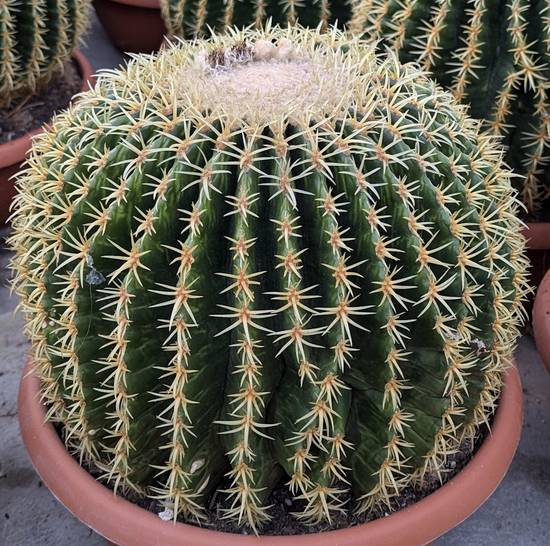
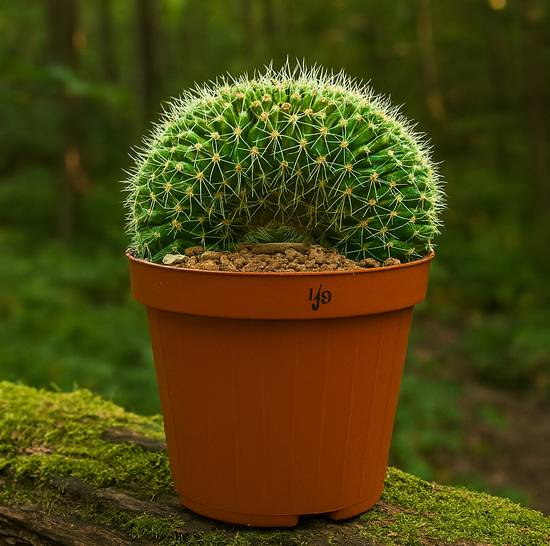
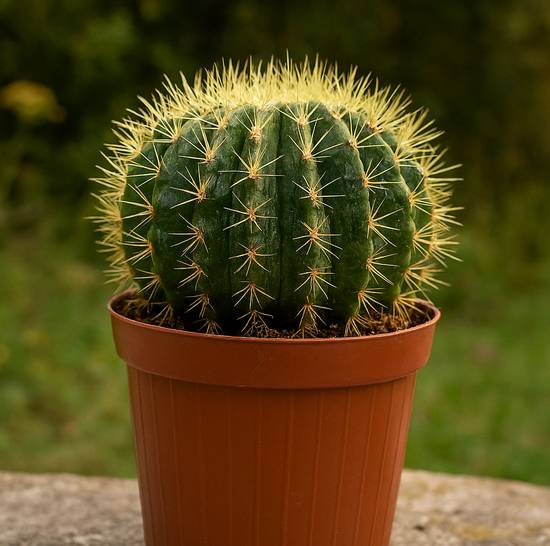
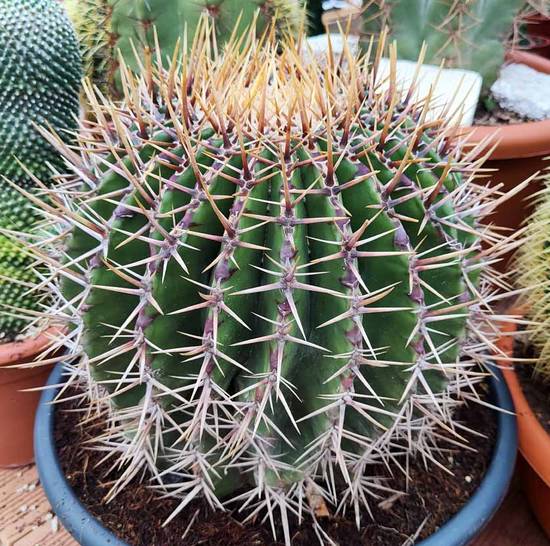
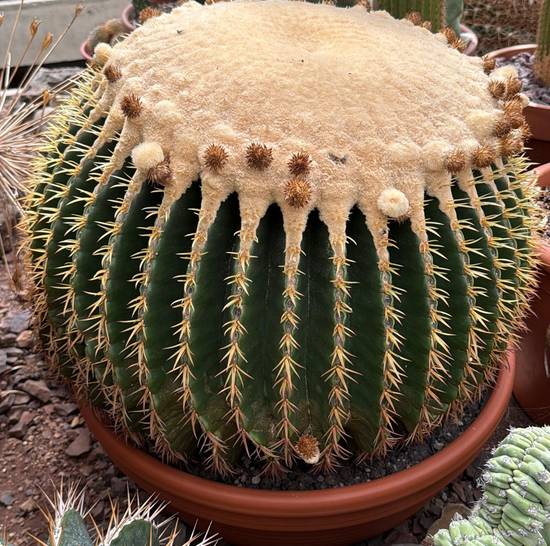
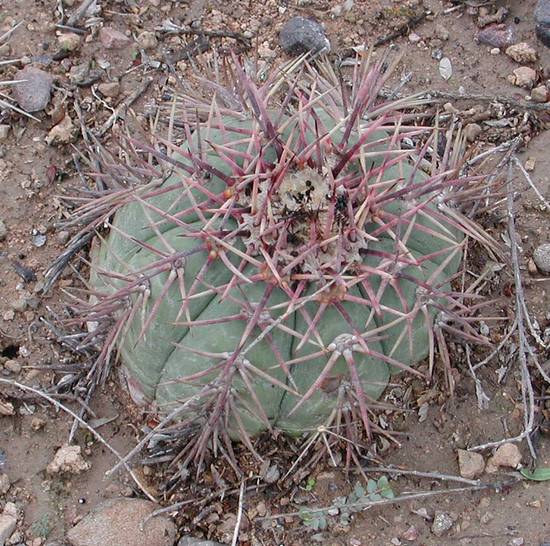
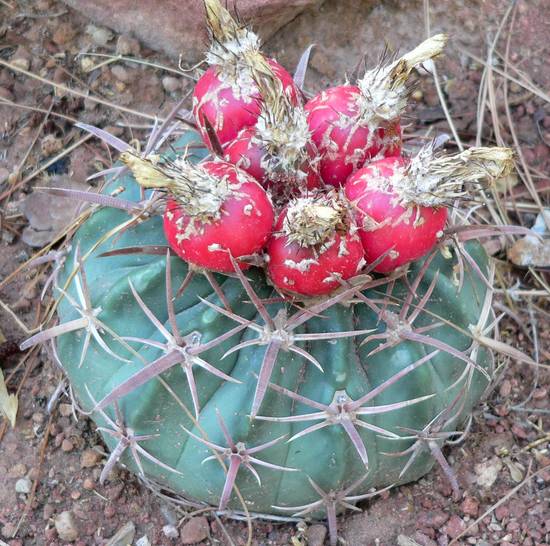
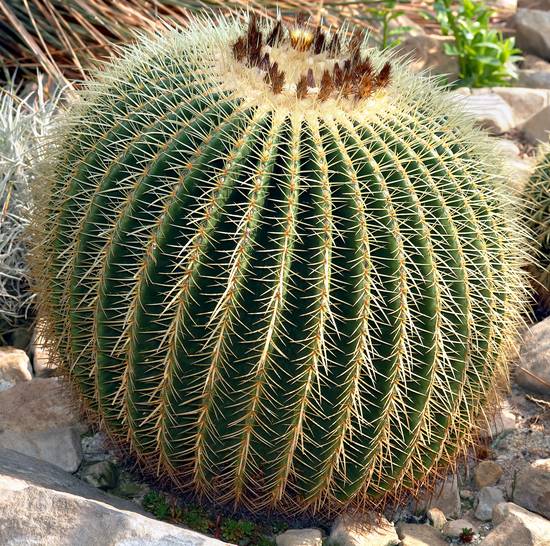
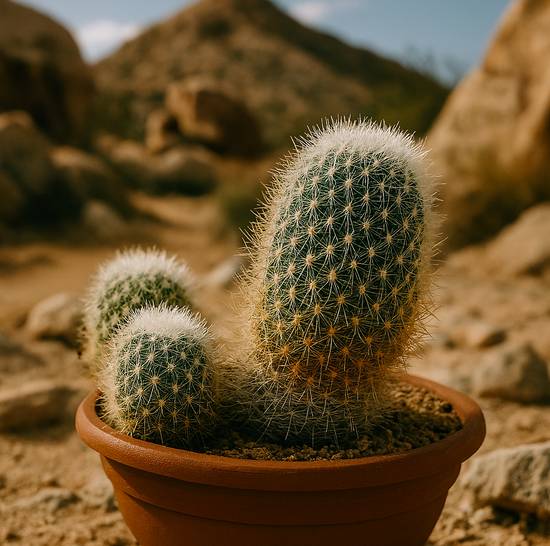
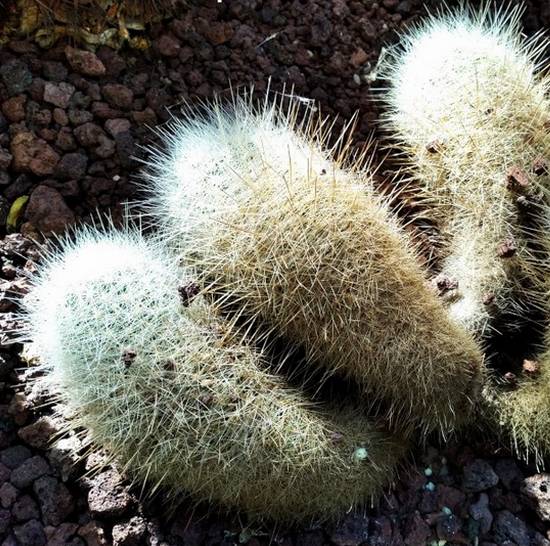
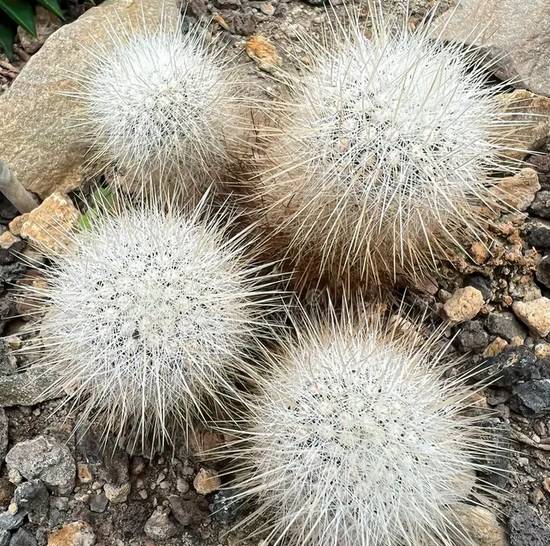
The Echinocactus Macdowellii is a true little gem of the Echinocactus genus, often confused with more well-known species such as Echinocactus Grusonii. This cactus has a globular to slightly flattened silhouette, usually solitary, although some specimens may produce lateral offsets as they age.
Its epidermis is a bright green, sometimes slightly bluish, and crossed by marked, shallow but well-defined ribs. These ribs are lined with woolly areoles bearing short, rigid spines ranging from yellow to brownish. The contrast between the white wool and the spines creates a very ornamental appearance, especially in young plants.
Native to northern Mexico, Echinocactus Macdowellii grows in desert and semi-desert environments, often at moderate altitudes. It is a plant adapted to extreme conditions, making it an excellent choice for lovers of hardy, drought-resistant cacti.
🌞 Outdoors: Provide a location in direct sunlight, at least 6 hours per day.
🏡 Indoors: Place it behind a south- or west-facing window with as much light as possible.
⚠️ Tip: If you move it outdoors during the warm season, avoid sudden exposure to full sun, especially if it spent winter indoors. Acclimate it gradually to prevent sunburn.
🌱 Spring / Summer: Moderate watering every 15 to 25 days, only when the substrate is completely dry.
🍂 Autumn / Winter: Stop watering completely or limit it to once a month if the plant is kept in a heated indoor environment.
🚫 Warning: Avoid standing water in the saucer, as it promotes root rot.
🌡️ Ideal range: Between 20°C and 30°C during the growth period.
❄️ Cold tolerance: Down to 5°C in dry conditions, but protected from frost.
🏠 Wintering: Prefer a cool, bright location between 8°C and 12°C to encourage flowering.
🪨 Ideal substrate: Mix cactus potting soil with pumice or lava rock (50/50).
🌼 Flower type: Large funnel-shaped flowers, bright pink to magenta.
🗓️ Season: Mainly in spring, sometimes in summer if conditions are favorable.
🕑 Duration: Each flower lasts between 2 and 4 days, but several may appear successively.