Echinocactus Grusonii
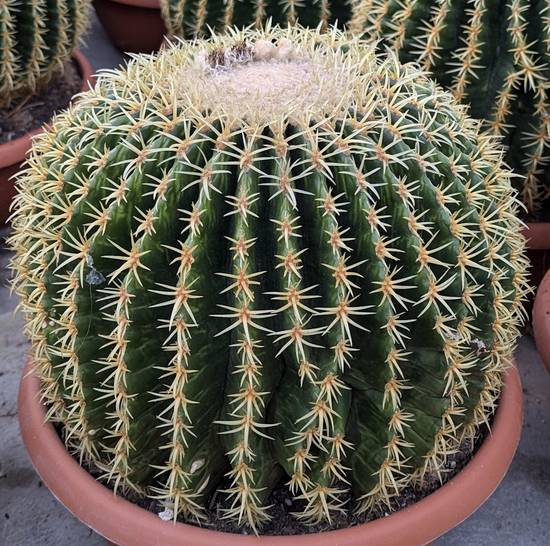
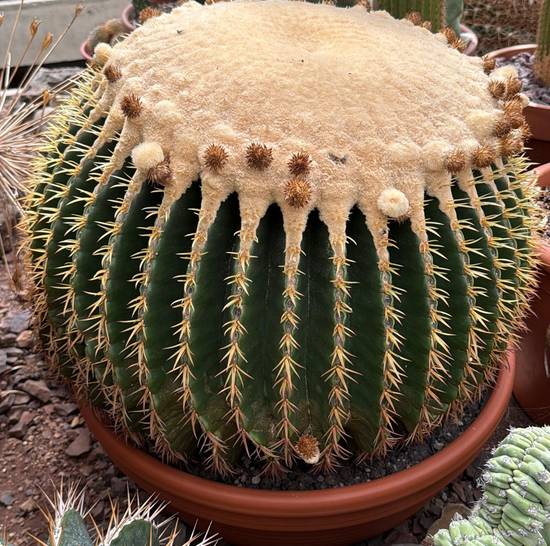
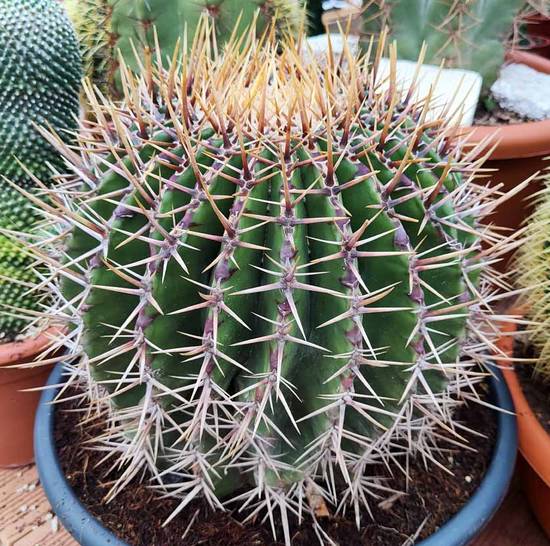
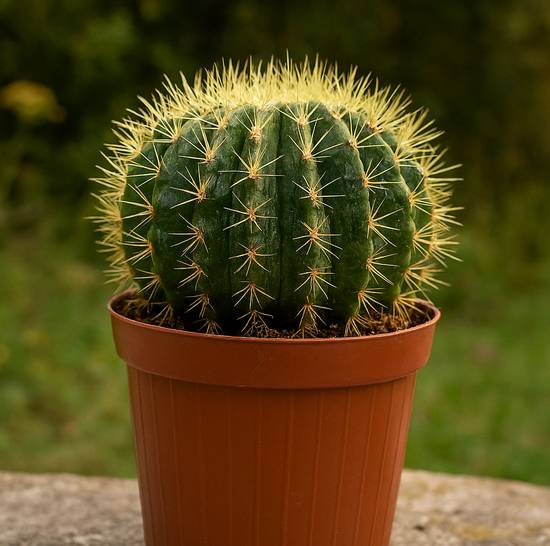
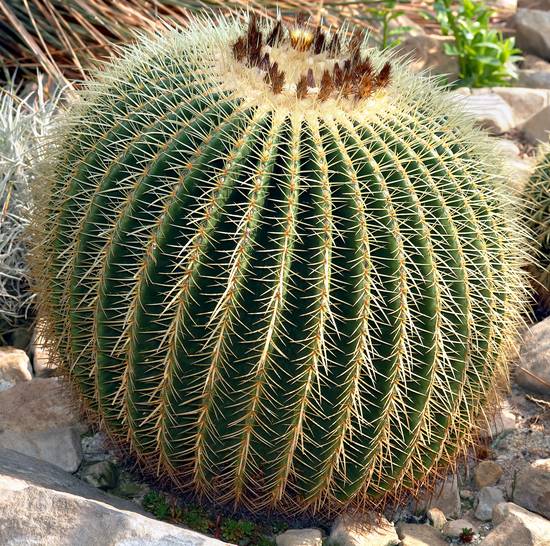
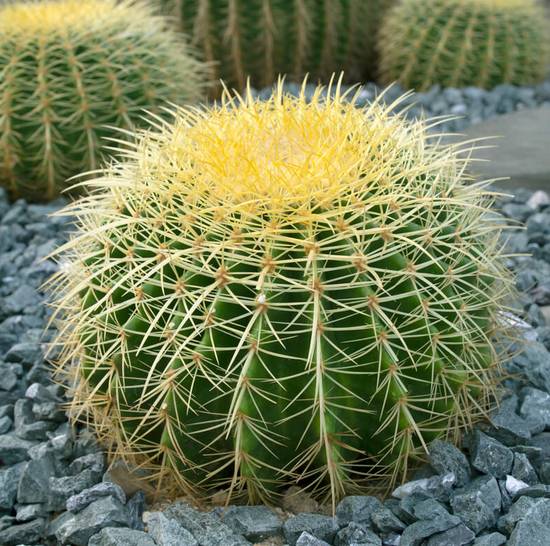
The Echinocactus Grusonii is undoubtedly one of the most emblematic cacti in the world. Its popular nickname, the "mother-in-law’s cushion", refers to its rounded shape covered with golden spines, both decorative and intimidating. Native to central Mexico (notably the regions of San Luis Potosí, Zacatecas, and Hidalgo), this globular cactus is a true icon of the succulent plant world.
It stands out for its perfect spherical silhouette, often ribbed with 20 to 30 vertical ribs lined with areoles bearing golden-yellow spines. With age, it can reach up to 1 meter in height and diameter, although this size is usually only achieved in open ground under hot, dry climates.
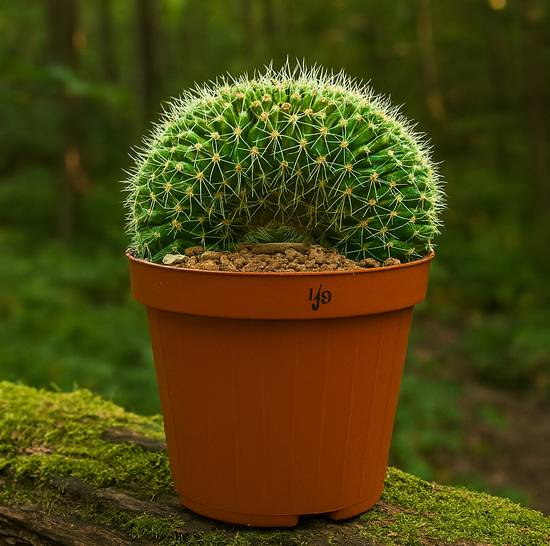
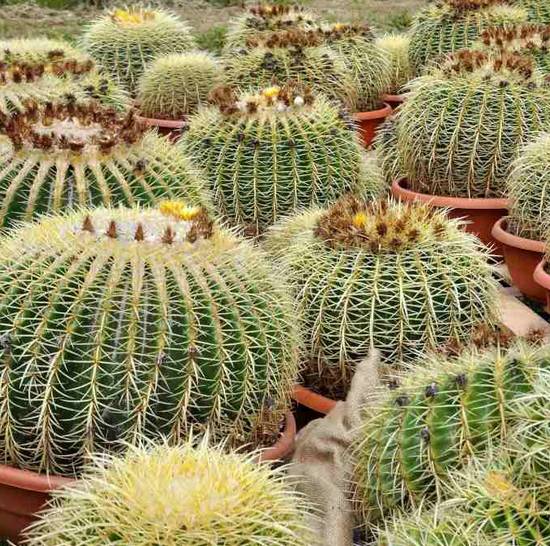
The Echinocactus Grusonii is particularly prized in rock gardens, dry gardens, greenhouses, and cactus collections. In pots, its growth is slower, but it retains all its architectural charm.
Due to the overexploitation of its natural habitats and urbanization, it is now considered an endangered species in its native environment. Fortunately, it is widely cultivated worldwide for its beauty.
🌞 Direct sunlight: place it where it receives at least 6 hours of direct light per day.
🌤️ Summer protection: during heatwaves (>35°C), light protection is recommended to avoid sunburn, especially if young or recently repotted.
💡 Lack of light will cause elongation and loss of its beautiful spherical symmetry.
🌱 Spring / Summer: water every 2 to 3 weeks, letting the substrate dry completely between waterings.
🍂 Autumn / Winter: stop watering as soon as temperatures drop below 12°C. In winter, it enters dormancy.
⚠️ Warning: excess water is the main cause of root rot. Always favor good drainage.
❄️ Minimum temperature: tolerates temperatures down to 5°C provided the soil is perfectly dry.
🏠 Overwintering advice: in cold climates, bring your Echinocactus Grusonii into a bright, cool, and dry room during winter.
🪨 Ideal substrate: mix of cactus potting soil with 50% pumice or pozzolana.
💡 A terracotta pot is also recommended, as it promotes evaporation of excess moisture.
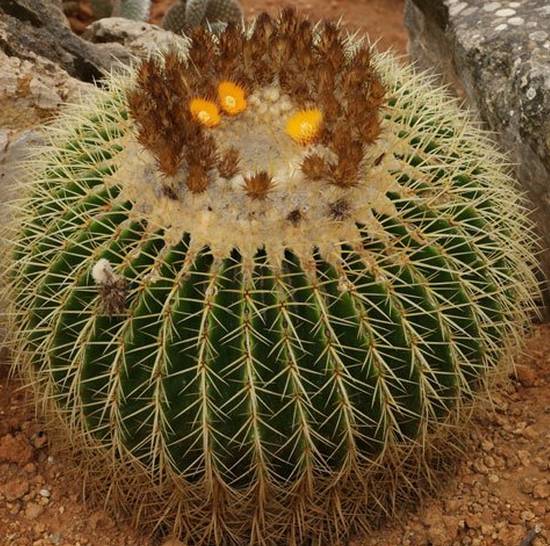
🌸 Season: late spring to summer, usually on mature plants (10 years or older).
🎨 Color: bright yellow, at the top of the plant.
🕑 Duration: a few days to a week, repeated over several weeks.
💡 Flowers appear only if the plant is well exposed, in good health, and has received a winter dormancy period without watering.