Echeveria Afterglow
With its violet hues and majestic growth habit, Echeveria Afterglow is a true star in the world of succulents. This almost otherworldly-looking cultivar captivates with its impressive size, unique leaf color, and remarkable decorative presence, whether in pots or planted in the ground in mild regions.
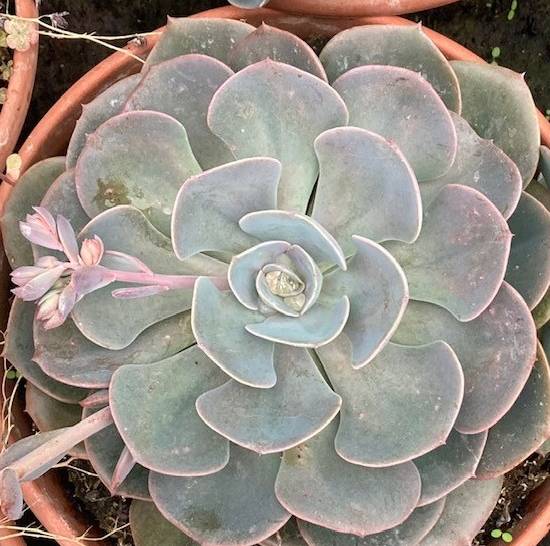
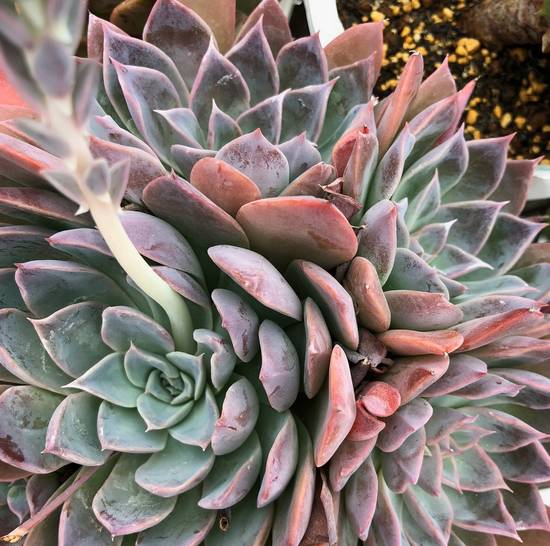
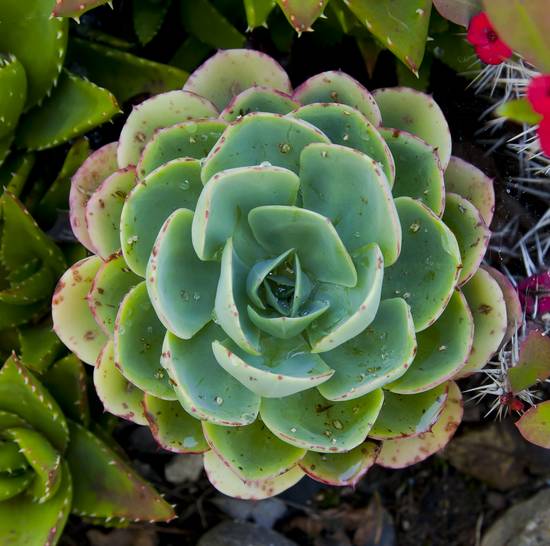
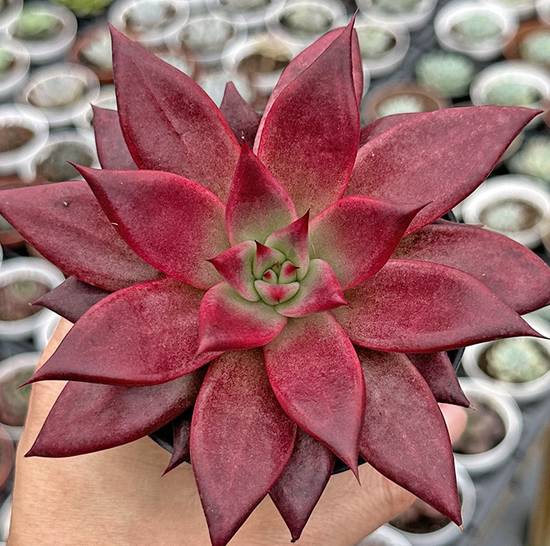
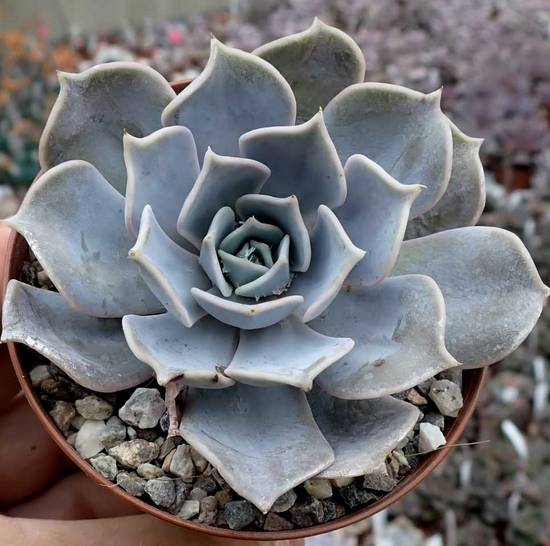
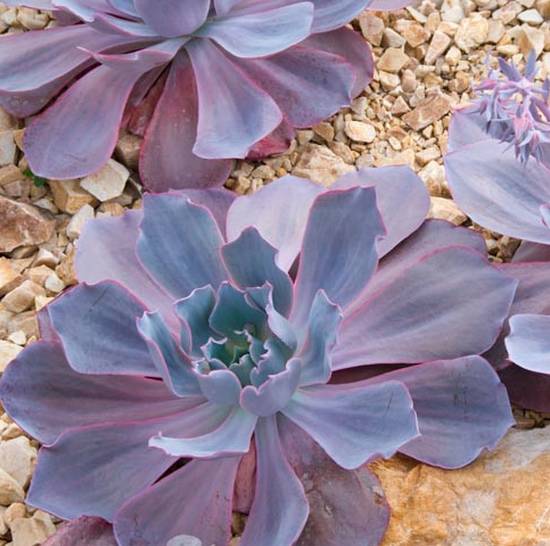
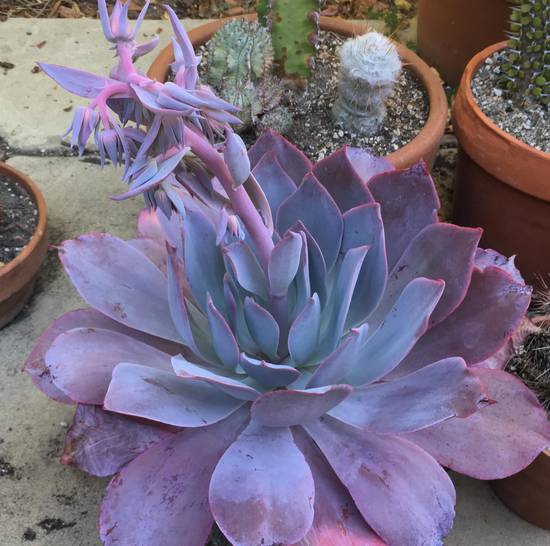
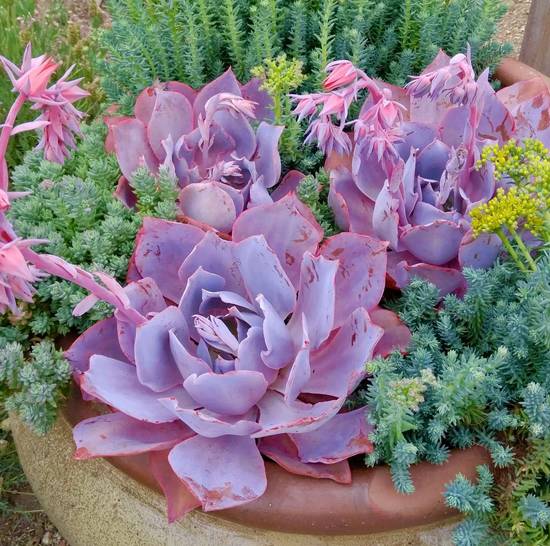
It forms a large flattened rosette, often exceeding 30 cm in diameter, with thick leaves dusted in lavender gray and bright fuchsia pink edges. The dense farina covering its foliage gives the whole plant an almost unreal effect, as if it were hand-painted. Echeveria Afterglow is not only beautiful, it is also relatively easy to grow with proper care.
Echeveria Afterglow is a horticultural hybrid resulting from the cross between Echeveria Shaviana and Echeveria Cante. Created in the United States, it was developed specifically for its exceptional ornamental qualities.
Its genetic origins give it good drought tolerance, slow but steady growth, and remarkable resistance in Mediterranean climates.
Its genetic origins give it good drought tolerance, slow but steady growth, and remarkable resistance in Mediterranean climates.
For Echeveria Afterglow to develop its most beautiful colors, bright light is essential.
☀️ Outdoor: Morning sun or light partial shade in the afternoon in very hot regions.
🏠 Indoor: Place it in front of a south-facing window or under a grow light.
🎨 Tip: Light stress enhances the bright pink edges.
☀️ Outdoor: Morning sun or light partial shade in the afternoon in very hot regions.
🏠 Indoor: Place it in front of a south-facing window or under a grow light.
🎨 Tip: Light stress enhances the bright pink edges.
Controlled watering is essential for its health, as with all Echeverias.
🌱 Spring / Summer: Water once every 2 to 3 weeks, allowing the substrate to dry thoroughly between waterings.
❄️ Winter: Drastically reduce watering, or even stop completely if temperatures are cool.
⚠️ Important: Absolutely avoid water stagnating in the center of the rosette.
🌱 Spring / Summer: Water once every 2 to 3 weeks, allowing the substrate to dry thoroughly between waterings.
❄️ Winter: Drastically reduce watering, or even stop completely if temperatures are cool.
⚠️ Important: Absolutely avoid water stagnating in the center of the rosette.
Echeveria Afterglow tolerates variations fairly well but fears cold humidity.
🌡️ Ideal: Between 18 and 25°C
❄️ Limit: Down to 5°C occasionally when kept dry
🏠 Advice: Bring it indoors as soon as temperatures drop below 8°C, especially in heavy soil.
🌡️ Ideal: Between 18 and 25°C
❄️ Limit: Down to 5°C occasionally when kept dry
🏠 Advice: Bring it indoors as soon as temperatures drop below 8°C, especially in heavy soil.
Good drainage is imperative to prevent root diseases.
🪨 Ideal mix: 50% cactus soil + 25% perlite + 25% pozzolana
🪨 Ideal mix: 50% cactus soil + 25% perlite + 25% pozzolana
The flowering of Echeveria Afterglow is just as elegant as its foliage.
📅 Period: Summer
🌺 Flowers: Orange bell-shaped flowers on long stalks emerging from the base
✂️ Tip: Cut the stalks after flowering to maintain the plant’s appearance.
📅 Period: Summer
🌺 Flowers: Orange bell-shaped flowers on long stalks emerging from the base
✂️ Tip: Cut the stalks after flowering to maintain the plant’s appearance.
FAQ - Echeveria Afterglow
What is the mature size of Echeveria Afterglow?
It can reach up to 30–35 cm in diameter.
What type of light is recommended for Echeveria Afterglow?
Gentle full sun or bright indirect light for colorful foliage.
Can Echeveria Afterglow be grown indoors?
Yes, if placed near a well-exposed window or under artificial lighting.
What is the best substrate for Echeveria Afterglow?
A well-draining mix with cactus soil, perlite, and pumice.
Does Echeveria Afterglow tolerate frost?
No, it must be protected when temperatures drop below 5–8 °C.
When should Echeveria Afterglow be watered?
Every 2 to 3 weeks in summer, much less in winter.
How can Echeveria Afterglow be propagated?
By leaf cuttings or offsets if available.
What fertilizer should be used for Echeveria Afterglow?
A liquid succulent fertilizer such as Or Brun or Undergreen during spring and summer.
Why are the leaves becoming pale?
Often due to lack of light or overwatering.
Can Echeveria Afterglow be grown in the ground?
Yes, in a mild and dry climate with well-draining soil.