Crassula Ovata
The Crassula Ovata, known by the popular names “jade tree” or “friendship plant”, is an essential succulent in indoor and balcony collections. Easy to grow, aesthetically pleasing and remarkably long-lived, it embodies the ideal plant for beginners as well as experienced enthusiasts.
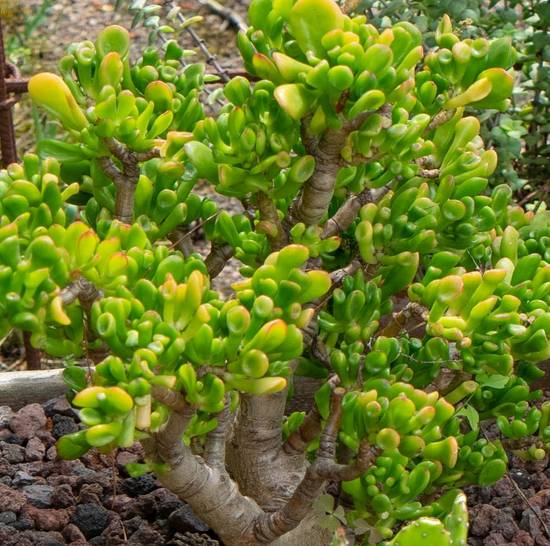
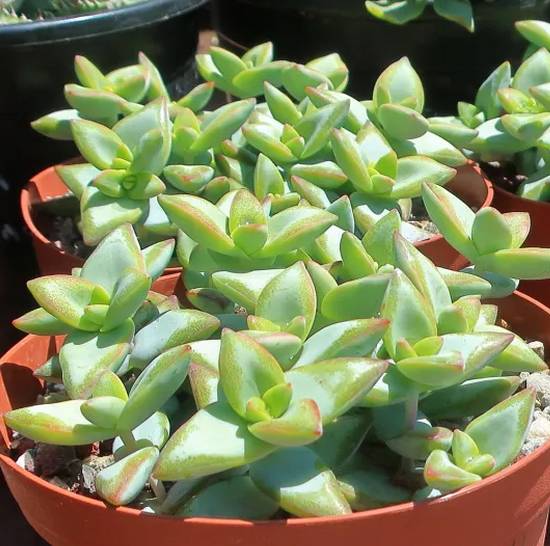
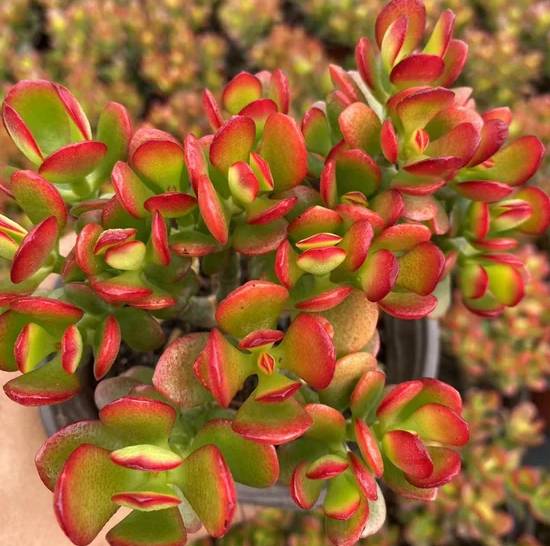
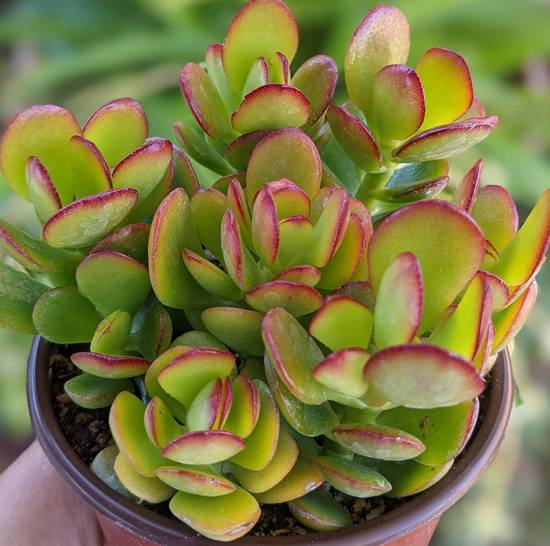
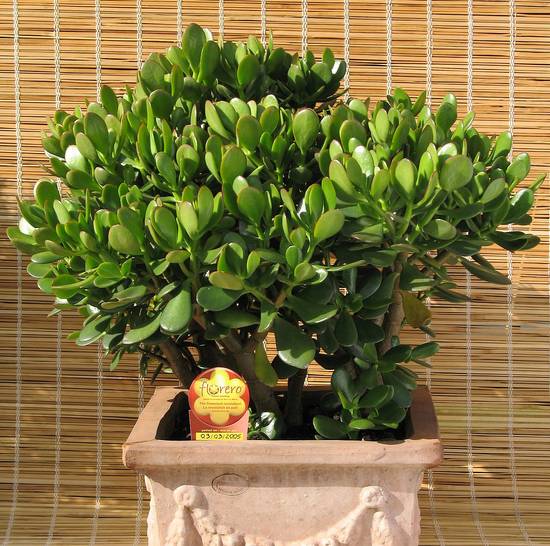
Its shrubby habit resembles that of a natural bonsai, with a thick woody trunk, well-defined branches and fleshy deep green leaves, sometimes edged with red. These oval, smooth and glossy leaves are filled with water, allowing it to withstand long periods of drought. Over the years, the Crassula Ovata can reach more than one meter in height in pots, branching harmoniously to form a very graphic silhouette.
A symbol of luck, prosperity and positive energy according to Asian traditions, it is frequently given as a gift. It can live for several decades, becoming a true element of plant heritage within a household.
Its adaptation to drought is exemplary: it knows how to store water in its stems and leaves, allowing it to survive weeks without rain. In nature, it can form dense bushes covered with small star-shaped flowers during the southern summer.
🌞 Full light : It loves the sun and tolerates full southern exposure very well. Direct light encourages reddish tones on the leaf edges.
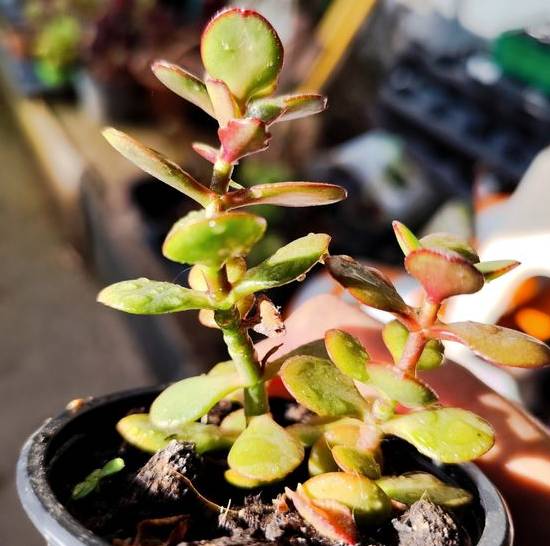
🌤️ Indoors : Choose a well-exposed window (south or west). If it lacks light, it may become etiolated, with elongated and weak stems.
🌱 Spring / summer : Water once every two to three weeks, allowing the substrate to dry completely. It stores water in its leaves.
🍂 Autumn / winter : Greatly space out watering. In winter, monthly watering is often sufficient, or none if kept in a cool room.
⚠️ Warning : Excess water is the primary cause of death. When in doubt, it is better not to water.
🌡️ Ideal : between 18 and 28°C during the growing period.
❄️ Minimum : It can tolerate 5°C occasionally, but must never be exposed to frost.
🏠 Overwintering : Bring it indoors into a bright location as soon as temperatures drop below 10°C, especially if grown in a pot.
🪨 Ideal mix : use a special cactus or succulent soil, mixed with perlite or pozzolana.
You can opt for a substrate suitable, and add perlite or pozzolana to ensure good aeration.
🌸 Period : It generally blooms in late autumn or early winter, when nights are cool and watering is limited.
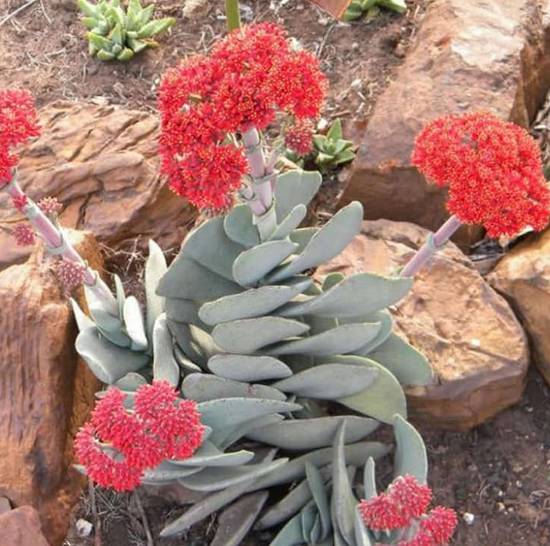
🎨 Appearance : Small star-shaped flowers, white to pinkish, grouped in clusters.
🌿 Conditions : A mature plant, good sunlight and winter rest are necessary to induce flowering.