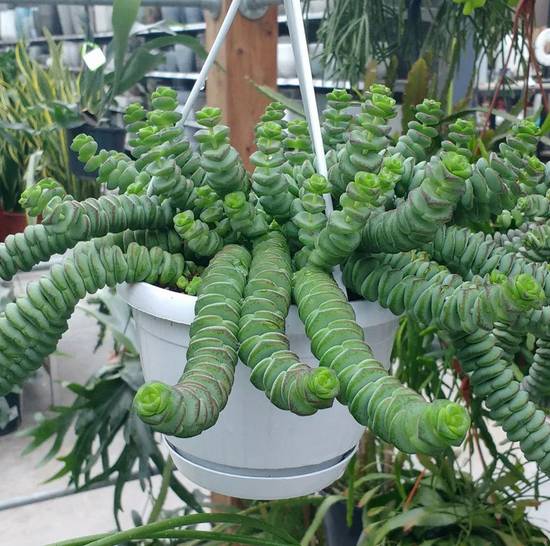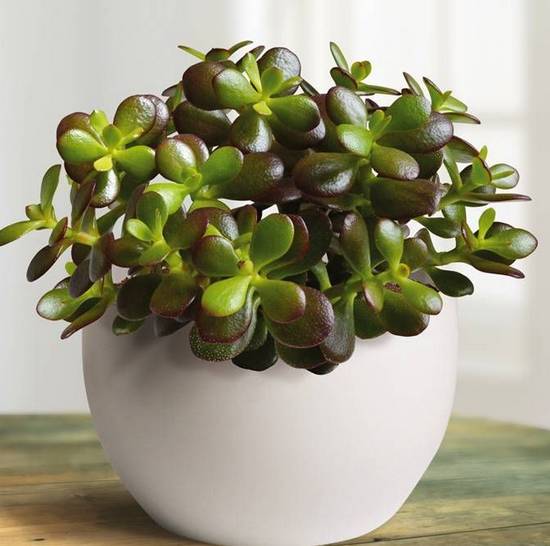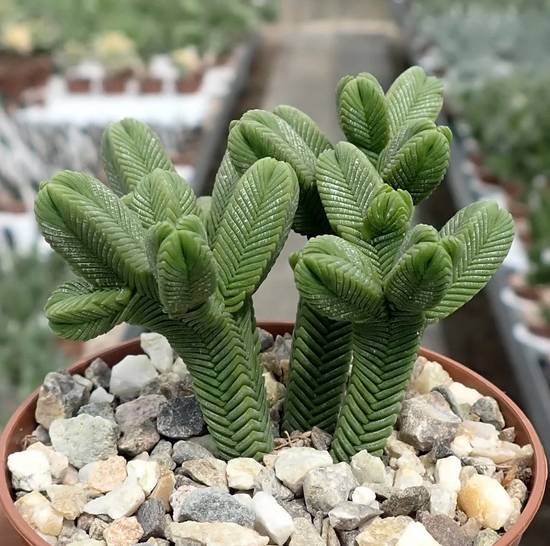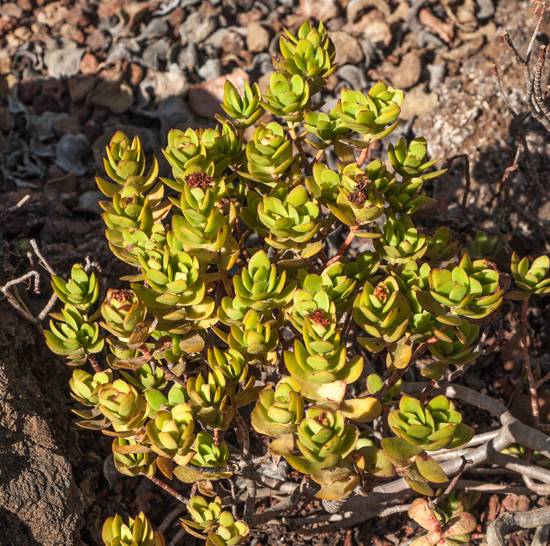
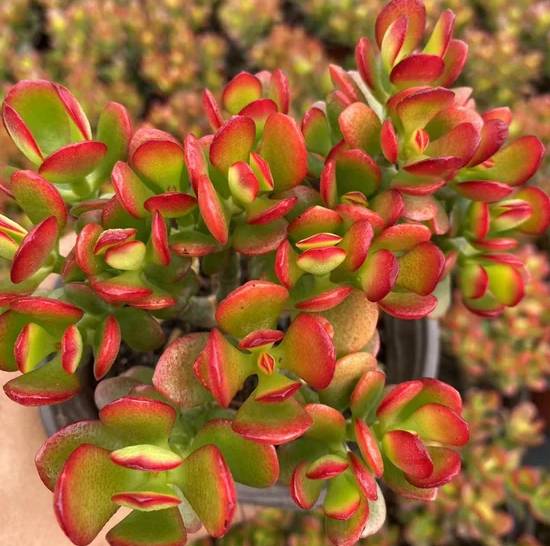
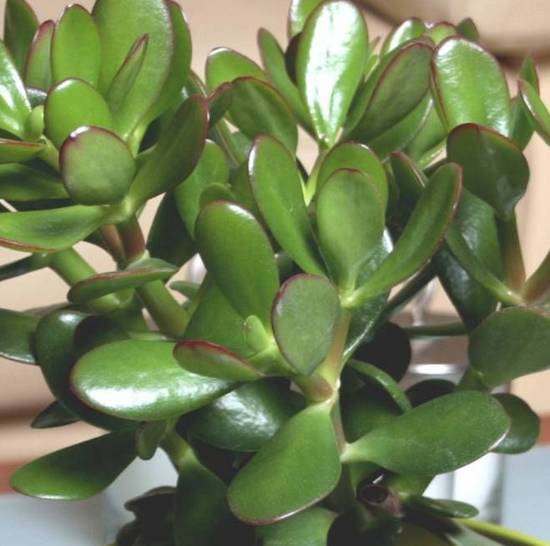
Crassula Portulacea
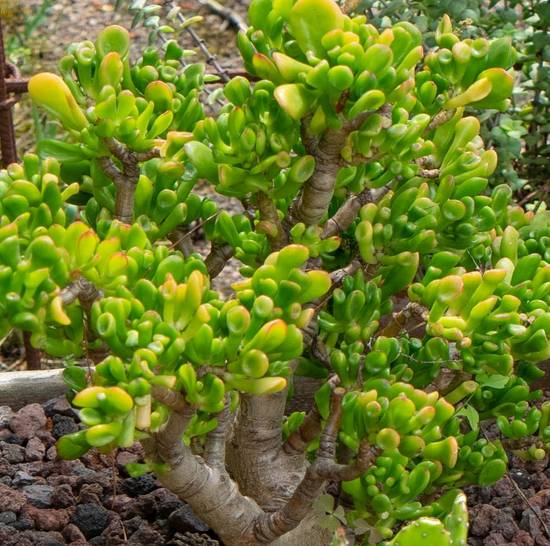
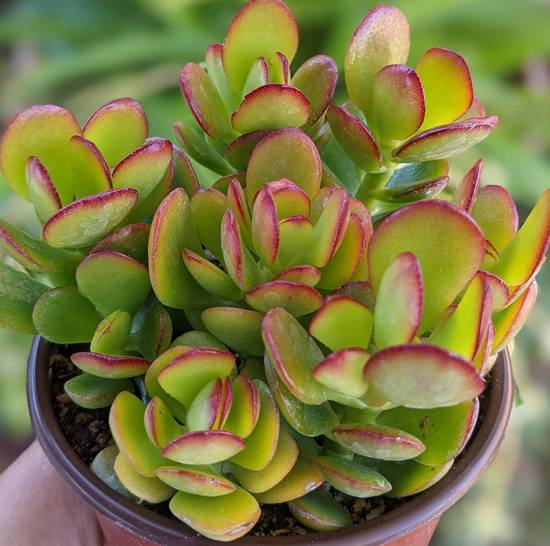
The Crassula Portulacea, also known as “jade tree” or “lucky plant”, is one of the most emblematic and appreciated succulents in the world of horticulture. Very often confused with other similar Crassulas, it stands out for its vigorous growth, its bright green leaves and its ability to transform into a real small tree over the years.
With its bushy habit, thick stems and fleshy spoon-shaped leaves, the Crassula Portulacea adopts a structured and elegant silhouette. It can exceed 1.20 meters in height if well maintained, forming a robust trunk and well-defined branches. This plant is very popular in bright interiors, verandas and even outdoors in regions with a mild climate.
Native to the semi-arid regions of South Africa, the Crassula Portulacea naturally grows on rocky and sunny terrain, often on hillsides or in slightly shaded areas. There it forms dense colonies, benefiting from a dry climate and extremely well-drained soils.
Its morphology and water storage capacities are perfectly adapted to the long periods of drought of its natural environment.
Its morphology and water storage capacities are perfectly adapted to the long periods of drought of its natural environment.
To thrive, the Crassula Portulacea needs good brightness:
🌞 Direct sun : Ideally 4 to 6 hours per day. Intense exposure will promote red edges on the leaves.
🌤️ Indoors : Choose a well-exposed window (south or west). Avoid dark corners that slow its growth and promote etiolation.
🌞 Direct sun : Ideally 4 to 6 hours per day. Intense exposure will promote red edges on the leaves.
🌤️ Indoors : Choose a well-exposed window (south or west). Avoid dark corners that slow its growth and promote etiolation.
Watering of the Crassula Portulacea must remain moderate and adapted to the season:
🌱 Spring / summer : Water when the substrate is completely dry. On average, watering every 2 to 3 weeks is sufficient.
🍂 Autumn / winter : Greatly reduce watering, even spacing up to one month, depending on conditions.
⚠️ Excess water is the main cause of root rot. When in doubt, it is better to wait a few days before watering.
🌱 Spring / summer : Water when the substrate is completely dry. On average, watering every 2 to 3 weeks is sufficient.
🍂 Autumn / winter : Greatly reduce watering, even spacing up to one month, depending on conditions.
⚠️ Excess water is the main cause of root rot. When in doubt, it is better to wait a few days before watering.
The Crassula Portulacea is relatively tolerant to temperature:
🌡️ Comfort zone : Between 18°C and 28°C for optimal growth.
❄️ Minimum temperatures : It can withstand down to 5°C, but does not tolerate frost.
🏠 Overwintering : In cold regions, bring the plant indoors as soon as night temperatures drop below 10°C.
🌡️ Comfort zone : Between 18°C and 28°C for optimal growth.
❄️ Minimum temperatures : It can withstand down to 5°C, but does not tolerate frost.
🏠 Overwintering : In cold regions, bring the plant indoors as soon as night temperatures drop below 10°C.
The Crassula Portulacea needs draining soil to avoid any moisture retention.
🪨 Opt for a special succulent or cactus substrate, which you can enrich with draining materials such as perlite or pozzolana. You will find a adapted substrate here, as well as perlite or pozzolana for optimal drainage.
🪨 Opt for a special succulent or cactus substrate, which you can enrich with draining materials such as perlite or pozzolana. You will find a adapted substrate here, as well as perlite or pozzolana for optimal drainage.
The flowering of the Crassula Portulacea is as discreet as it is charming:
🌸 Period : It generally occurs in winter or very early spring.
🎨 Color : The flowers are small, star-shaped, white or pale pink.
💡 To encourage flowering, the plant must have experienced a cool winter rest period and sufficient light exposure.
🌸 Period : It generally occurs in winter or very early spring.
🎨 Color : The flowers are small, star-shaped, white or pale pink.
💡 To encourage flowering, the plant must have experienced a cool winter rest period and sufficient light exposure.
FAQ - Crassula Portulacea
What is the difference between Crassula Portulacea and the classic jade tree?
It is actually the same cultivar. Crassula Portulacea is commonly called the jade tree, although this name may also refer to other Crassula.
Can Crassula Portulacea be grown outdoors in France?
Yes, only in regions with a mild climate. It does not tolerate frost, but it can be placed outdoors in a pot during spring and summer.
What is the best type of substrate for Crassula Portulacea?
A cactus substrate enriched with draining materials such as pumice or perlite is ideal.
Should Crassula Portulacea be fertilized?
Yes, use a liquid succulent fertilizer every two months during the growing season.
What should you do if Crassula Portulacea loses its leaves?
This may indicate excess water, lack of light, or unsuitable temperature. Review the growing conditions.
Can Crassula Portulacea be easily propagated?
Yes, stem cuttings are very simple. It quickly takes root in a dry, well-draining substrate.
What is the ideal watering frequency for Crassula Portulacea?
Water every 2 to 3 weeks in summer, much less in winter. The substrate must be completely dry before each watering.
Is it a toxic plant for animals?
Yes, it can be toxic if ingested. It is best to avoid any contact with pets.
What are the signs of overwatering in Crassula Portulacea?
Soft or falling leaves, blackened roots. In this case, repot quickly into a suitable substrate.
How can you encourage Crassula Portulacea to bloom?
Place it in full light, use a light fertilizer, and respect a cool rest period in winter.