Crassula Cultrata
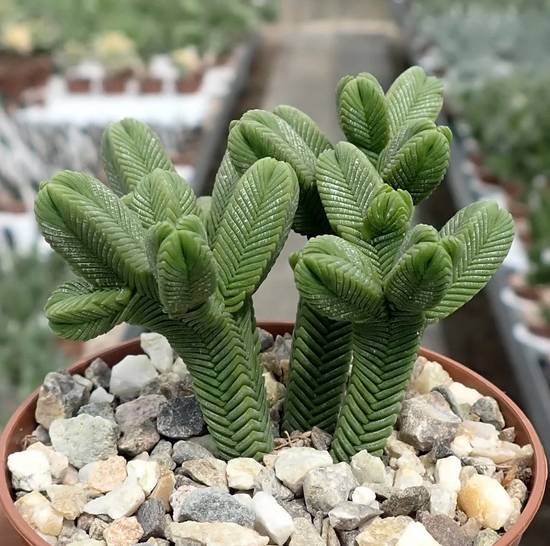
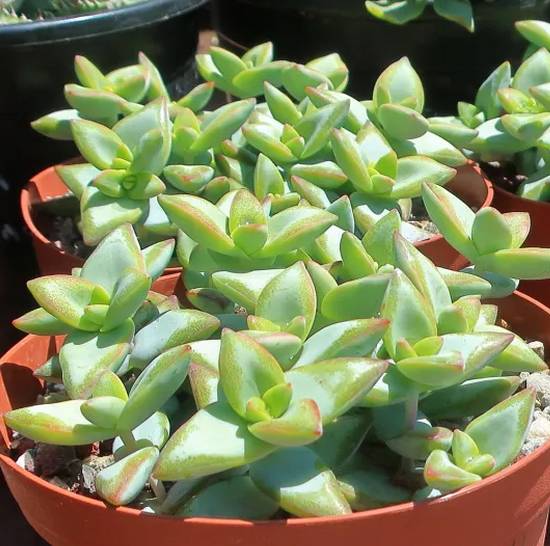
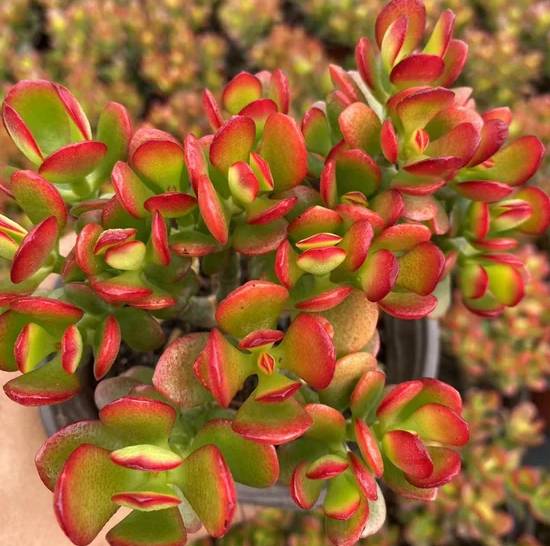
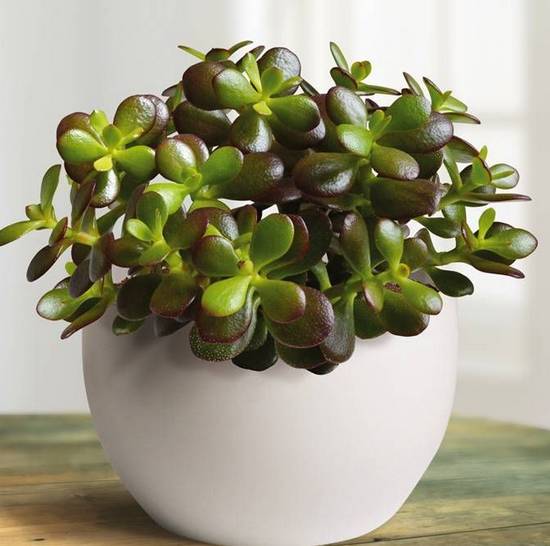
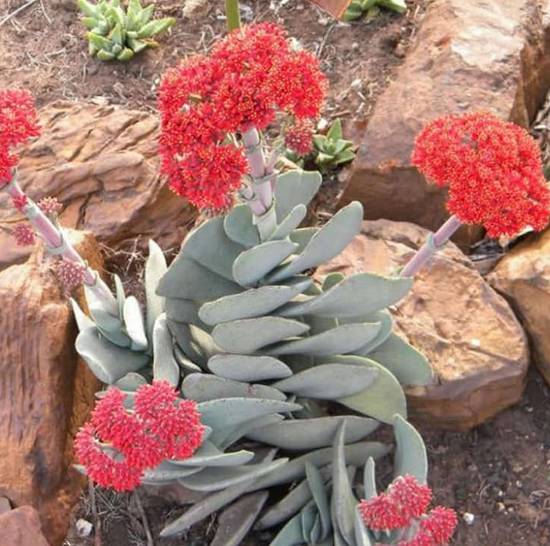
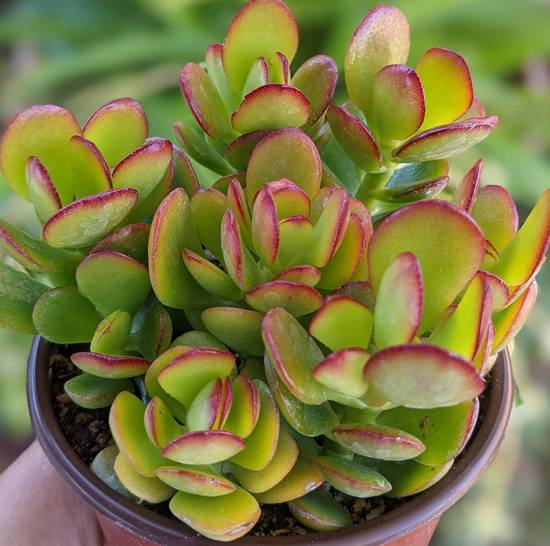
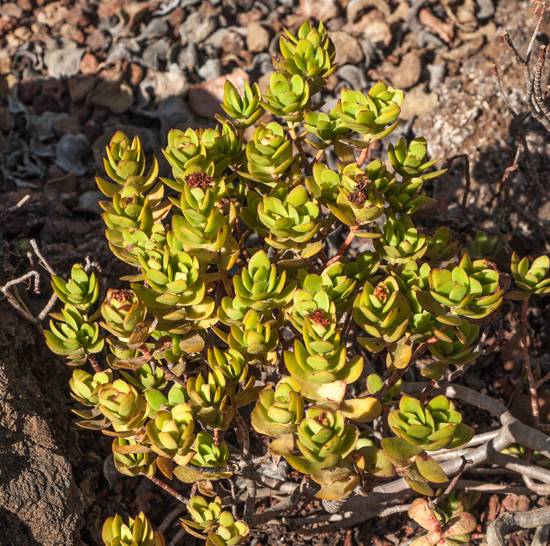
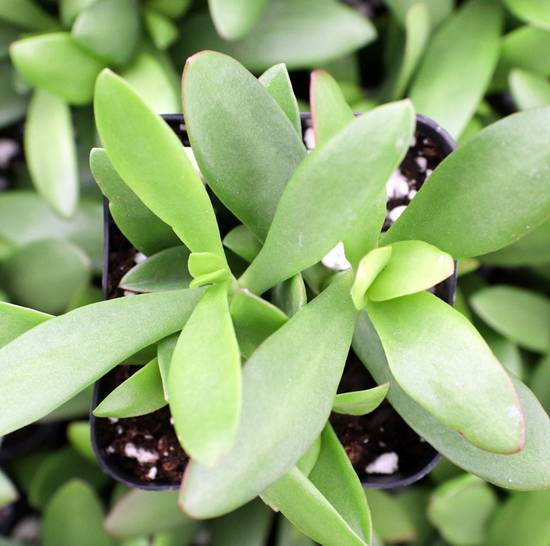
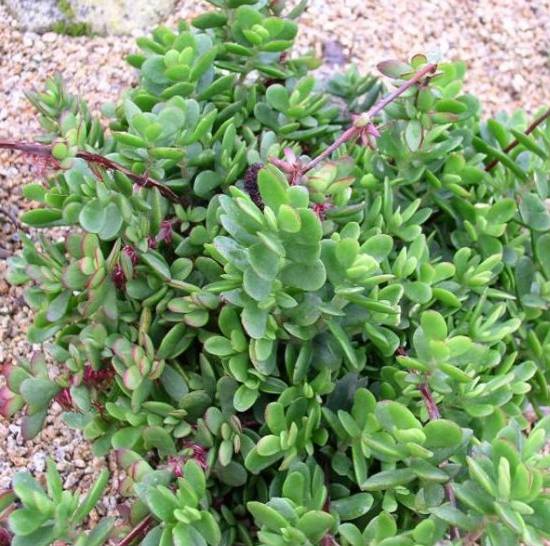
The Crassula Cultrata, often nicknamed "knife-leaf Crassula", is a South African succulent easily recognizable by its flat, broad and sharp leaves arranged oppositely along upright stems. These olive green to dark green leaves are often edged with red and display a smooth, slightly glossy texture. Their elongated shape, resembling a blunt blade, gives the plant a graphic and structured appearance, perfect for modern compositions or rock gardens.
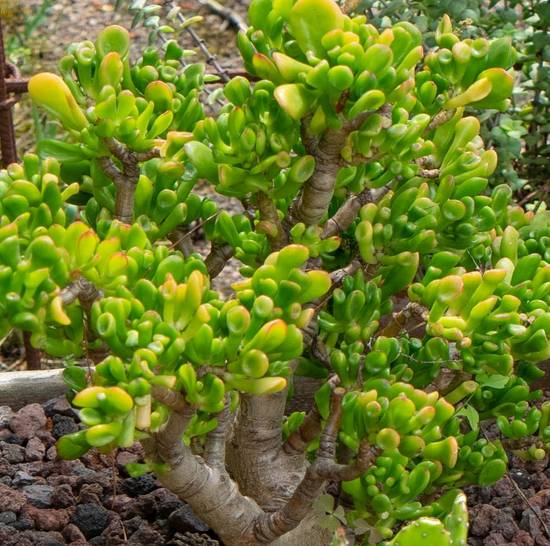
The Crassula Cultrata is an upright plant that can reach 30 to 50 cm in height at maturity while maintaining an elegant and branched habit. Indoors as well as outdoors, it forms a small succulent shrub that attracts attention thanks to its contrasting colors, especially when exposed to intense sunlight. Easy to grow and undemanding, it is often chosen by lovers of geometric shapes and graphic appearance, particularly in minimalist designs or designer pots.
🌞 Full sun : Minimum 5 to 6 hours of sun per day to maintain its red colors and compact habit.
🌿 Indoors : Place it near a bay window or a south-facing window. Avoid low-light areas.
⚠️ Tip : Insufficient exposure causes stem elongation and foliage discoloration.
💧 Spring-summer : Water every 15 to 20 days depending on heat. Allow the substrate to dry thoroughly between waterings.
❄️ Winter : Water once a month at most, or not at all if kept cool.
⚠️ Monitoring : Soft or translucent leaves = excess water. An overwatered plant is a plant in danger.
🌡️ Ideal : 20 to 30 °C during its growing period.
❄️ Critical threshold : 5 °C in dry substrate. It tolerates no frost, even light frost.
🏠 Advice : Bring it indoors in autumn if you live in a cold region.
🪨 Recommended mix : 50% of soil for succulents, 25% perlite and 25% pozzolana.
This mix prevents any water retention, aerates the substrate and allows roots to develop healthily.
🌸 Period : In summer, after a period of heat and abundant light.
🎨 Color : Creamy white to pale yellow flowers, grouped in small inflorescences at the top of the stems.
💡 It blooms mainly when growing conditions are optimal, with reduced watering and maximum exposure.