Crassula Buddha’s Temple
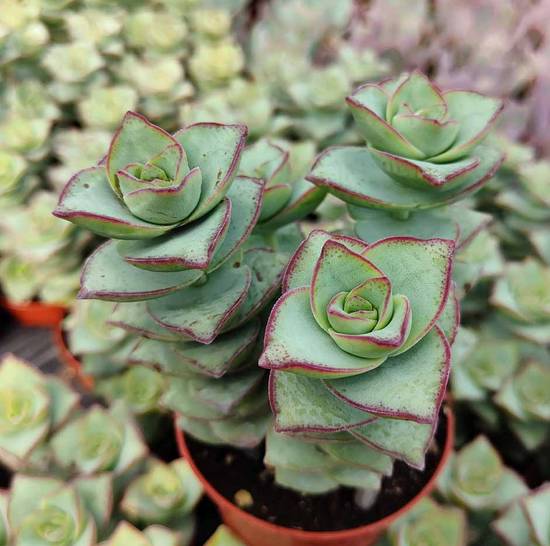
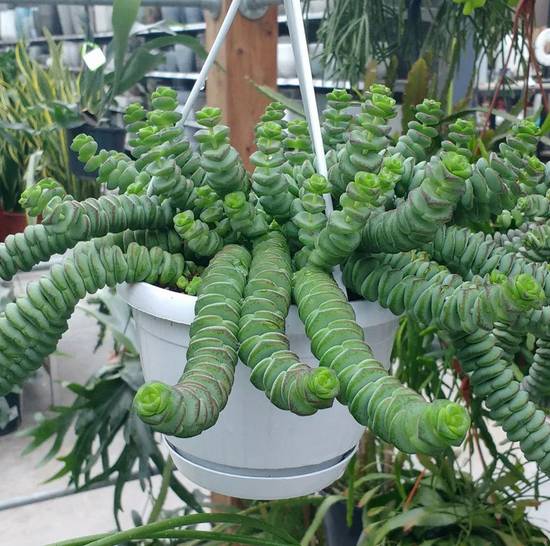
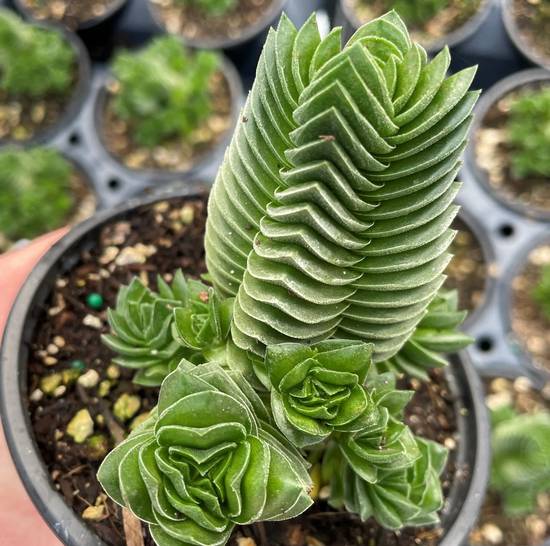
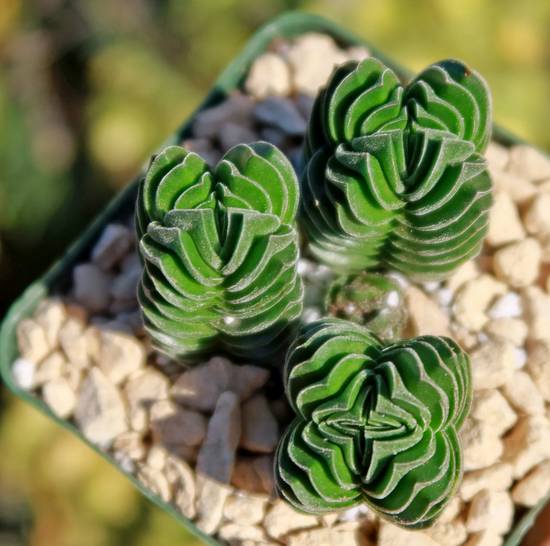
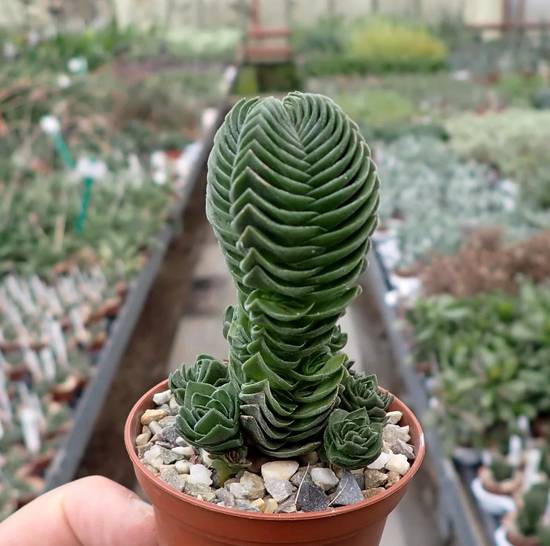
The Crassula Buddhas Temple is a fascinating succulent, famous for its compact and geometric shape that evokes the pagoda roofs of Buddhist temples, hence its evocative name. This rare plant, highly appreciated by collectors, charms with its thick leaves stacked in perfectly symmetrical columns, in silvery green tones sometimes edged with red depending on exposure. Its slow growth reinforces its precious and decorative character, particularly in minimalist compositions or rock garden plant collections.
Each specimen of Crassula Buddhas Temple is a small natural masterpiece, both graphic and soothing. It remains relatively compact and can reach a height of 15 cm at maturity. Its stacked structure gives it an almost sculptural appearance, ideal for lovers of plant design. In addition to being decorative, this Crassula is also easy to care for, as long as its specific needs are respected.
Thanks to its unique shape and relative rarity on the market, Crassula Buddhas Temple is a plant that quickly attracts attention and often becomes the centerpiece of a succulent collection.
This adaptation to difficult environments explains its preference for dry substrates, its need for sun, and its tolerance of missed waterings.
🌞 Direct sunlight : 4 to 6 hours of sun per day promote tightly packed leaves and red coloration on the edges.
🌤️ Avoid persistent shade : It may become etiolated, its leaves spreading apart and losing their beautiful architectural alignment.
Indoors, choose a location near a south- or west-facing window.
🌱 Spring / Summer : Water every 2 to 3 weeks, once the substrate is completely dry.
🍂 Autumn / Winter : Drastically limit water input or even stop completely during the dormant period.
⚠️ Warning : Excess water causes softening of the base of the plant and loss of its stacked shape. When in doubt, it is better to wait.
🌡️ Ideal range : between 18°C and 26°C
❄️ Minimum threshold : 5°C. Absolutely avoid negative temperatures.
🏠 In winter : Bring it indoors into a bright and cool room if outdoor temperatures become too low.
🪨 Recommended substrate : Mix a special cactus substrate with 30% perlite or pumice to improve aeration. You can also add a little pozzolana for even more drainage.
🌸 Period : late winter or early spring
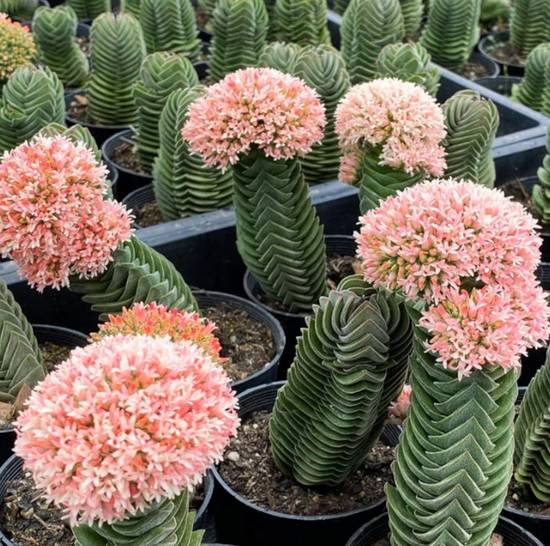
🎨 Flowers : small, star-shaped, white to slightly pinkish, appearing at the tip of the plant
🔍 Tip : Flowering is more likely if the plant is mature, well exposed and slightly stressed (slight temperature variations, little water).