Crassula Hottentot
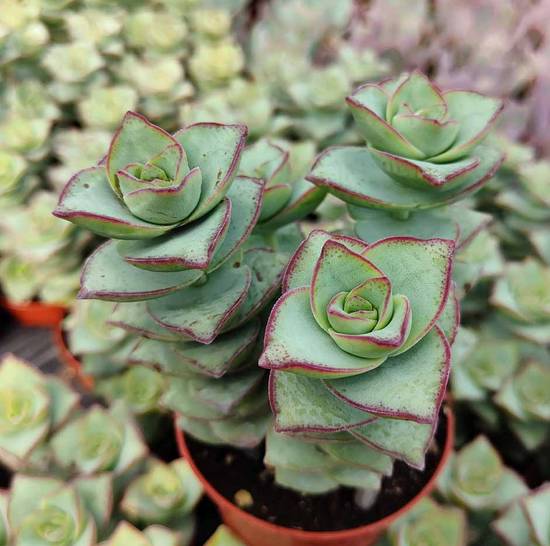
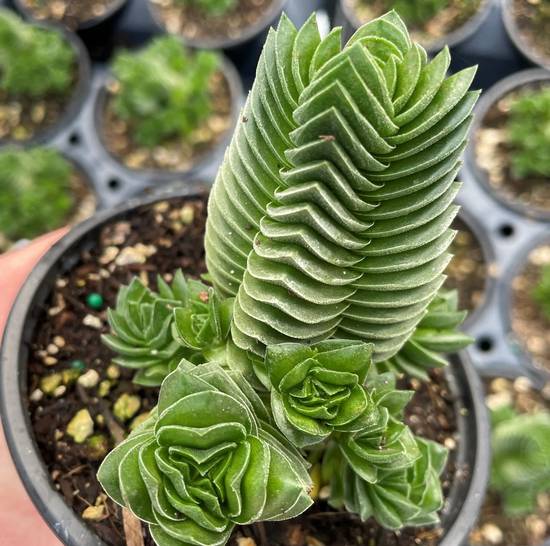
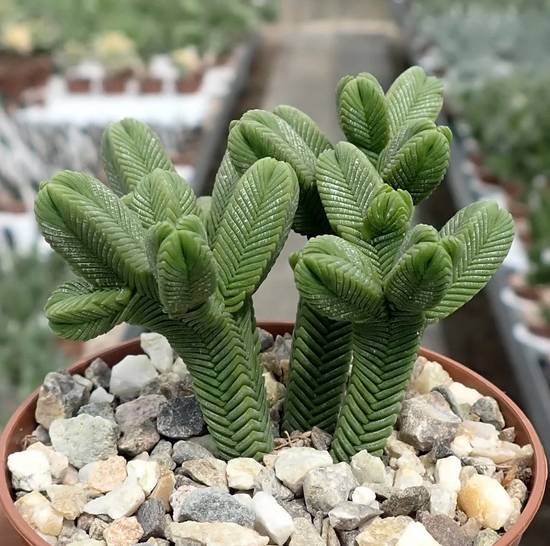
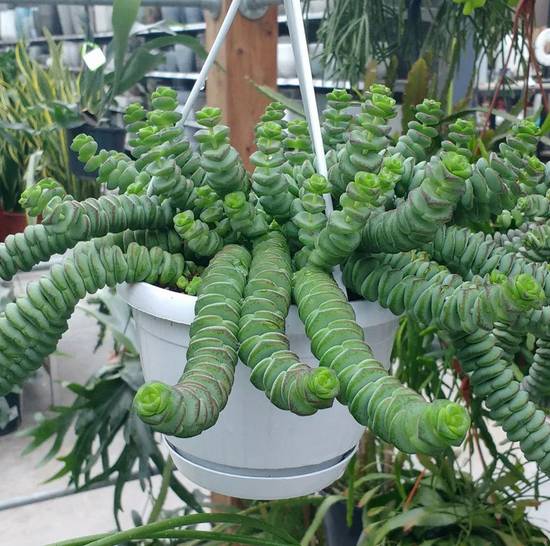
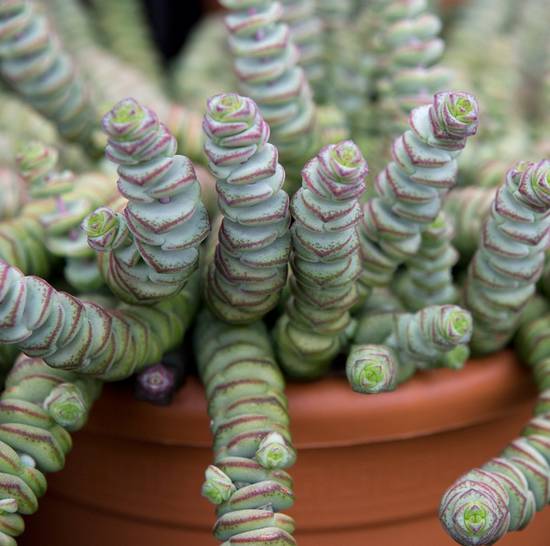
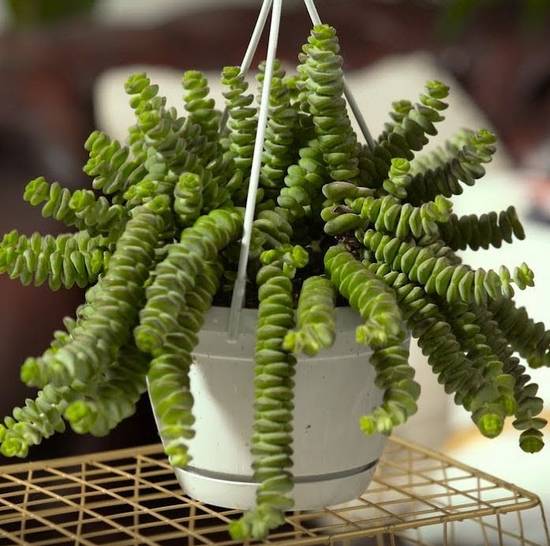
The Crassula Hottentot is a very popular hybrid variety for its trailing habit and spiral foliage, making it an ideal plant for hanging baskets and planters. Unlike more upright Crassulas, this succulent develops long, flexible, pendulous stems covered with small barrel-shaped fleshy leaves stacked in a helix. This arrangement creates a surprising and highly decorative twisted effect, reminiscent of living plant chains.
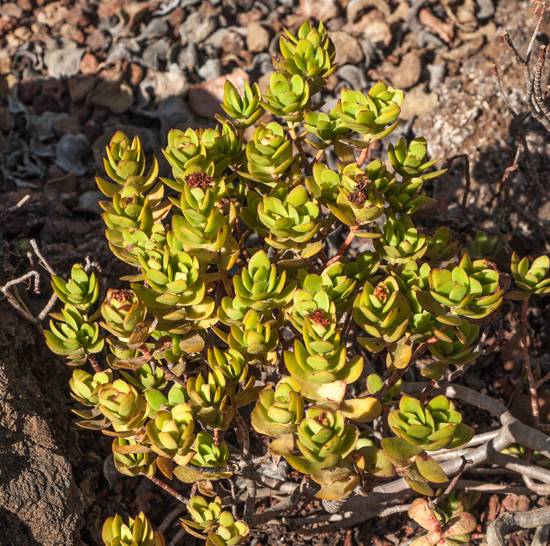
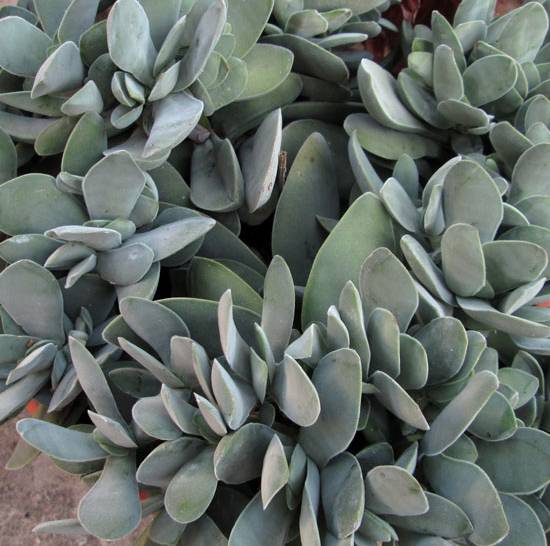
The Crassula Hottentot is a cross, often considered a selected form of Crassula Rupestris. It combines the robustness of the parent species with a more flexible habit and shorter internodes. The foliage is pale green to bluish green, sometimes edged with pink in bright conditions. Highly appreciated for hanging compositions, it brings volume, movement and original texture to any bright corner.
Easy to grow, not very water-demanding, and decorative all year round, Crassula Hottentot is a perfect plant for beginners as well as collectors. Its growth is relatively fast for a succulent, especially if cultivated in good light conditions.
🌞 Optimal exposure : Full sun or bright partial shade. At least 4 to 6 hours of light per day ensure compact growth and pronounced colors.
🏠 Indoor cultivation : Place it near a south- or west-facing bay window. Lack of light will cause elongated stems and distort the spirals.
🌿 Outdoors : It thrives on a sunny balcony or terrace from spring to autumn.
💧 Growing period (spring-summer) : Water every 2 to 3 weeks, when the substrate is dry deep down.
❄️ Rest period (winter) : Space out watering considerably (once a month or less), especially in a cool environment.
⚠️ Warning : Excess water causes soft or falling leaves. Always allow to dry between waterings.
🌡️ Ideal temperature : Between 18 °C and 26 °C.
❄️ Minimum temperature : 5 °C in dry substrate. It does not tolerate frost and must be protected from prolonged cold spells.
🏠 Overwintering : Perfect indoors during winter, in a bright, cool and ventilated room.
🪨 Ideal mix : 50% of soil for succulents + 25% perlite + 25% pozzolana or coarse sand.
This type of mix allows roots to breathe while preventing excess moisture that causes rot.
🌸 Period : Generally in late summer or early autumn.
🎨 Appearance : Small star-shaped flowers, creamy white to slightly pinkish, grouped in terminal clusters.
💡 It blooms especially if it receives sufficient light and benefits from slight water stress at the end of summer.