Agave Victoriae-Reginae

Agave Victoriae-Reginae

Agave Victoriae-Reginae

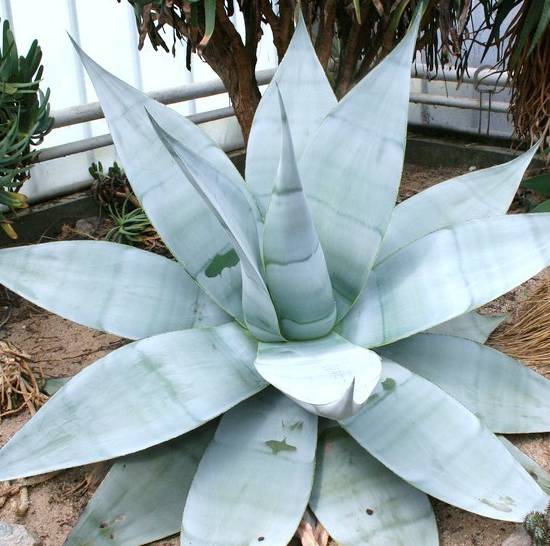
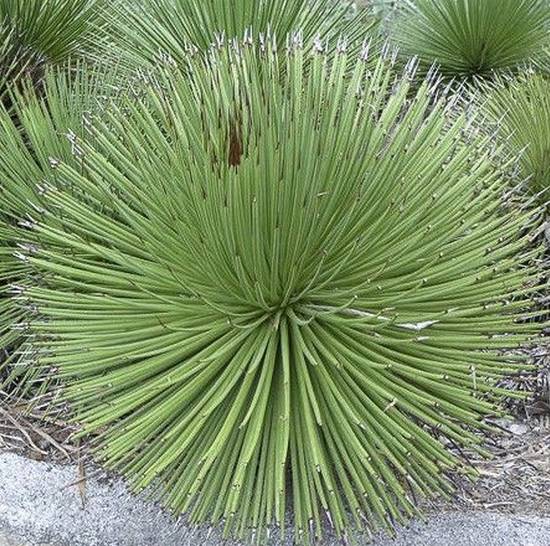
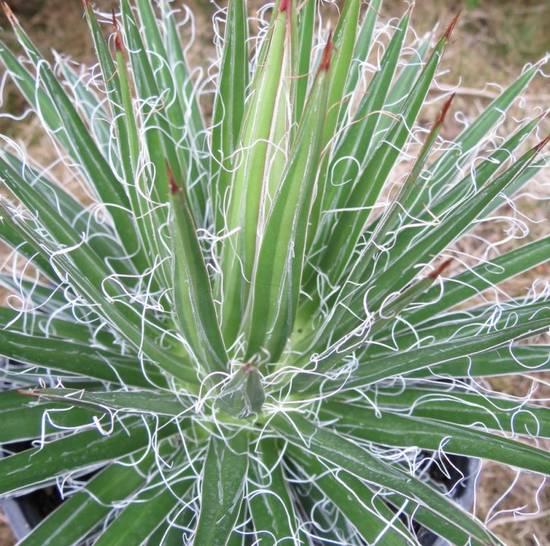
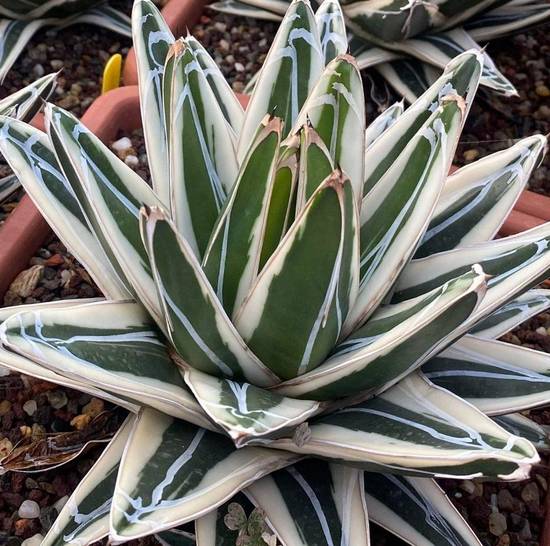
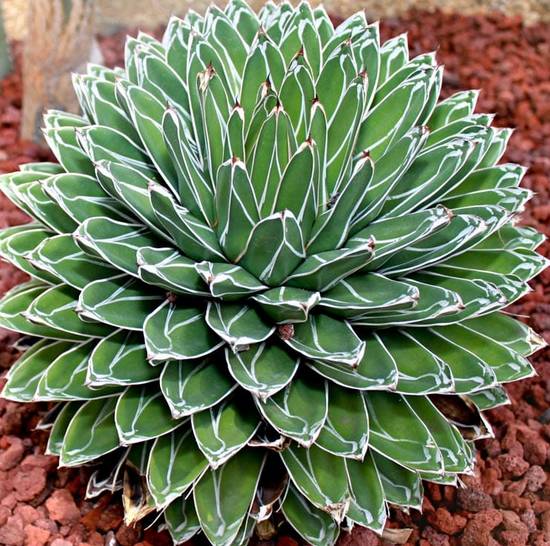
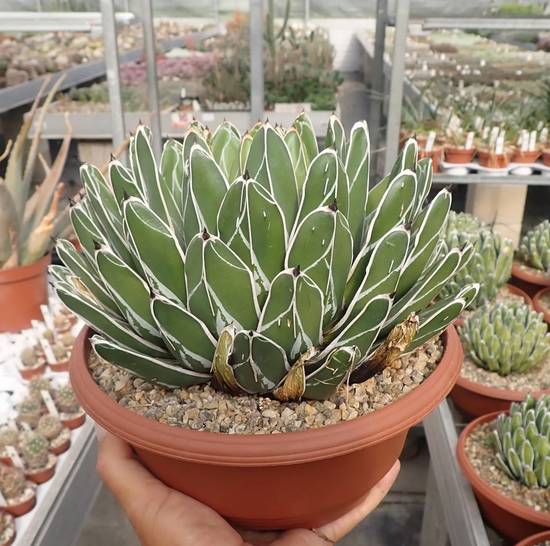
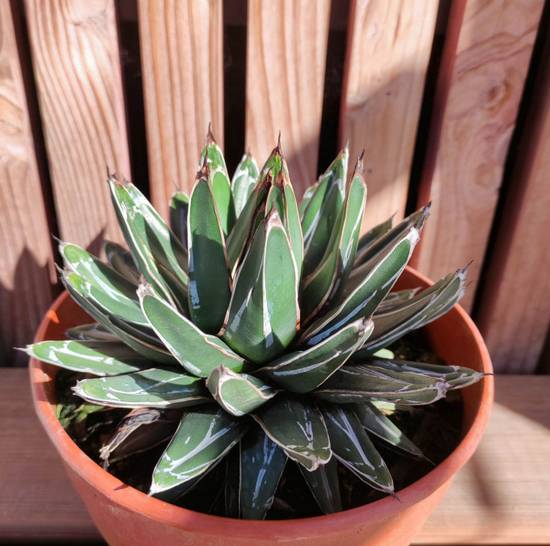
The Agave Victoriae-Reginae, also known as the Queen Victoria agave, is a remarkable succulent admired for its compact, geometric, and architectural form. Native to the Mexican desert, it forms a dense and symmetrical rosette of thick, short, triangular leaves edged with delicate white markings.

Unlike other more aggressive agaves, this species remains relatively small, rarely exceeding 45 cm in diameter. Its elegant and graphic silhouette makes it a top choice for collectors of rare plants, whether grown in pots or dry gardens.

Its slow growth and exceptional longevity make it a lasting botanical companion, as well as a true living sculpture. It flowers only once in its lifetime, producing an impressive flower stalk before dying — often after several decades.

The Agave Victoriae-Reginae is endemic to northeastern Mexico, mainly in the state of Coahuila. It grows in semi-desert regions, often on rocky slopes where drainage is excellent and sunlight abundant.

It is perfectly adapted to arid conditions, with exceptional resistance to drought and full sun.
Light is essential for keeping your Agave Victoriae-Reginae compact and well-colored:

🌞 Direct sunlight: at least 6 hours per day

🌤️ Indoors: place near a large south-facing window or under a grow light

🛑 Avoid: prolonged shade, which causes etiolation and slows growth.
This agave hates stagnant moisture. Watering must be spaced and carefully controlled:

🌱 Growing season (spring/summer): water every 15 to 20 days, only when the substrate is completely dry

🍂 Dormant period (autumn/winter): drastically reduce watering, or stop entirely if conditions are cool

⚠️ Tip: slightly wrinkled leaves are a sign it is time to water.
The Agave Victoriae-Reginae tolerates heat very well and even short frosts:

🔥 Ideal temperature: between 20 and 35°C

❄️ Cold resistance: down to −5°C when dry for well-established plants

🏠 Overwintering: indoors in bright conditions if temperatures fall below freezing.
Good drainage is the key to success with this plant:

🪨 Recommended mix: 40% cactus soil + 30% pumice + 30% pozzolana

💡 Never compact the substrate: air between particles is as vital as water.
The Agave Victoriae-Reginae flowers only once in its life, after 15 to 30 years of growth:

🌼 Flowers: yellow to cream, carried on a tall flower stalk often exceeding 2 meters

📍 Emergence: from the center of the rosette

Duration: several weeks; offsets may sometimes appear before the mother plant dies.
FAQ - Agave Victoriae-Reginae

Can Agave Victoriae-Reginae be grown in a pot?
Yes, it is even recommended in cold climates. Use well-drained cactus potting soil with pumice and pozzolana.
Is Agave Victoriae-Reginae toxic?
Its sap may be slightly irritating, but it is not toxic to animals or children under normal contact.
What is the lifespan of Agave Victoriae-Reginae?
15 to 30 years. It dies after flowering but may produce offsets at the base.
How do I know if Agave Victoriae-Reginae lacks water?
The leaves hollow slightly and become duller. Deep watering quickly resolves this issue.
Does Agave Victoriae-Reginae need a lot of sun?
Yes. Without direct sun, it will become etiolated and lose its compact shape. 6 to 8 hours of direct light are ideal.
Should Agave Victoriae-Reginae be fertilized?
Yes, once a month in spring/summer with a low-nitrogen cactus fertilizer.
Can Agave Victoriae-Reginae be easily propagated?
Not always. Some specimens produce offsets after flowering, but most are propagated by seed.
What are the risks of excess water for Agave Victoriae-Reginae?
Root rot and black spots at the base. Ensure good drainage with pumice and pozzolana.
Can Agave Victoriae-Reginae survive frost?
Yes, down to -5°C in dry conditions, but bring it indoors as soon as possible to avoid cold humidity.
When should Agave Victoriae-Reginae be repotted?
Every 3 to 4 years in spring, with fresh substrate and reinforced drainage.