Agave Potatorum
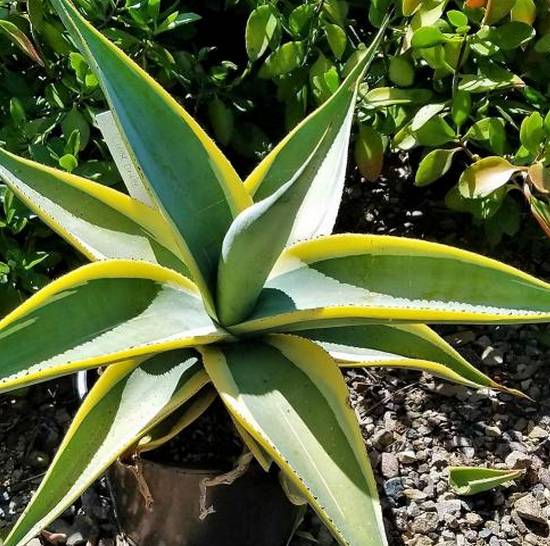
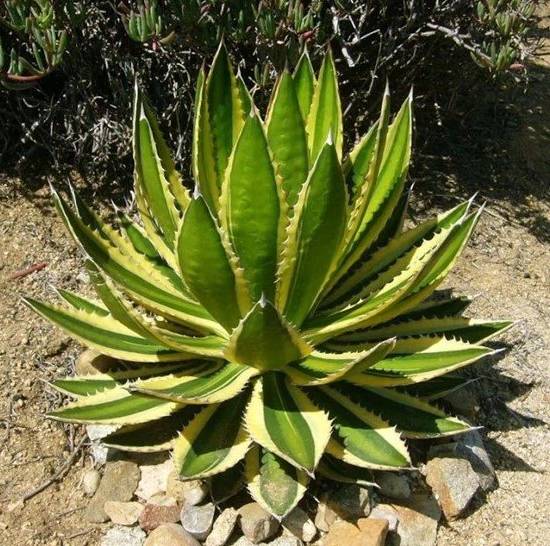
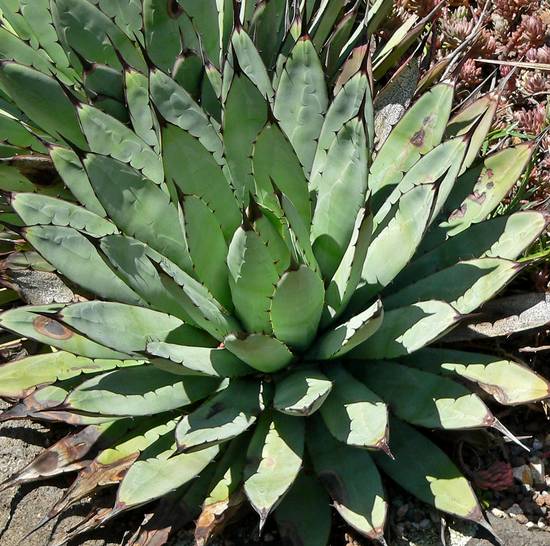
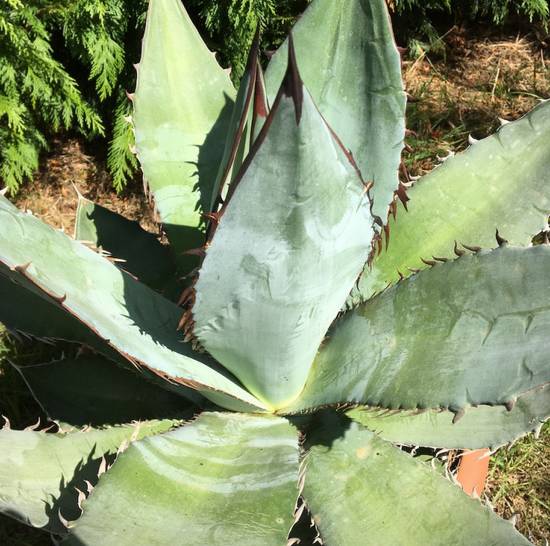
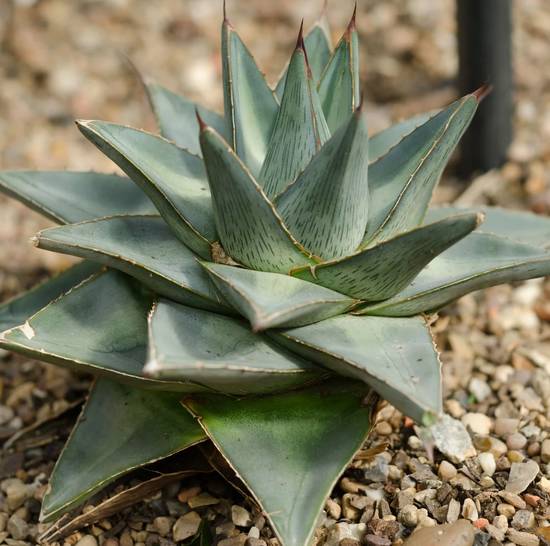
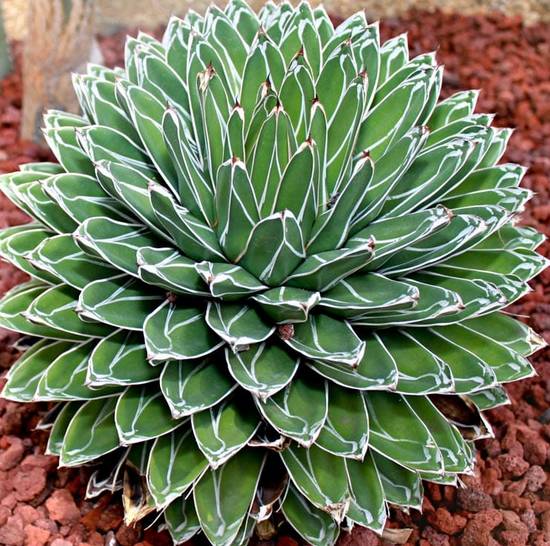
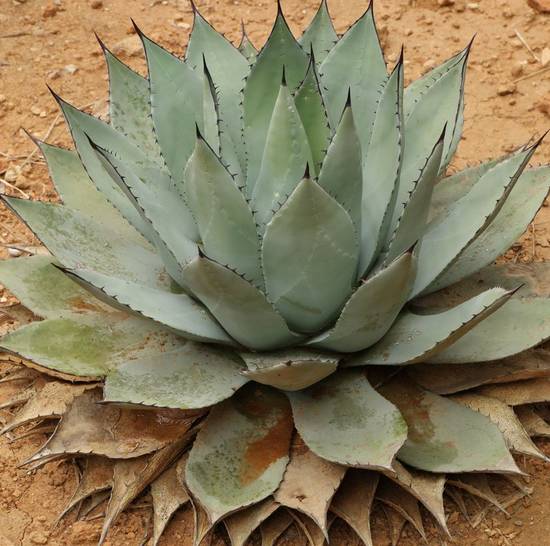
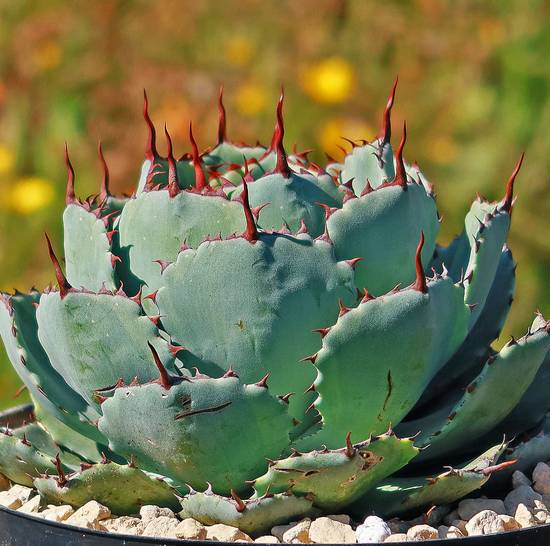
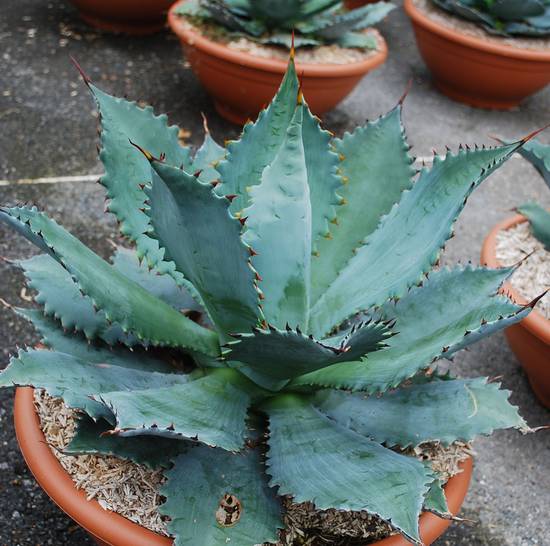
The Agave Potatorum is a succulent plant native to Mexico, particularly prized for its compact and elegant silhouette. Its thick, rigid leaves, arranged in a perfectly symmetrical rosette, display spectacular shades ranging from silvery blue to gray-green, bordered with brown-red teeth that enhance its sculptural character.
With its slow growth and graphic habit, it draws attention both in pots and in the ground in the warmest regions. It is also very well suited to bright indoor cultivation. The Agave Potatorum, sometimes nicknamed the “butterfly agave” because of the shape of its leaves, is a true gem for lovers of graphic and architectural plants.
The Agave potatorum is endemic to the semi-arid mountainous regions of Mexico, particularly in the states of Oaxaca and Puebla. It naturally grows on rocky, poor, well-drained soils, often exposed to intense sunlight and significant temperature variations between day and night.
In its natural habitat, it is traditionally used in the production of mezcal. This link with Mexican traditions further enhances its appeal among collectors.
In its natural habitat, it is traditionally used in the production of mezcal. This link with Mexican traditions further enhances its appeal among collectors.
The Agave Potatorum enjoys bright exposures:
🌞 Full sun: Ideal for intensifying the bluish color and reinforcing the compactness of the rosette.
🌤️ Bright light: Indoors, place it near a south- or west-facing window.
⚠️ Warning: During heatwaves, light temporary shade will prevent browning of leaf tips.
🌞 Full sun: Ideal for intensifying the bluish color and reinforcing the compactness of the rosette.
🌤️ Bright light: Indoors, place it near a south- or west-facing window.
⚠️ Warning: During heatwaves, light temporary shade will prevent browning of leaf tips.
Like all agaves, it fears excess water:
🌱 Spring / Summer: Water moderately, about every 2 to 3 weeks, allowing the cactus potting soil to dry completely between waterings.
🍂 Autumn / Winter: Very infrequent watering or completely stopped indoors. Never water if the temperature drops below 10 °C.
💡 Excess water quickly leads to crown rot, especially if drainage is insufficient.
🌱 Spring / Summer: Water moderately, about every 2 to 3 weeks, allowing the cactus potting soil to dry completely between waterings.
🍂 Autumn / Winter: Very infrequent watering or completely stopped indoors. Never water if the temperature drops below 10 °C.
💡 Excess water quickly leads to crown rot, especially if drainage is insufficient.
The Agave Potatorum prefers warmth:
🌞 Optimal growth temperature: Between 20°C and 28°C.
❄️ Cold resistance: Can tolerate brief drops to -2°C if the soil is perfectly dry, but in pots it is preferable to bring the plant indoors as soon as temperatures fall below 5°C.
🌞 Optimal growth temperature: Between 20°C and 28°C.
❄️ Cold resistance: Can tolerate brief drops to -2°C if the soil is perfectly dry, but in pots it is preferable to bring the plant indoors as soon as temperatures fall below 5°C.
The soil must be perfectly well-drained. To achieve this, use a mix of:
🪨 50% cactus potting soil, 25% pumice, 25% pozzolana.
🪨 50% cactus potting soil, 25% pumice, 25% pozzolana.
The Agave Potatorum flowers only once in its lifetime (monocarpic plant). This flowering may occur after 10 to 20 years depending on conditions:
🌼 Flower stalk: Can reach 2 to 3 meters in height.
🎨 Flowers: Yellow-green, sometimes tinged with pink.
📆 Period: Generally between late spring and summer.
🌼 Flower stalk: Can reach 2 to 3 meters in height.
🎨 Flowers: Yellow-green, sometimes tinged with pink.
📆 Period: Generally between late spring and summer.
FAQ - Agave Potatorum
How to recognize excess moisture in Agave Potatorum?
Excess moisture causes softening at the base, black spots, and overall wilting. Use a very well-draining substrate such as a mix of cactus potting soil, pumice, and pozzolana.
What is the best substrate for Agave Potatorum?
The best substrate is a mix rich in draining materials. It is recommended to use 50% cactus potting soil, 25% pumice, and 25% pozzolana.
How to recognize underwatering in Agave Potatorum?
Its leaves retract inward, become soft, or lose their bluish tint. Water moderately.
Can Agave Potatorum stay outdoors all year round?
Only in a mild Mediterranean climate and in perfectly drained soil. Elsewhere, it must be overwintered from 5°C in a bright room.
What exposure should be preferred for Agave Potatorum indoors?
Place it near a sunny window (south or west). If light is lacking, its leaves will elongate and pale.
Does Agave Potatorum bloom in a pot?
Yes, but rarely. It requires a well-established adult plant, good care, and sometimes slight stress to trigger flowering.
When should Agave Potatorum be repotted?
Every 3 to 4 years, or when the rosette overflows the pot. Use a pot with drainage holes and a substrate enriched with fertilizer.
Which fertilizer should be used for Agave Potatorum?
Use a liquid fertilizer for cacti in spring, every 4 weeks.
Can Agave Potatorum be propagated?
Yes, by offsets or sowing. Cuttings are rarely practiced.
Which plants pair well with Agave Potatorum?
It pairs well with Echeveria, Aeonium, and ornamental grasses.