Agave Ghiesbreghtii
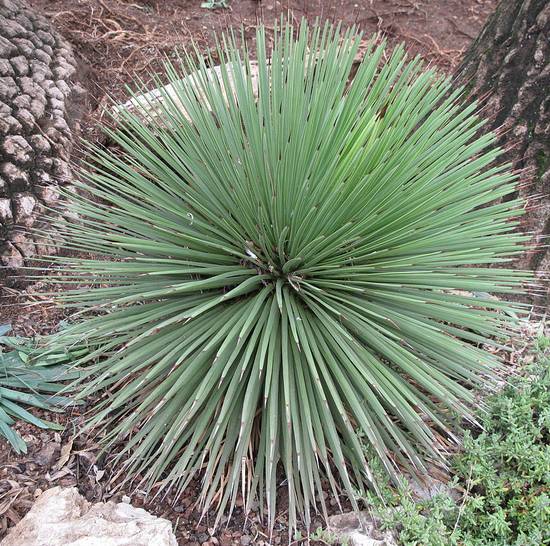
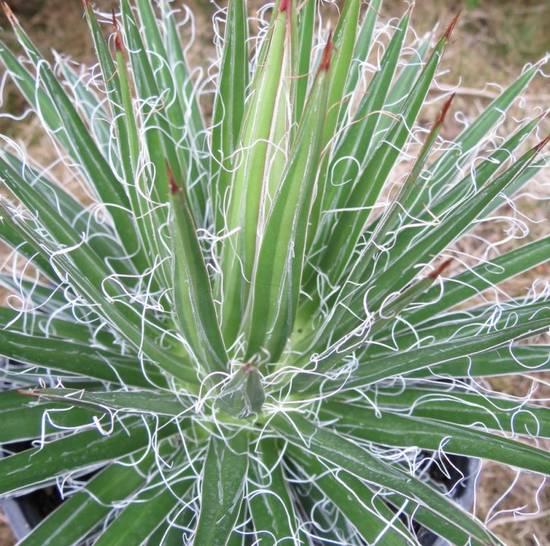
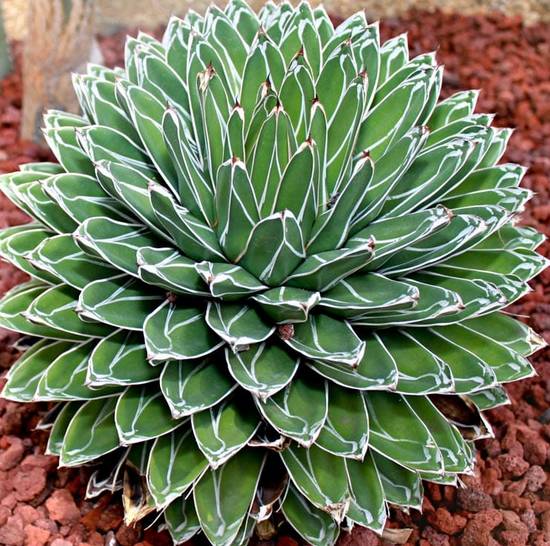
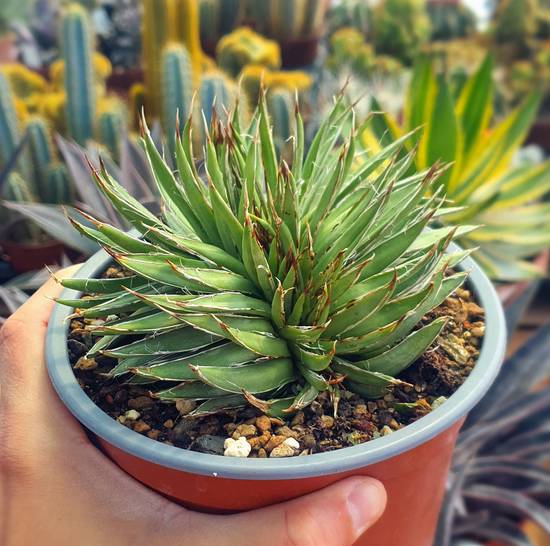
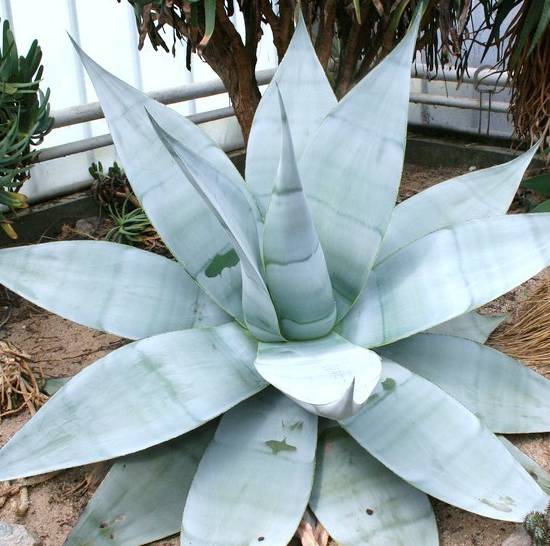
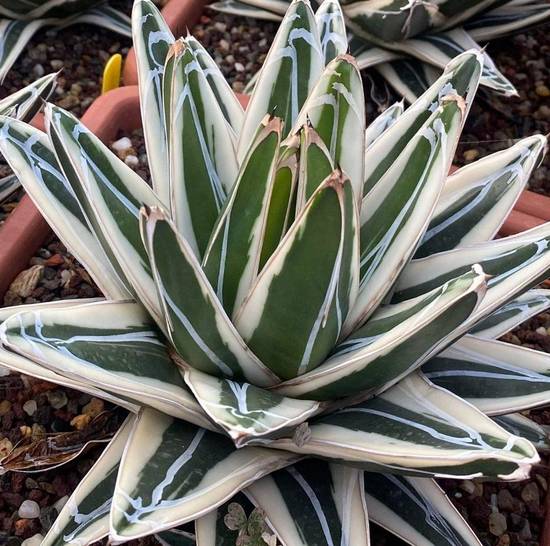
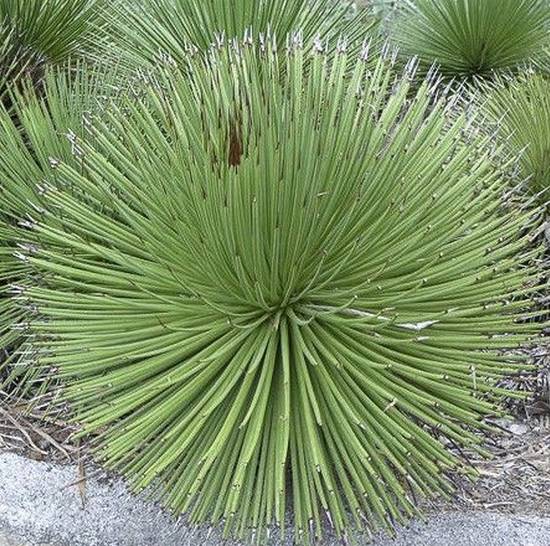
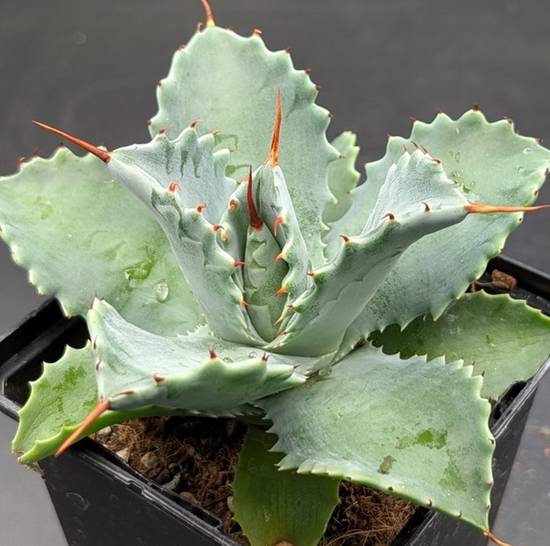
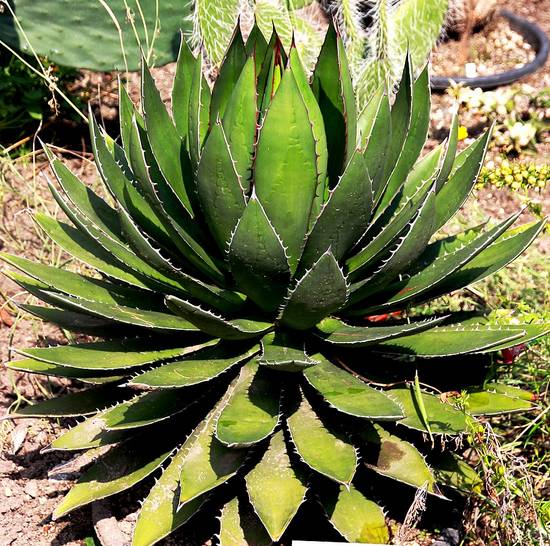
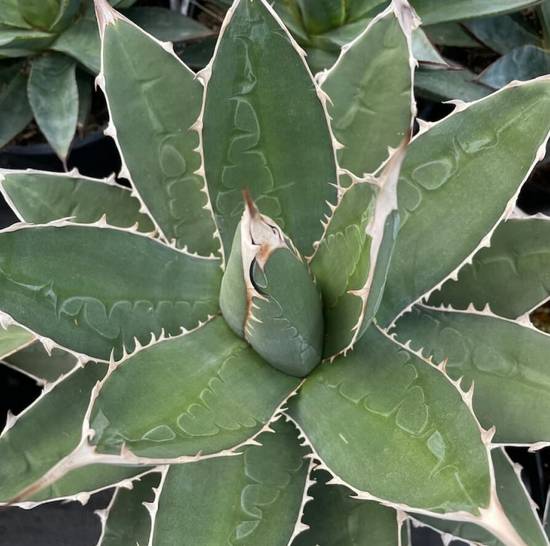
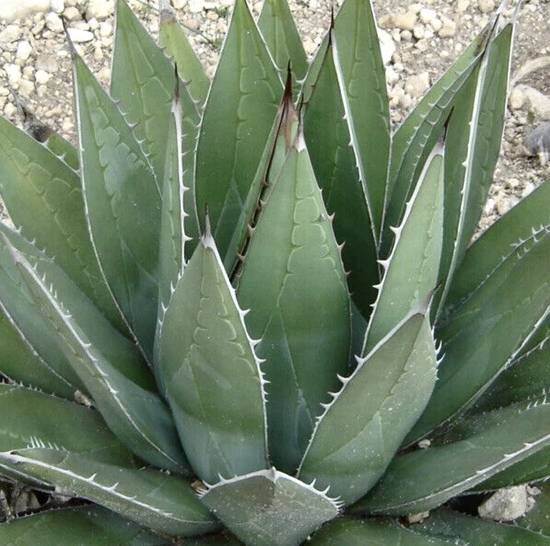
The Agave Ghiesbreghtii is a species still little known in cultivation, yet well worth discovering for its original habit, hardiness and graphic beauty. Native to mountainous areas of Mexico, this agave forms a wide open rosette composed of flexible, elongated leaves slightly curved outward. Its olive-green foliage is sometimes finely streaked with darker tones, and edged with regular fine reddish-brown spines, giving it a very decorative wild charm.
Less rigid than many other agaves, Agave Ghiesbreghtii displays supple and almost graceful foliage, with faster growth than the genus average. In pots, it can reach 40 to 60 cm in diameter, but in open ground, it may exceed one meter depending on growing conditions. Its star-shaped form, the elegance of its arched leaves and its ability to adapt well in temperate climates make it a perfect plant to decorate terraces, rock gardens or even dry gardens.
🌞 Outdoors : choose full sun to promote compact growth, intense colors and better disease resistance.
🌤️ Indoors : a veranda or very bright room is necessary. It tolerates partial shade, but strong light remains ideal.
💡 If light is insufficient, the leaves tend to elongate and lose their natural flared habit.
🌱 During the growing season : watering every 2 to 3 weeks is sufficient, always allowing the substrate to dry completely between waterings.
🍂 In winter : drastically reduce watering, or stop completely if kept cool.
🚫 Beware of excess water : this species can be sensitive, especially in pots and in cold weather. A soft base or yellowing leaves should raise concern.
🌡️ Ideal temperature : between 18°C and 28°C.
❄️ Cold resistance : down to –6°C in dry soil, or slightly lower if winters are short and dry.
🏠 Container cultivation : bring it indoors in winter in humid regions or areas prone to prolonged frost.
🪨 A good mix includes a cactus substrate lightened with 30 to 50% perlite or pozzolana. Consider a drainage layer at the bottom of the pot.
🌸 Flower stalk : up to 3 meters high, emerging from the center of the rosette.
🎨 Flowers : tubular, greenish-yellow to bright yellow, very nectar-rich.
🕑 Monocarpic : like all agaves, it flowers only once in its lifetime, often after more than 10 years, then dies. However, it may produce offsets.