Agave Utahensis
The Agave Utahensis is a fascinating species of North American Agave, known for its impressive hardiness and wild aesthetic. Native to the mountainous regions of the southwestern United States, it grows in extreme environments where frost, drought and intense sun follow one another. This makes it one of the rare agaves capable of withstanding severe frosts, making it particularly suitable for dry gardens in temperate climates.
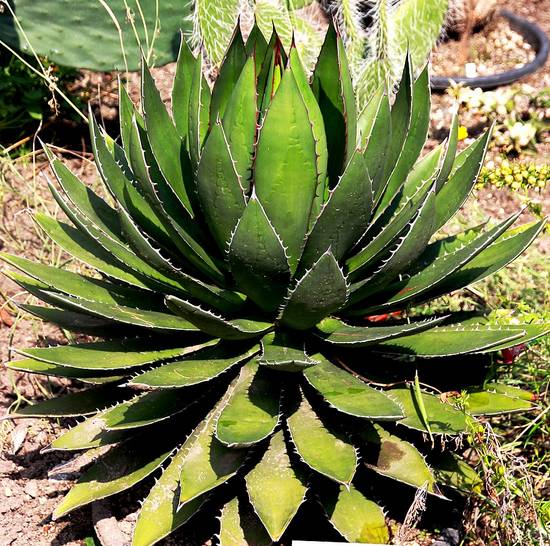
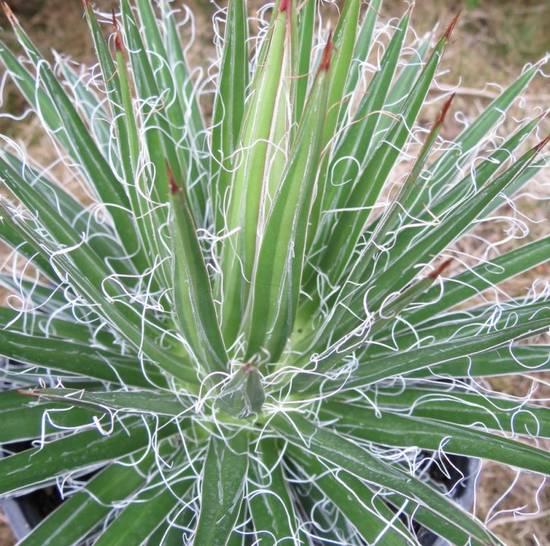
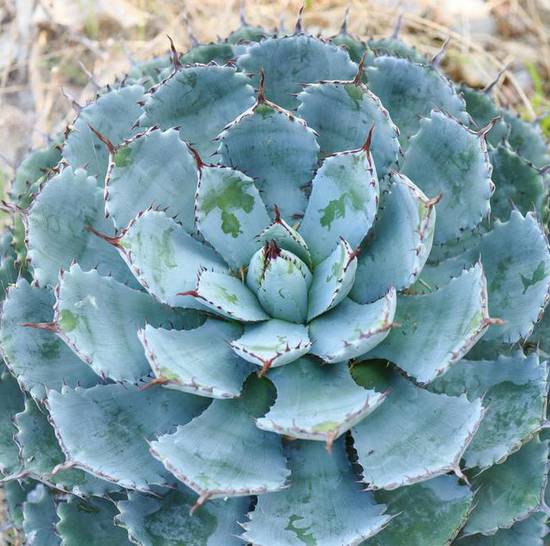
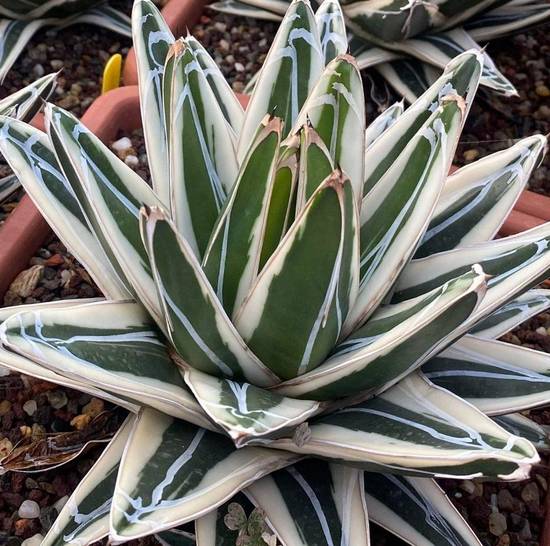
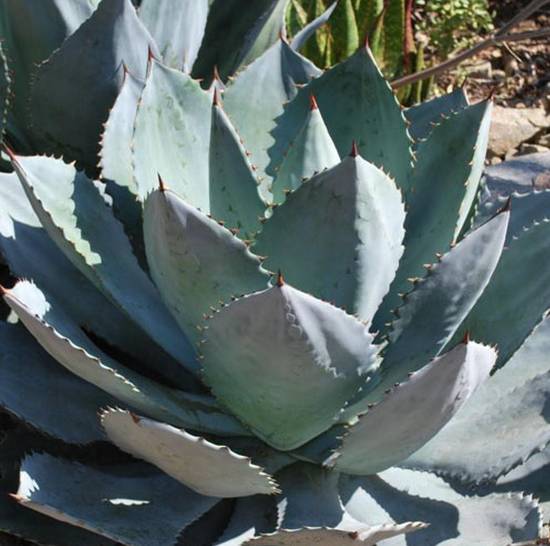
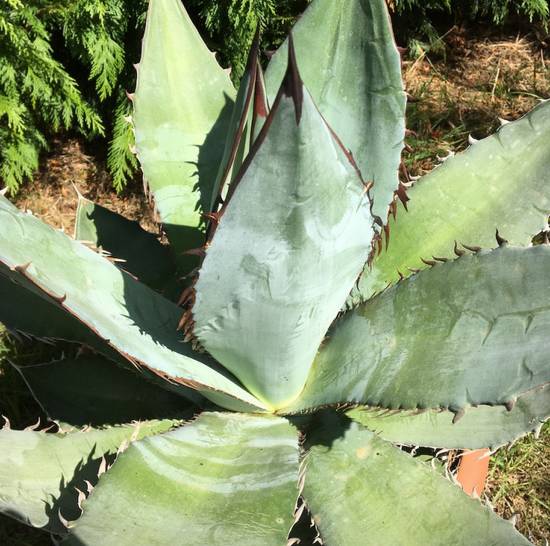
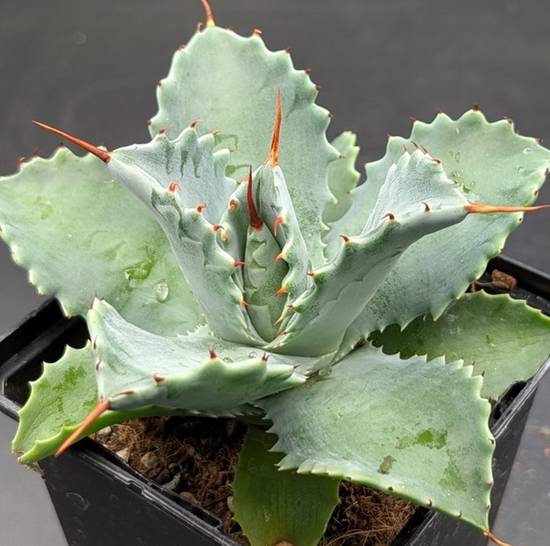
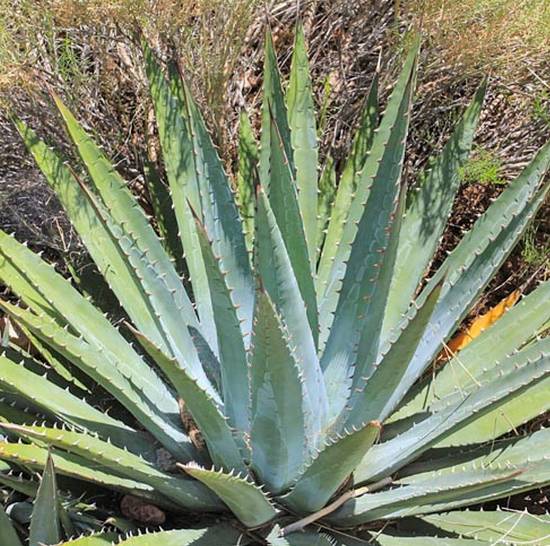
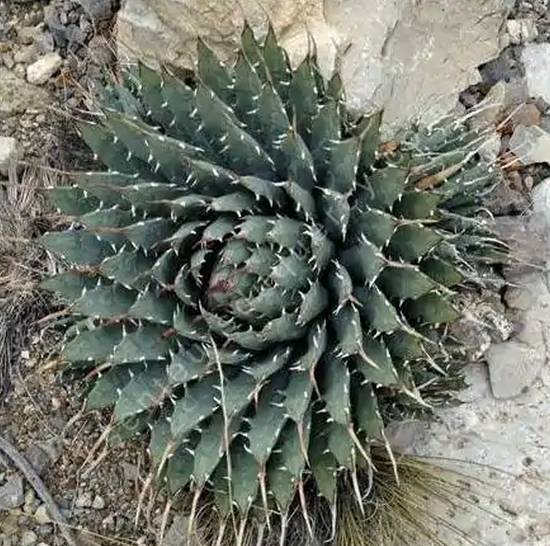
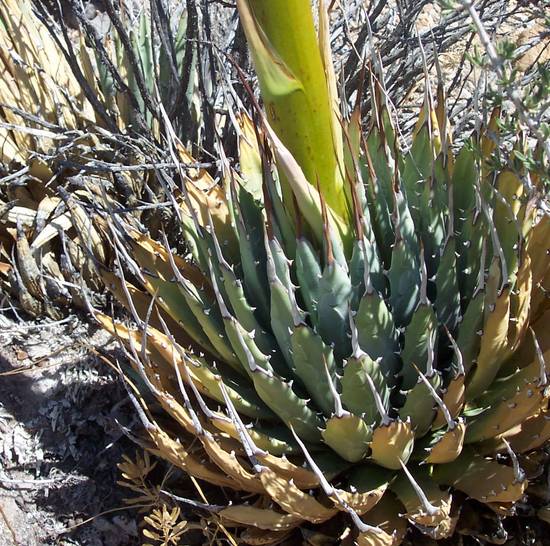
This agave forms a dense and rigid rosette composed of narrow, stiff and elongated leaves, colored glaucous green to blue-green. The leaves are edged with small sharp teeth and end in a long dark brown terminal spine. What stands out about Agave Utahensis is its almost wild appearance, with arched and bristling leaves that give it a raw and natural look.
Compact, it reaches on average 30 to 40 cm in diameter, making it an excellent choice for rock gardens, green roofs or raised containers. Very slow-growing, it offers great longevity and requires little maintenance once well established. Its charm lies as much in its sculptural appearance as in its incredible ability to adapt to harsh climates.
🌞 Outdoors : south-facing exposure, at least 6 hours of direct sun per day.
🌤️ Indoors : possible if it receives plenty of light, near a well-exposed bay window.
⛔ To avoid : prolonged shade, which weakens the plant and encourages disease.
💧 In summer : watering every 3 weeks if in a pot, even less in the ground.
❄️ In winter : complete stop of watering. It fears humidity more than cold.
⚡ Advice : in pots, prefer bottom watering to avoid wetting the central rosette.
🌡️ Ideal temperatures : between 10 and 30 °C during the season.
❄️ Hardiness : it can withstand down to –15 °C, even occasionally –20 °C if the soil is dry.
🏠 Wintering : unnecessary in dry temperate climates. In pots, bring indoors in case of prolonged winter humidity.
🌼 Flower stalk : very tall (up to 3 meters), with numerous pale yellow to cream flowers.
🌱 After flowering : the plant dies, but may produce basal offsets if it was well developed.