Agave Pygmae Dragon Toes
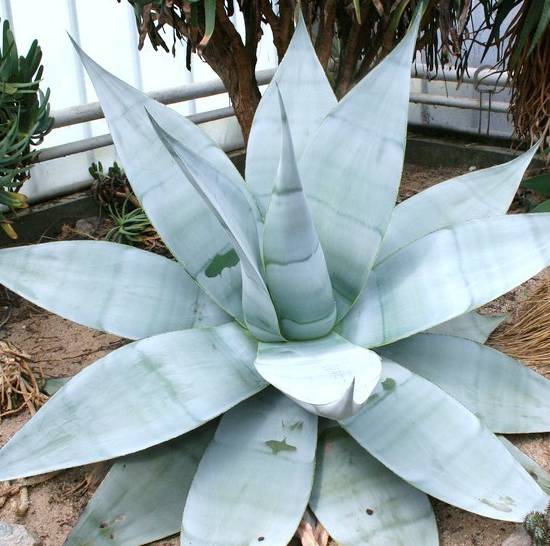
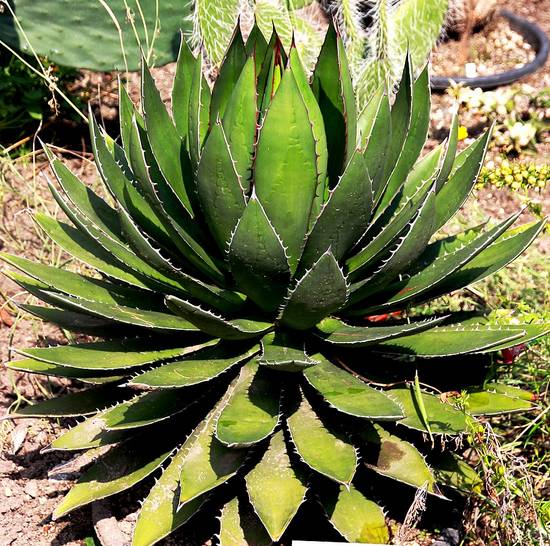
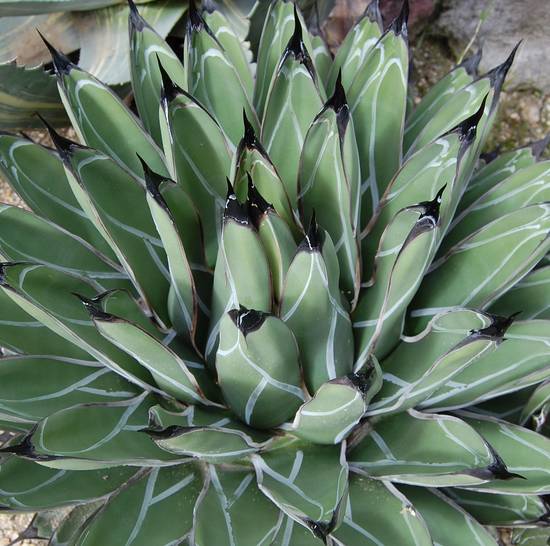
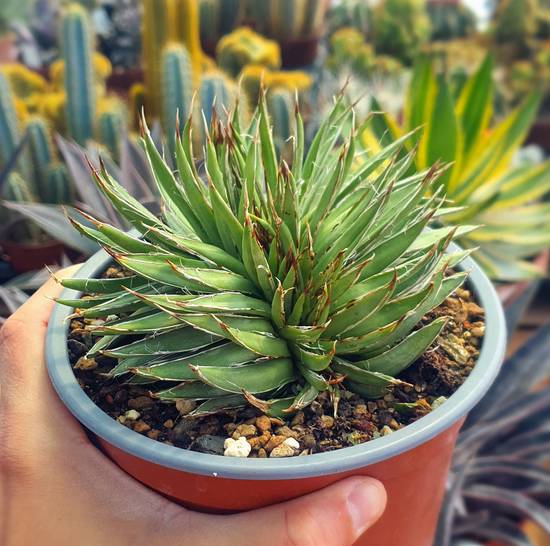
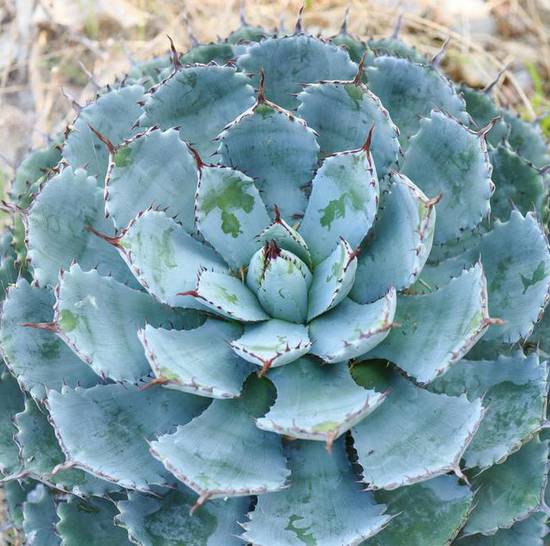
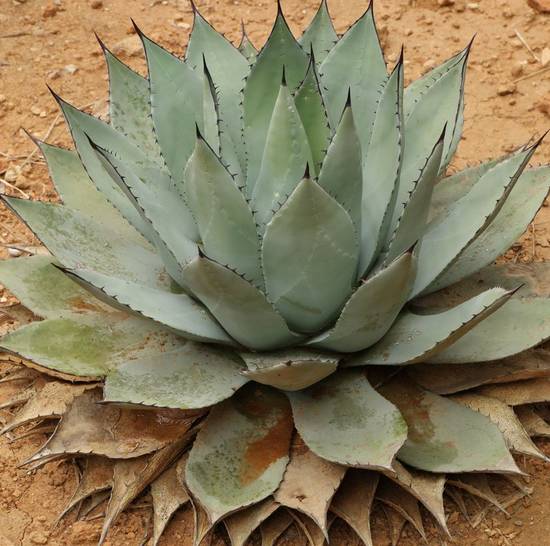
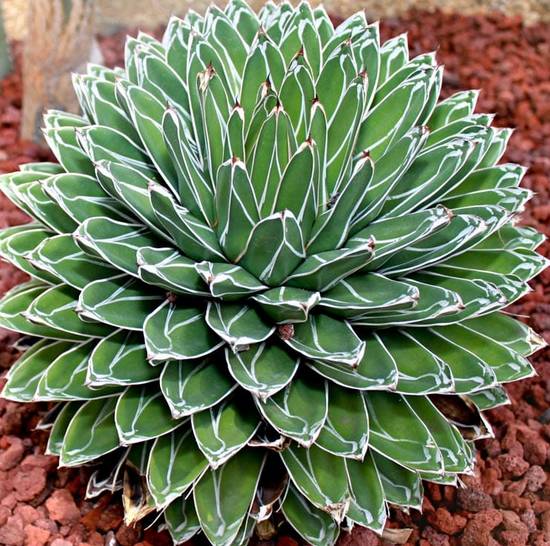
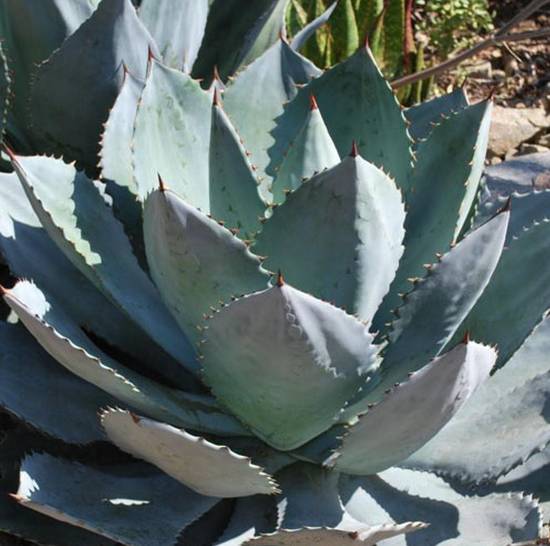
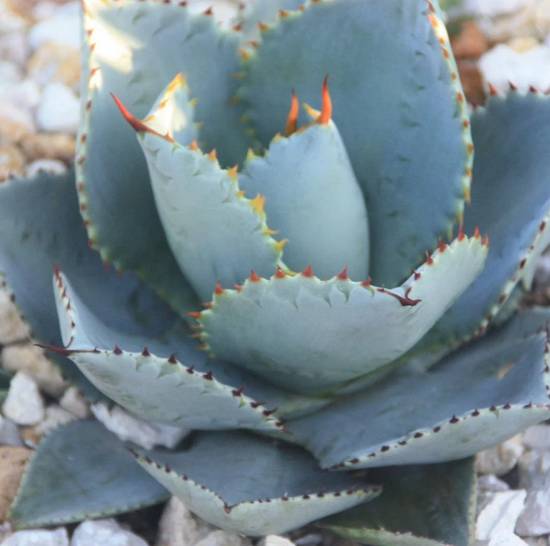
The Agave Pygmae Dragon Toes is a small ornamental Agave particularly appreciated for its compact silhouette, robustness, and the elegance of its leaves. Native to southern Mexico, this miniature variety is ideal for small spaces, decorative pots, or rock gardens. It takes its name from the slightly curved shape of its thick and smooth leaves, reminiscent of dragon claws, making it a highly graphic and decorative plant.
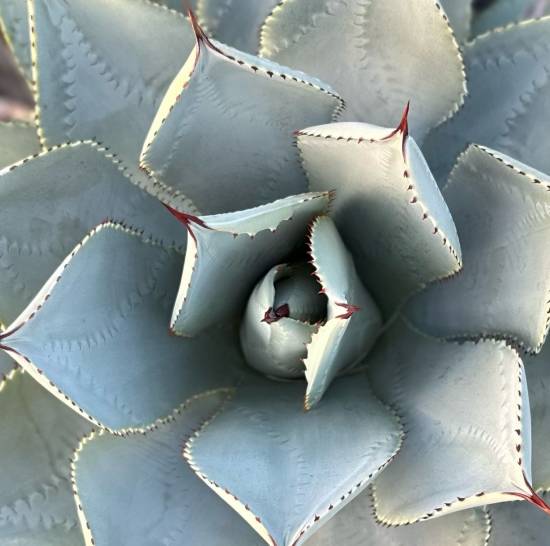
Its dense rosette, rarely wider than 30 cm, is composed of light green to grey-green leaves with finely serrated margins. Each leaf ends with a short central spine, reddish-brown in color. In cultivation, the plant remains very orderly and displays perfect symmetry, appealing to both collectors and lovers of dry gardens or modern plant design. Its slow growth and drought tolerance make it an easy plant to live with, even for beginners.
Thanks to its small size and resilience, Agave Pygmae Dragon Toes is perfect for container growing on a balcony or terrace, but it can also be planted in the ground in regions with mild climates. Its sculptural appearance immediately draws attention, even without flowering.
🌞 Full sun : recommended to intensify colors and strengthen the compact structure of the rosette.
🌤️ Partial shade : tolerated, but the plant will be less colorful and looser.
🌱 Indoors : place it near a very bright window, ideally facing south.
💧 Spring / summer : watering every 2 to 3 weeks is sufficient, only when the substrate is completely dry.
🍂 Autumn / winter : almost stop all watering, especially if temperatures fall below 10 °C.
⚠️ Warning : excess water is the main cause of rot. It is better to miss a watering than to overwater.
🌡️ Ideal : between 20 and 30 °C during the growing period.
❄️ Resistance : down to –3 °C if the soil is perfectly dry, but it is best protected from frost.
🏠 In winter : a sheltered, bright and frost-free location is recommended.
🌸 Flowering : rarely before 10 to 15 years, with a large upright flower stalk.
🕑 After flowering : the plant dies, but may produce lateral offsets.