Agave Ferdinandi-Regis

Agave Ferdinandi-Regis

Agave Ferdinandi-Regis

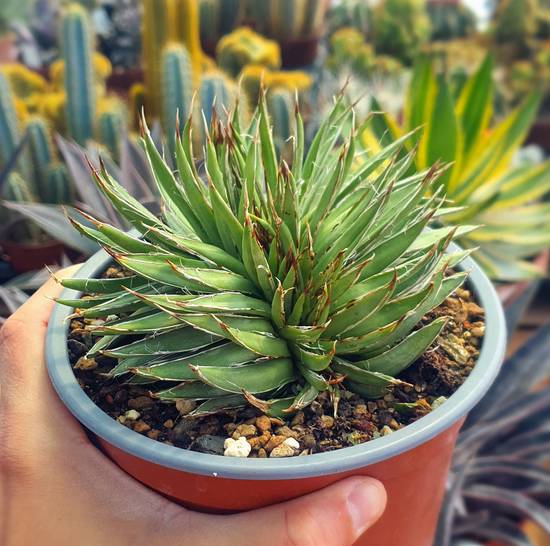
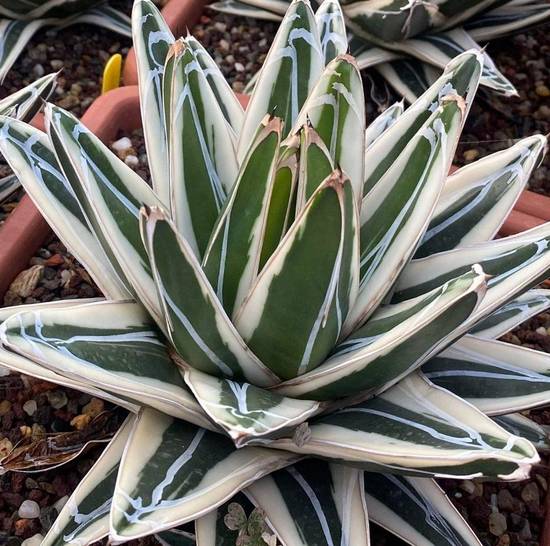
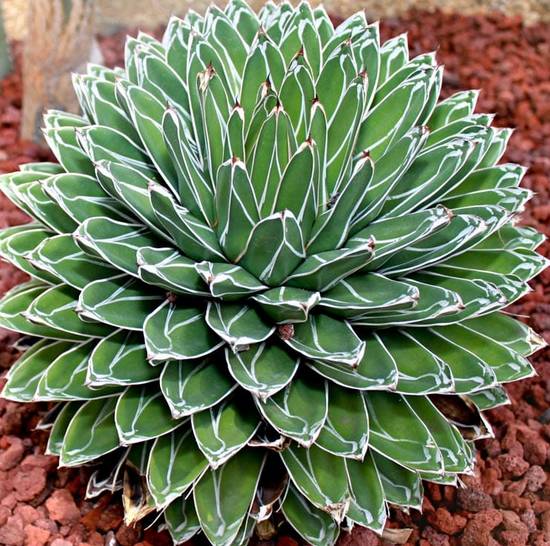
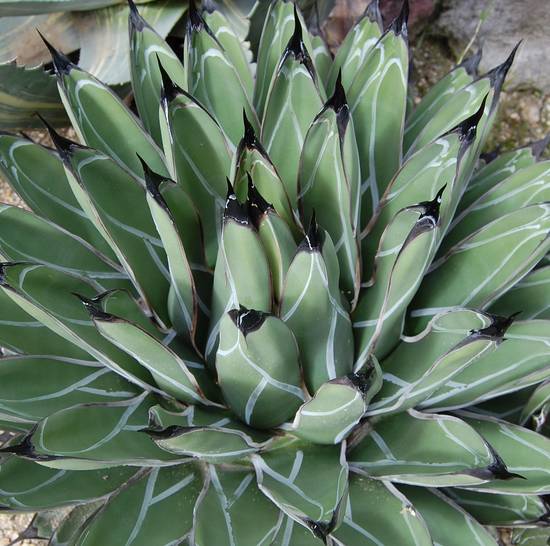
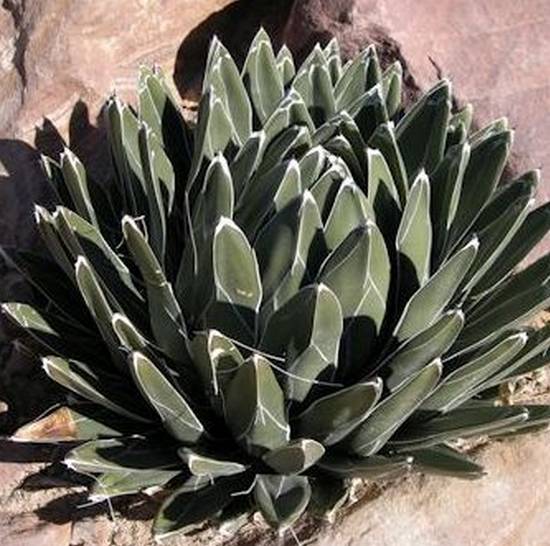
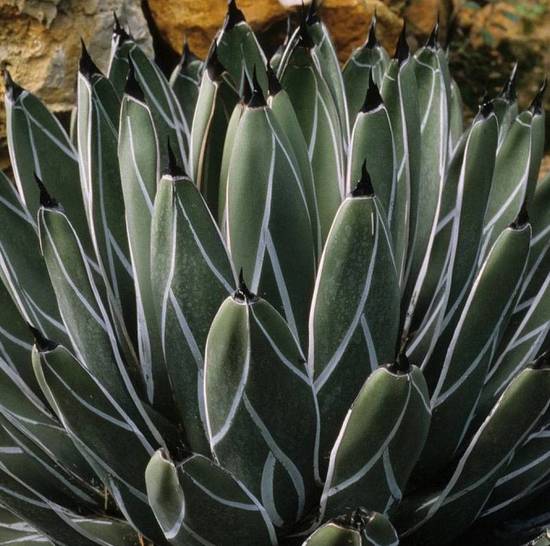
The Agave Ferdinandi-Regis, also known as King Ferdinand’s Agave, is one of the most iconic Agaves in the plant world. Appreciated for its architectural habit and its almost spherical dense rosette, this succulent plant stands out for its extreme elegance. Each thick, dark green and rigid leaf is highlighted by marked white lines that follow the margins and the center, as if hand-drawn. These characteristic stripes make it a true vegetal work of art.

Compact and geometric, Agave Ferdinandi-Regis grows slowly and remains small, rarely exceeding 45 cm in diameter at maturity. Its perfect appearance makes it a preferred subject for lovers of sculptural and minimalist plants. It is a rare species, often cultivated in pots for close observation, but it can also be integrated into a dry garden or rockery, provided it receives good winter protection.

Thanks to its slow growth, this agave requires little maintenance, apart from good light, a perfectly draining substrate and moderate watering. It delights collectors and is often considered a centerpiece in a succulent collection.

Agave Ferdinandi-Regis is native to the semi-desert areas of northeastern Mexico, mainly in the limestone mountains of the states of Coahuila and Nuevo León. In its natural habitat, it grows on well-exposed rocky slopes, often among stones, which explains its strong drought tolerance and its need for perfectly draining soil.
Agave Ferdinandi-Regis requires very bright exposure to remain compact and preserve the vividness of its white lines :

🌞 Outdoors : direct sun, at least 6 hours per day.

🌤️ Indoors : place it behind a south-facing window or under horticultural lighting.

💡 Tip : the brighter the exposure, the more pronounced the contrast of the white patterns.
Agave Ferdinandi-Regis is very sensitive to stagnant moisture :

💧 Spring / summer : water only when the substrate is completely dry, about every 15 to 20 days.

🍂 Autumn / winter : greatly reduce or stop watering depending on conditions.

⚠️ Advice : in pots, avoid saucers filled with water and choose a container with drainage holes.
Adapted to arid climates, Agave Ferdinandi-Regis is fairly hardy if kept dry :

🌡️ Ideal : between 20 and 30 °C during the growing season.

❄️ Tolerance : down to –5 °C if the soil is perfectly drained.

🏠 Wintering : bring it indoors as soon as temperatures drop below 5 °C in humid climates.
🪨 A draining soil is essential to prevent root rot: cactus substrate base, 30 to 40% perlite to aerate and complete with 20% pozzolana to ensure deep drainage
Agave Ferdinandi-Regis flowers only once, at the end of its life :

🌸 Flowering : after 15 to 20 years in cultivation, depending on conditions.

📏 Flower stalk : very tall (up to 3 m), bearing pale yellow flowers.

💀 After flowering : the rosette dies, but may produce offsets if the plant is well developed.
FAQ - Agave Ferdinandi-Regis

Is Agave Ferdinandi-Regis suitable for indoor cultivation?
Yes, it can be grown indoors if placed in a very bright location. A south-facing window is ideal to maintain its compact rosette.
What is the best substrate for Agave Ferdinandi-Regis?
Use a cactus substrate enriched with perlite and pumice for optimal drainage.
How often should Agave Ferdinandi-Regis be watered?
In summer, water every two to three weeks. In winter, almost completely stop watering to prevent rot.
Is Agave Ferdinandi-Regis frost hardy?
It can tolerate temperatures close to –5°C if kept dry. In humid climates, it is best brought indoors once temperatures reach 5°C.
When does Agave Ferdinandi-Regis bloom?
Flowering is rare and occurs after 15 to 20 years. A tall flower stalk appears, and the rosette then dies. Offsets may sometimes be produced.
What size can Agave Ferdinandi-Regis reach?
Its rosette reaches about 40 to 45 cm in diameter at maturity, making it suitable for pots or rock gardens.
How should Agave Ferdinandi-Regis be fertilized?
Apply a diluted cactus fertilizer once a month in spring and summer. No fertilizer is needed in winter.
What are the signs of overwatering in Agave Ferdinandi-Regis?
Soft, blackened leaves or loss of rigidity indicate rot. Stop watering immediately and check drainage.
How should Agave Ferdinandi-Regis be repotted?
Repot every 2 to 3 years in spring into a slightly larger pot with well-draining substrate. Handle carefully because of the spines.
Can Agave Ferdinandi-Regis be propagated?
Propagation is difficult because it rarely produces offsets. Sowing is possible but very slow.