Tephrocactus Fulgida
Cristata

Tephrocactus Fulgida Cristata

Tephrocactus Fulgida Cristata

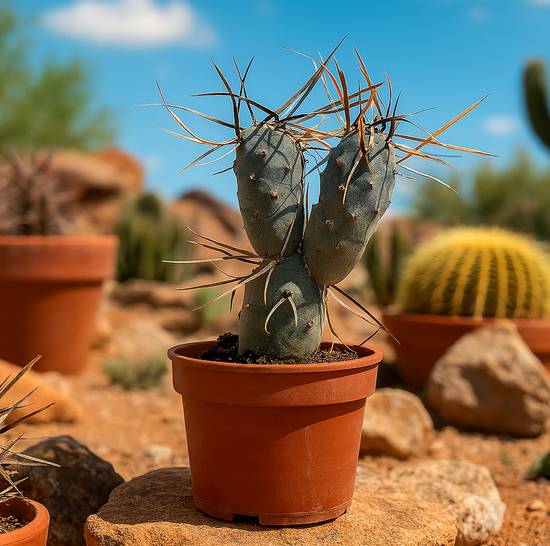
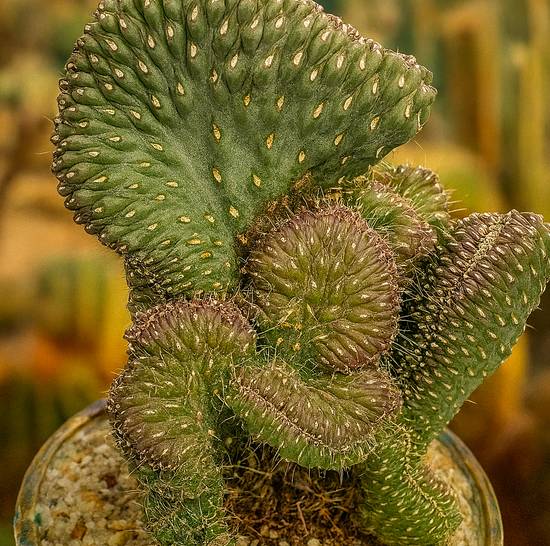
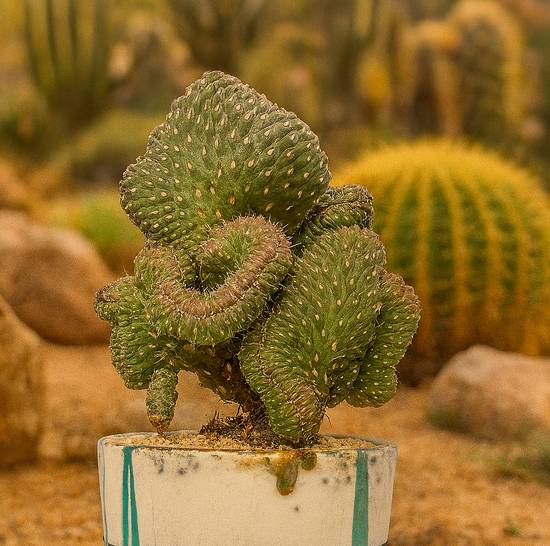
The Tephrocactus Fulgida Cristata is a rare and fascinating form of Tephrocactus Fulgida, whose growth is altered by a crested mutation. This variation produces flattened, misshapen or undulating segments, creating visually chaotic and intriguing structures. Each specimen develops a unique, almost extraterrestrial silhouette that immediately attracts collectors and enthusiasts of unusual cacti.

Native to the arid regions of Argentina, the Tephrocactus Fulgida Cristata is a desert plant by excellence. Its crested form is unstable and may, over time, partially revert to a normal growth habit or intensify depending on growing conditions. This phenomenon makes each plant truly unique and evolving.

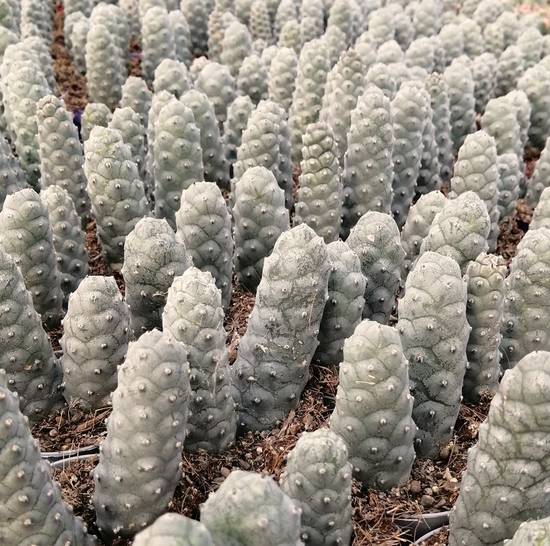
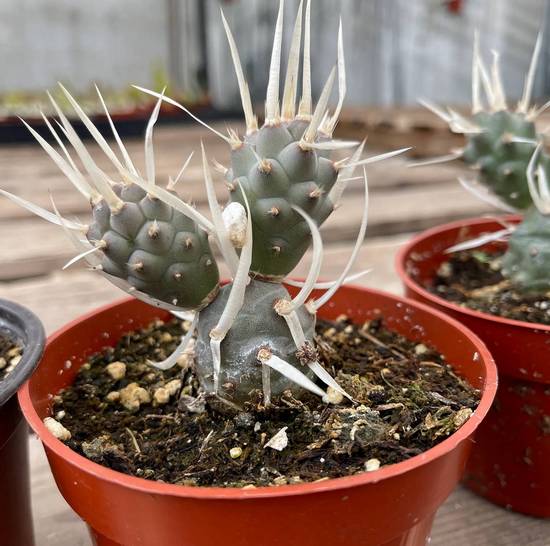
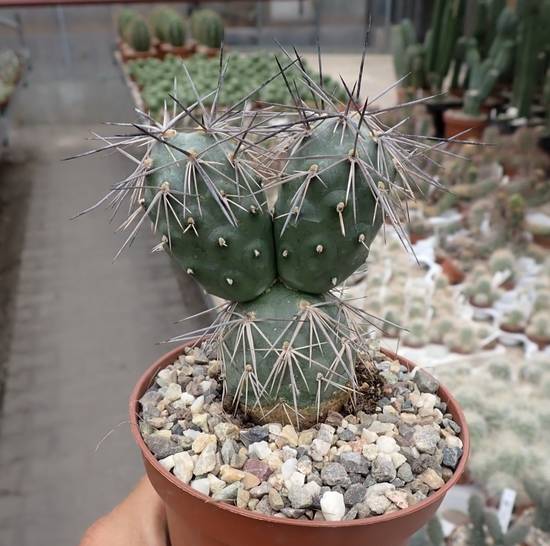
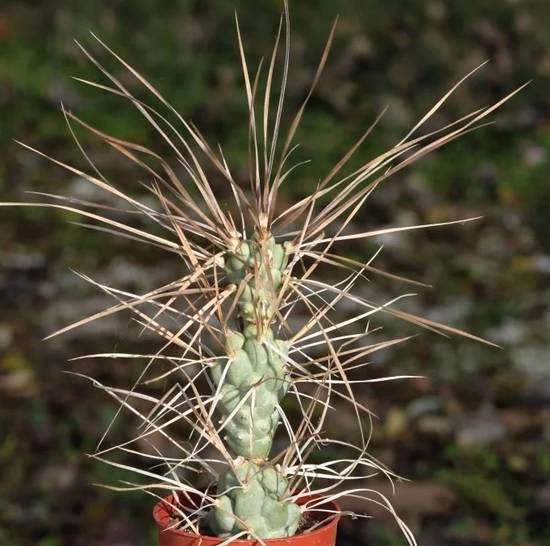
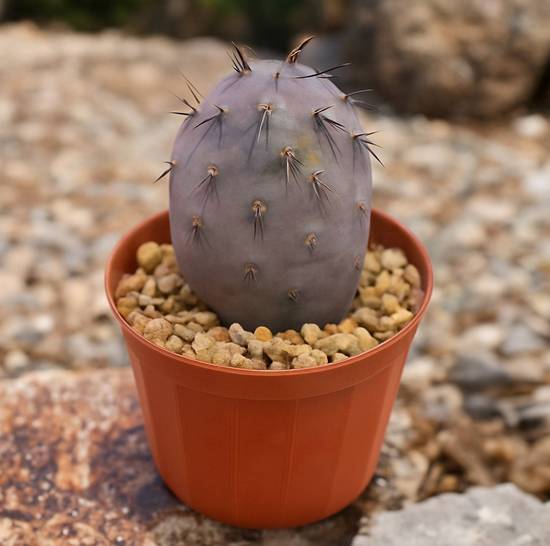
The epidermis is generally gray-green to olive green, covered with small areoles from which white to brown spines may emerge, although the crested form tends to be less spiny. In cultivation, it remains relatively compact but can form dense, twisted clusters with age. Growth is slow but steady with proper care.

The Tephrocactus Fulgida Cristata is a mutant form of Tephrocactus Fulgida, a species native to the desert regions of South America, mainly northwestern Argentina and certain semi-arid areas of Bolivia.

In its natural habitat, it grows in full sun, in extremely poor and well-drained rocky soils, often alongside other cacti and succulent plants adapted to extreme conditions. It withstands strong temperature fluctuations, drought, and intense UV radiation.
☀️ Direct sun: It appreciates a very bright location, with at least 5 to 6 hours of direct sunlight per day.

🌤️ Summer protection: During heatwaves, it is recommended to slightly filter the light at midday to avoid burns on fragile tissues.

💡 Indoor cultivation possible: Indoors, place it near a south-facing window to maximize light exposure.
🌱 Spring / summer: Water approximately every 3 weeks. The substrate must dry completely between waterings.

🍂 Autumn / winter: Watering stopped or very spaced (every 6 to 8 weeks maximum).

⚠️ Warning: Excess moisture is the number one enemy of this cactus. In crested form, the base may be more sensitive to rot.
🌞 Ideal: Between 20 °C and 30 °C to promote slow but stable growth.

❄️ Resistance: Down to 5 °C occasionally, but frost must be avoided.

🏠 Wintering: Bring it into a bright, ventilated, and dry space as soon as temperatures drop below 10 °C.
The Tephrocactus Fulgida Cristata requires an ultra well-draining substrate to avoid water stagnation.

🪨 Ideal mix: 50% cactus soil and 50% minerals (pumice, perlite, gravel).
🕑 Period: spring to early summer, only if the plant is well established.

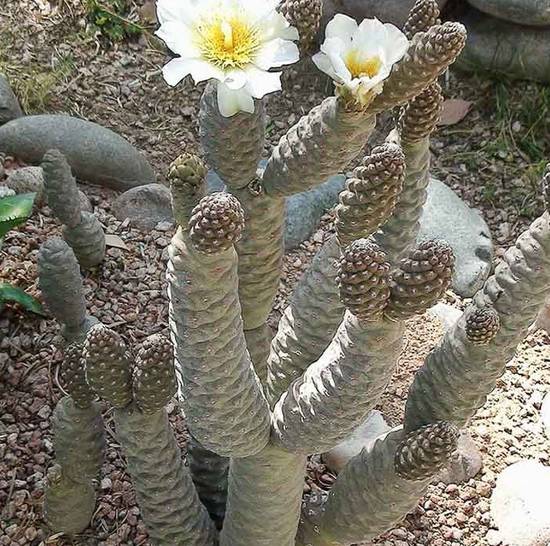
🎨 Color: pale pink to white, with a sometimes reddish-pink center.

📍 Rarity: Flowering is rare in cultivation, especially on the crested form.
FAQ - Tephrocactus Fulgida Cristata

How should Tephrocactus Fulgida Cistata be watered properly?
Watering should be spaced out: every 3 weeks in summer, not at all in winter. Always wait until the substrate is completely dry.
Is Tephrocactus Fulgida Cistata cold hardy?
It tolerates temperatures around 5°C but must be protected from frost. Bring it indoors as soon as it drops below 10°C.
What exposure is ideal for Tephrocactus Fulgida Cistata?
Place it in full sun. It needs direct light for at least 6 hours a day to maintain its compact shape and beautiful colors.
What substrate is recommended for Tephrocactus Fulgida Cistata?
A well-draining substrate such as Fertiligène Cactus Substrate with added pozzolana is recommended.
Does Tephrocactus Fulgida Cistata flower in a pot?
Yes, but rarely. It requires a mature, well-rooted cactus in optimal conditions and controlled water stress.
What is the growth rate of Tephrocactus Fulgida Cistata?
It grows slowly. The crested form makes its growth even more irregular and artistic. It may remain small for a long time before branching.
Can Tephrocactus Fulgida Cistata be propagated by cuttings?
Yes, you can carefully detach a crest, let the wound dry, then replant it in dry substrate. Recovery may be slow.
What fertilizers should be used for Tephrocactus Fulgida Cistata?
A gentle fertilizer such as Undergreen Jungle Fever is ideal, to be used once a month in summer.
Is Tephrocactus Fulgida Cistata toxic?
No, it is not considered toxic, but its segments can be brittle: handle it with care.
Why is my Tephrocactus Fulgida Cistata changing shape?
Crested forms can revert to a normal shape or evolve further depending on light, stress, and watering.