Tephrocactus Articulatus Inermis
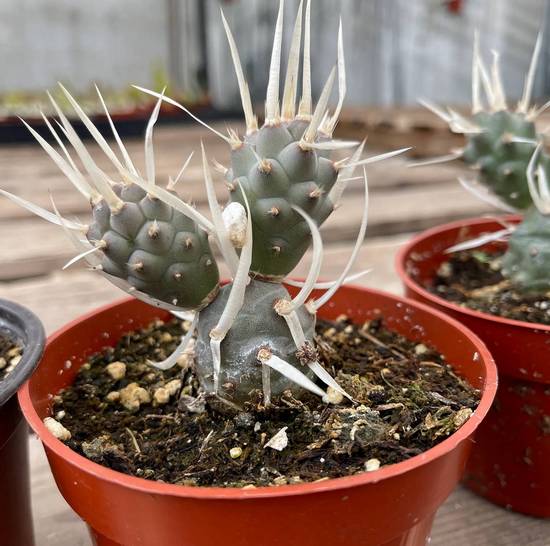
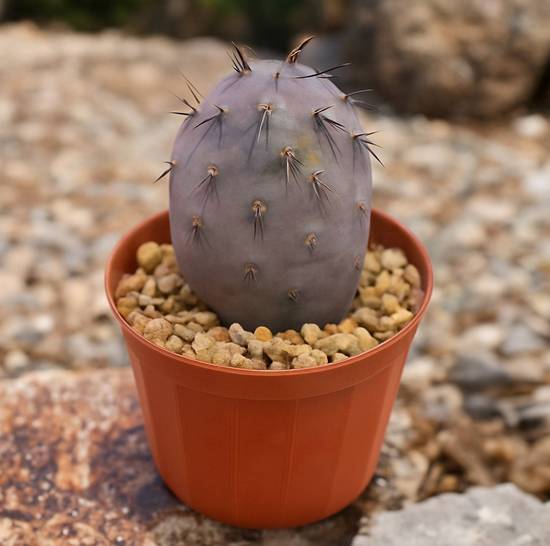
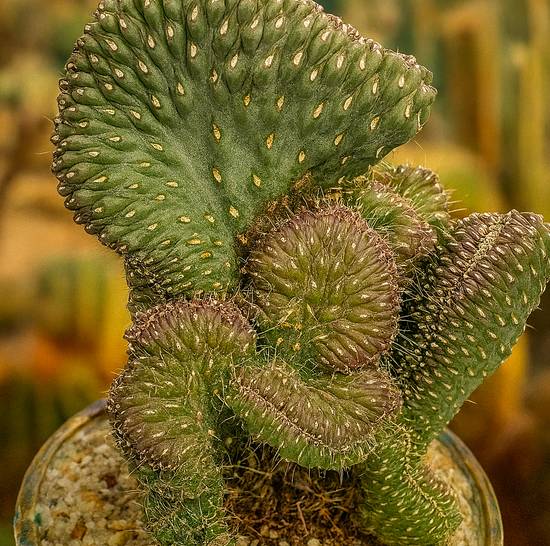
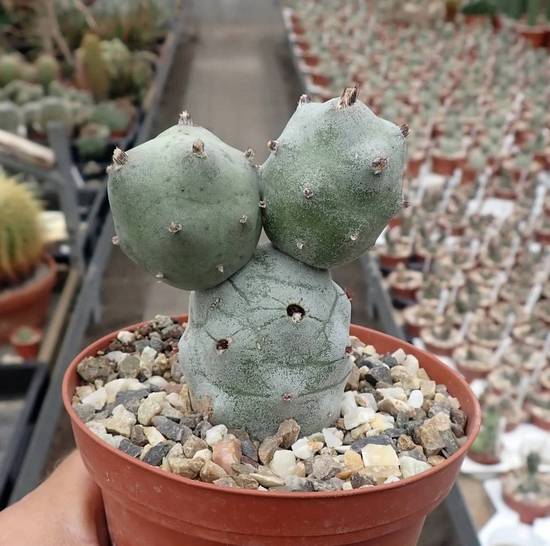
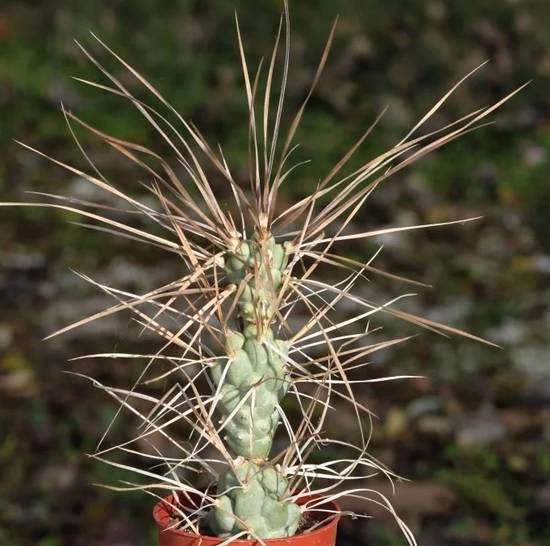
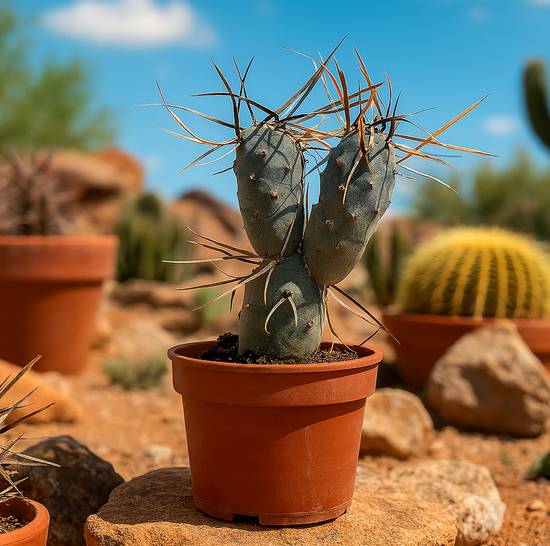
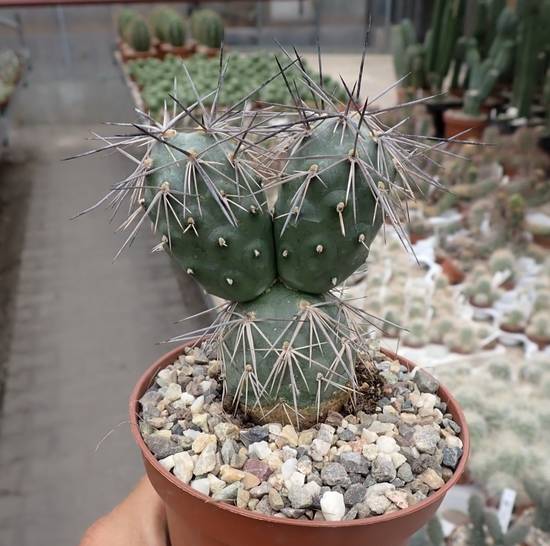
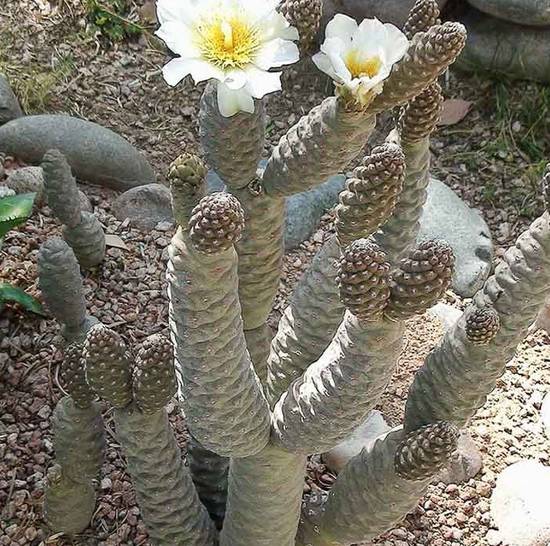
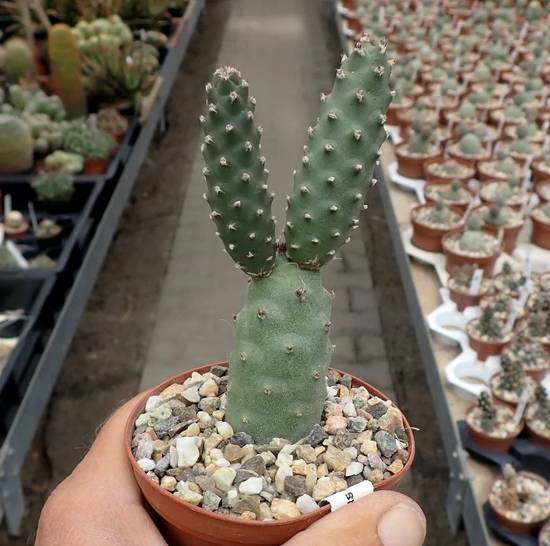
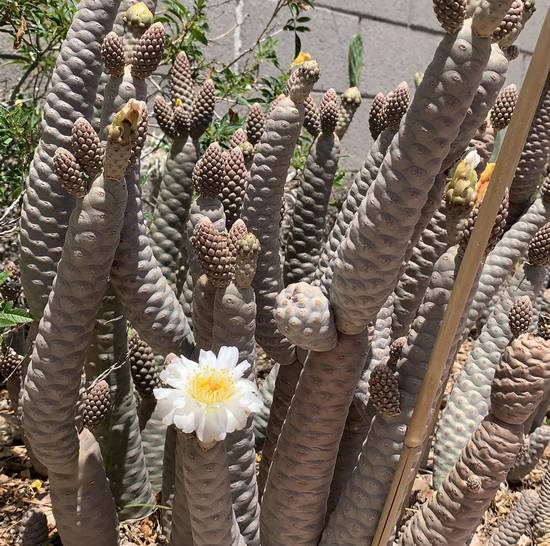
The Tephrocactus Articulatus Inermis is a fascinating form of Tephrocactus Articulatus, recognizable by its stacked pine-cone-shaped segments and, above all, by the complete absence of spines — hence its name “inermis” meaning “unarmed”. This original cactus is highly valued by collectors for its sculptural silhouette and ease of care, while remaining visually striking in a mineral arrangement or as a standalone potted plant.
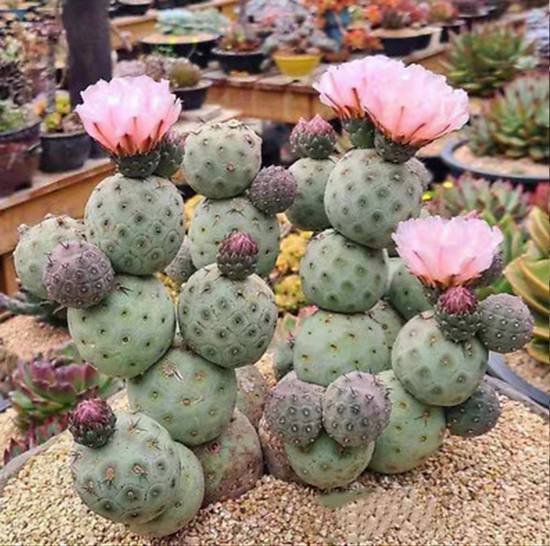
Each segment is ovoid to cylindrical, slightly conical, with a bluish-green to matte gray-green coloration. They stack vertically in an irregular manner, giving the plant an almost fractal appearance. With age, it can form small branching colonies, sometimes unstable, as the segments tend to detach easily with the slightest shock.
Highly decorative and safe to handle thanks to its lack of spines, it is an excellent choice for enthusiasts seeking an unusual cactus, suitable for both indoor and outdoor cultivation (when climate allows).
Its adaptation to extreme conditions explains its high tolerance to drought, heat, and even brief freezing temperatures, provided the substrate remains completely dry.
🌞 Recommended exposure: full sun or very bright light
☁️ Filtered light possible in summer to prevent sunburn if the plant is not acclimated
💡 Low light = etiolation, segment drop, loss of color
Proper exposure promotes harmonious growth and flowering.
🌱 Spring / summer: one watering every 2 to 3 weeks (when the substrate is completely dry)
❄️ Winter: strict dormancy → no watering
⚠️ Beware of excess water → risk of rot at the base
💡 Tip: wait until the segments become slightly soft before watering.
❄️ Cold resistance: down to –4 °C if the soil is completely dry
🏠 Winter: protect as soon as temperatures drop below 5 °C.
🪨 Composition: 30% cactus potting mix + 70% mineral materials (pozzolana, perlite, gravel).
🎨 Color: white to cream, cup-shaped flowers
🌼 Position: at the top of the upper segments
⚠️ Conditions: mature plant, well-respected winter dormancy, abundant light
Flowering remains modest but very elegant, beautifully contrasting with the plant’s segmented structure.