Tephrocactus Articulatus Papyracanthus
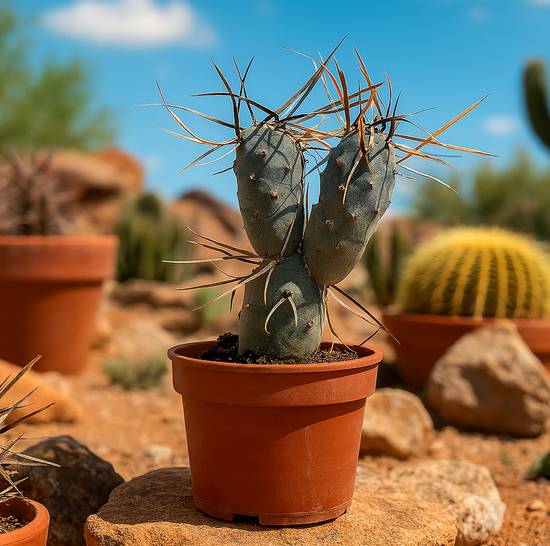
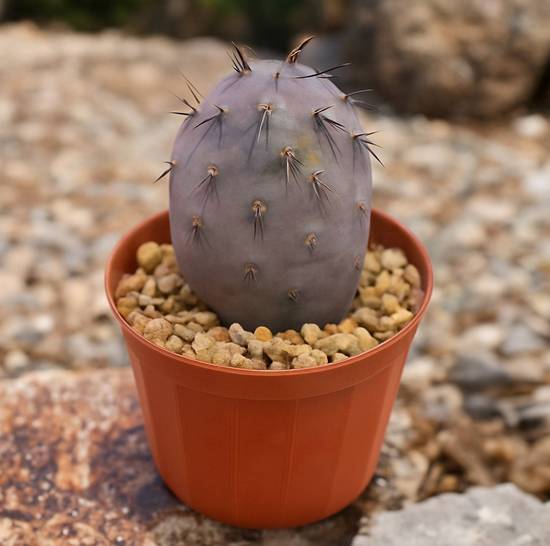
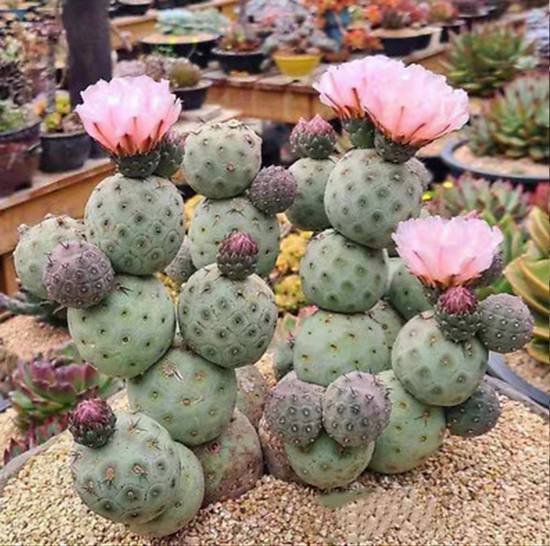
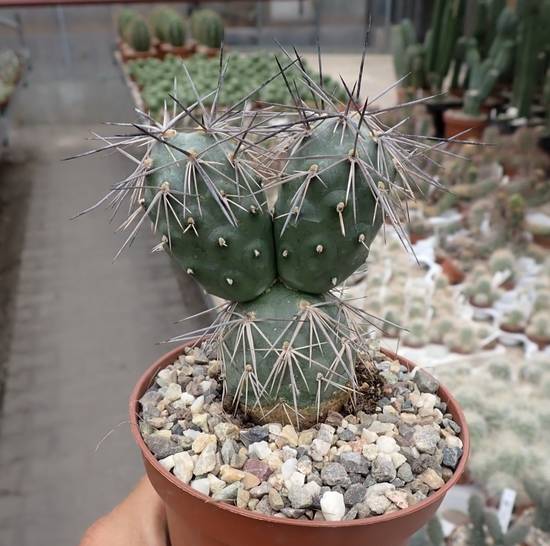
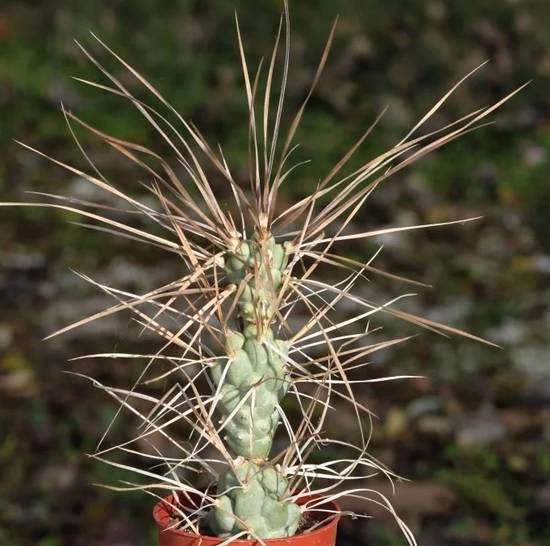
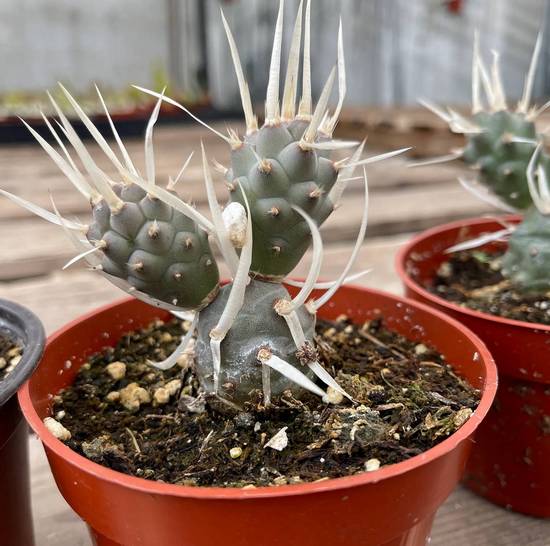
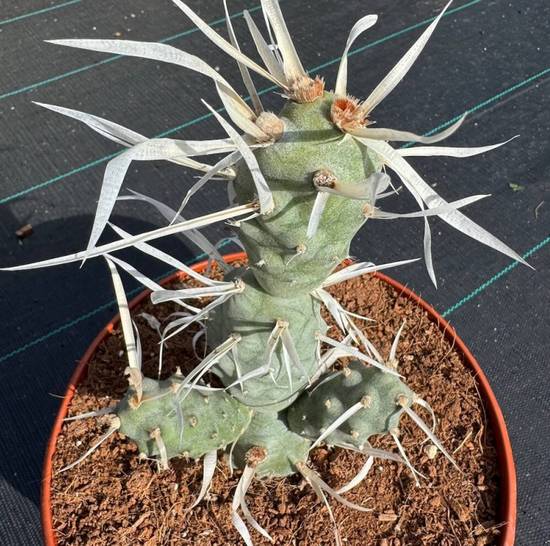
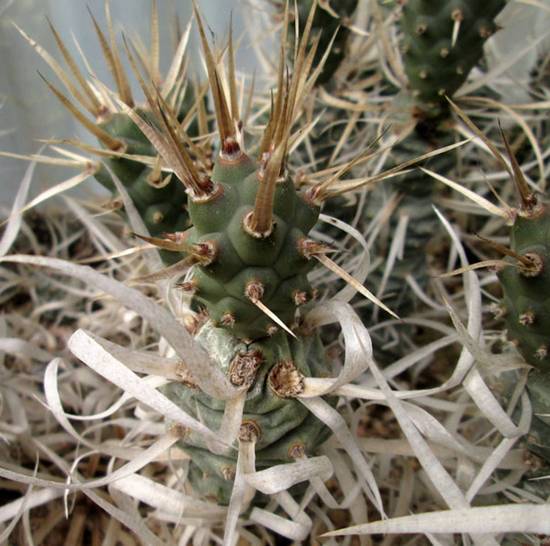
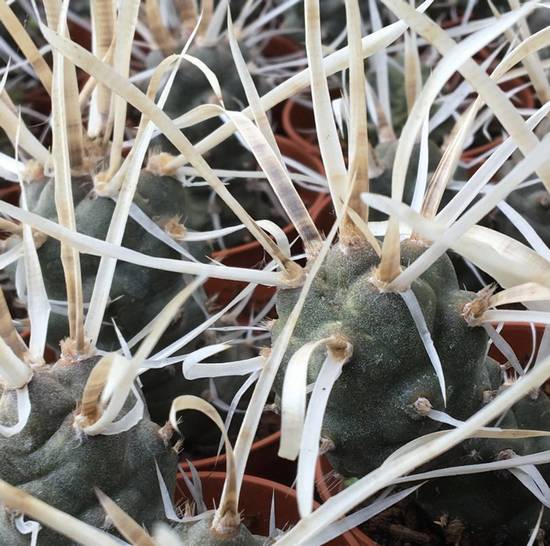
The Tephrocactus Articulatus Papyracanthus is a cactus as delicate as it is original, known for its stacked ovoid segments and especially for its long, flat, thin and translucent spines, which give it the nickname “paper spine cactus”. This variety, both minimalist and graphic, is highly appreciated by collectors for its unusual appearance and discreet charm.
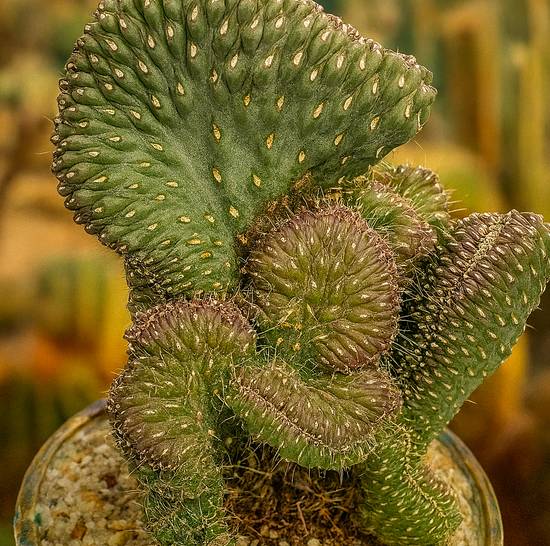
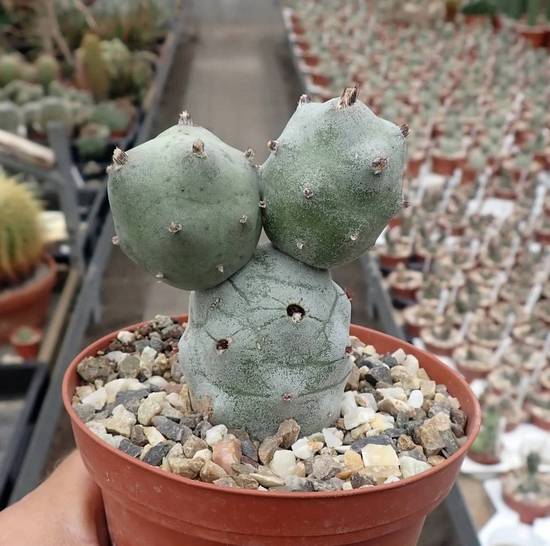
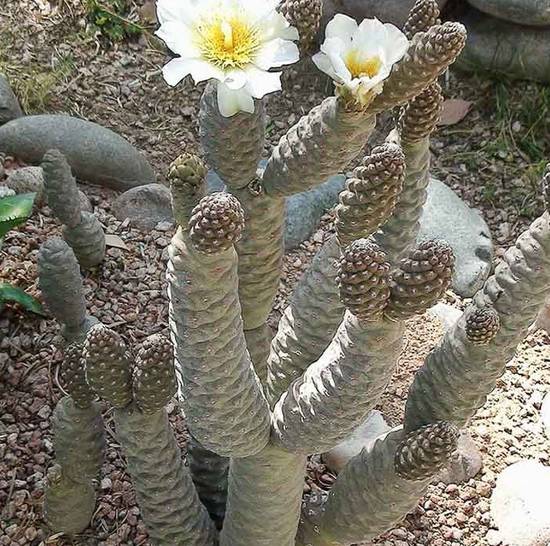
Each stem is composed of small articulated modules, stacked on top of each other, which can easily detach: a natural propagation strategy. The spines are very light, almost airy, and give the plant a feathery and delicate appearance. In reality, they are hard and brittle, but their shape and light beige color give them a deceptive look.
The Tephrocactus Articulatus originates from the semi-desert areas of Argentina, notably the provinces of Catamarca, Mendoza and La Rioja. This Papyracanthus variety is a natural form adapted to life on poor, sandy or rocky soils, exposed to strong sunlight and wide temperature ranges.
Its segmented form allows it to reproduce easily by natural dispersal. A simple fall of a segment to the ground can produce a new plant. Its roots remain superficial, quickly absorbing any soil moisture.
Its segmented form allows it to reproduce easily by natural dispersal. A simple fall of a segment to the ground can produce a new plant. Its roots remain superficial, quickly absorbing any soil moisture.
The Tephrocactus Articulatus Papyracanthus is a cactus that loves sun, but must be acclimated gradually:
🌞 Outdoors: full sun, at least 6 h/day
🌤️ Indoors: direct light behind a window or cold greenhouse
⚠️ Caution in summer: strong sun without acclimation can burn the segments. Light shade during heatwaves is recommended.
🌞 Outdoors: full sun, at least 6 h/day
🌤️ Indoors: direct light behind a window or cold greenhouse
⚠️ Caution in summer: strong sun without acclimation can burn the segments. Light shade during heatwaves is recommended.
This cactus fears stagnant humidity and prefers periods of drought. It follows a classic cycle:
🌱 Spring / summer: watering every 20 to 25 days, when the substrate is dry
🍂 Autumn / winter: complete rest (no watering) if overwintered in cool conditions
⚡ Advice: water from below (15-minute soak) to avoid damaging fragile segments
🌱 Spring / summer: watering every 20 to 25 days, when the substrate is dry
🍂 Autumn / winter: complete rest (no watering) if overwintered in cool conditions
⚡ Advice: water from below (15-minute soak) to avoid damaging fragile segments
The Tephrocactus Articulatus Papyracanthus tolerates hot temperatures and moderate nighttime drops:
🌡️ Ideal: 20 to 30°C in summer
❄️ Winter: tolerates down to 0°C when dry, but not prolonged frost
🏠 Pot cultivation: bring indoors from 8–10°C
🌡️ Ideal: 20 to 30°C in summer
❄️ Winter: tolerates down to 0°C when dry, but not prolonged frost
🏠 Pot cultivation: bring indoors from 8–10°C
A perfectly well-draining soil is mandatory. Roots are sensitive to prolonged humidity.
🪨 Recommended mix: 60% pumice + 20% pozzolana + 20% cactus potting soil
An unglazed terracotta pot also allows better moisture evaporation.
🪨 Recommended mix: 60% pumice + 20% pozzolana + 20% cactus potting soil
An unglazed terracotta pot also allows better moisture evaporation.
The flowering of the Tephrocactus Articulatus Papyracanthus is discreet but charming:
🌸 Season: spring, sometimes summer
🎨 Color: white to cream, sometimes with a pink touch
🕑 Duration: a few days
💡 Tip: good sun exposure and cool overwintering promote flowering
🌸 Season: spring, sometimes summer
🎨 Color: white to cream, sometimes with a pink touch
🕑 Duration: a few days
💡 Tip: good sun exposure and cool overwintering promote flowering
FAQ - Tephrocactus Articulatus Papyracanthus
How to recognize excess moisture in a Tephrocactus Articulatus Papyracanthus?
Excess moisture causes softening of the segments, brownish discoloration, and sometimes the fall of entire stems. If the roots remain in water too long, rot can quickly set in.
How to know if Tephrocactus Articulatus Papyracanthus lacks water?
Lack of water appears as slightly wrinkled or wilted segments. Their surface becomes less firm and growth slows. Proper hydration during the warm season helps restart the production of new segments.
Are the paper spines dangerous?
No. The spines of Tephrocactus articulatus var. papyracanthus are thin, flat and only mildly prickly. They are mainly decorative and do not cause serious injury. This makes it an ideal cactus for indoor spaces or near children.
How to prevent segments from falling too often?
Falling segments are normal but can be reduced by avoiding frequent handling. Use a well-draining substrate and avoid excessive watering, especially in winter. Place the pot in a stable location sheltered from wind.
Should a specific fertilizer be used for this cactus?
Yes. A liquid fertilizer for cacti low in nitrogen is ideal. Apply it every 4 weeks between April and August to stimulate growth without risk of deformation.
Can Tephrocactus Articulatus Papyracanthus be grown indoors?
Yes, provided it receives bright exposure, ideally in front of a well-oriented window. A grow light can supplement natural light in winter. Avoid dark places that slow its growth.
Does Tephrocactus Articulatus Papyracanthus produce flowers easily?
Flowering remains rare but possible in cultivation. It requires a mature plant, good sunlight, a dry winter rest and some patience. Flowers appear at the top of active segments.
How long does it take for the cactus to branch?
Generally, a new segment appears each year on a mature segment. Visible branching takes between 2 and 3 years depending on growing conditions (light, water, nutrients).
Is this cactus hardy?
It can tolerate light frosts down to 0°C if kept dry, but it is better to overwinter it between 5°C and 10°C. It is not suitable for regions with humid and prolonged winters.
Why is my Tephrocactus Articulatus Papyracanthus no longer growing?
This may be due to lack of light, excess water or a substrate that is too compact. Check that the pot drains well, that light is sufficient and that the plant is in its active period (spring-summer).