Tephrocactus Strobiliformis

Tephrocactus Strobiliformis

Tephrocactus Strobiliformis

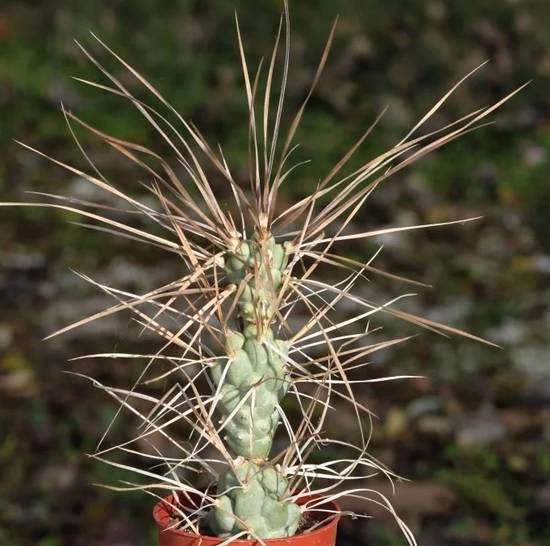
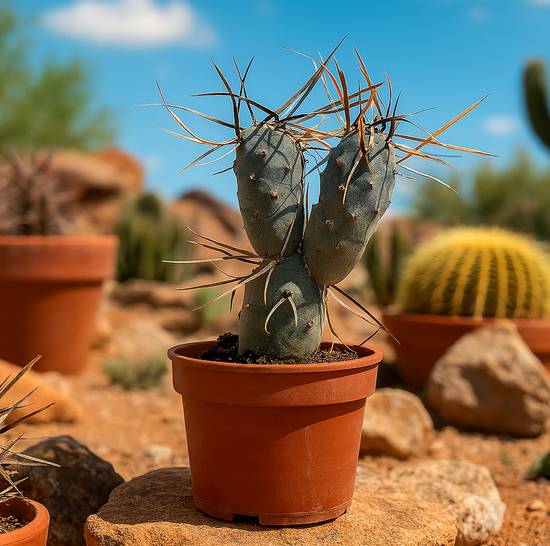
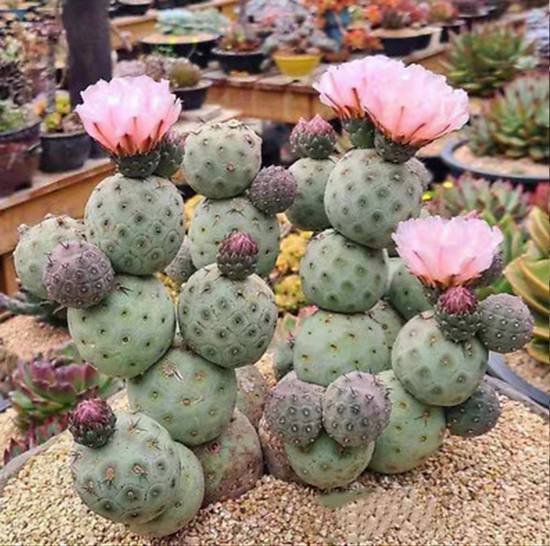
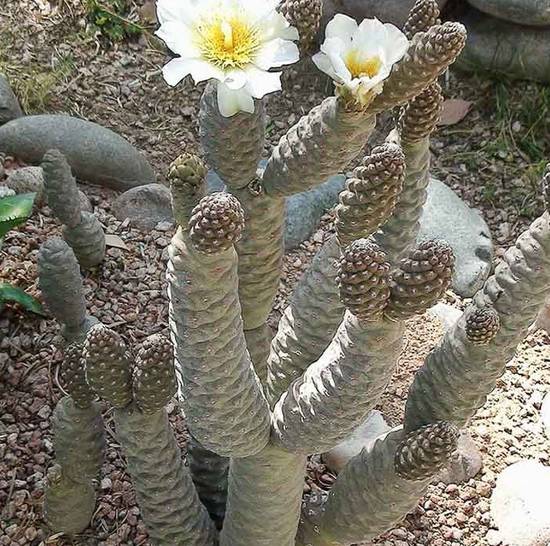
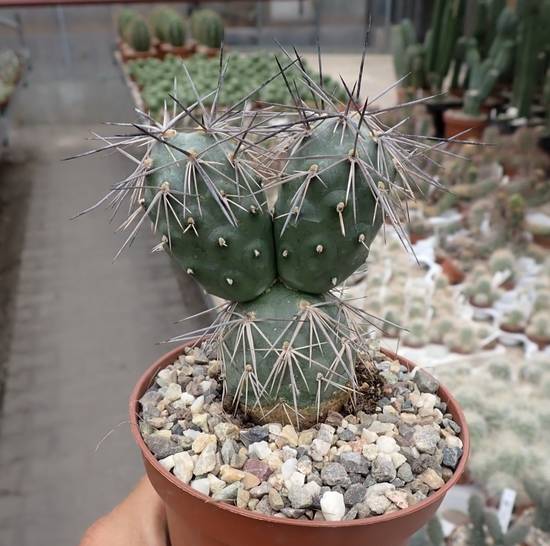
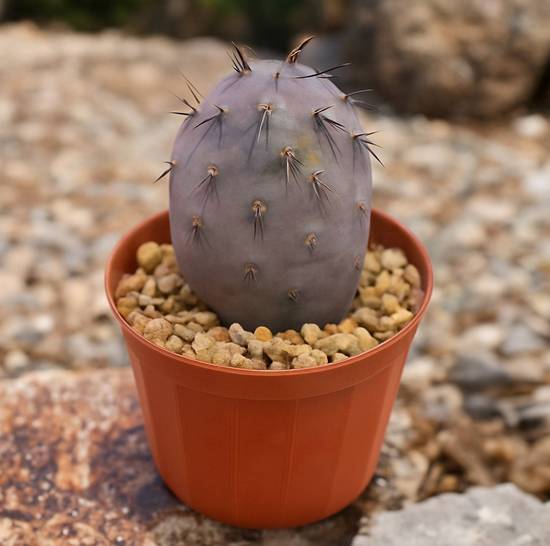
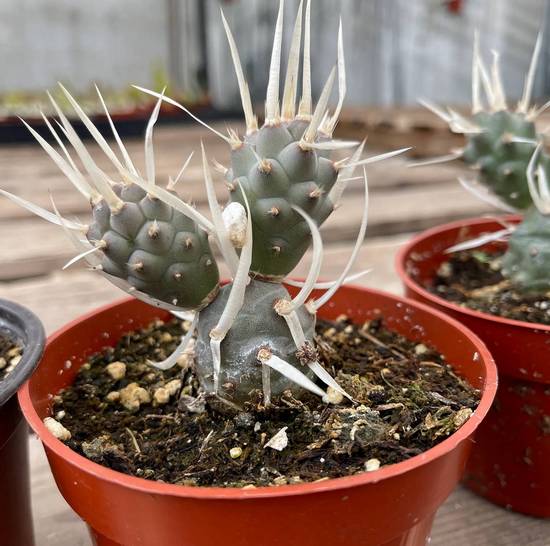
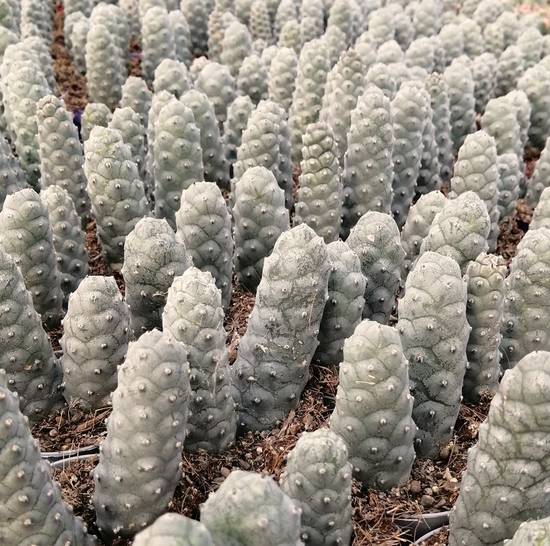
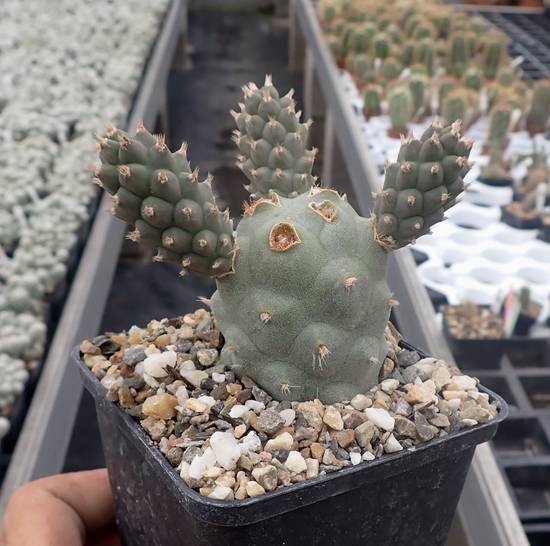
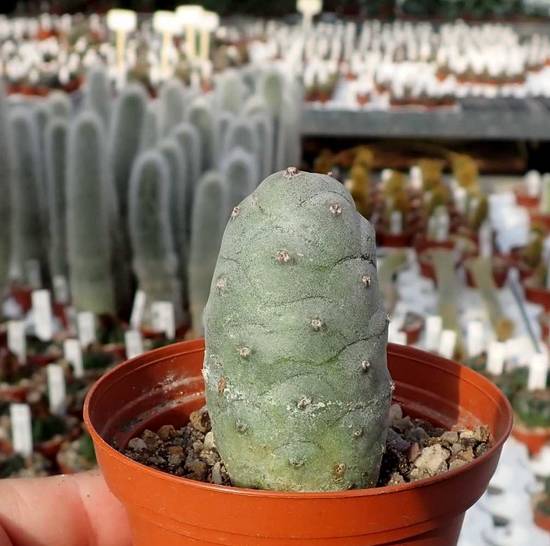
The Tephrocactus Strobiliformis is an original and uncommon cactus, appreciated for its unique shape reminiscent of stacked pine cones. This member of the Opuntioideae family stands out for its ovoid to conical segments, stacked vertically on top of one another, forming an extraordinary sculptural structure. Each segment appears delicately balanced on the previous one, giving the plant a striking architectural appearance.

This cactus does not always bear large visible spines on every segment: some specimens are spineless, while others display discreet glochids or fine small needles. Its color ranges from gray-green to purplish-brown depending on sun exposure, plant age, and growing conditions. In pots, it generally remains compact, measuring between 10 and 25 cm in height, but it can form small colonies over time.

The Tephrocactus Strobiliformis originates from the arid regions of northwestern Argentina, particularly the provinces of La Rioja and Catamarca. It grows in rocky areas, often at high altitude, where soils are well-drained, the climate is extremely dry, and temperature differences between day and night are significant.

This adaptation to an extreme environment makes it a robust yet demanding cactus: it requires carefully controlled growing conditions to develop properly.
To keep the Tephrocactus Strobiliformis compact and well segmented:

🌞 Direct sunlight recommended: at least 5 to 6 hours per day

☁️ Bright but filtered light in summer, especially in hot regions

⚠️ Lack of light = etiolation, segment drop, dull coloration

Good exposure also promotes flowering and vibrant colors.
This cactus requires very moderate watering, as each segment stores a large amount of water:

🌱 Spring / summer: every 20 to 30 days if the substrate is dry

❄️ Winter: complete dormancy = no watering

⚠️ Too much water = rot at the base of the segments

💡 Waiting until the segments slightly wrinkle before watering can be a useful tip.
The Tephrocactus Strobiliformis is adapted to dry climates:

🌡️ Ideal temperature: 20–30 °C in summer

❄️ Cold resistance in dry conditions: down to –5 °C if completely dry

🏠 In winter, place it in a bright, unheated area (~5–10 °C).
It requires an extremely well-draining substrate, as its roots are sensitive:

🪨 Composition: 30% cactus potting mix + 70% mineral elements (pumice, pozzolana, perlite).
Flowering is quite rare in cultivation but very decorative when it occurs.

📆 Season: late spring to early summer

🎨 Flowers: white to cream, cup-shaped

🌼 Position: at the top of the upper segments

⚠️ Required conditions: mature plant, proper water stress, abundant light
FAQ - Tephrocactus Strobiliformis

My Tephrocactus Strobiliformis is losing its segments, is this normal?
Yes, when it experiences stress (temperature shock, excess water), it may spontaneously detach its segments.
Should Tephrocactus Strobiliformis be fertilized?
Yes, use a gentle fertilizer such as UNDERGREEN Jungle Fever once a month.
Can it grow in the shade?
No. It needs direct sunlight or very bright light to remain compact.
Is it a good cactus for beginners?
It is quite demanding and is better suited to experienced enthusiasts.
Can Tephrocactus Strobiliformis be propagated by cuttings?
Yes, each segment can be replanted after drying for a few days.
How large can Tephrocactus Strobiliformis grow?
In cultivation, it reaches up to 25 cm. It forms larger clumps in its natural habitat.
What type of pot should be used for this cactus?
A terracotta pot, wide and shallow, is recommended.
How do I know if my Tephrocactus Strobiliformis needs water?
Its segments wrinkle slightly when it needs water.
What is its cold tolerance?
It can survive down to –5°C if the substrate is perfectly dry.
What substrate should I choose for my Tephrocactus Strobiliformis?
Use a mix of Fertiligène substrate and Or Brun pozzolana for optimal drainage.