Senecio Anteuphorbium

Senecio Anteuphorbium

Senecio Anteuphorbium

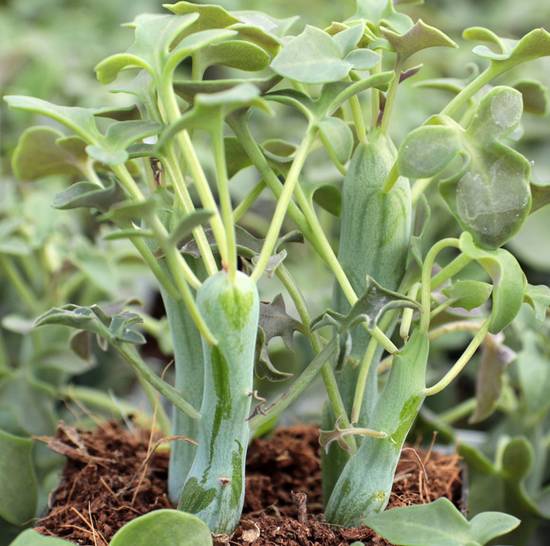
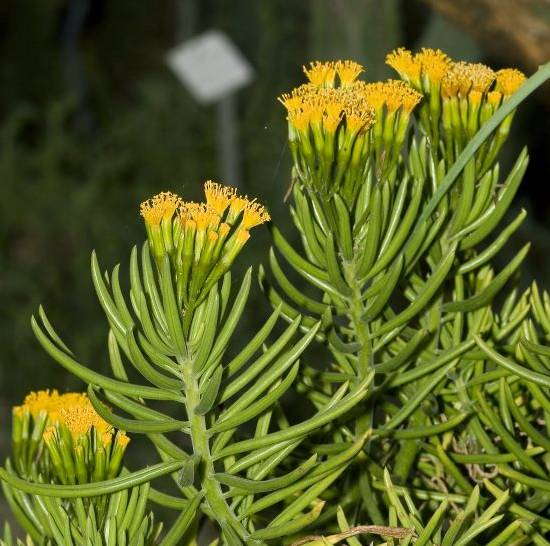
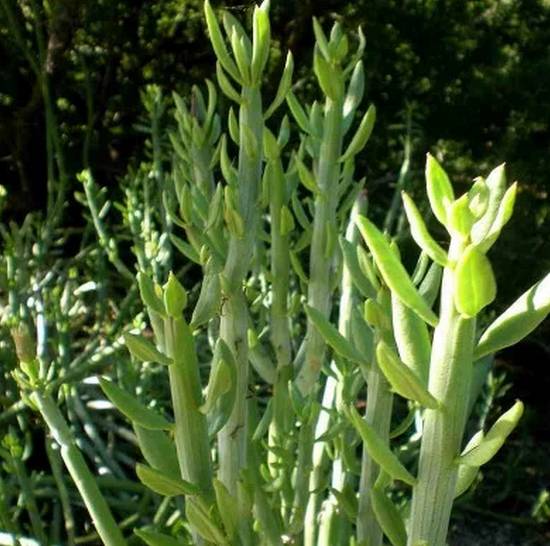
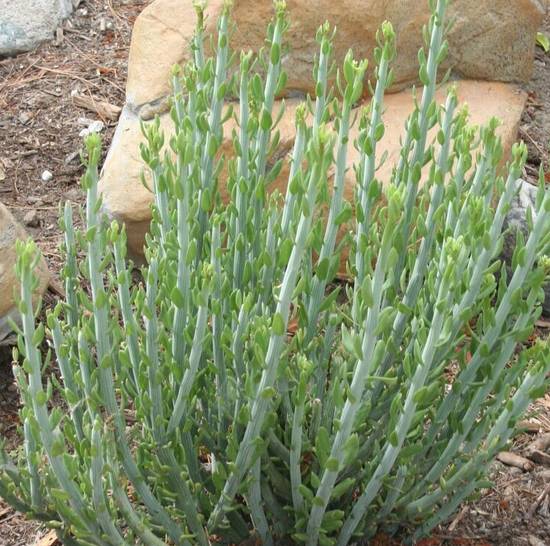
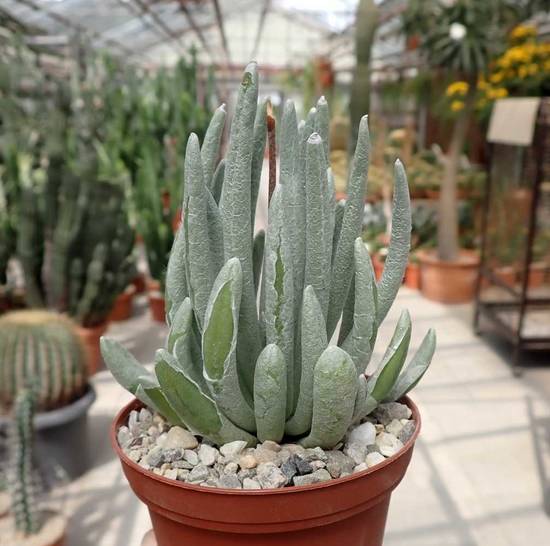
The Senecio Anteuphorbium is a striking and architectural succulent belonging to the Asteraceae family. It is distinguished by its thick, cylindrical, blue-green stems, slightly angular and marked with vertical striations, often interrupted by small ephemeral leaves and spine-like tips. This structure resembles euphorbias, hence its name, but it is not part of that genus. It is an architectural plant with a very modern silhouette, ideal for lovers of minimalist and graphic forms.

The Senecio Anteuphorbium is particularly appreciated for its vigorous upright growth and its ability to form dense clumps of erect stems. Highly drought-tolerant, it is also easy to care for, making it an excellent choice both for dry gardens and for container cultivation. Its upright habit makes it an interesting structural plant, whether grown alone or in combination with other succulents.

Its flowering is discreet but pleasant, with small yellow flower heads appearing in winter or early spring. These are not its main ornamental feature, but they add an unexpected touch of color to its clean silhouette.

The Senecio Anteuphorbium naturally grows in arid and rocky areas of the Maghreb, often on stony slopes exposed to full sun. In these extreme environments, it benefits from very well-drained soil and a long dry season. Its morphology allows it to survive long periods without rain by storing water in its fleshy stems, explaining its extreme drought tolerance.
For optimal growth, the Senecio Anteuphorbium must benefit from bright and sunny exposure:

🌞 Direct sun: Place it in a location receiving 6 to 8 hours of direct light per day, especially if grown outdoors.

🌤️ Indoors: A veranda, large window or very bright room will suit it perfectly. It can tolerate slightly lower light but may become etiolated.
The Senecio Anteuphorbium must be watered very sparingly:

🌱 Growing season (spring/summer): Water when the substrate is completely dry. Generally, watering every 2 to 3 weeks is sufficient.

🍂 Rest period (autumn/winter): Stop watering or reduce to a strict minimum, especially if the plant is in a cool room.

⚠️ Excess or lack of water?: Excess water causes stems to soften and yellow. Conversely, prolonged dehydration results in shriveled or wilted stems.
The Senecio Anteuphorbium is adapted to warm climates:

🌡️ Ideal: Temperatures between 18°C and 30°C.

❄️ Minimum tolerated: It can withstand down to 5°C if kept dry, but does not tolerate prolonged frost.

🏠 Indoor cultivation: Perfectly suited to apartment living if the exposure is bright.
The Senecio Anteuphorbium requires soil that drains quickly to prevent water stagnation.

🪨 Substrate advice: Use cactus soil or a succulent-specific substrate. It is strongly recommended to mix it with perlite or pumice to improve drainage.
The Senecio Anteuphorbium produces small flower heads:

🌸 Season: Generally in winter or very early spring.

🎨 Appearance: Yellow pompom-like flowers, subtle but pleasant.

🕑 Duration: A few days to one week, often in terminal clusters.
FAQ - Senecio Anteuphorbium

How often should Senecio Anteuphorbium be watered?
It requires very little water. Water only when the substrate is completely dry, every 2 to 3 weeks in summer, and almost none in winter.
What substrate should be used for Senecio Anteuphorbium?
Use a cactus substrate enriched with pumice or perlite to prevent water retention.
Does Senecio Anteuphorbium tolerate frost?
No, it does not tolerate freezing temperatures. Bring it indoors when temperatures approach 5°C.
Is Senecio Anteuphorbium easy to grow indoors?
Yes, it is a hardy plant well suited for indoor cultivation if placed in a bright location.
Does Senecio Anteuphorbium need fertilizer?
A small amount of cactus fertilizer in spring can stimulate growth. Applying it every 1 to 2 months is sufficient.
Can Senecio Anteuphorbium be propagated?
Yes, it can be propagated by stem cuttings in summer. Let the cut dry for a few days before planting.
Why do the stems of Senecio Anteuphorbium become soft?
Soft stems are often caused by overwatering. Reduce watering frequency and ensure proper drainage.
Is Senecio Anteuphorbium toxic?
Yes, like many Senecio species, its sap can be irritating. Avoid contact with skin and mucous membranes.
What exposure is best for Senecio Anteuphorbium?
Full sun or very bright light is preferable. Indoors, place it near a large, bright window.
My Senecio Anteuphorbium stems are wilting, what should I do?
Wilting stems can be caused by either overwatering or underwatering. If the substrate is dry, water lightly. If it is still moist, allow it to dry completely before watering again.