Senecio Rowleyanus
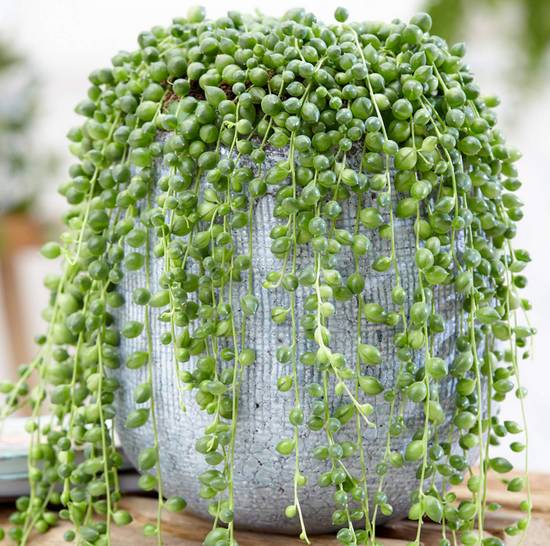
The Senecio Rowleyanus, also known as "string of pearls", is one of the most recognizable and popular trailing succulents. With its long stems adorned with small green spheres resembling a necklace of pearls or peas, this ornamental plant immediately captivates with its originality. It is ideal in hanging baskets, on a shelf or a windowsill where its stems can cascade down and create a spectacular visual effect.
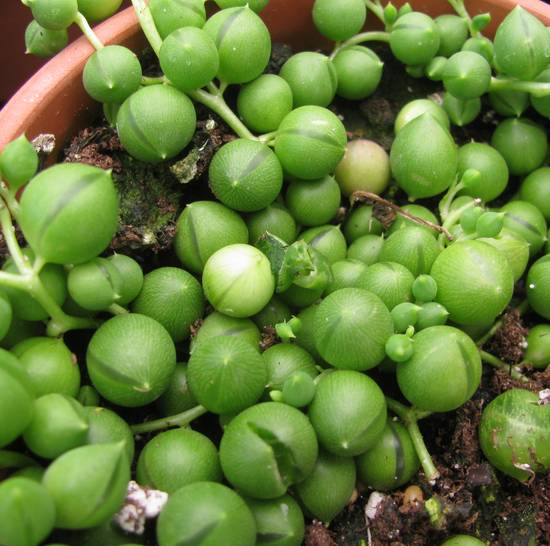
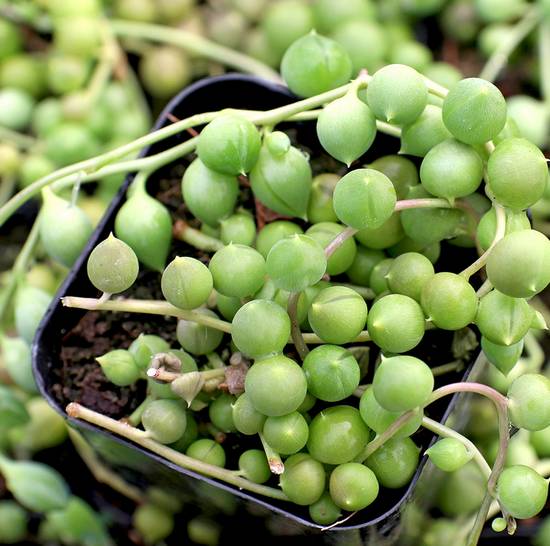
Each of the small beads of the Senecio Rowleyanus is a modified leaf that stores water, proof of this plant’s ingenuity in surviving in arid environments. Its unique structure allows it not only to withstand drought, but also to capture light optimally thanks to fine translucent windows on each bead. Highly decorative, this senecio is also easy to propagate, making it a must-have in succulent collections.
When well grown, the Senecio Rowleyanus can bloom in winter or spring. Its white pompom-shaped flowers release a sweet, slightly spicy fragrance reminiscent of cinnamon or vanilla.
🌞 Bright light without intense direct sun: Abundant light is essential to maintain vigorous growth and prevent etiolation.
🌤️ Watch for burns: In summer, avoid direct sun during the hottest hours, which can mark or dry out the beads.
A bright location near an east- or west-facing window is ideal indoors.
🌱 Spring and summer: Wait until the substrate is completely dry in depth before watering. Watering every 2 to 3 weeks is generally sufficient.
🍂 Autumn and winter: Space watering even more, or stop completely during the rest period.
⚠️ Lack or excess water: Too much water causes the beads to soften or blacken; prolonged drought makes them shrivel or deflate.
🌡️ Ideal temperature: Between 18°C and 26°C for optimal growth.
❄️ Minimum: It tolerates temperatures around 5°C, but without humidity. Do not expose to frost.
🏠 Indoor cultivation: In a pot or hanging basket, it overwinters well in a bright and cool room.
🪨 Substrate advice: Use cactus soil or a well-draining substrate, which you can further lighten with perlite or pumice to increase aeration.
🌸 Season: Late winter or early spring.
🎨 Appearance: Small white pompom flowers, sometimes pink at the base, with a delicately sweet fragrance.
🕑 Duration: Several days to one week.
💡 Flowering is more frequent if the plant benefits from moderate water stress and a cool winter rest.