Rhipsalis Paradoxa

Rhipsalis Paradoxa
Rhipsalis Paradoxa
Rhipsalis Paradoxa

Rhipsalis Paradoxa

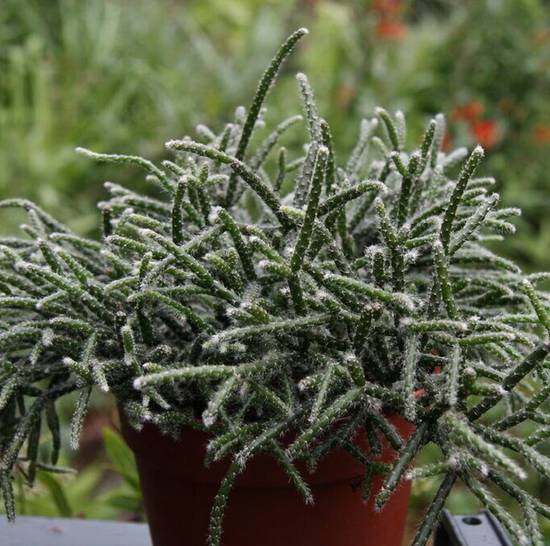
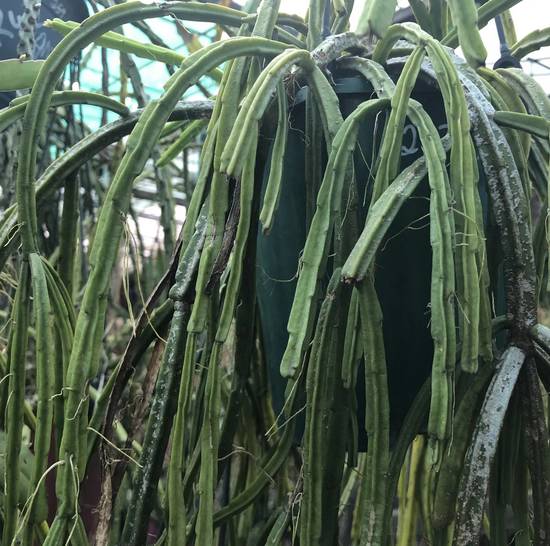
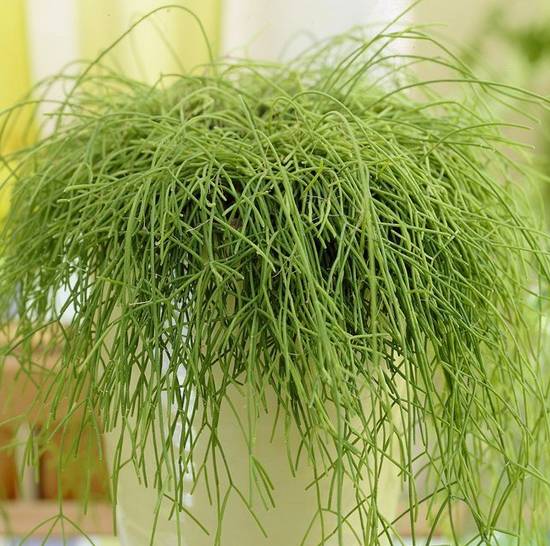
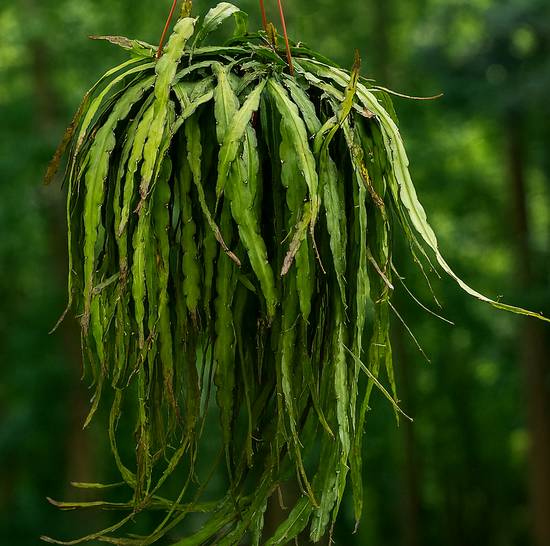
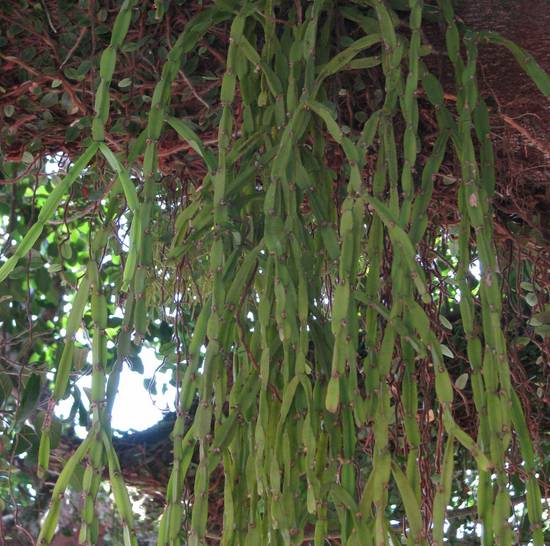
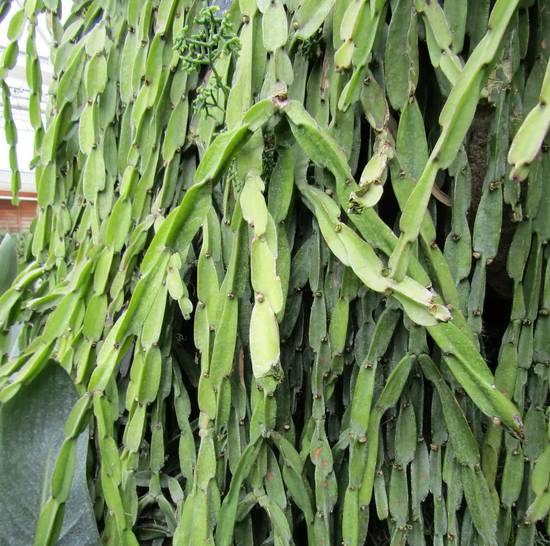
The Rhipsalis Paradoxa is a remarkable species with a trailing habit, characteristic of epiphytic cacti native to the tropical forests of South America. Unlike most terrestrial cacti, this one grows in trees, where its hanging stems form cascades of stacked, spiral-shaped segments.

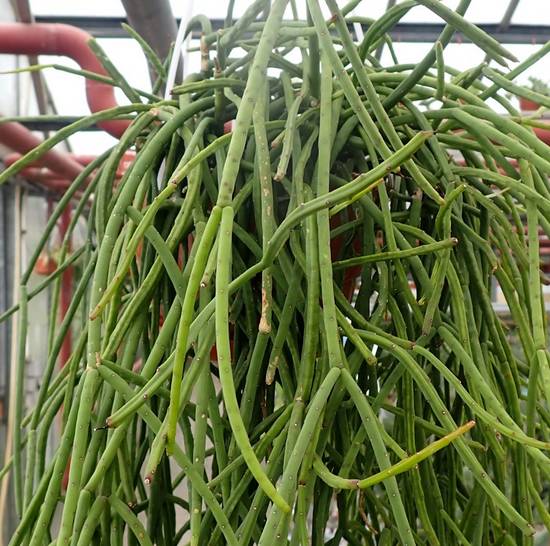
Its unique growth makes it a highly decorative plant, perfect for hanging baskets or high shelves. The stems are light to dark green, slightly ribbed, and can exceed one meter in length. The spiral appearance of its stems results from their particular growth and segmentation, making it instantly recognizable.

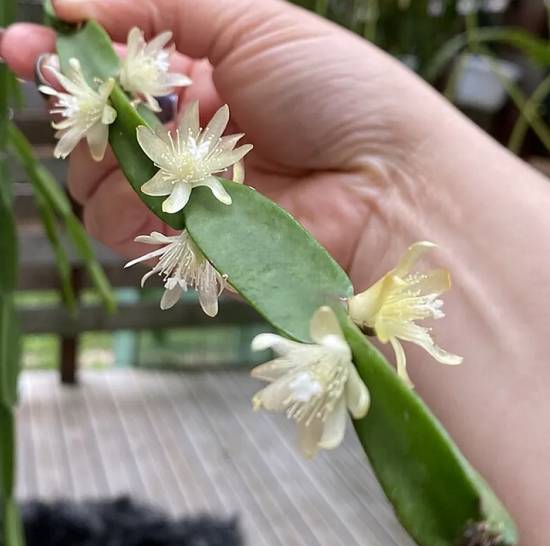
During flowering, the Rhipsalis Paradoxa produces small white to yellowish star-shaped flowers, often followed by small white or translucent globular fruits. It combines unusual foliage with discreet but charming flowering.

The Rhipsalis Paradoxa originates from Brazil, where it grows naturally in the humid forests of the Mata Atlântica.

This warm, shaded and constantly humid region has shaped a cactus very different from desert varieties. Adapted to life in trees, this Rhipsalis absorbs water from ambient humidity, which defines its cultivation needs.
The Rhipsalis Paradoxa prefers soft, filtered light.

🌤️ Bright indirect light: Ideally near an east-facing window or behind a sheer curtain.

🌿 Avoid full sun: Direct rays can burn its sensitive stems. Diffuse light is preferable, especially in summer.
Watering of the Rhipsalis Paradoxa should be more regular than for desert cacti.

💧 Spring - summer: Water every 10 to 15 days, when the substrate is dry on the surface.

🌧️ Autumn - winter: Reduce to once a month depending on ambient temperatures. Avoid excess water.
The Rhipsalis Paradoxa enjoys warm and humid environments.

🌡️ Ideal temperature: Between 18 °C and 25 °C.

❄️ Minimum tolerated: 10 °C. Below this, stress may slow its growth.

🏠 Winter care: Avoid drafts and place in a bright but protected room.
A light, rich and airy soil is ideal.

🪨 Recommended substrate: 40% cactus soil, 30% perlite, 30% fine bark or sphagnum.
Its flowering is discreet but elegant.

🌼 Period: Late spring to summer.

🌺 Flowers: Small, white or cream-colored, star-shaped, about 5 mm wide.

💡 Tip: Moderate watering, stable light and a winter rest period encourage flowering.
FAQ - Rhipsalis Paradoxa

What is the ideal exposure for a Rhipsalis Paradoxa in an apartment?
Rhipsalis Paradoxa prefers bright indirect light. Avoid direct sun, which could burn its delicate stems. An east exposure or a filtered window is ideal. For darker areas, a grow light can help.
Does Rhipsalis Paradoxa need frequent watering?
This tropical cactus requires more water than a classic cactus. Water every 10 to 15 days in spring and summer, and reduce in winter. Always use a well-drained substrate.
Can Rhipsalis Paradoxa tolerate cold?
It does not tolerate temperatures below 10°C. In winter, place it in a bright room protected from the cold.
How can I encourage Rhipsalis Paradoxa to bloom?
For successful blooming, provide a winter rest period with little water, good lighting, and consider a gentle fertilizer in spring.
What type of pot should I use for Rhipsalis Paradoxa?
A hanging pot or a terracotta container with good drainage is recommended. Add drainage granules at the bottom to prevent excess water.
Is Rhipsalis Paradoxa toxic to animals?
No, like most Rhipsalis, it is considered non-toxic to cats and dogs.
Can Rhipsalis Paradoxa be easily propagated from cuttings?
Yes! Take a healthy segment, let it dry for 24 hours, then plant it in a light substrate. It will root within a few weeks.
Why is my Rhipsalis Paradoxa turning yellow?
Excess water or lack of light are the main causes. Make sure to use a well-draining substrate and provide good brightness.
Is Rhipsalis Paradoxa a true cactus?
Yes, although it does not resemble classic cacti, it belongs to the Cactaceae family. It is simply epiphytic.
Which fertilizer should I choose for Rhipsalis Paradoxa?
Use a suitable liquid fertilizer once a month during the growing period (spring–summer).