Rhipsalis Baccifera

Rhipsalis Baccifera
Rhipsalis Baccifera
Rhipsalis Baccifera

Rhipsalis Baccifera

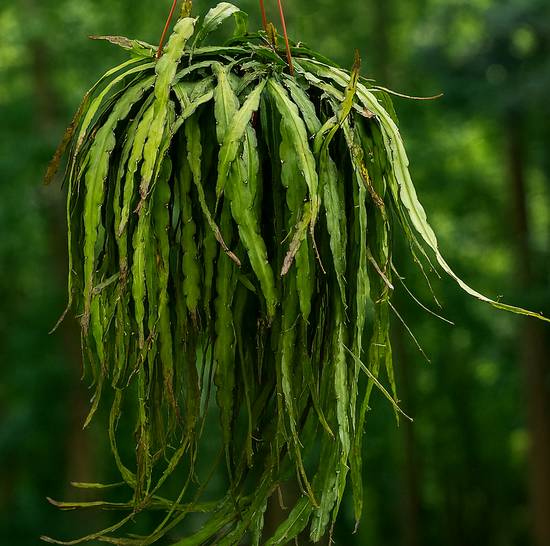
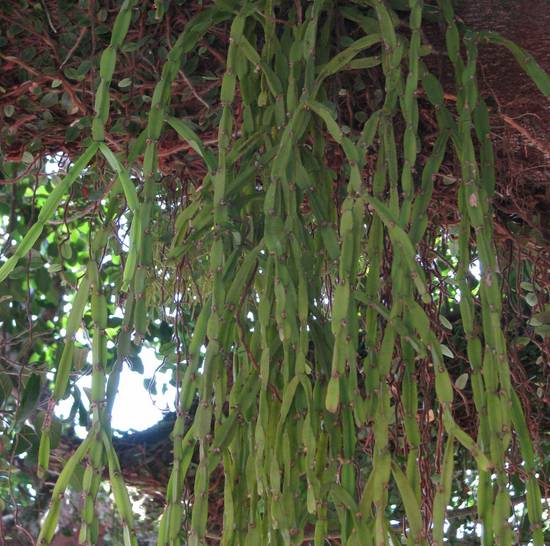
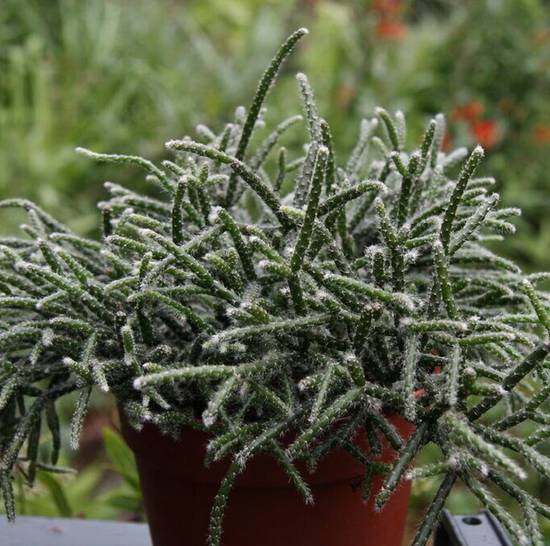
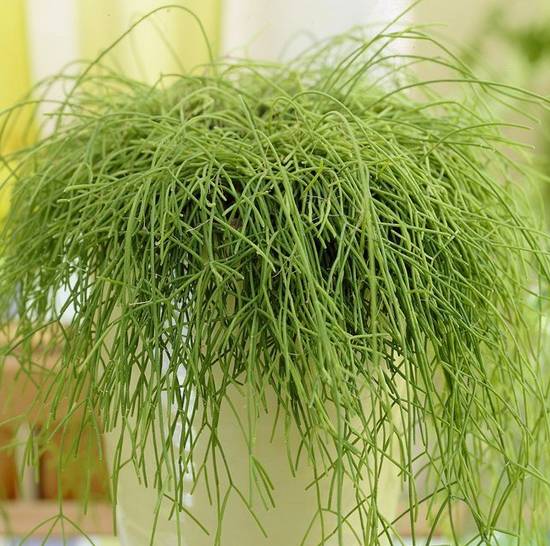
The Rhipsalis Baccifera, also known as the “mistletoe cactus”, is a surprising epiphytic plant that completely breaks with the classic image of arid desert cacti. Unlike its desert relatives, it naturally grows in humid tropical forests, often hanging from trees. It is one of the very few cactus species native to the Americas, Africa, and parts of Asia — a true botanical globe-trotter!

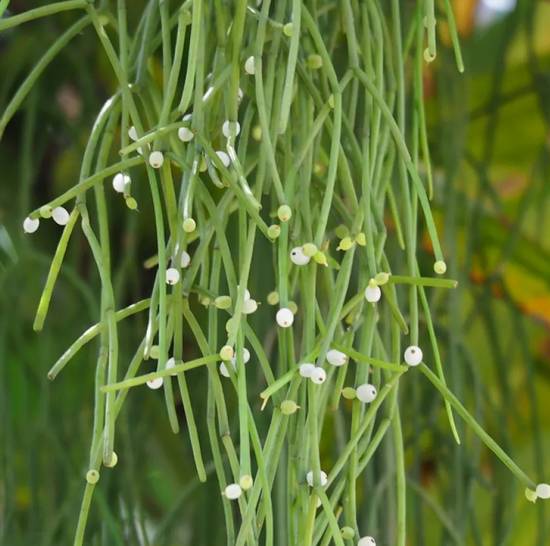
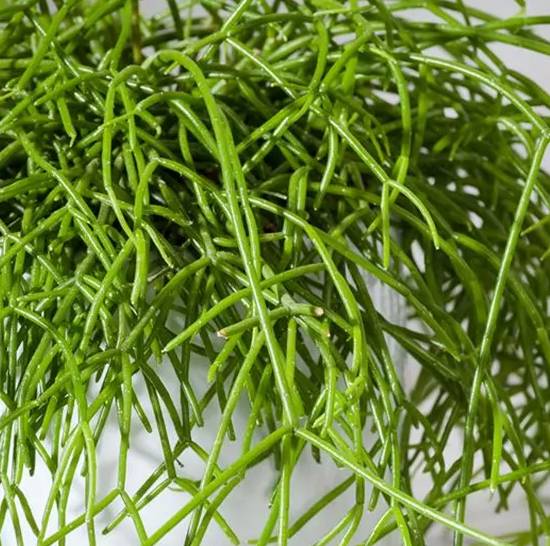
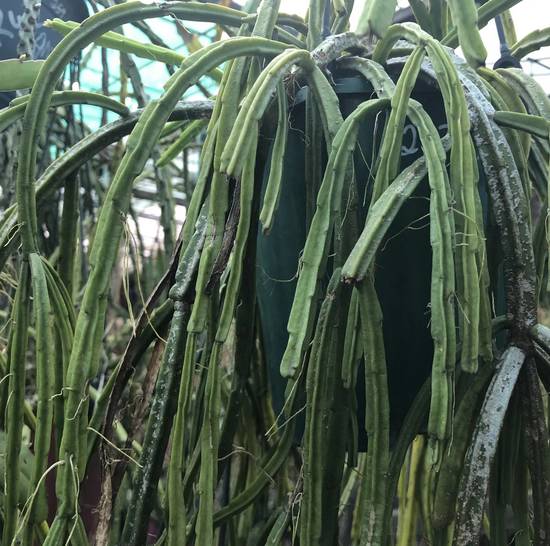
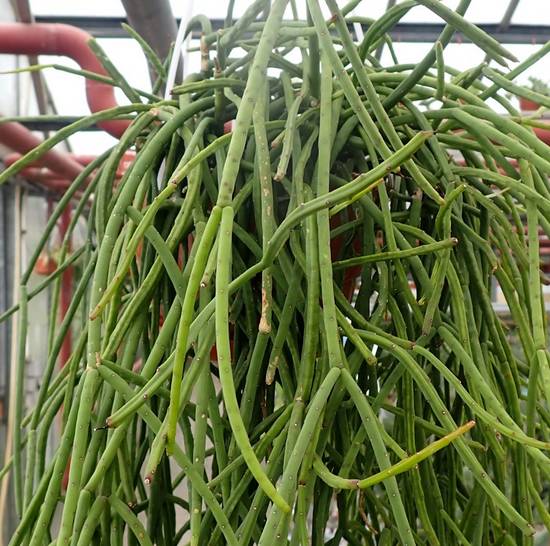
Its trailing habit and thin, cylindrical, branching stems make it an ideal decorative plant for hanging baskets. When mature, the Rhipsalis Baccifera develops small translucent berries resembling pearls, which explain its specific name “baccifera” (berry-bearing).

Easy to grow, spineless, and highly ornamental, this forest cactus adapts perfectly to indoor cultivation, bringing a tropical and wild touch to any bright space.

The Rhipsalis Baccifera is the only cactus naturally found outside the Americas. It grows in the tropical forests of Brazil, the Antilles, Madagascar, and even some regions of Southeast Asia.

This wide distribution is likely explained by seed dispersal via birds, which carried the seeds over long distances.
Although it is a cactus, it does not tolerate direct full sun.

🌤️ Filtered light: Rhipsalis baccifera prefers soft, indirect or diffused light, such as in a conservatory or behind a sheer curtain.

🏠 Indoor cultivation: Ideal near an east- or north-facing window. Avoid harsh direct sun, which can dry out its thin stems.
Watering is more frequent than for classic desert cacti, as it grows in a humid climate.

🌱 Spring / summer: Water once a week, when the top 2–3 cm of substrate are dry.

🍂 Autumn / winter: Space watering every 15 days. Always avoid excess water, especially indoors with limited ventilation.
The Rhipsalis Baccifera is a tropical cactus and therefore sensitive to cold.

🌡️ Ideal temperature: Between 18 and 26 °C.

❄️ Minimum: Do not expose below 10 °C. Cold and humidity combined are particularly dangerous.

🏡 Wintering: Keep indoors in a warm, well-lit environment to avoid thermal stress.
This epiphytic cactus does not tolerate compact soils.

🪨 Ideal substrate: 40% tropical plant soil, 30% perlite, 30% pine bark or coconut fiber.

⚠️ Drainage required: Always place a drainage layer at the bottom of the pot.
Although discreet, its flowering is a pleasure to observe.

📅 Season: Late winter or early spring.

🌼 Flowers: White to slightly pink, small but numerous, often followed by translucent spherical berries.

🌿 Tip: A winter rest period and balanced fertilization at growth restart help stimulate flowering.
FAQ - Rhipsalis Baccifera

What exposure is best for Rhipsalis Baccifera?
Rhipsalis Baccifera prefers soft, filtered light. Avoid direct sun, which could burn its stems. Place it behind an east-facing window or under indirect light.
How should I water Rhipsalis Baccifera?
Water moderately in spring and summer (once a week) when the substrate is dry on the surface. In winter, reduce to once every two weeks. Use a well-draining substrate.
Can Rhipsalis Baccifera live indoors?
Yes, it is one of the cacti best suited for indoor cultivation thanks to its moderate light requirements. Place it in a bright room away from direct sunlight.
What minimum temperature can Rhipsalis Baccifera tolerate?
It tolerates a minimum of 10°C but dislikes cold humidity. In winter, bring it indoors if temperatures drop.
Does Rhipsalis Baccifera have spines?
No, it has no spines. It is one of the rare completely harmless cacti, perfect for families or small spaces.
When is the best time to repot it?
Repot every 2 to 3 years, in spring, with effective drainage and a light substrate.
Why is my Rhipsalis Baccifera turning yellow?
Yellowing may be due to excess water or too much direct light. Check the substrate and change its location if necessary.
Does Rhipsalis Baccifera produce fruit?
Yes, after flowering, it develops small decorative translucent berries that are non-toxic.
How can Rhipsalis Baccifera be propagated?
It is easily propagated by cuttings. Cut a stem, let it dry for a few days, then plant it in slightly moist substrate.
What fertilizer should be used for Rhipsalis Baccifera?
Choose a gentle cactus fertilizer in spring and summer, every 30 to 45 days.