Notocactus Scopa Inermis
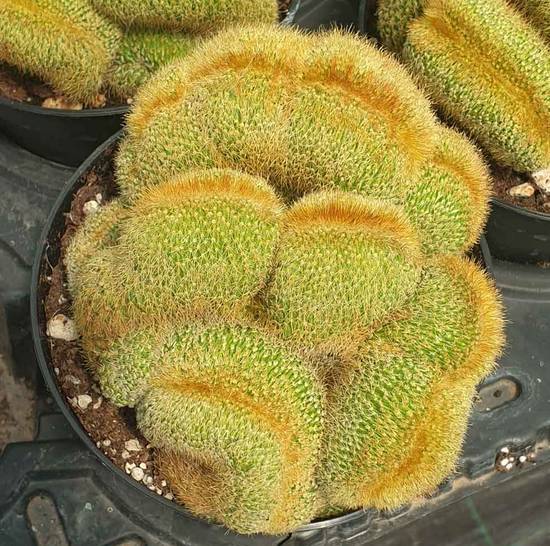
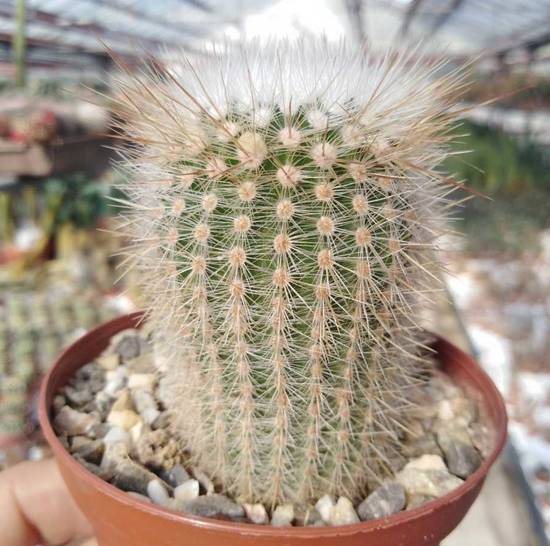
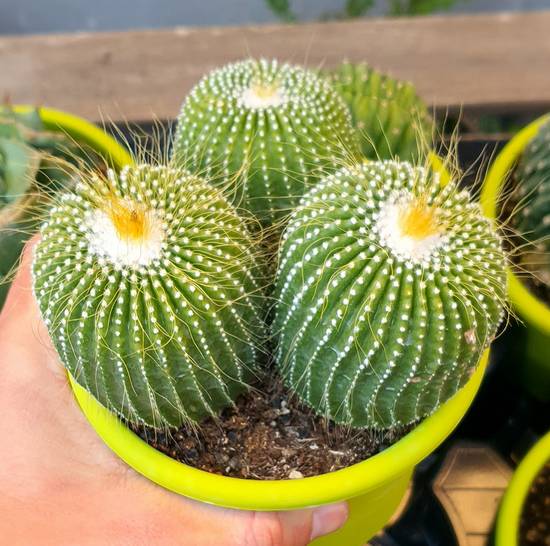
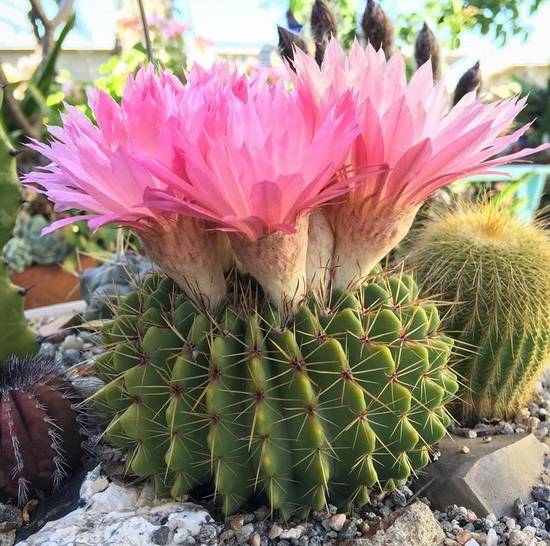
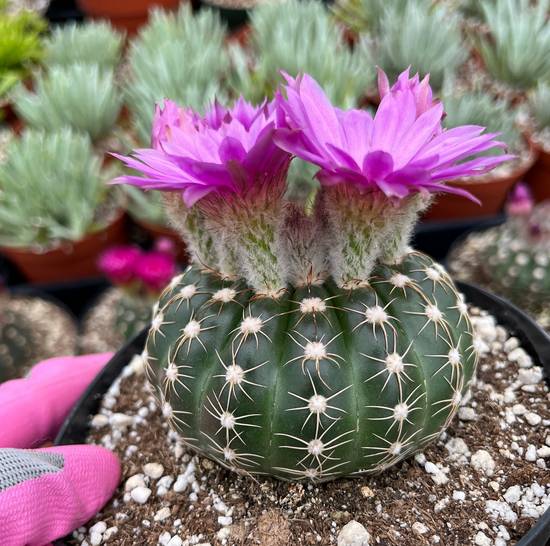
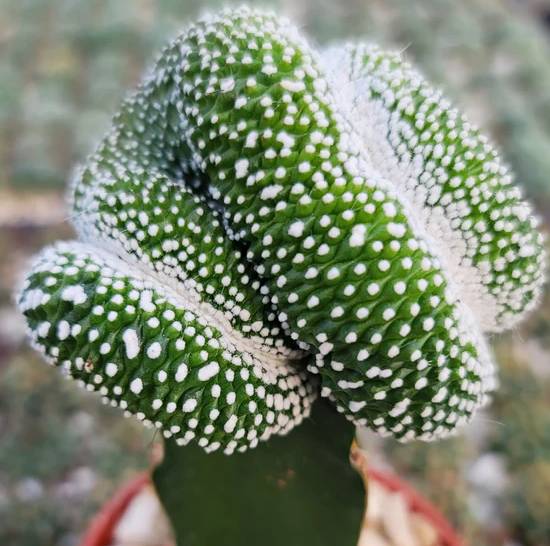
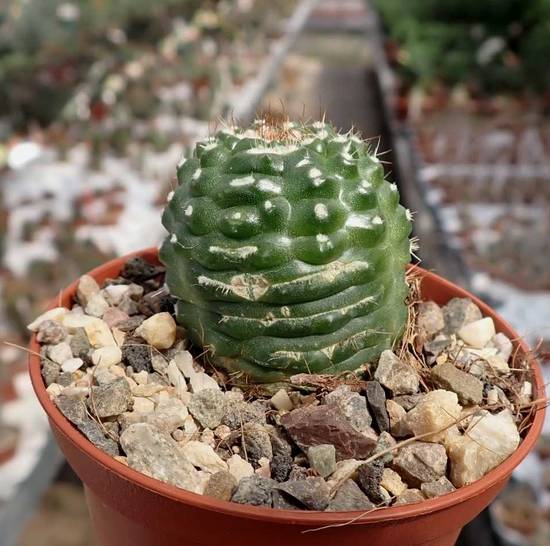
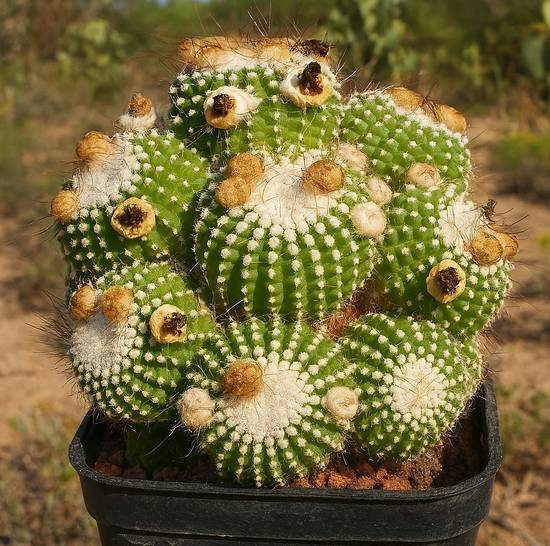
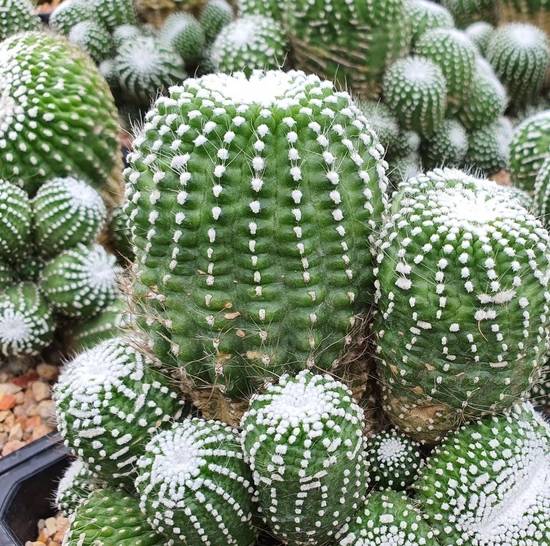
The Notocactus Scopa Inermis is a rare and fascinating form of the Notocactus Scopa, characterized by the absence of spines or by their very reduced presence. This feature gives it a softer and more ornamental appearance, while retaining the robustness and beauty of its original species.
Its silhouette is globular to slightly cylindrical, generally bright green, with well-defined ribs and small woolly areoles. Where the classic form displays numerous golden spines, the “inermis” cultivar stands out with its bare or weakly spined appearance, highlighting the plant’s natural geometry.
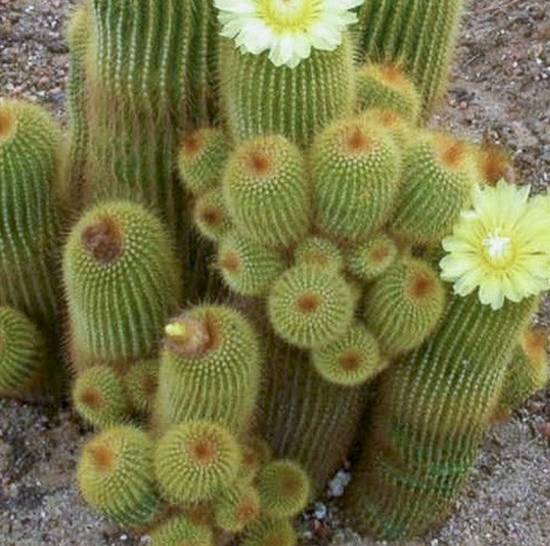
Its growth is relatively slow, making it an ideal species for pot culture or mini dry gardens. When mature, this cactus can produce very pretty golden-yellow flowers in a crown at the top, contrasting beautifully with the absence of spines.
In nature, it grows on well-exposed slopes in poor but very well-drained rocky soils. The “inermis” cultivar is mainly kept in collections or grown in pots.
🌞 Bright indirect light or light sun: Avoid scorching full sun during the hottest hours.
🌤️ Ideal exposure: East- or west-facing window, or lightly shaded greenhouse.
⚠️ Tip: Insufficient light may cause deformation (etiolation) and prevent flowering.
🌱 Spring / summer: Water every 2 to 3 weeks when the substrate is completely dry.
🍂 Autumn / winter: Stop watering and keep the plant cool and dry if possible.
💧 Tip: Use a fine-spout watering can and avoid prolonged contact of water with the base of the plant.
🌡️ Optimal range: Between 18°C and 26°C during the growing season.
❄️ Minimum temperatures: Tolerates down to 5°C if the substrate is perfectly dry.
🏠 Wintering: Choose a bright, cool, dry location.
🌵 Recommended mix: 50% cactus substrate + 50% draining materials (pumice, perlite, sand).
🧱 Tip: Slightly raise the pot or use an unglazed terracotta container to promote evaporation.
🌸 Period: From May to August, depending on growing conditions.
🎨 Flowers: Bright yellow, funnel-shaped, up to 4 cm in diameter.
💡 To stimulate: Cool, dry winter rest and maximum light in spring.