Notocactus Leninghausii Cristata
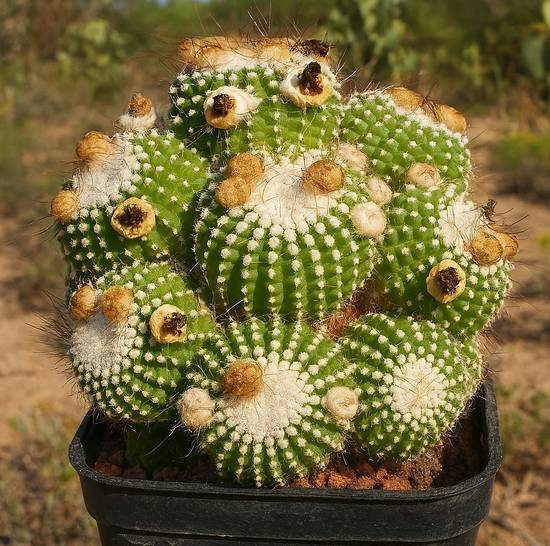
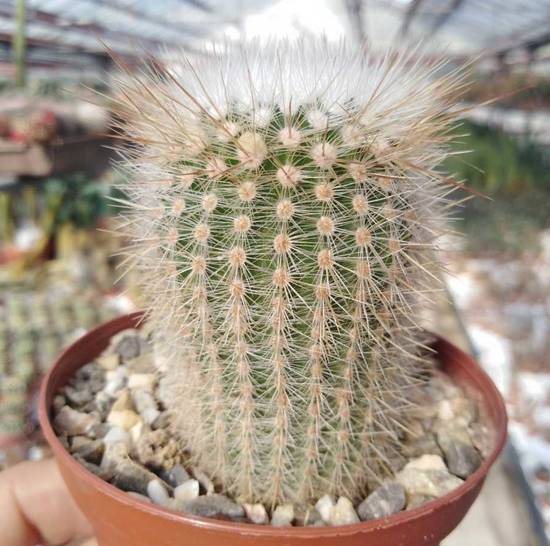
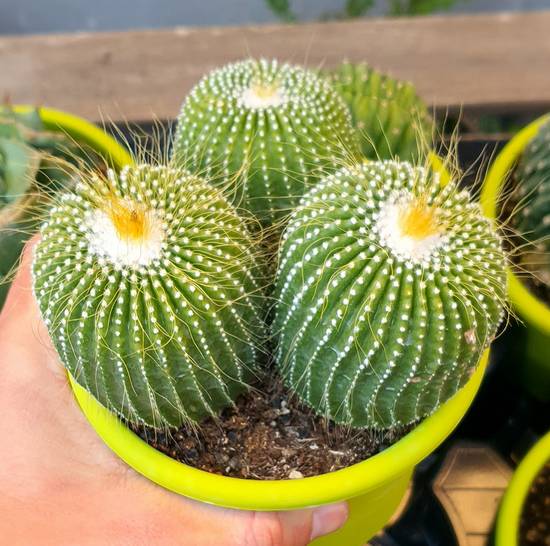
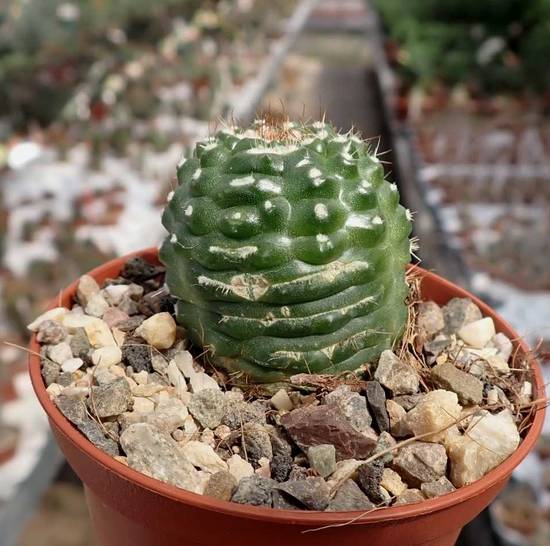
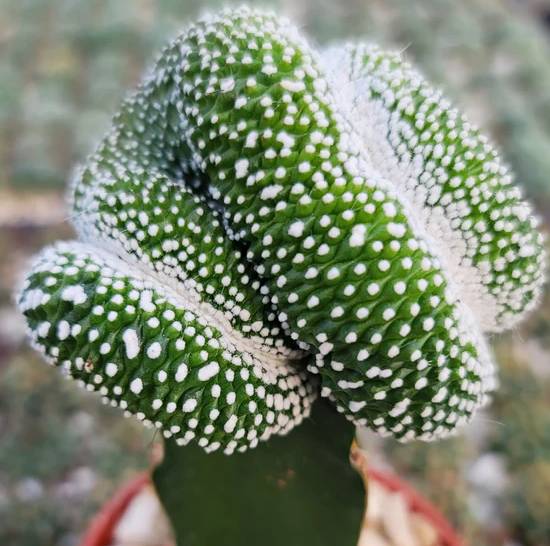
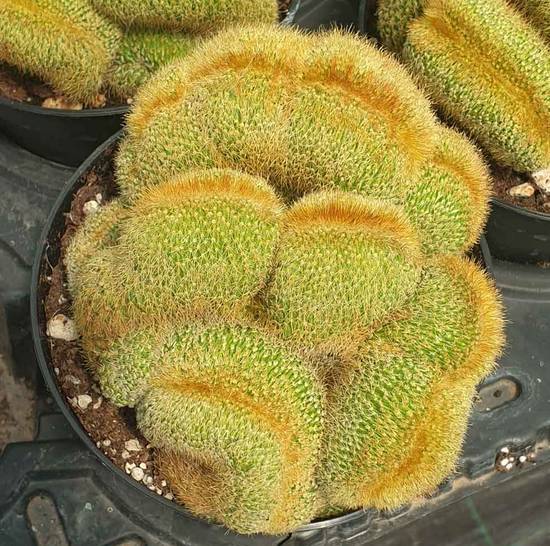
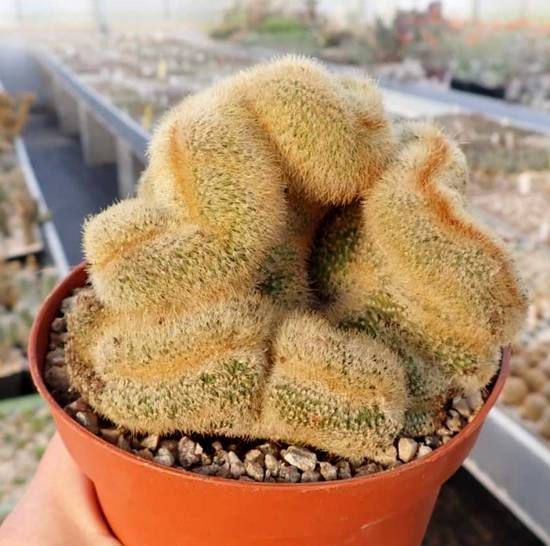
The Notocactus Leninghausii Cristata is a botanical marvel that immediately draws attention. It is a mutated form of the Notocactus Leninghausii, whose crested growth gives it a sinuous, wavy and highly distinctive silhouette. Unlike the classic upright column form, this crested version grows in a fan shape, forming irregular waves covered with fine golden spines.
Each specimen is unique: crests may fold over themselves, branch out, or form large sculptural fans. The body color ranges from light green to yellow-green, sometimes slightly bluish, covered with fine white areoles densely aligned. The spines are thin, soft and almost silky, giving the plant a glossy appearance.
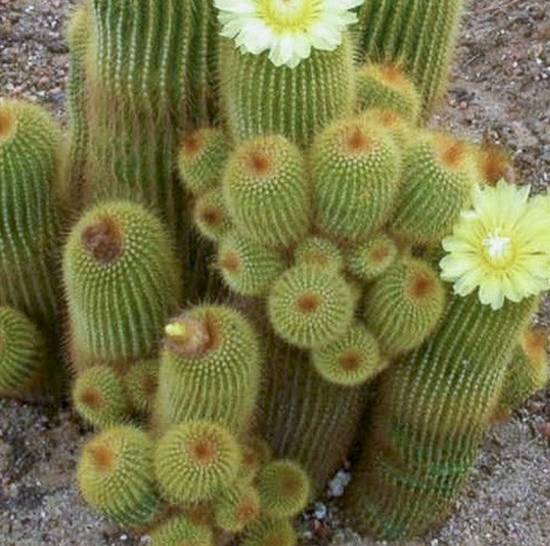
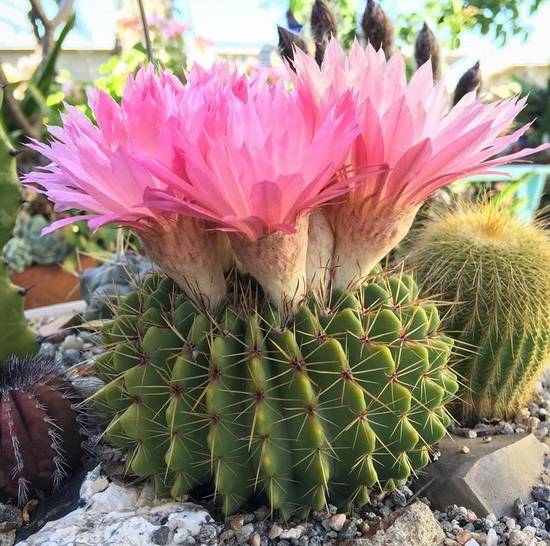
Although flowering is rarer than in the standard form, the Notocactus Leninghausii Cristata can produce lovely yellow flowers at the top of the crest under well-controlled conditions. This mutation is often grafted to stabilize growth and improve longevity, but it can also grow on its own roots when conditions are optimal.
🌞 Bright but filtered light: Ideal exposure is strong indirect light, such as behind a sheer curtain or in a lightly shaded greenhouse.
🌤️ Indoor exposure: South- or west-facing window with protection during the hottest hours.
⚠️ Warning: Excessive light can burn the crests, especially on young plants.
🌱 Growing season: Moderate watering every 2 to 3 weeks, only when the substrate is completely dry.
🍂 Winter rest: Reduce or completely stop watering if the plant is kept cool.
💧 Tip: Water only at the base to prevent water from collecting in the folds of the crest.
🌡️ Ideal range: 20 to 28 °C.
❄️ Minimum: 5 °C if kept dry. Indoor wintering is strongly recommended in cold regions.
🏠 Winter care: Choose a cool, bright location protected from humidity.
🪨 Optimal mix: 50% cactus substrate + 50% mineral components (pumice, perlite, gravel).
🧱 Tip: A surface layer of mineral material helps limit capillary moisture rise.
🌸 Season: Spring to summer.
🎨 Flowers: Bright yellow, small and tubular.
💡 Encouraging flowering: Provide good light, a dry winter rest, and light feeding in spring.