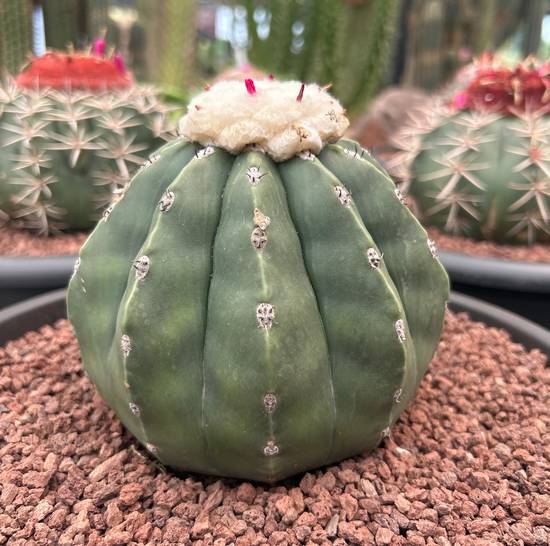
Melocactus Maxonii Inermis
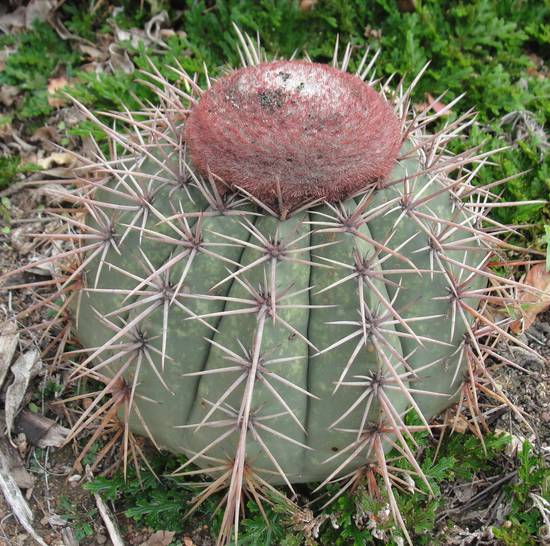
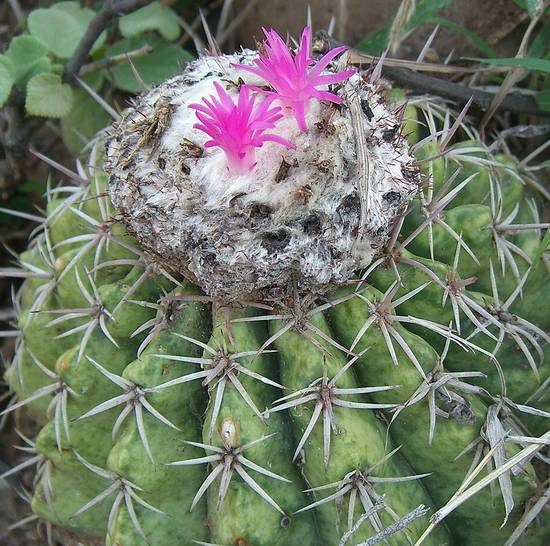
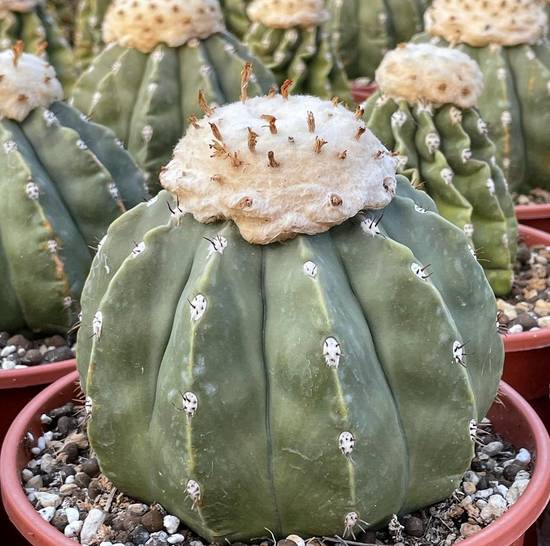
The Melocactus Maxonii Inermis is a rare and spectacular form of Melocactus Maxonii, native to the arid regions of Central America. The particularity of this variety lies in the almost total absence of spines — as its name “inermis” (spineless) indicates. This characteristic makes it a soft-to-the-touch plant and highly sought after by collectors looking for unusual specimens.
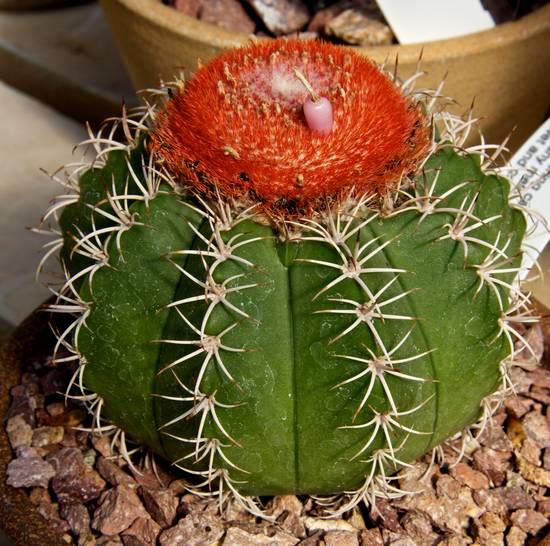
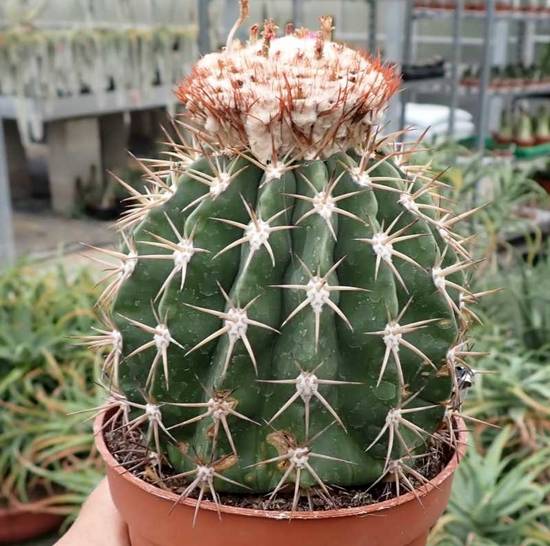
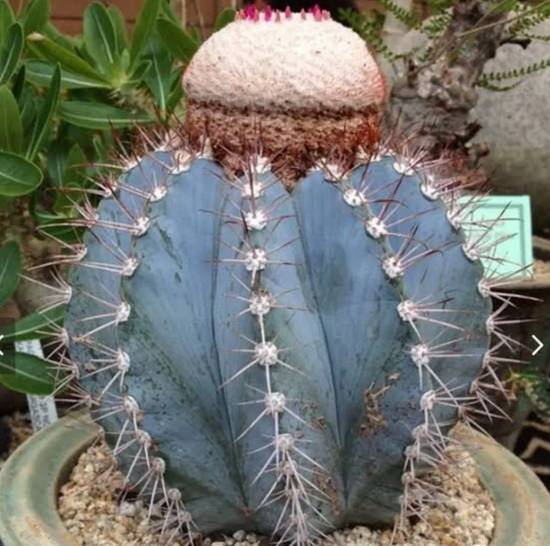
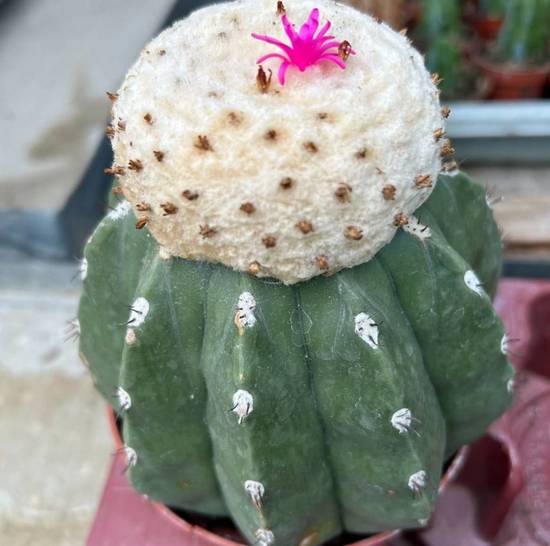
The body of Melocactus Maxonii Inermis is globular to slightly cylindrical, with a glossy bright green color, sometimes tinged with blue-green hues. It displays between 10 and 14 broad, shallow ribs, separated by marked grooves. The areoles are spaced and sometimes barely visible, producing only very small hairs or rudimentary spines. This lack of defense enhances its graphic and minimalist appearance.
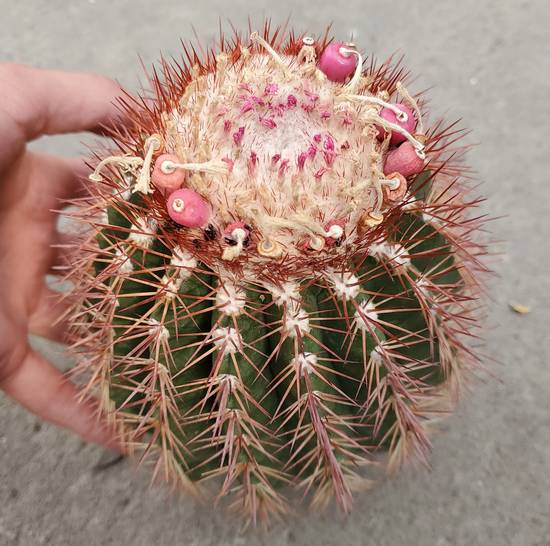
Like all Melocactus, this species stops its vegetative growth once the cephalium appears. The cephalium is a dense cylinder composed of white to orange wool, sometimes mixed with red bristles, which slowly grows at the top of the plant. From it emerge the flowers, followed by small pink, shiny and decorative capsule-shaped fruits.
🌤️ Suitable for bright indoor conditions: Place it near a south-facing window. A grow light can compensate for lack of light in winter.
☁️ Insufficient light: Prevents cephalium growth and promotes fungal diseases.
🍂 Autumn / Winter: Strongly reduce or completely stop watering. Melocactus maxonii inermis then enters vegetative rest.
⚠️ Major risk: This cactus, without spines, is even more sensitive to rot. Drainage is essential.
❄️ Lower limit: Not below 12°C. Too low a temperature causes growth stoppage or irreversible damage.
🏠 Wintering: From 15°C, bring the plant into a bright space protected from humidity.
🧪 Ideal mix: 50% cactus potting soil + 50% pumice or drainage granules.
🎨 Color: Small pink or lilac flowers, often grouped.
🍓 Fruits: Cylindrical, pink to red, edible but bland.