Melocactus Bahiensis
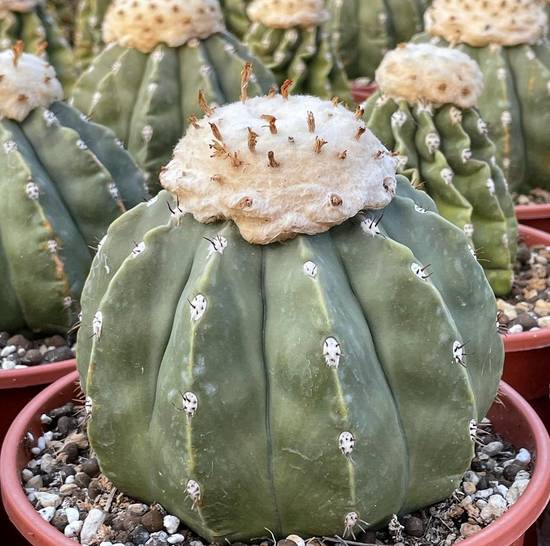
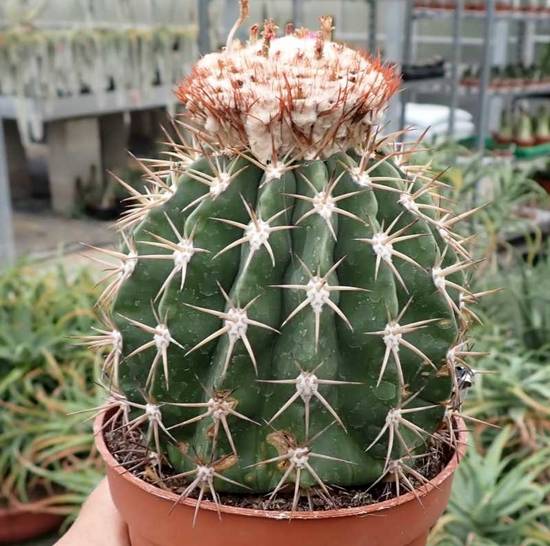
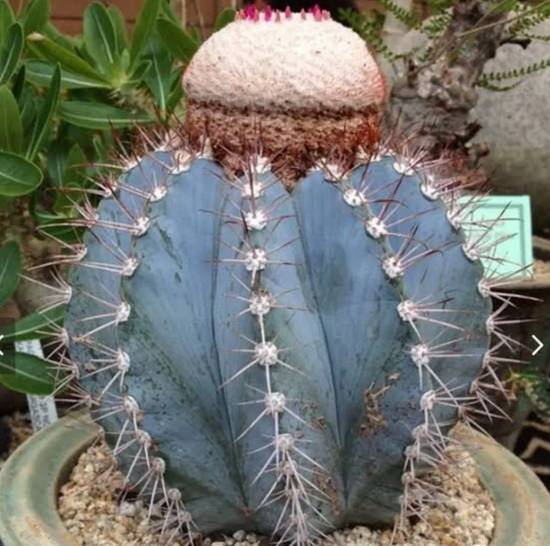
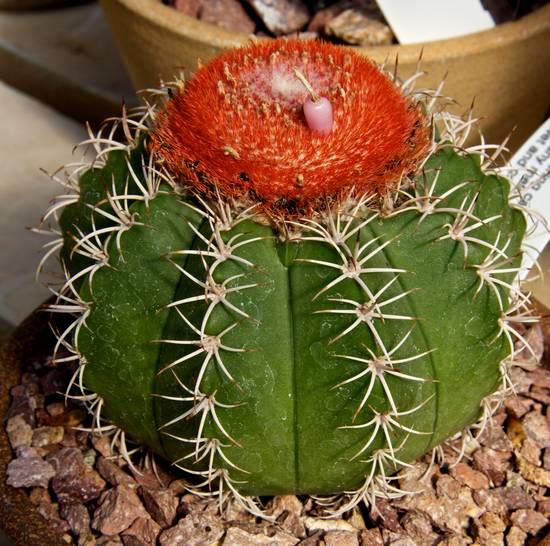
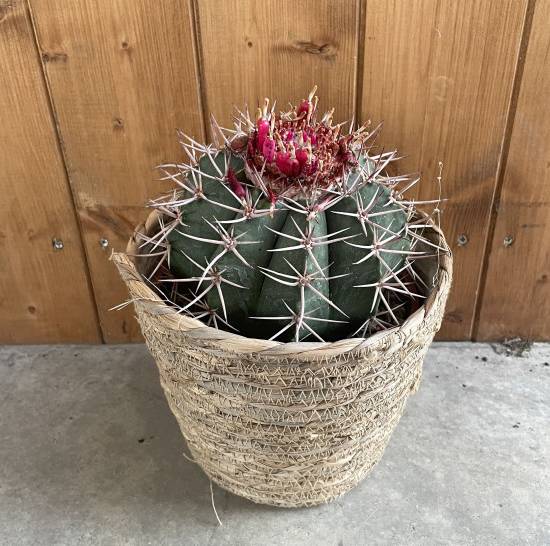
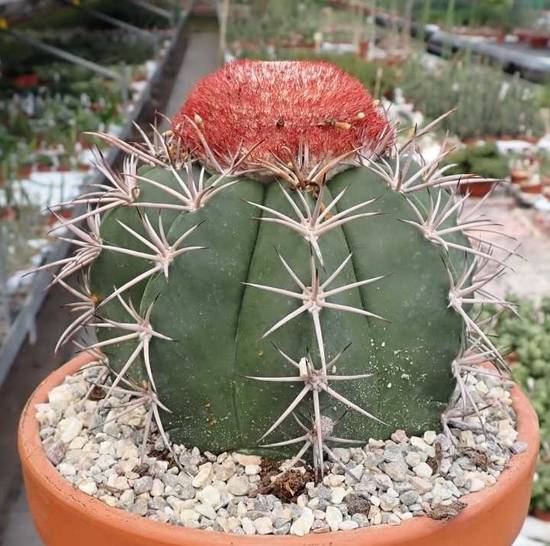
The Melocactus Bahiensis is a rare and fascinating species native to Brazil, more precisely to the state of Bahia, from which it takes its name. It stands out from other cacti by its elegant silhouette and the spectacular appearance of its woolly red-orange cephalium, making it immediately recognizable among other Melocactus species.
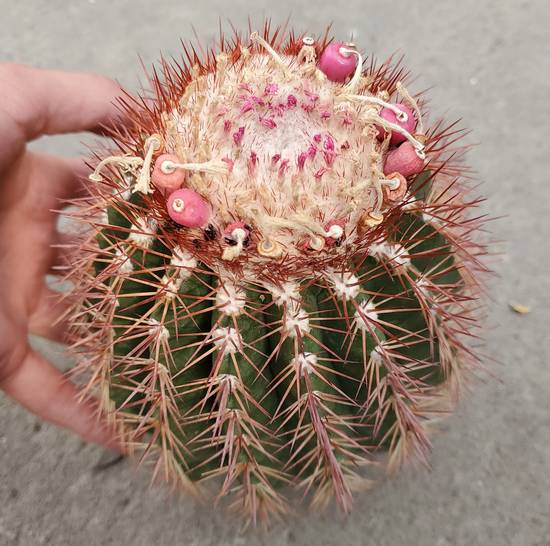
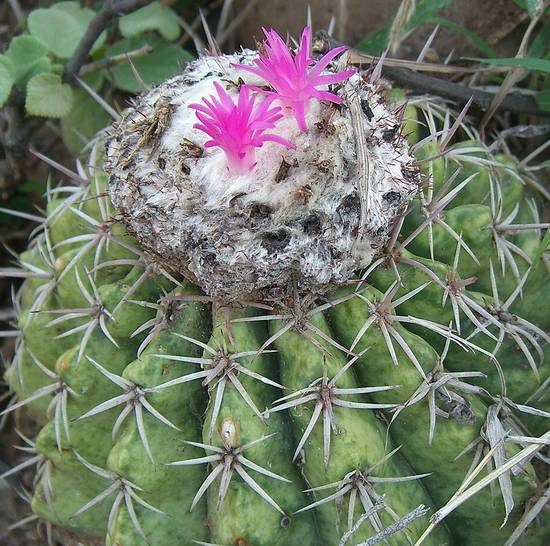
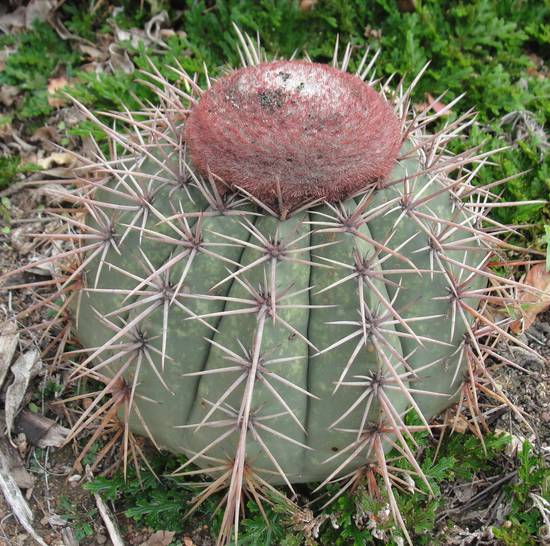
This cactus has a globular to short cylindrical body, deep green in color, often slightly glossy. It has between 10 and 14 pronounced ribs, on which areoles are arranged bearing fine, short spines, sometimes slightly curved. In mature specimens, vegetative growth stops in favor of cephalium development — a cylindrical structure made of red wool and bristles, typical of the genus.
The Melocactus bahiensis is a demanding but spectacular plant. It requires special attention, particularly regarding watering, repotting, and light exposure. It is mainly recommended for collectors who already have some experience growing tropical cacti.
Indoor cultivation: Place it near a south-facing bay window, or under a horticultural lamp in winter.
Insufficient light: Delays or prevents cephalium formation.
Cold period (autumn/winter): Drastically reduce watering, or stop completely if the plant is kept dry and warm.
Warning: This cactus is highly vulnerable to root rot. Excess water is often fatal, especially without sufficient heat.
Tolerance threshold: Does not tolerate temperatures below 10°C. Frost is fatal.
Wintering: Bring indoors as soon as temperatures drop below 15°C. A greenhouse or heated, bright room is ideal.
Recommended mix: 1/2 cactus potting soil + 1/2 drainage granules.
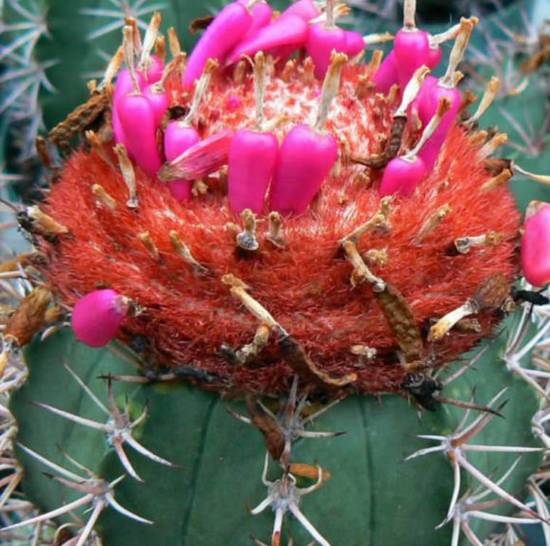
Fruits: Pink to red, cylindrical and decorative. They may remain on the plant for several weeks.
Note: Flowering only occurs on mature, well-exposed specimens.