Melocactus Curvispinus

Melocactus Curvispinus

Melocactus Curvispinus

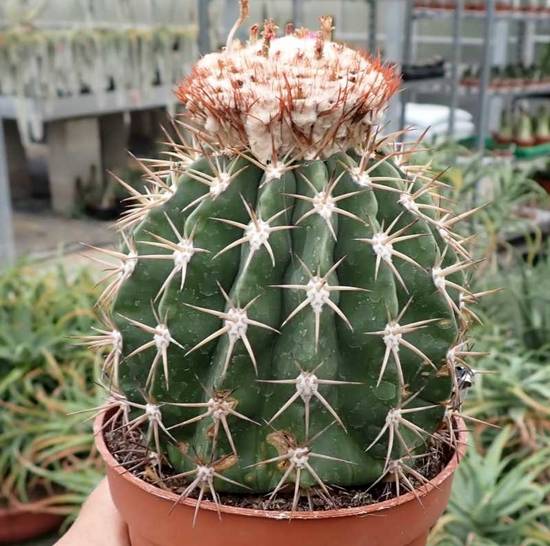
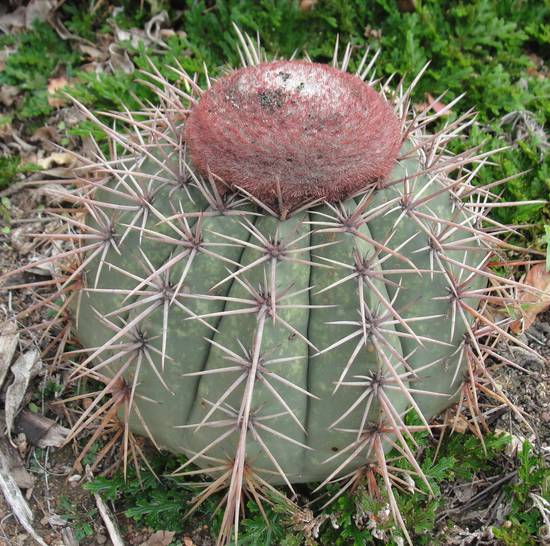
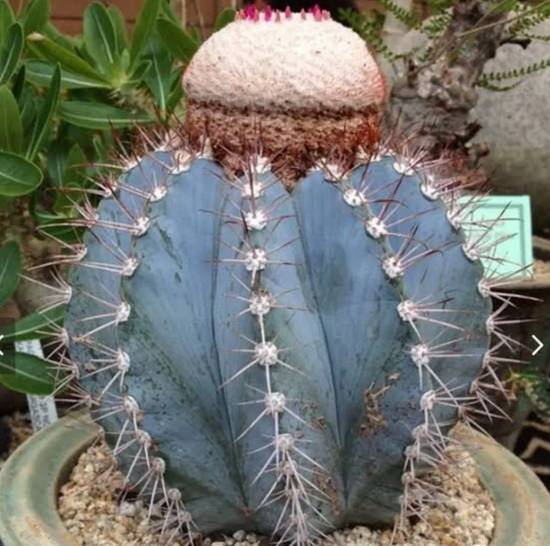
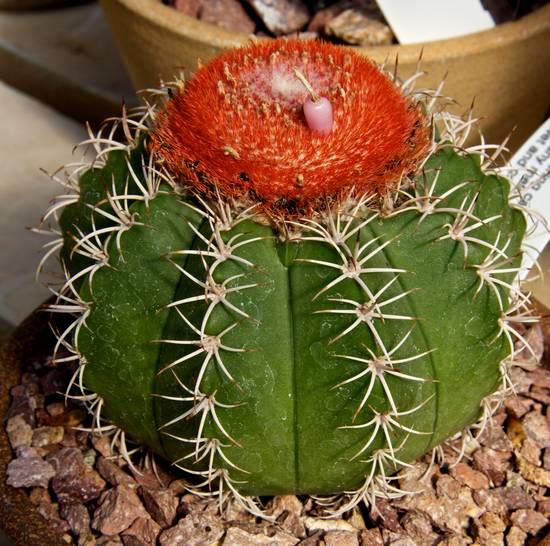
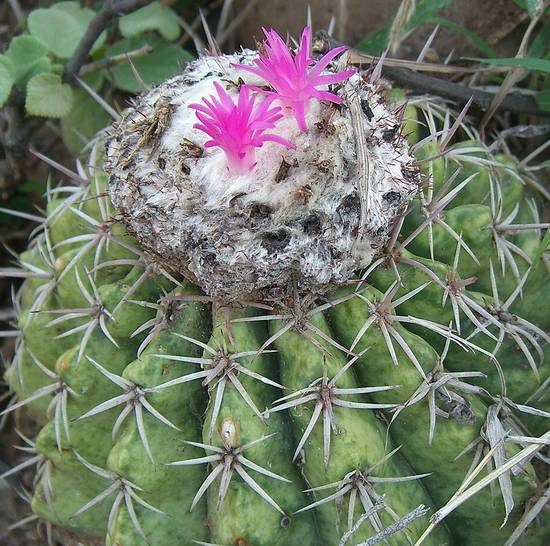
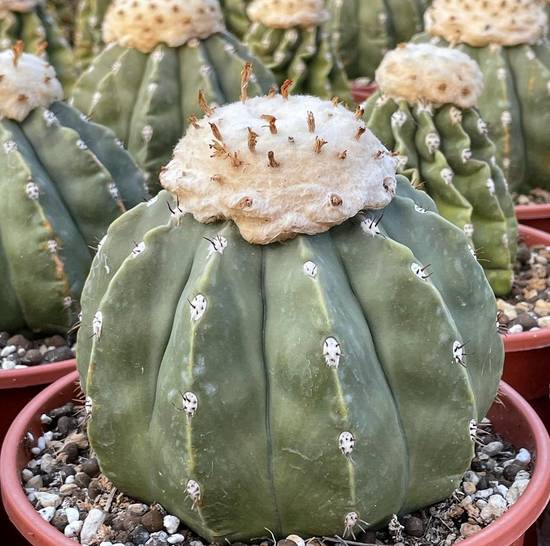
The Melocactus Curvispinus is an iconic and unique species in the world of cacti. Unlike most cacti that grow continuously in height or width, this Melocactus follows a very particular growth strategy: once mature, it stops increasing in size and develops a cephalium — a woolly and spiny structure at its top — dedicated solely to flowering.

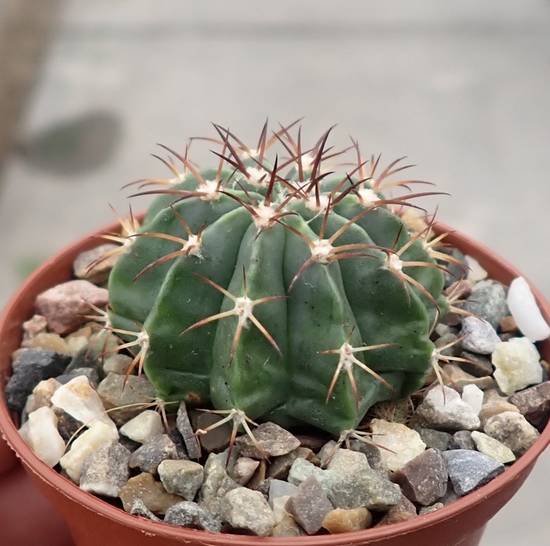
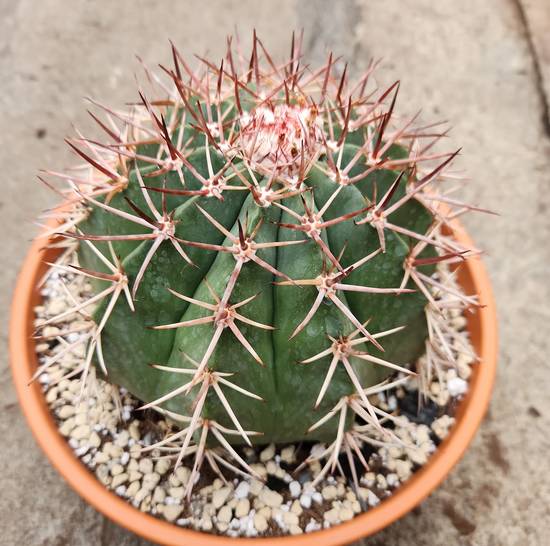
Its globular or slightly cylindrical body, deep green in color, features well-defined ribs, usually numbering between 10 and 16. It is adorned with curved spines, lighter at the base and darker at the tip, hence its name "Curvispinus."

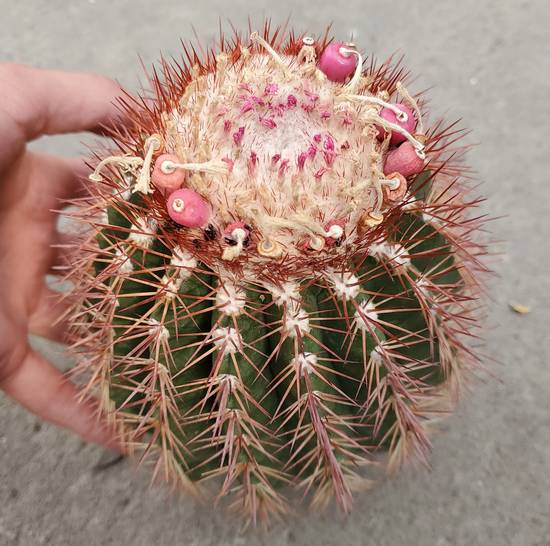
But it is truly the cephalium that makes it famous: a red-orange cap covered with hairs and small spines, producing delicate pink to purple flowers often followed by elongated fruits resembling candies.

In its natural habitat, Melocactus Curvispinus grows in arid or semi-arid areas, often on rocky hills or open plains under full sun. It adapts to highly mineral, well-draining soils and prolonged dry periods.
Light is crucial for forming a beautiful cephalium:

☀️ Full sun: At least 6 hours of direct light daily.

🌤️ Indoor culture: Place near a south-facing window or use a grow light.

⚠️ Avoid sudden exposure changes to prevent burns.
Melocactus Curvispinus requires careful watering, especially once the cephalium forms:

🌱 Spring / Summer: Every 15–20 days when soil is dry.

🍂 Autumn / Winter: Drastically reduce or suspend watering.

⚠️ Excess water can rot the cephalium.
Melocactus Curvispinus loves heat and dislikes cold:

🌡️ Ideal: 22–30 °C.

❄️ Minimum: 12 °C. Does not tolerate frost.

🏠 Keep indoors below 15 °C.
🪨 Use highly mineral cactus soil: 30% soil + 40% perlite + 30% pumice.
📅 Period: Summer to autumn depending on maturity.

🌼 Flowers: Small pink to purple blooms emerging from the cephalium.

🍬 Fruits: Long red edible fruits.
FAQ - Melocactus Curvispinus

Why does Melocactus Curvispinus stop growing?
Because at maturity it develops a cephalium, which replaces further growth of the main body.
Can Melocactus Curvispinus flower in a pot?
Yes, provided it is mature and receives sufficient light.
What substrate should be used for Melocactus Curvispinus?
A cactus potting mix enriched with perlite and pumice is recommended.
How should the cephalium of Melocactus Curvispinus be cared for?
Never moisten it directly and avoid overwatering.
Does Melocactus Curvispinus tolerate cold?
No, it must always be kept above 12 °C.
How long does Melocactus Curvispinus take to flower?
It can take 5 to 10 years to reach flowering maturity.
Should Melocactus Curvispinus be fertilized?
Yes, in spring with a cactus fertilizer applied every 2 months.
Can a mature Melocactus Curvispinus be repotted?
Yes, but carefully to avoid damaging the cephalium.
Is this species suitable for beginners?
No, it is a more delicate species, better suited for experienced growers.
Does Melocactus Curvispinus produce offsets?
No, it does not produce offsets. It reproduces only by seeds.