Melocactus Azureus

Melocactus Azureus
Melocactus Azureus
Melocactus Azureus

Melocactus Azureus

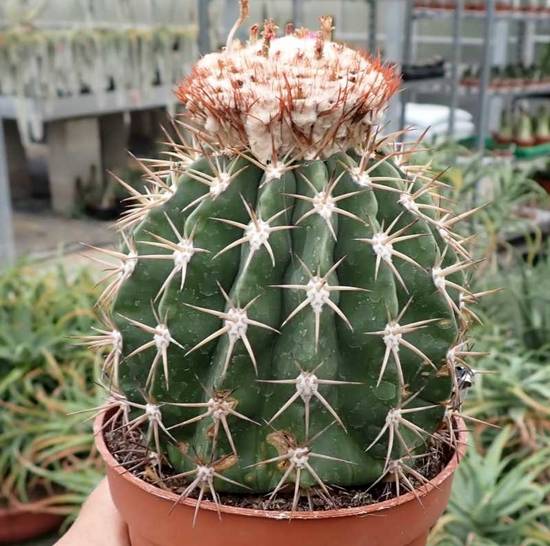
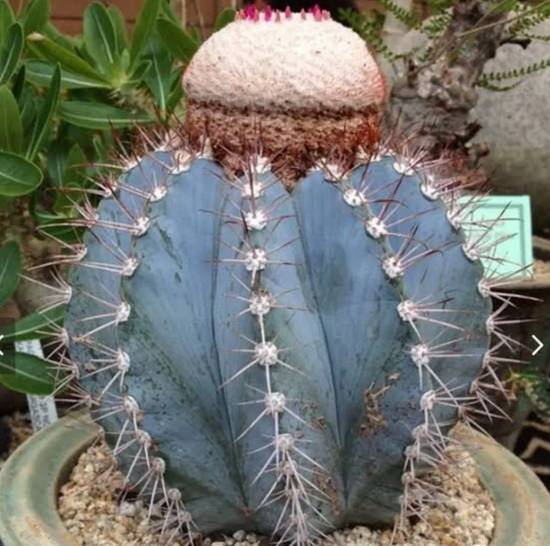
The Melocactus Azureus is one of the most fascinating representatives of the genus Melocactus. Native to Brazil, it is renowned for its remarkable bluish coloration, its dense orange cephalium, and its natural elegance. It combines aesthetic appeal and rarity, making it highly sought after by cactus collectors.

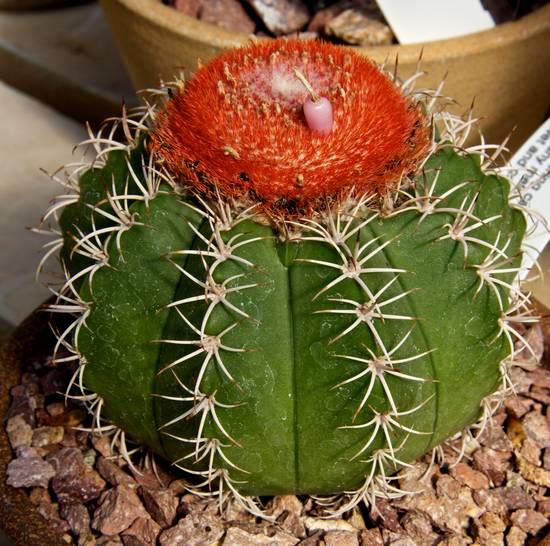
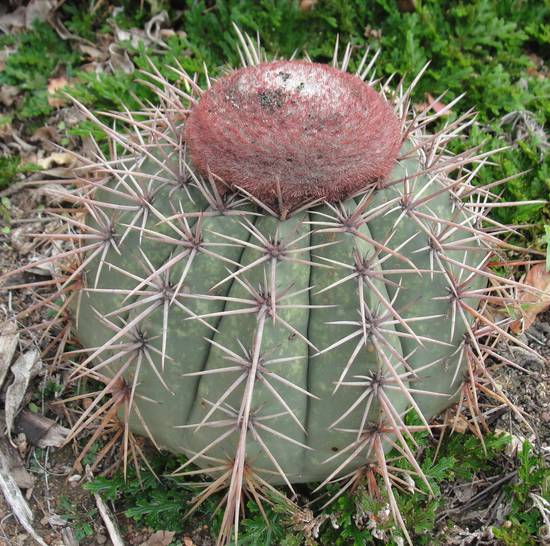
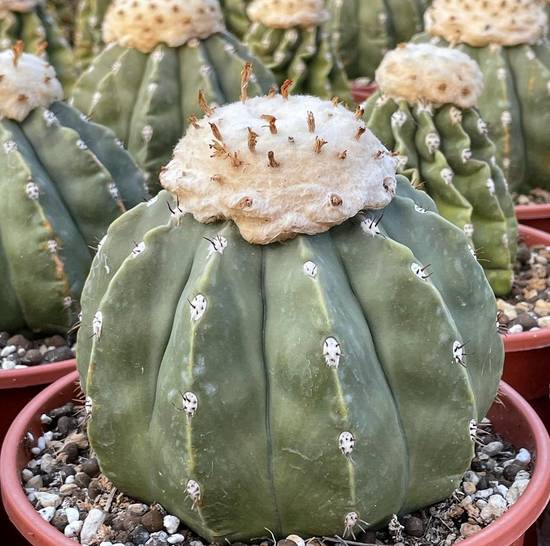
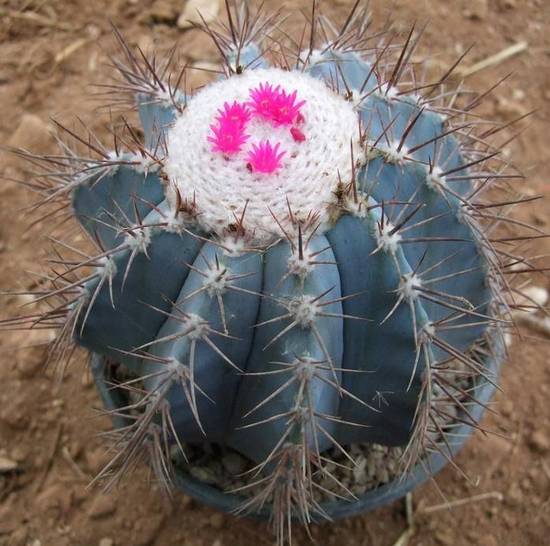
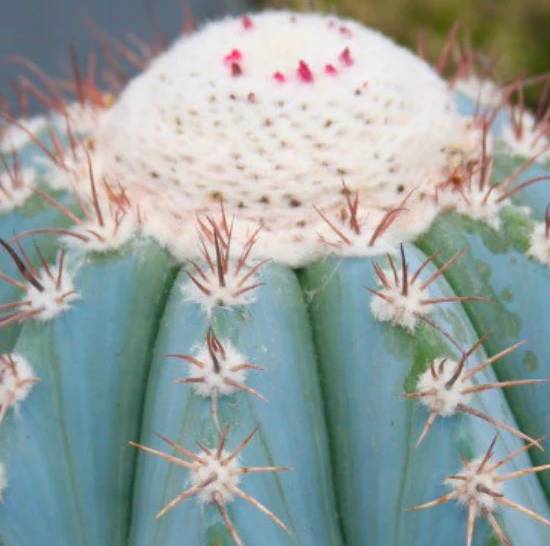
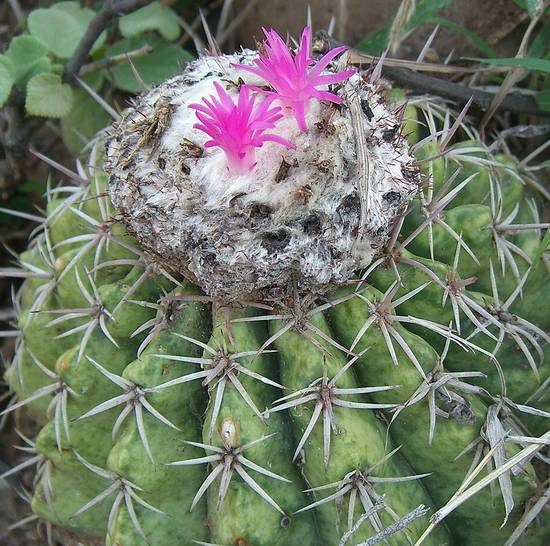
This cactus has a globular to short cylindrical body, reaching up to 15 cm in diameter, with a compact habit and a powdery blue-grey, almost silvery skin. Its well-defined ribs are lined with areoles bearing fine white to light brown spines, often slightly curved. This blue coloration is uncommon among cacti and gives Melocactus azureus all of its charm.

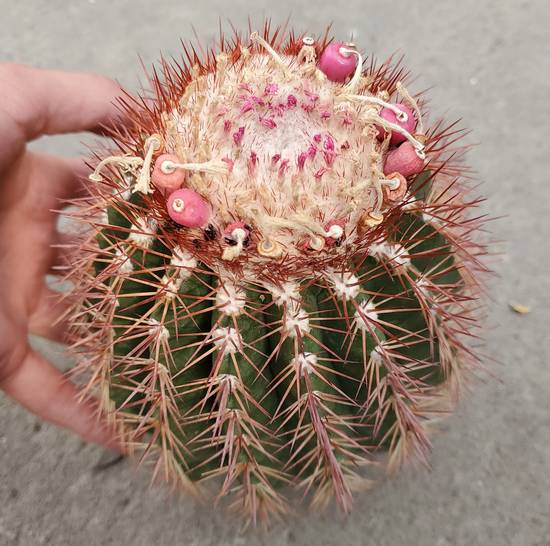
Like all Melocactus, it develops a cephalium at maturity: a dense, cylindrical woolly structure, brick-red to orange in color, emerging from the top of the plant and producing flowers and fruits. The flowers are small, pink to mauve, discreet but continuous during the warm season.

The Melocactus Azureus originates from the arid regions of Brazil, particularly the states of Bahia and Minas Gerais. It grows on rocky plateaus in acidic, highly draining soils, exposed to intense sunlight and significant temperature differences between day and night.
🌞 Intense light required: 6 to 8 hours of direct sunlight per day. Insufficient light will cause the blue coloration of the epidermis to fade.

🌤️ Indoor growing: South-facing window or a powerful grow light in winter.

☁️ Warning: Without sufficient light, no cephalium or flowering will occur.
🌱 Spring / Summer: Infrequent watering (every 2–3 weeks), only when the substrate is completely dry.

🍂 Autumn / Winter: Almost complete rest. Prolonged moisture must be strictly avoided.

⚠️ Sensitivity: Melocactus azureus is highly prone to rot. Perfect drainage is essential.
🌡️ Optimal range: 22°C to 35°C.

❄️ Minimum: 12°C. No cold tolerance. Must be overwintered in a warm, bright environment.

🏠 Tip: A heated greenhouse or a well-exposed veranda is ideal in winter.
🪨 Perfect drainage required: Melocactus Azureus naturally grows in acidic, mineral and rocky soil.

🧪 Recommended mix: 50% cactus substrate + 50% mineral components (pumice, volcanic sand, gravel).
🌸 Period: Summer, if the cephalium is well developed.

🎨 Flowers: Small, pink to mauve, emerging from the cephalium.

🍓 Fruits: Cylindrical, red, decorative. They may remain on the plant for several days.
FAQ - Melocactus Azureus

Why is Melocactus Azureus blue?
Its blue tint is due to a fine protective bloom. Without enough light, it disappears.
Can Melocactus Azureus be grown on a balcony?
Yes, in summer, in full sun and sheltered from rain. A mineral mulch such as Or Brun pozzolana is recommended.
What fertilizer should be used for Melocactus Azureus?
A gentle fertilizer such as Undergreen Jungle Fever is ideal during the growing season.
When does the cephalium of Melocactus Azureus start to grow?
It appears after a few years, when the plant is mature and well exposed.
My Melocactus Azureus is turning green, is this normal?
No, this indicates a lack of sun or too much water. Place it back in the sun and reduce watering. Use a substrate such as Algoflash cactus soil.
Does Melocactus Azureus flower every year?
Yes, if the cephalium is well developed and the plant is well exposed.
Can Melocactus Azureus be repotted easily?
Only before the cephalium forms. After that, avoid it. Add drainage granules to reduce risks.
Is this cactus suitable for beginners?
No, it requires good control of watering and climate.
What is the lifespan of Melocactus Azureus?
With proper care, it can live more than 30 years.
Is Melocactus Azureus toxic?
No, it is not toxic. The fruits are edible but not very flavorful.