Mammillaria Humboldtii
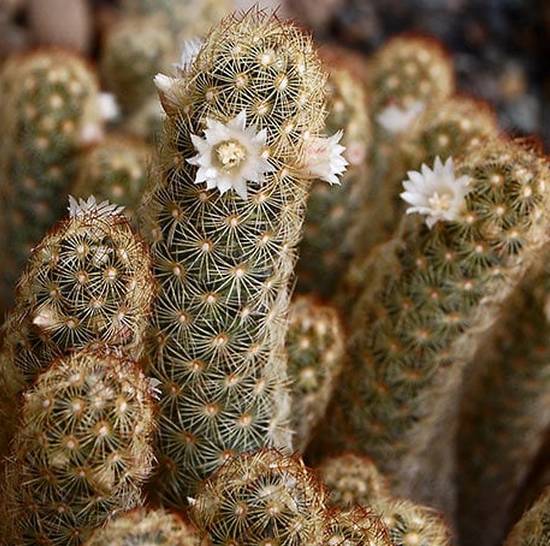
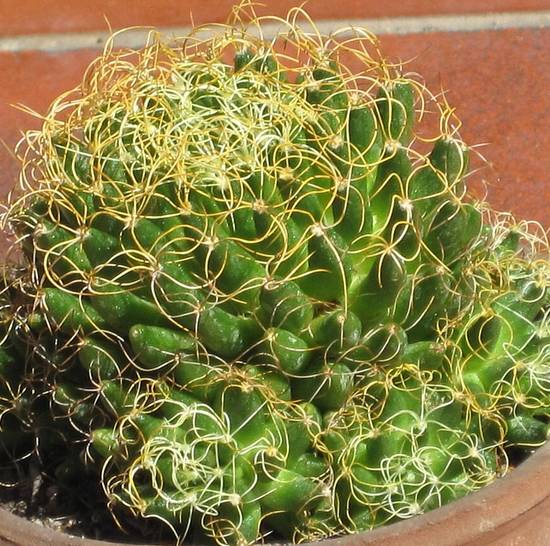
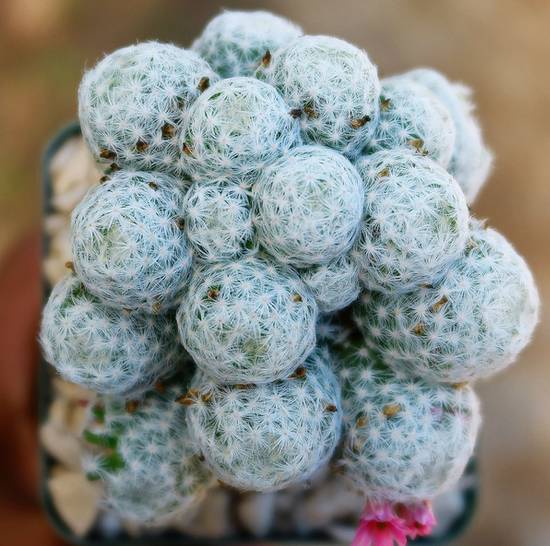
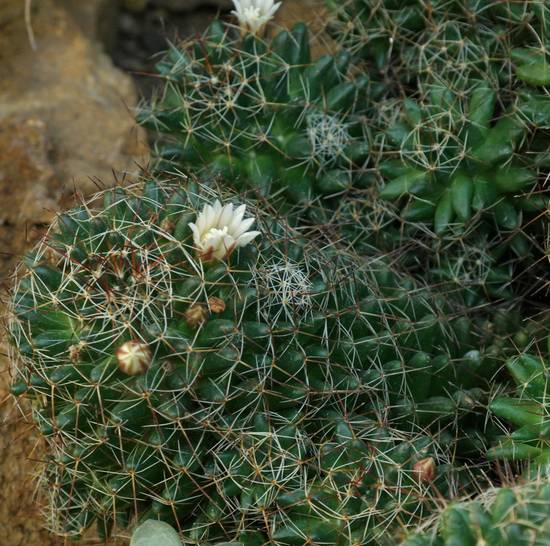
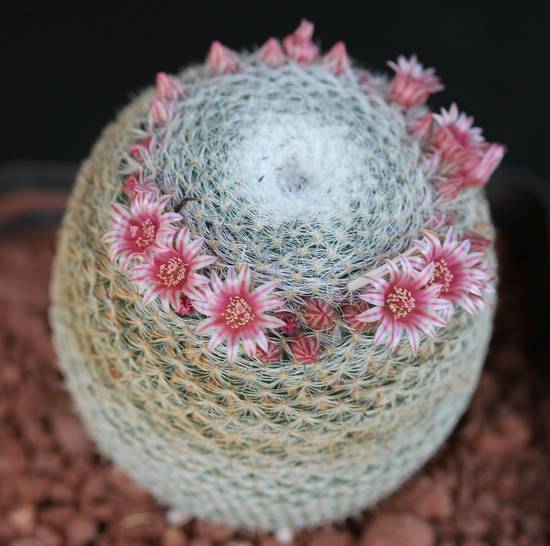
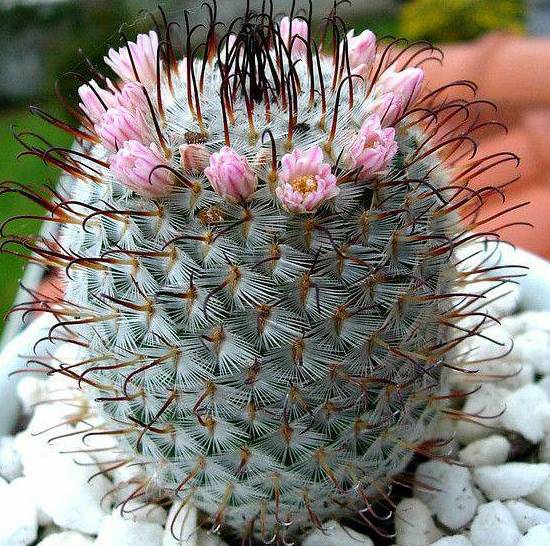
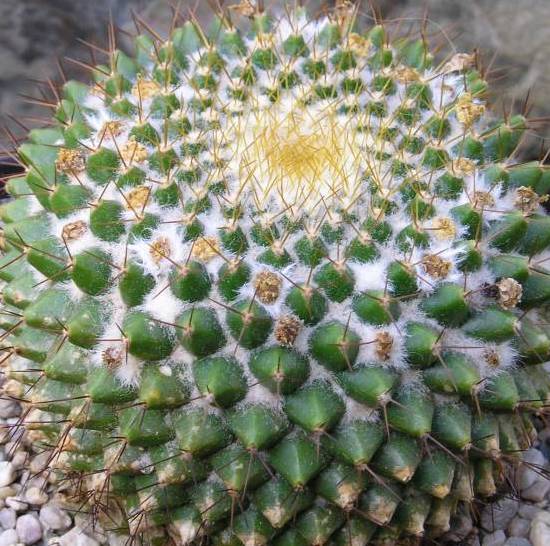
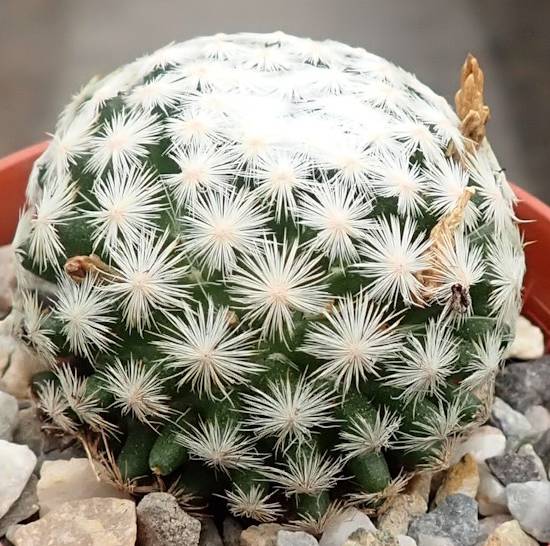
The Mammillaria Humboldtii is a small Mexican jewel, highly prized by collectors for its delicate appearance and cottony look. This globular to semi-cylindrical cactus has tubercles densely covered with fine, silky white spines, giving it the appearance of a living snowball. This fine hair layer protects the plant from intense sunlight while limiting evaporation, a typical adaptation of species endemic to semi-arid zones.
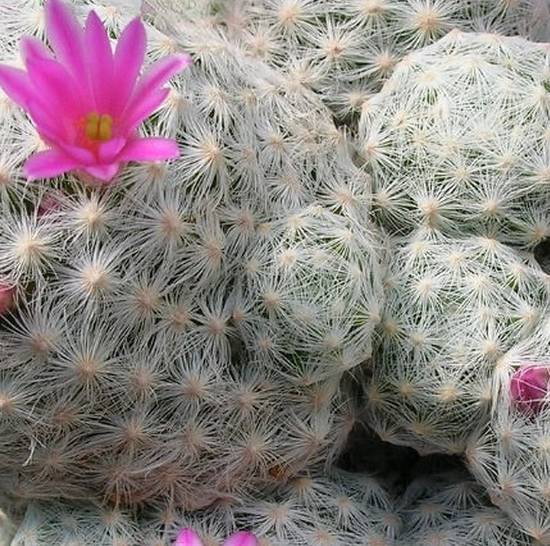
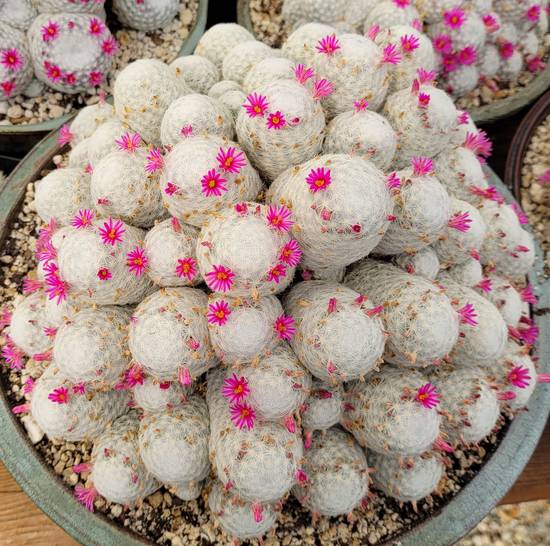
Over time, Mammillaria Humboldtii forms compact clusters of joined heads, making it particularly decorative in wide pots. It can flower abundantly, producing lovely small pale pink to mauve flowers arranged in a crown at the top of each stem, creating a striking contrast with its fluffy white body.
This cactus originates from northern Mexico, particularly the states of Coahuila and Durango. It grows naturally on arid limestone hills, in poor but well-drained mineral soils. Extreme temperatures and scarce rainfall have shaped its compact form and woolly covering.
Bright exposure is essential to ensure harmonious growth.
🌞 Bright light: Place it in full light, ideally with gentle direct sun (morning or late afternoon).
🌤️ Summer protection: During heatwaves, light shade prevents burns on young tubercles.
🏠 Indoors: Place near a well-exposed window (south or west). Insufficient light leads to etiolation and weakening of its woolly covering.
🌞 Bright light: Place it in full light, ideally with gentle direct sun (morning or late afternoon).
🌤️ Summer protection: During heatwaves, light shade prevents burns on young tubercles.
🏠 Indoors: Place near a well-exposed window (south or west). Insufficient light leads to etiolation and weakening of its woolly covering.
Watering must be cautious and well spaced.
💧 Growth period (March to September): Water moderately every 15 to 20 days, letting the substrate dry between waterings.
❄️ Rest period (October to February): Almost completely stop watering. Keep the cactus dry to encourage future flowering.
⚠️ Important: Excess water quickly causes rot. Slight thirst is preferable to excess moisture.
💧 Growth period (March to September): Water moderately every 15 to 20 days, letting the substrate dry between waterings.
❄️ Rest period (October to February): Almost completely stop watering. Keep the cactus dry to encourage future flowering.
⚠️ Important: Excess water quickly causes rot. Slight thirst is preferable to excess moisture.
This cactus tolerates heat well but must be protected from frost.
🌡️ Ideal range: 18 to 28 °C during the growing season.
❄️ Minimum temperature: Can tolerate 2 to 5 °C if kept completely dry.
💡 Overwintering tip: A bright, cool location (5 to 10 °C) in winter stimulates spring flowering.
🌡️ Ideal range: 18 to 28 °C during the growing season.
❄️ Minimum temperature: Can tolerate 2 to 5 °C if kept completely dry.
💡 Overwintering tip: A bright, cool location (5 to 10 °C) in winter stimulates spring flowering.
A very well-drained substrate is essential for survival.
🪨 Ideal composition: 50 % cactus potting soil + 25 % perlite or drainage granules + 25 % pumice or coarse sand.
⛏️ Drainage: Place a layer of gravel or clay pebbles at the bottom of the pot.
🪨 Ideal composition: 50 % cactus potting soil + 25 % perlite or drainage granules + 25 % pumice or coarse sand.
⛏️ Drainage: Place a layer of gravel or clay pebbles at the bottom of the pot.
This cactus can flower generously, forming a lovely floral crown.
🌸 Period: Spring to early summer, depending on growing conditions.
🌺 Flower: Small, bell-shaped, pink to mauve flowers arranged in a ring around the apex.
🌿 Encouraging flowering: Provide a strict winter rest, abundant spring light, and apply a suitable cactus fertilizer once a month.
🌸 Period: Spring to early summer, depending on growing conditions.
🌺 Flower: Small, bell-shaped, pink to mauve flowers arranged in a ring around the apex.
🌿 Encouraging flowering: Provide a strict winter rest, abundant spring light, and apply a suitable cactus fertilizer once a month.
FAQ - Mammillaria Humboldtii
How should Mammillaria Humboldtii be watered to prevent rot?
Water moderately. In summer, always allow the substrate to dry completely between waterings. In winter, reduce or stop watering entirely. A well-draining substrate is essential to prevent excess moisture.
What light exposure is suitable for Mammillaria Humboldtii?
It enjoys bright light but should be protected from intense midday sun in summer. Gentle sun or partial shade is ideal. Indoors, place it near a well-exposed window.
Can Mammillaria Humboldtii be grown outdoors in France?
Yes, provided it is brought indoors during winter. It can tolerate temperatures down to 2°C if kept dry, but must be protected from frost and humidity.
Is Mammillaria Humboldtii easy to make bloom?
It can bloom fairly easily if given a proper winter rest, bright light, and a suitable cactus fertilizer in spring.
How can Mammillaria Humboldtii be distinguished from other white Mammillaria species?
It stands out with its fine interwoven white spines and dense clustered stems. Its pale pink crown-shaped flowers are also characteristic.
Should Mammillaria Humboldtii be repotted frequently?
No, repotting every 3 to 4 years is sufficient. Repot in spring using a well-draining cactus soil to refresh the substrate and encourage growth.
Can Mammillaria Humboldtii suffer from overwatering?
Yes, this is its main risk. Excess water causes root and stem rot. When in doubt, wait before watering.
Why is my Mammillaria Humboldtii not growing?
It may be due to insufficient light, a pot that is too small, or compact soil. Provide more sunlight and use a well-draining mineral mix.
What is the growth rate of Mammillaria Humboldtii?
Its growth is slow but steady. Over time, it forms attractive clusters. Do not expect rapid growth; it is a plant for patient growers.
Does Mammillaria Humboldtii need fertilizer?
Yes, but moderately. A cactus fertilizer applied once a month in spring and summer is sufficient.
What are the differences between Mammillaria Humboldtii Caespitosa and Mammillaria Humboldtii?
| Characteristics | Humboldtii | Humboldtii Caespitosa |
|---|---|---|
| Growth form | Globular to slightly cylindrical, solitary or in small clumps | Dense cushion form with many heads |
| Stem size | Small (3 to 5 cm in diameter) | Similar stems but more numerous |
| Offset production | Occasional offsets | Very frequent offsets |
| Spine density | Very dense, white and silky | Equally dense but less uniform |