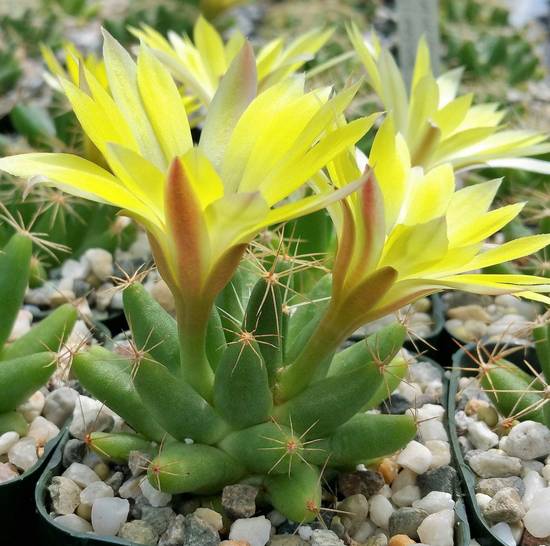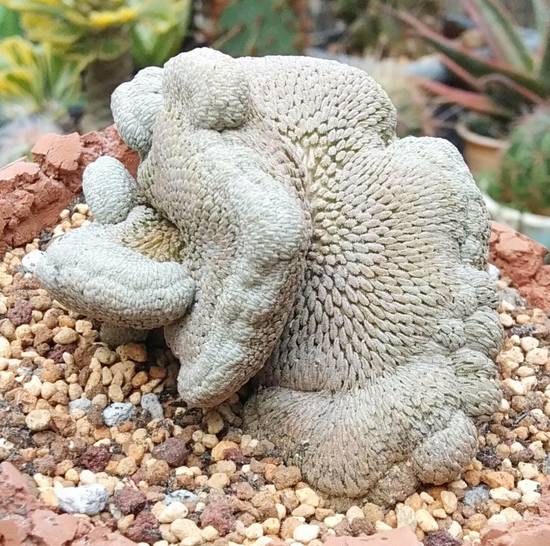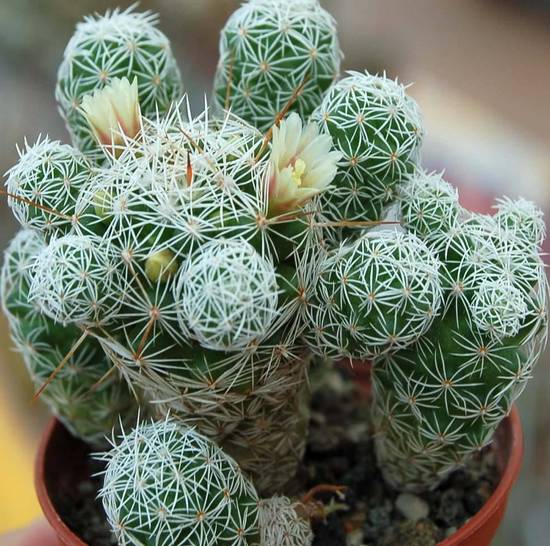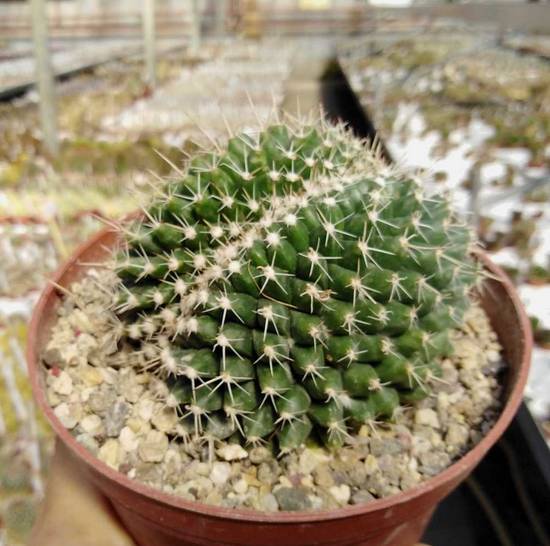
Mammillaria Humboldtii Caespitosa
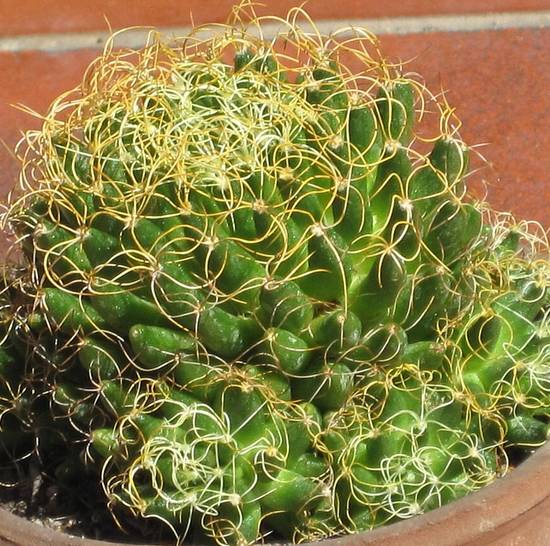
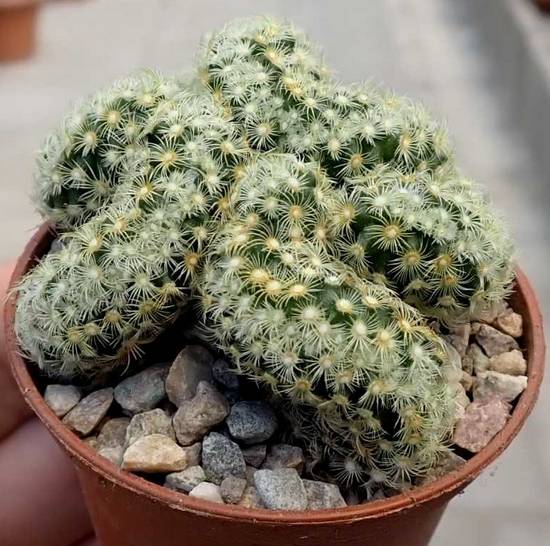
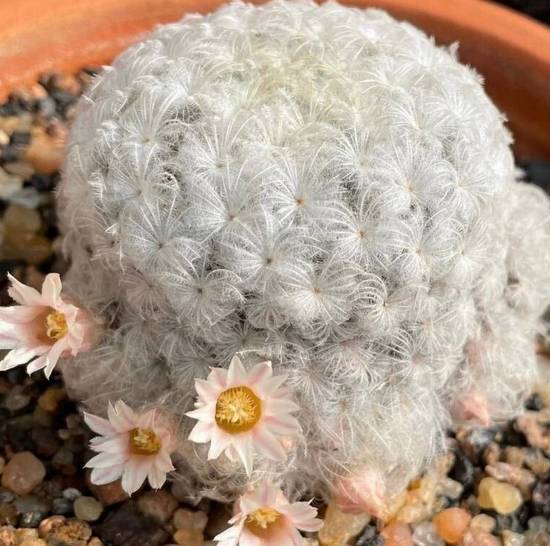
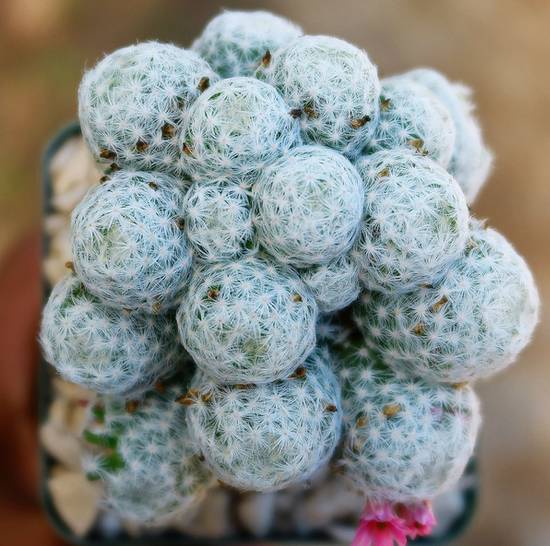
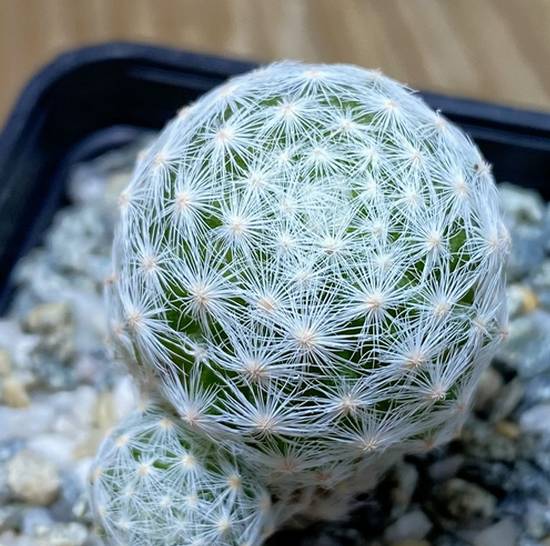
The Mammillaria Humboldtii Caespitosa is a particularly appreciated variant of Mammillaria Humboldtii, recognized for its growth in small, dense clumps. This miniature cactus is covered with a fine coat of white, silky spines, giving it a soft and fluffy appearance. Unlike the classic form, the Caespitosa variety tends to form compact groups of spherical heads, creating a highly decorative cushion effect. Its beauty lies in the contrast between its apparent delicacy and its robustness in cultivation.
Over time, this Mammillaria can form a small, spreading colony, ideal for pot arrangements or open terrariums. It is prized for its harmonious structure and delicate spines that barely prick despite their density.
This variety originates from the semi-arid regions of northern Mexico, mainly in the states of Coahuila and Durango. It grows on rocky slopes, often in full exposure, where it benefits from morning dew and a well-drained mineral substrate. This harsh climate explains its excellent drought tolerance and slow growth.
Light is essential for the good health of Mammillaria Humboldtii Caespitosa.
🔆 Outdoors: Gentle direct sun or light partial shade in very hot regions.
🏠 Indoors: Choose a well-exposed south- or west-facing window. Lack of light causes unsightly elongation of the stems.
🌤️ Protection: Avoid intense midday sun in summer, especially for young plants.
🔆 Outdoors: Gentle direct sun or light partial shade in very hot regions.
🏠 Indoors: Choose a well-exposed south- or west-facing window. Lack of light causes unsightly elongation of the stems.
🌤️ Protection: Avoid intense midday sun in summer, especially for young plants.
This cactus prefers moderate, spaced watering. Too much water can be fatal.
🌱 Spring / Summer: Water every 15 to 20 days, allowing the substrate to dry thoroughly.
❄️ Autumn / Winter: Stop watering as soon as temperatures drop below 10 °C.
⚠️ Tip: Excess moisture causes irreversible rot. Use a suitable substrate and avoid water-filled saucers.
🌱 Spring / Summer: Water every 15 to 20 days, allowing the substrate to dry thoroughly.
❄️ Autumn / Winter: Stop watering as soon as temperatures drop below 10 °C.
⚠️ Tip: Excess moisture causes irreversible rot. Use a suitable substrate and avoid water-filled saucers.
This cactus is tolerant, but hates cold humidity.
🌡️ Optimal temperature: 18 to 28 °C.
❄️ Minimum tolerated: 2 °C if the substrate is perfectly dry.
💡 Tip: Bright, cool overwintering (between 5 and 10 °C) encourages beautiful flowering.
🌡️ Optimal temperature: 18 to 28 °C.
❄️ Minimum tolerated: 2 °C if the substrate is perfectly dry.
💡 Tip: Bright, cool overwintering (between 5 and 10 °C) encourages beautiful flowering.
Like many Mammillarias, this variety needs a very well-drained soil.
🪨 Recommended mix: 50 % cactus potting soil + 30 % perlite + 20 % pumice.
⛏️ Bottom drainage: Always add a layer of stones or drainage granules.
🪨 Recommended mix: 50 % cactus potting soil + 30 % perlite + 20 % pumice.
⛏️ Bottom drainage: Always add a layer of stones or drainage granules.
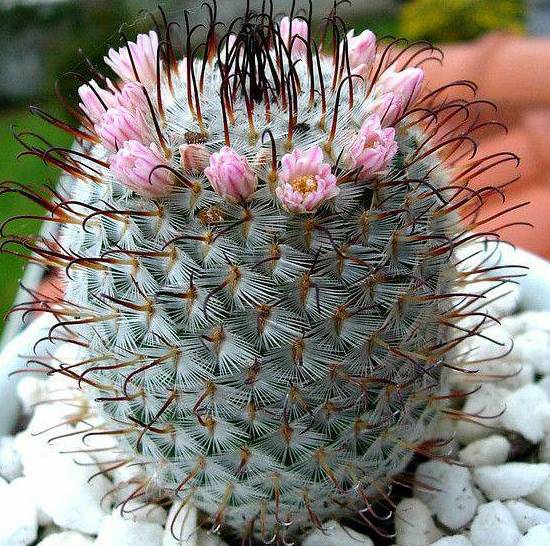
The Mammillaria Humboldtii Caespitosa produces pretty small flowers when conditions are right.
📆 Period: Late spring to early summer.
🌺 Color: Pale pink to lilac, sometimes with a darker central stripe.
💡 To stimulate flowering: Respect a dry winter rest and apply a cactus fertilizer at the start of growth.
📆 Period: Late spring to early summer.
🌺 Color: Pale pink to lilac, sometimes with a darker central stripe.
💡 To stimulate flowering: Respect a dry winter rest and apply a cactus fertilizer at the start of growth.
FAQ - Mammillaria Humboldtii Caespitosa
How should Mammillaria Humboldtii Caespitosa be cared for in a pot?
It requires a well-draining substrate, bright exposure, and moderate watering. Place it behind a sunny window and avoid excess moisture.
When does Mammillaria Humboldtii Caespitosa bloom?
It blooms from May to July, producing small delicate pink flowers. A dry winter rest promotes flowering.
Can Mammillaria Humboldtii Caespitosa stay outdoors in winter?
It can tolerate temperatures slightly above freezing if the substrate is completely dry. However, bringing it indoors is generally safer.
How can you tell if Mammillaria Humboldtii Caespitosa is overwatered?
Signs of overwatering include a soft base or black spots. Always wait until the soil is completely dry before watering again.
What fertilizer should be used for Mammillaria Humboldtii Caespitosa?
Use a cactus fertilizer rich in potassium in spring. Avoid fertilizers that are too high in nitrogen.
Why is Mammillaria Humboldtii Caespitosa not flowering?
A lack of light or insufficient cool winter rest may prevent flowering. Provide bright light and a proper winter dormancy period.
What is the growth rate of Mammillaria Humboldtii Caespitosa?
Its growth is very slow. It takes several years to form an attractive clump. Patience and proper conditions are essential.
Does Mammillaria Humboldtii Caespitosa have sharp spines?
Its spines are fine and silky, making them relatively soft. It is appreciated for its gentle appearance.
What type of pot is recommended for Mammillaria Humboldtii Caespitosa?
A terracotta pot with a drainage hole is ideal. It helps regulate moisture and prevents root rot.
Can Mammillaria Humboldtii Caespitosa be easily propagated?
Yes, by separating offsets. Wait until they are well formed before detaching and replanting them in a suitable substrate.
What are the differences between Mammillaria Humboldtii Caespitosa and Mammillaria Humboldtii?
| Characteristics | Humboldtii | Humboldtii Caespitosa |
|---|---|---|
| Growth form | Globular to slightly cylindrical, solitary or in small clumps | Dense cushion form with many heads |
| Stem size | Small (3 to 5 cm in diameter) | Similar stems but more numerous |
| Offset production | Occasional offsets | Very frequent offsets |
| Spine density | Very dense, white and silky | Equally dense but less uniform |