Haworthia Fasciata
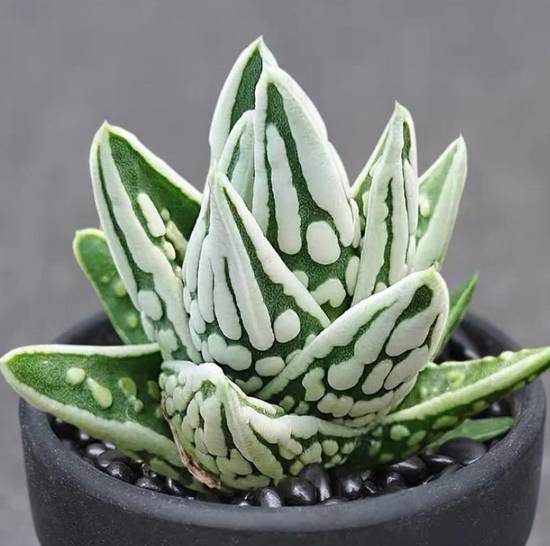
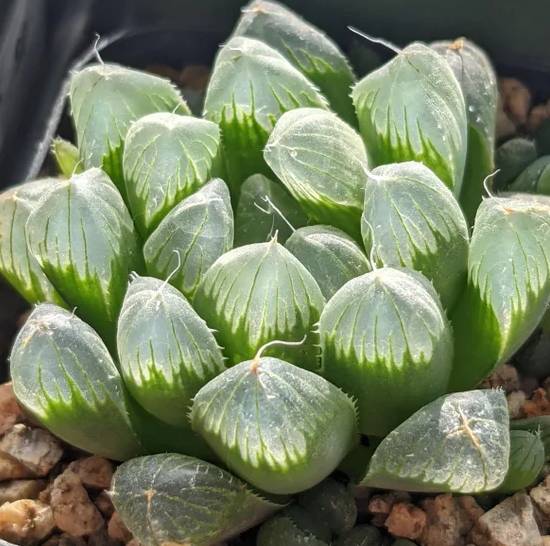
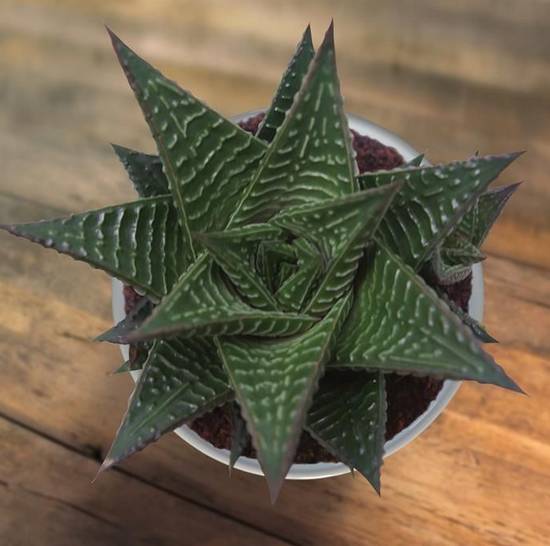
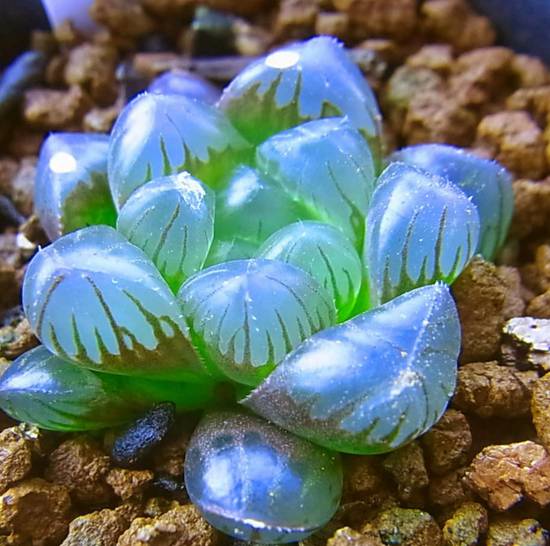
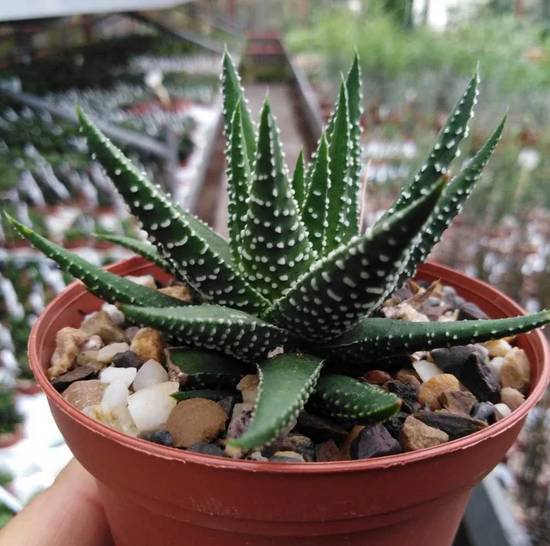
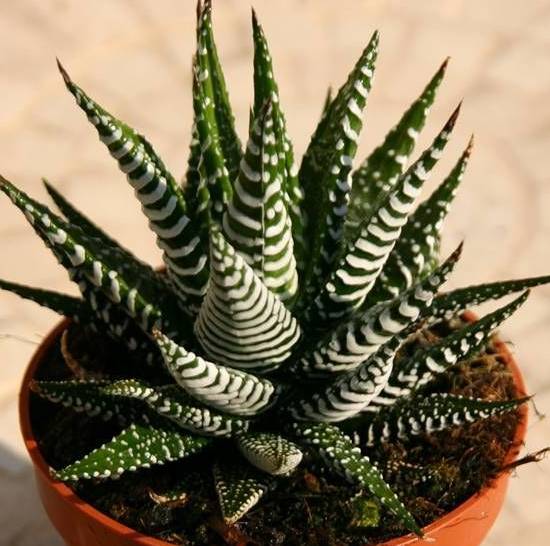
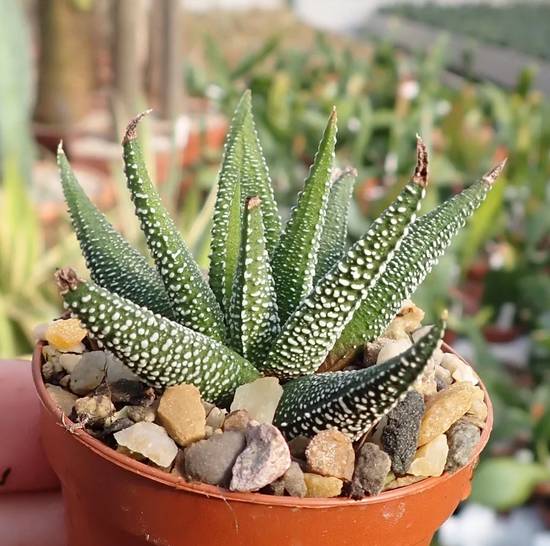
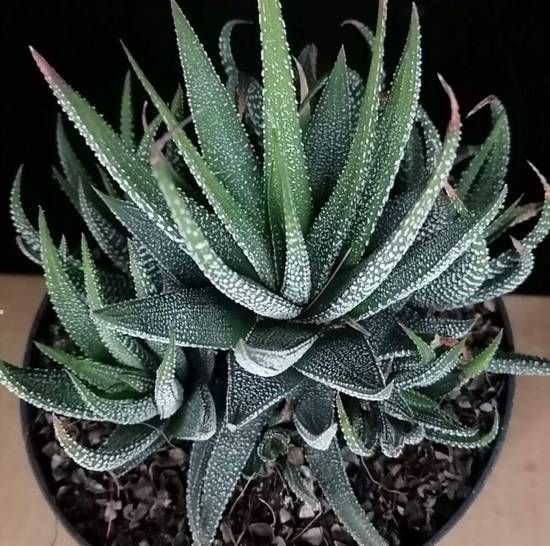
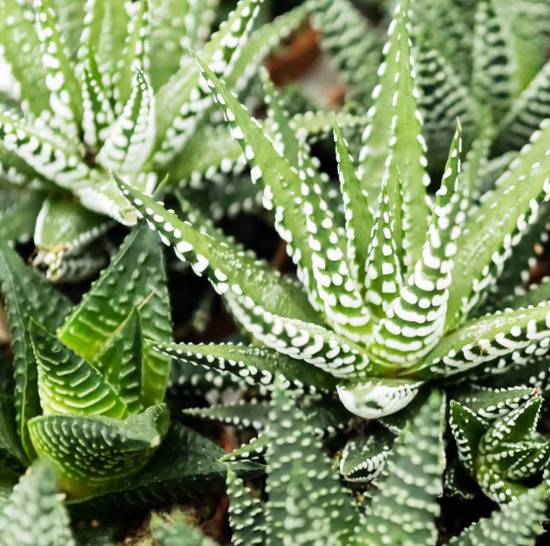
Haworthia Fasciata is one of the most emblematic species of the genus Haworthia, famous for its compact habit and thick leaves adorned with transverse white stripes. It forms a dense and regular rosette of fleshy, dark green leaves, upright or slightly curved inward. Its silhouette resembles that of an Aloe, although it is much smaller and easier to grow indoors. These white markings, reminiscent of zebra stripes, have earned this plant the nickname “zebra succulent” in some English-speaking regions.
Appreciated for its resilience, compact size and great ease of cultivation, Haworthia Fasciata is ideal for small spaces, offices, windowsills or potted arrangements. It thrives indoors as well as in a greenhouse or veranda, and even tolerates outdoor cultivation during the warm season, provided direct scorching sunlight is avoided.
🌤️ Bright light without direct sun : An east- or northwest-facing window is ideal.
🪟 Indoors : It thrives behind a light curtain or in a naturally well-lit room.
🚫 To avoid : Direct midday sun, which can burn the leaves and cause discoloration.
💧 Spring / summer : Water moderately every 2 to 3 weeks. Wait until the substrate is completely dry before watering again.
❄️ Winter : Water very little, or not at all if the plant is placed in a cool and bright room.
⚠️ Excess water often leads to soft leaves, brown roots and rot. It is better to forget watering than to overwater.
🌡️ Ideal : 18 to 26 °C
❄️ Minimum : Can tolerate 5 °C if the substrate is dry, but fears frost.
🏠 Overwintering : In winter, place it in a bright room sheltered from drafts and excessively low temperatures.
🪨 Recommended composition : 50% of cactus substrate, 25% perlite and 25% pozzolana.
This mix guarantees excellent aeration and efficient drainage, essential to prevent root diseases.
🌸 Season : Mainly during the warm months.
🌿 Appearance : Slender flower stalks bearing small tubular white to greenish flowers.
💡 Although not spectacular, flowering indicates that the plant is well acclimated and healthy.