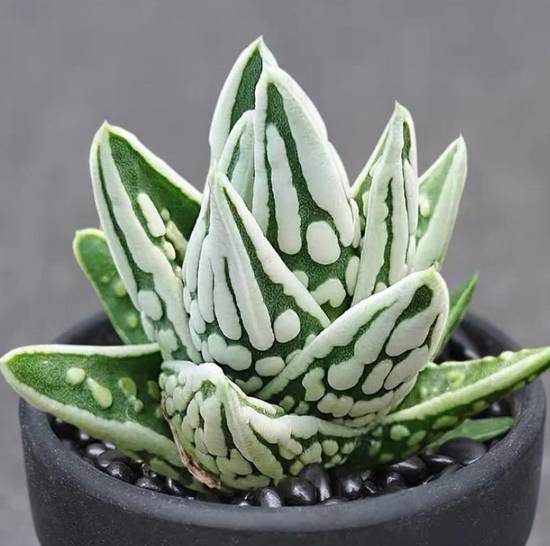
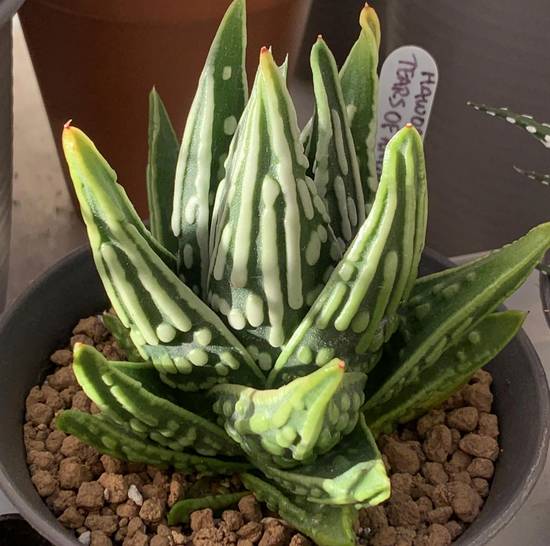
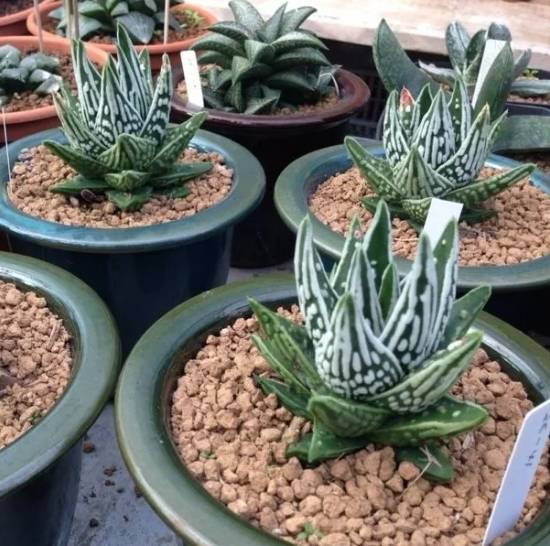
Haworthia Pumila Tears of Angels
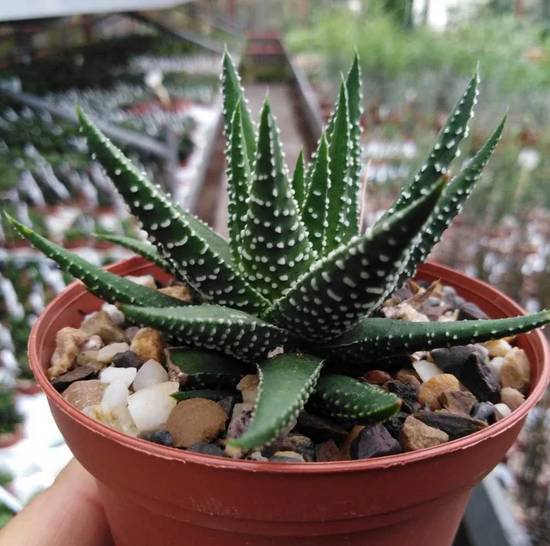
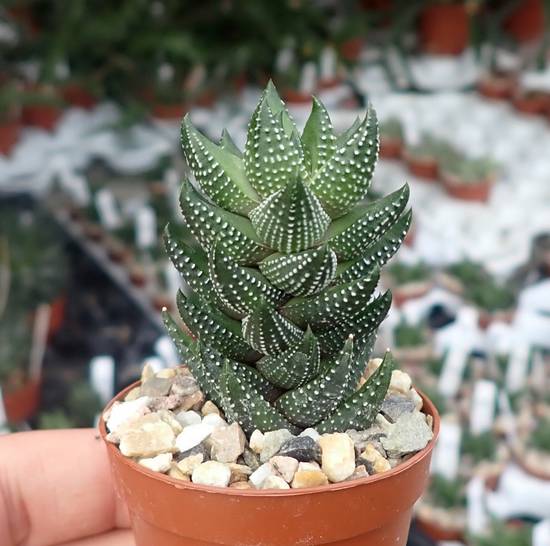
The Haworthia pumila Tears of Angels is a remarkable variant of the classic Haworthia Pumila, cultivated for its particularly ornamental foliage. Its long, thick lance-shaped leaves are rigid, upright, and covered with prominent white tubercles. This strong contrast between the dark green foliage and the white dots evokes a shower of stars or, as its name suggests, “tears of angels”. This almost mystical appearance makes it a centerpiece in any rare succulent collection.
Compact, graphic and extremely decorative, this Haworthia develops slowly, forming a dense and elegant rosette. It is ideal for pot cultivation, even indoors, as it appreciates soft light and protected environments. It is a plant with character, sculptural in appearance, that immediately attracts attention while remaining easy to care for.
🌤️ Ideal : Bright indirect light near an east- or west-facing window.
☀️ A few hours of gentle sun are tolerated, especially in the morning, but intense direct sunlight should be avoided as it may mark or burn the leaves.
💡 Signs of lack of light : elongated, less dense leaves and dull colors. In that case, move it to a brighter location.
🌱 During the growing period (spring-summer) : Water approximately every 2 to 3 weeks, allowing the substrate to dry completely.
🍂 In winter : Space watering as much as possible, or stop completely if the plant is kept cool.
⚠️ Excess moisture is its worst enemy. Roots rot quickly if the substrate remains wet for too long.
🌡️ Ideal temperature : 18 to 26 °C.
❄️ Minimum : Tolerates down to 5 °C if kept dry, but must absolutely be protected from frost.
🏠 Indoor cultivation : Very well adapted, especially in winter.
🪨 Recommendation : A mix of 50% cactus substrate with 30% perlite and 20% pozzolana ensures optimal aeration and prevents excess moisture.
🌸 Period : Spring or summer
🌿 Shape : Small white tubular flowers carried on a long slender stem that can reach 30 cm.
🕑 Duration : A few days to a week
💡 It is not the main decorative element, but it indicates that the plant is healthy.